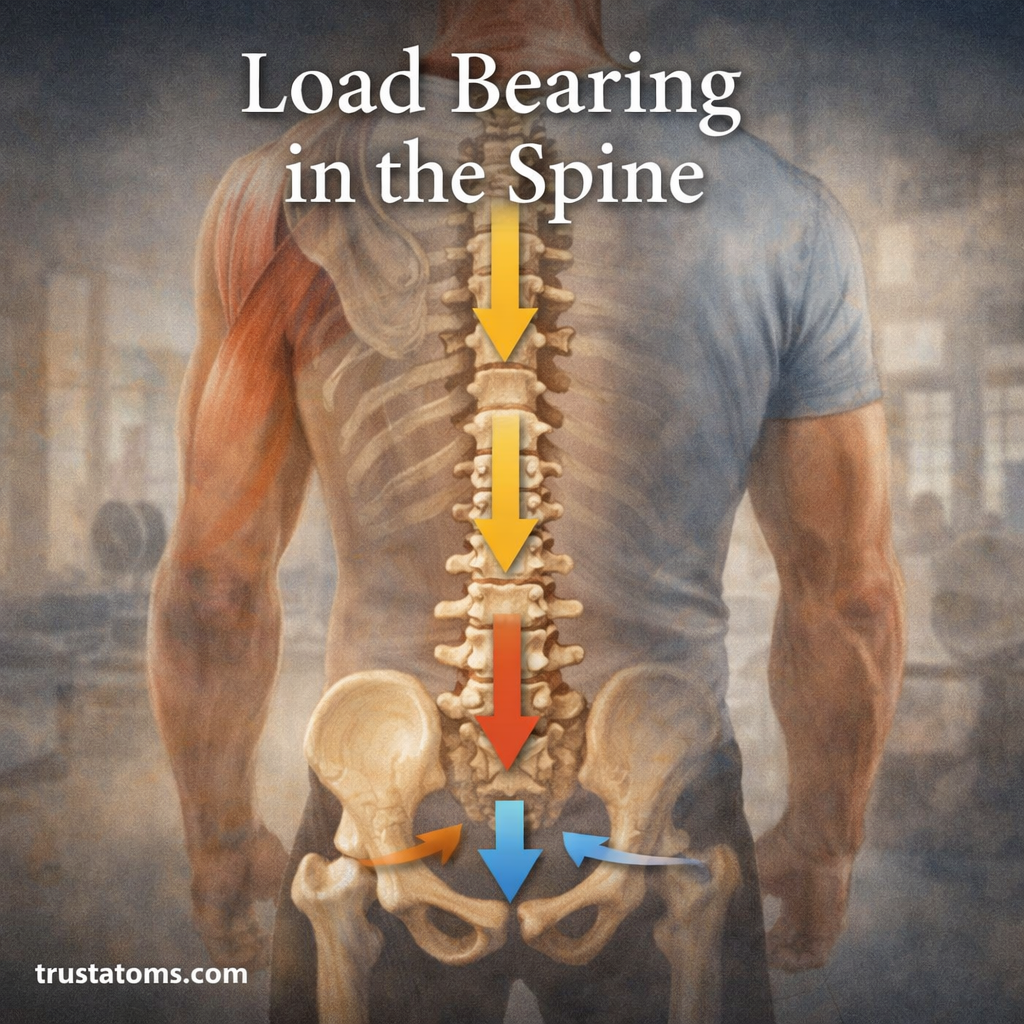
Load bearing in the spine refers to how the vertebral column supports, distributes, and transfers weight throughout the body. Every time you stand, sit, walk, or lift, your spine manages forces from gravity, body mass, and external loads.
Understanding how the spine handles these forces is essential for maintaining posture, preventing injury, and improving overall movement efficiency.
Structure of the Spine
The spine is a complex, load-bearing structure made up of:
- 33 vertebrae (stacked bones)
- Intervertebral discs (shock absorbers)
- Ligaments (stabilizing connective tissue)
- Muscles (support and movement control)
Spinal Regions
The spine is divided into five main regions:
- Cervical spine (neck) – supports the head
- Thoracic spine (upper back) – stabilizes the rib cage
- Lumbar spine (lower back) – primary load-bearing region
- Sacrum – transfers load to the pelvis
- Coccyx – tailbone with minimal load function
How the Spine Bears Load
The spine is designed to handle both static loads (standing still) and dynamic loads (movement).
Vertical Load Distribution
When standing upright:
- Body weight travels downward through the spine
- Each vertebra transfers load to the next
- Intervertebral discs absorb and distribute pressure
- Load is ultimately transferred to the pelvis and legs
Role of Spinal Curvature
The spine’s natural curves improve its load-bearing capacity:
- Cervical lordosis (inward curve)
- Thoracic kyphosis (outward curve)
- Lumbar lordosis (inward curve)
These curves:
- Act like a spring system
- Reduce stress on individual vertebrae
- Help distribute forces evenly
The Role of Intervertebral Discs
Intervertebral discs are critical for load bearing and shock absorption.
Structure of a Disc
Each disc consists of:
- Nucleus pulposus – gel-like center that absorbs compression
- Annulus fibrosus – tough outer ring that provides structure
Function in Load Bearing
Discs:
- Distribute compressive forces across the spine
- Allow flexibility and movement
- Reduce impact during activities like walking or jumping
Without healthy discs, load distribution becomes uneven, increasing injury risk.
Load Types Acting on the Spine
The spine does not only handle vertical compression. It experiences multiple types of forces:
1. Compression
- Force pushing vertebrae together
- Occurs during standing, sitting, and lifting
2. Tension
- Pulling forces from muscles and ligaments
- Helps stabilize the spine
3. Shear Forces
- Forces that cause vertebrae to slide forward or backward
- Common during bending or twisting
4. Torsion
- Rotational forces acting on the spine
- Occur during twisting movements
The Lumbar Spine: Primary Load Bearer
The lumbar spine تحمل the greatest load in the body.
Why the Lumbar Region Is Important
- Supports upper body weight
- Handles bending, lifting, and twisting
- Experiences the highest compressive forces
Load Example
- Standing upright: moderate load
- Sitting: increased load (especially with poor posture)
- Lifting heavy objects: significantly increased load
This is why the lower back is the most common site of spinal injuries.
Muscle Support and Load Sharing
Spinal load bearing is not handled by bones alone. Muscles play a critical role.
Key Muscle Groups
- Erector spinae – maintain posture
- Core muscles (abdominals) – stabilize the spine
- Multifidus – supports spinal alignment
How Muscles Help
- Reduce stress on vertebrae and discs
- Control movement and prevent excessive strain
- Distribute load more evenly
Weak muscles can lead to poor load management and increased injury risk.
Posture and Load Distribution
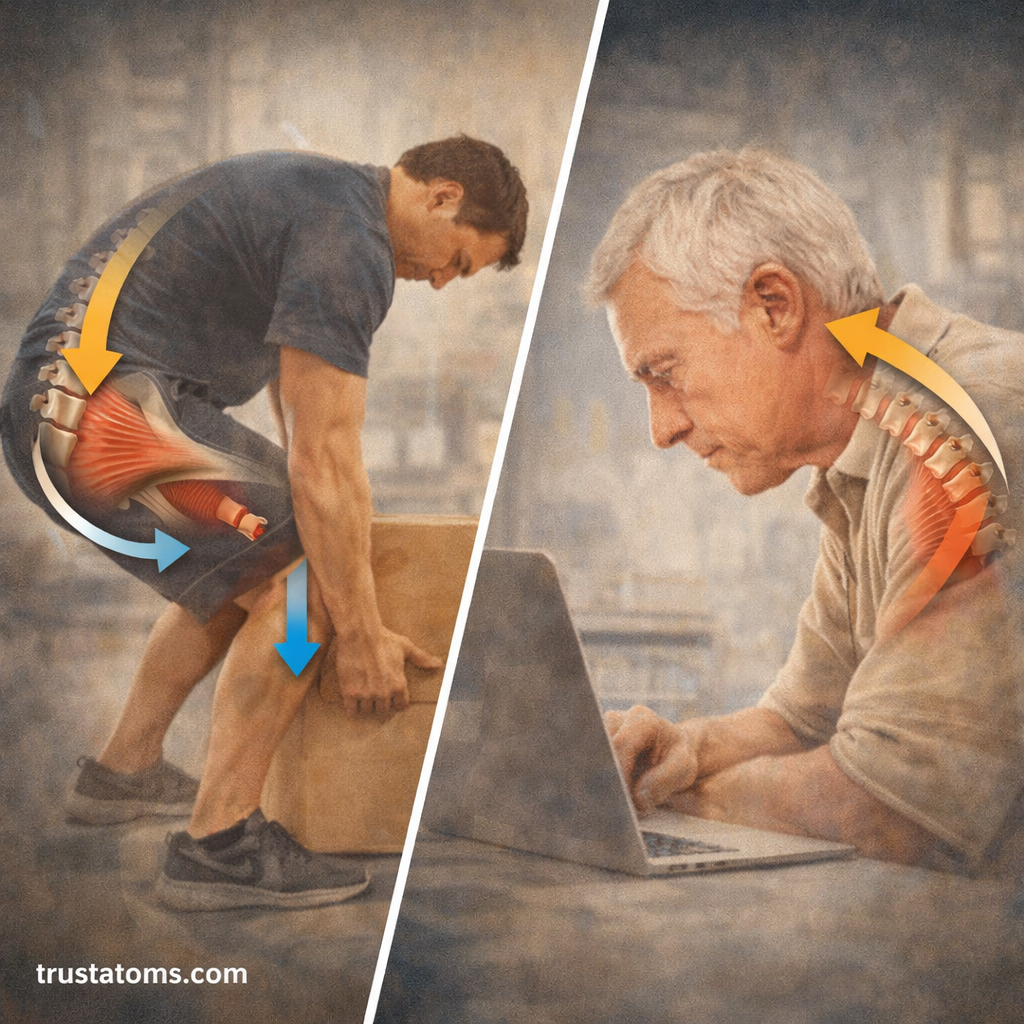
Posture has a major impact on how the spine bears load.
Neutral Spine Position
A neutral spine:
- Maintains natural curves
- Distributes load evenly
- Minimizes stress on discs and ligaments
Poor Posture Effects
- Slouching increases disc pressure
- Forward head posture strains the cervical spine
- Rounded shoulders alter load distribution
Over time, poor posture can lead to chronic pain and structural changes.
Load Bearing During Movement
The spine constantly adapts to changing loads during movement.
Examples
- Walking: alternating load shifts between sides
- Running: increased compressive forces
- Lifting: combined compression, shear, and torsion
Safe Movement Principles
- Keep loads close to the body
- Use the hips and legs when lifting
- Avoid excessive twisting under load
Factors That Affect Spinal Load Bearing
Several factors influence how effectively the spine manages load:
1. Body Weight
- Higher body weight increases compressive forces
2. Activity Level
- Regular movement strengthens muscles and improves load distribution
3. Age
- Disc hydration decreases with age
- Reduces shock absorption capacity
4. Technique and Mechanics
- Proper lifting and posture reduce stress
- Poor mechanics increase injury risk
5. Ergonomics
- Chair height, desk setup, and sleeping position all impact spinal load
Common Load-Related Spinal Issues
Improper load management can lead to several conditions:
- Herniated discs
- Degenerative disc disease
- Lower back pain
- Spinal stenosis
These conditions often result from prolonged stress, poor posture, or improper lifting techniques.
Improving Spinal Load Management
Maintaining a healthy spine involves improving how it handles load.
Practical Strategies
- Strengthen core muscles
- Maintain proper posture
- Use correct lifting techniques
- Stay active and mobile
- Optimize your workspace ergonomics
Small daily habits can significantly reduce stress on the spine over time.
Final Thoughts
Load bearing in the spine is a dynamic and complex process involving bones, discs, muscles, and posture. The spine is designed to handle significant forces, but it relies on proper alignment and support to function efficiently.
By understanding how load is distributed and managed, you can improve movement, reduce injury risk, and maintain long-term spinal health.