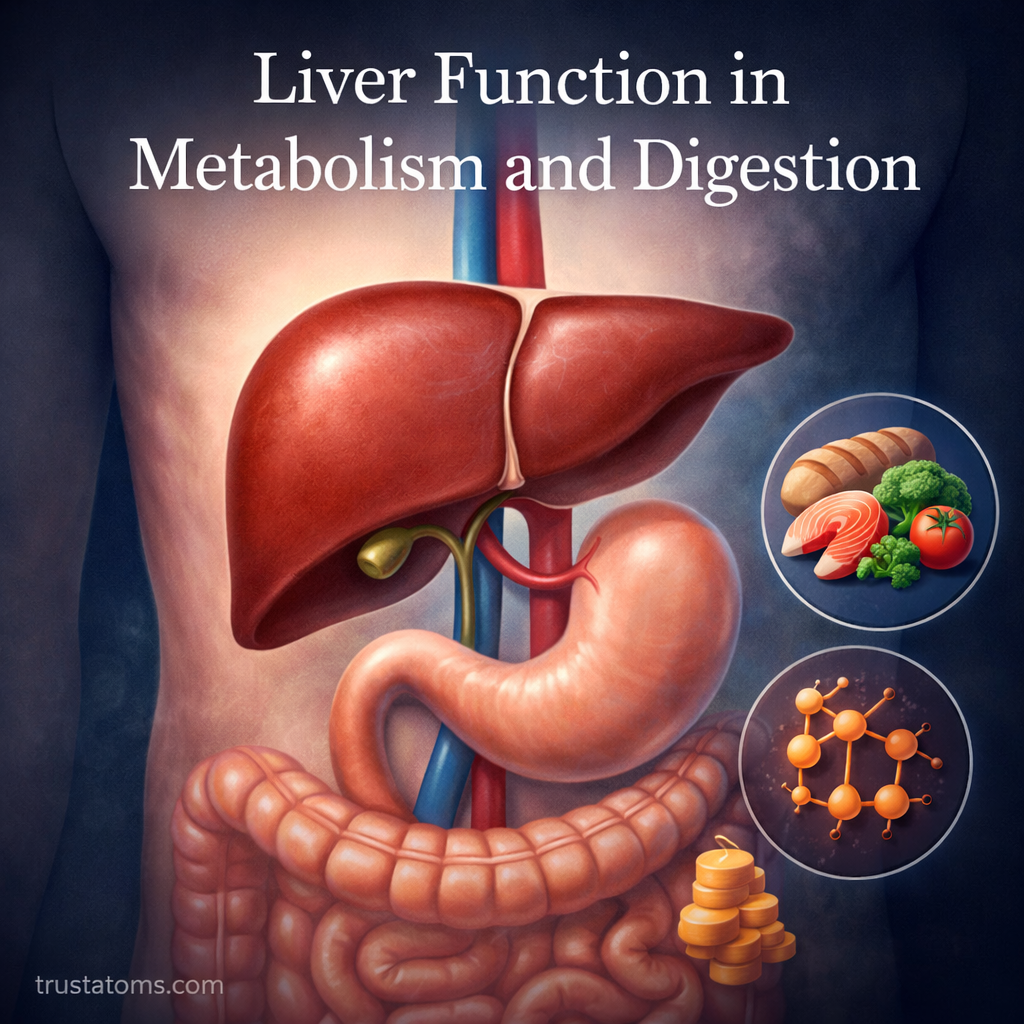
The liver supports digestion by producing bile, which helps the small intestine digest and absorb dietary fats. It also regulates metabolism by processing carbohydrates, proteins, and fats, storing nutrients, maintaining blood glucose, and converting certain harmful substances into forms the body can eliminate.
Located in the upper right abdomen, the liver connects the digestive and circulatory systems through an extensive network of blood vessels. Understanding its structure and functions links human anatomy with the processes that keep energy and nutrient levels within healthy ranges.
Overview of the Liver and Its Structure
The liver is a large, reddish-brown organ situated beneath the diaphragm, mainly on the right side of the abdomen. It is the largest internal solid organ and consists of specialized cells called hepatocytes, arranged around networks of tiny blood vessels.
Hepatocytes perform many metabolic tasks, including processing nutrients, producing bile, and modifying chemicals circulating in the blood. Other liver cells contribute to immune defense and tissue maintenance.
The liver’s major functions include:
- Producing bile to support fat digestion and absorption.
- Regulating blood glucose and storing glycogen.
- Processing amino acids, fatty acids, and cholesterol.
- Producing blood proteins and clotting factors.
- Modifying drugs and metabolic waste for elimination.
- Storing selected vitamins and minerals.
One of the liver’s distinctive digestive functions is bile secretion. The process is explained further in Bile Production and Fat Emulsification.
Role of the Liver in Digestion
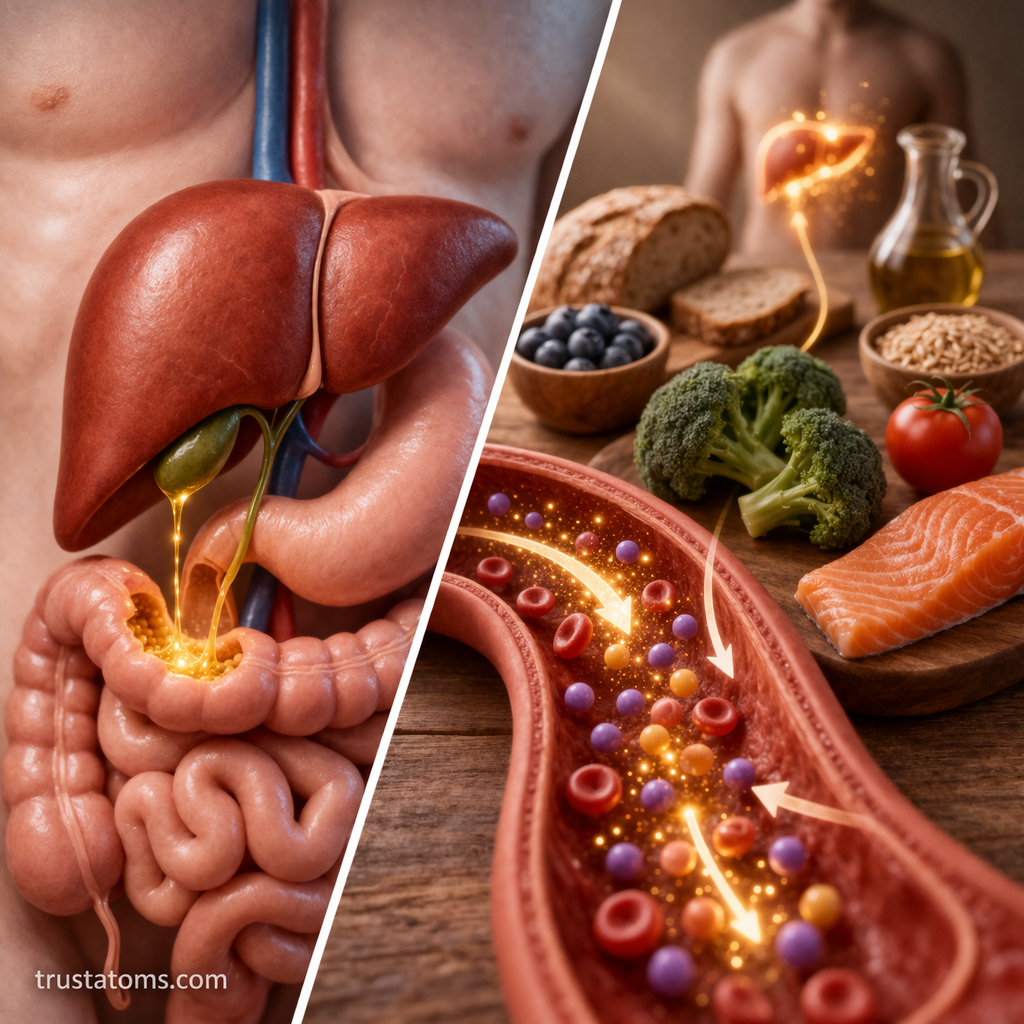
The liver does not digest food directly inside the stomach or intestines. Instead, it produces bile, a fluid containing bile salts, phospholipids, cholesterol, bilirubin, water, and electrolytes.
How Bile Helps Digest Fat
Bile salts help emulsify dietary fat, dispersing large fat droplets into smaller droplets. This increases the surface area available for pancreatic lipase, an enzyme that breaks down triglycerides.
Bile salts also help form structures called micelles, which transport fat digestion products toward the intestinal lining for absorption. This process supports the absorption of fat-soluble vitamins A, D, E, and K.
The gallbladder stores and concentrates bile between meals, then releases it into the small intestine when stimulated during digestion. Gallbladder Storage and Release of Bile explains this coordination.
The pancreas contributes enzymes that digest fats, carbohydrates, and proteins. Its digestive secretions are described in Pancreas Function in Digestion.
How the Liver Regulates Metabolism
Metabolism includes the chemical reactions that release energy, build cellular materials, and maintain internal conditions. The liver adjusts its activities according to nutrient availability and hormonal signals.
Carbohydrate Metabolism and Blood Glucose
After a carbohydrate-containing meal, glucose absorbed from the intestine reaches the liver. Some glucose is stored as glycogen through a process called glycogenesis.
Between meals, the liver can break down glycogen to release glucose into the bloodstream. It can also produce glucose from substances such as lactate, glycerol, and certain amino acids through gluconeogenesis.
Insulin generally promotes glucose storage after eating, while glucagon encourages glucose release when blood sugar falls.
Protein Metabolism and Urea Production
The liver processes amino acids absorbed from dietary proteins. It uses some to produce proteins such as albumin, which helps maintain fluid distribution in the bloodstream, and clotting factors needed to control bleeding.
When amino acids are broken down, nitrogen-containing waste is produced. The liver converts toxic ammonia into urea, which travels through the blood to the kidneys for removal in urine.
Fat Metabolism and Cholesterol
The liver breaks down fatty acids for energy, synthesizes cholesterol, and packages fats into lipoproteins for transport through the bloodstream.
It can also convert excess carbohydrate into fatty acids through lipogenesis. During fasting, the liver produces ketone bodies from fatty acids, providing an alternative fuel for several tissues.
An Everyday Example: What the Liver Does After Lunch
Imagine eating a lunch containing rice, chicken, and avocado. Each food supplies different nutrients that require distinct digestive and metabolic processes.
- Carbohydrates from rice are digested into sugars, including glucose, which enter the bloodstream.
- Proteins from chicken are digested into amino acids that can be used to build body proteins.
- Fats from avocado are emulsified with the help of bile and digested by pancreatic enzymes.
- The liver receives absorbed glucose and amino acids through portal circulation and adjusts how they are stored, transformed, or released.
Several hours later, as nutrient absorption declines, the liver can release glucose from glycogen stores to help maintain blood sugar. This illustrates how its metabolic activity changes between feeding and fasting.
Detoxification and Waste Processing
The liver chemically modifies many substances, including medications, alcohol, hormones, and products of normal metabolism. Enzymes can transform these compounds into forms that are easier to eliminate through urine or bile.
However, liver metabolism does not always make a substance harmless. Some reactions temporarily produce more reactive compounds, and excessive exposure can damage liver cells.
After nutrients enter the bloodstream, the liver also determines whether to store, convert, or distribute them. These processes are explored in Metabolic Processing After Absorption.
How the Liver Processes Bilirubin
Bilirubin forms during the breakdown of heme, including heme from aging red blood cells. The liver takes up bilirubin, chemically modifies it, and secretes it into bile for elimination through the digestive tract.
When bilirubin processing or bile flow is disrupted, bilirubin may accumulate in the bloodstream and contribute to jaundice, a yellowing of the skin or eyes.
How the Liver Stores Nutrients
The liver stores several substances that can be released or used when needed. These include glycogen, vitamin A, vitamin B12, and iron stored in association with proteins such as ferritin.
It also participates in the handling of vitamin D and copper. Storage capacity varies by nutrient, and the liver does not serve as the primary reserve for every vitamin or mineral.
How Blood Flows Through the Liver
The liver receives blood from two main vessels:
- Hepatic portal vein: Carries nutrient-rich blood from the intestines and blood from other abdominal organs.
- Hepatic artery: Delivers oxygen-rich blood from the systemic circulation.
These blood supplies mix within specialized capillary channels called hepatic sinusoids. Hepatocytes exchange substances with the passing blood before it drains through hepatic veins toward the heart.
The route taken by absorbed nutrients is described in Portal Circulation in Digestive Absorption. This arrangement allows the liver to process many absorbed substances before they enter the wider circulation.
How Liver Disease Can Affect Digestion and Metabolism
Conditions such as metabolic dysfunction-associated steatotic liver disease, hepatitis, and cirrhosis can interfere with normal liver function. Their effects depend on the cause, severity, and extent of liver damage.
Advanced liver disease may reduce protein synthesis, impair bilirubin processing, disrupt glucose regulation, and affect bile production or flow. Severe dysfunction can also allow substances normally processed by the liver to accumulate.
Persistent jaundice, abdominal swelling, unexplained bleeding, or confusion requires medical evaluation, particularly when liver disease is suspected.
Frequently Asked Questions
Does the liver digest food directly?
No. The liver produces bile, which helps emulsify dietary fats and supports their absorption in the small intestine. Digestive enzymes from the pancreas and intestinal lining perform much of the chemical breakdown of food.
How does the liver maintain blood sugar between meals?
The liver breaks down stored glycogen to release glucose and can manufacture additional glucose through gluconeogenesis. Hormones such as insulin and glucagon help regulate these processes.
What is the difference between the liver and gallbladder?
The liver continuously produces bile and performs numerous metabolic functions. The gallbladder primarily stores and concentrates bile, releasing it into the small intestine during digestion.
The liver connects digestion with metabolism by producing bile, processing absorbed nutrients, and regulating the availability of energy between meals. Its blood supply allows it to receive substances from the digestive tract, while its specialized cells manage nutrient storage, protein synthesis, and waste processing. These combined functions help maintain stable blood chemistry and support the activity of organs throughout the body.
This article is for general education and is not medical advice. Talk to a qualified health professional about any medical concern.
Sources: OpenStax, Anatomy and Physiology 2e; Guyton and Hall, Textbook of Medical Physiology; National Institute of Diabetes and Digestive and Kidney Diseases, Your Liver and How It Works.