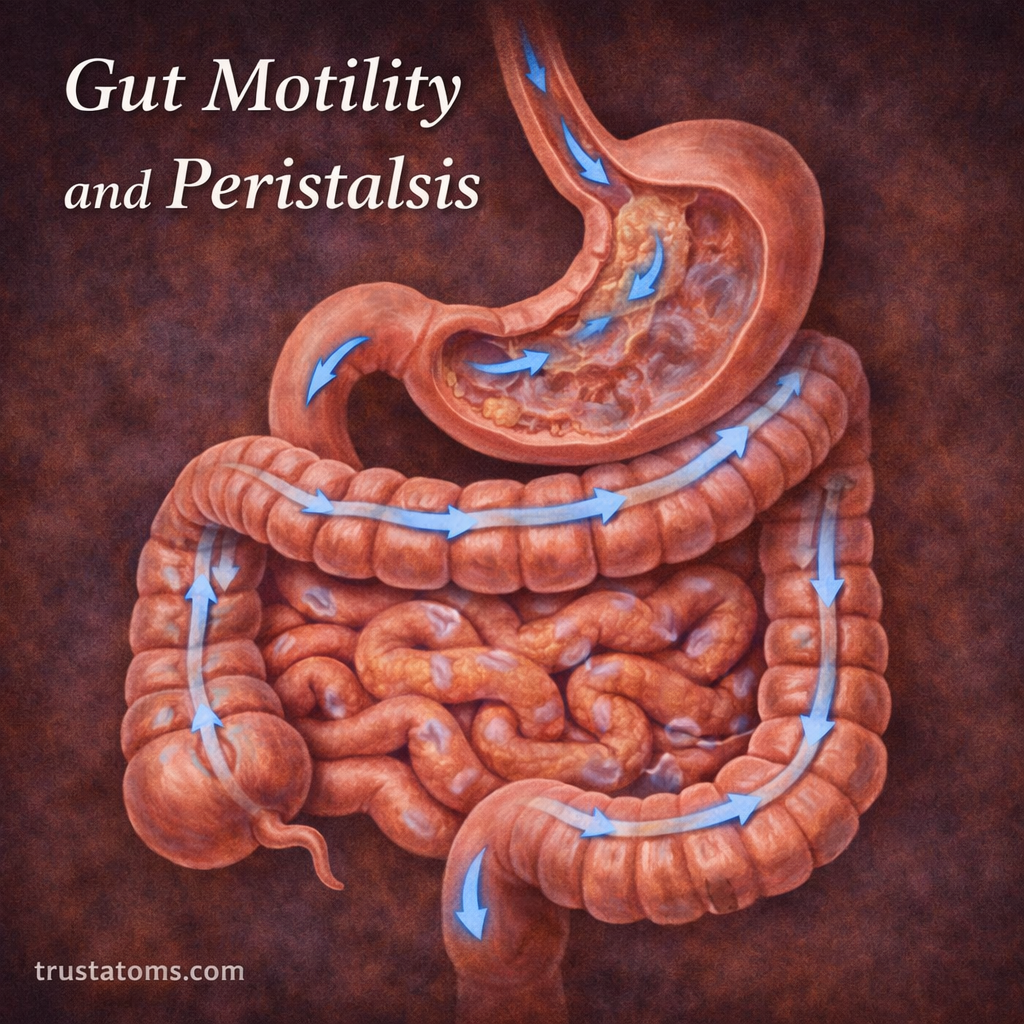
Gut motility is the coordinated movement of food, liquids, and waste through the digestive tract, while peristalsis is a wave of muscle contractions that pushes these materials forward. Together with mixing movements and controlled muscle relaxation, peristalsis allows digestion, nutrient absorption, and waste elimination to occur in the proper sequence.
Your digestive system isn’t just about breaking down food—it’s also about moving it efficiently from one stage to the next. Understanding these movements connects human anatomy with the muscular and nervous systems that coordinate digestion automatically.
What Is Gut Motility?
Gut motility refers to the muscular movements that transport and mix material within the gastrointestinal tract. These movements occur in the esophagus, stomach, small intestine, and large intestine, but their patterns differ according to each organ’s function.
Most digestive organs contain layers of smooth muscle controlled by local nerve circuits. The Enteric Nervous System Overview explains how these circuits coordinate contractions without requiring conscious instructions from the brain.
Movement also depends on the structure of each digestive organ. Digestive Tract Anatomy describes the pathway food follows, while Large Intestine Function explains how colonic transit influences water absorption and stool formation.
What Is Peristalsis and How Does It Work?
Peristalsis is a coordinated pattern of contraction and relaxation that propels material through a hollow digestive organ. It occurs when circular muscle contracts behind a food bolus or intestinal contents while muscle farther along the tract relaxes.
Longitudinal muscle activity can also help shorten sections of the digestive tube, supporting forward movement. These actions are coordinated through neural reflexes and the electrical activity of gastrointestinal smooth muscle.
- Food or fluid stretches a section of the digestive wall.
- Local nerve circuits detect the stretch and activate a coordinated reflex.
- Circular muscle contracts behind the contents.
- Muscle ahead relaxes, allowing the contents to move forward.
- The contraction pattern progresses along the tract, moving material toward the next region.
Peristalsis is generally directed forward during normal digestion, although reverse movements can occur in certain circumstances, including vomiting.
How Food Moves Through Each Digestive Organ
| Digestive Organ | Main Movement | Purpose |
|---|---|---|
| Esophagus | Peristaltic waves | Move swallowed food into the stomach |
| Stomach | Mixing waves and grinding | Break food into smaller particles and form chyme |
| Small intestine | Segmentation and peristalsis | Mix contents and support nutrient absorption |
| Large intestine | Haustral contractions and mass movements | Mix contents, absorb water, and move stool |
| Rectum | Distension and coordinated contractions | Help initiate defecation |
The digestive tract does not move food at a single constant speed. The stomach controls the delivery of chyme into the small intestine, while the colon typically moves its contents more slowly to allow water and electrolyte absorption.
Peristalsis Versus Segmentation and Other Gut Movements
Peristalsis primarily moves material forward, but other contraction patterns perform different tasks.
- Segmentation: Alternating contractions in the small intestine mix chyme with digestive fluids and repeatedly expose it to the intestinal lining.
- Gastric churning: Stomach contractions mix food with gastric juice and grind larger particles before emptying.
- Colonic mass movements: Strong, coordinated contractions move substantial amounts of colonic contents toward the rectum.
- Migrating motor complex: Cycles of contractions during fasting help move residual material through the stomach and small intestine.
These patterns demonstrate why effective digestion requires both propulsion and mixing rather than continuous forward movement alone.
What Controls Gut Motility?
Gut motility depends on interactions among smooth muscle, the enteric nervous system, autonomic nerves, and chemical signals.
- Enteric nervous system: Coordinates local reflexes controlling muscle contraction and relaxation.
- Autonomic nervous system: Parasympathetic activity generally promotes digestive movement, while sympathetic activity often inhibits it.
- Interstitial cells of Cajal: Generate rhythmic electrical activity that helps organize smooth muscle contractions.
- Hormones and signaling molecules: Substances such as gastrin, motilin, and serotonin influence movement under different conditions.
Muscular valves also regulate the passage of material between regions. Sphincters and flow regulation explain how these structures help control swallowing, stomach emptying, and bowel movements.
An Everyday Example: Swallowing a Bite of Bread
Imagine swallowing a bite of bread while sitting upright. After swallowing begins, the esophagus produces a coordinated peristaltic wave that pushes the food toward the stomach.
The lower esophageal sphincter relaxes to allow entry into the stomach. Remarkably, normal esophageal peristalsis can move swallowed food even when a person is lying down, because muscular contractions provide propulsion rather than relying entirely on gravity.
Once the bread reaches the stomach, muscular mixing and gastric secretions begin processing it into chyme. The small intestine then uses both segmentation and peristalsis to mix and transport the material while digestion and absorption continue.
What Happens When Gut Motility Is Too Fast or Too Slow?
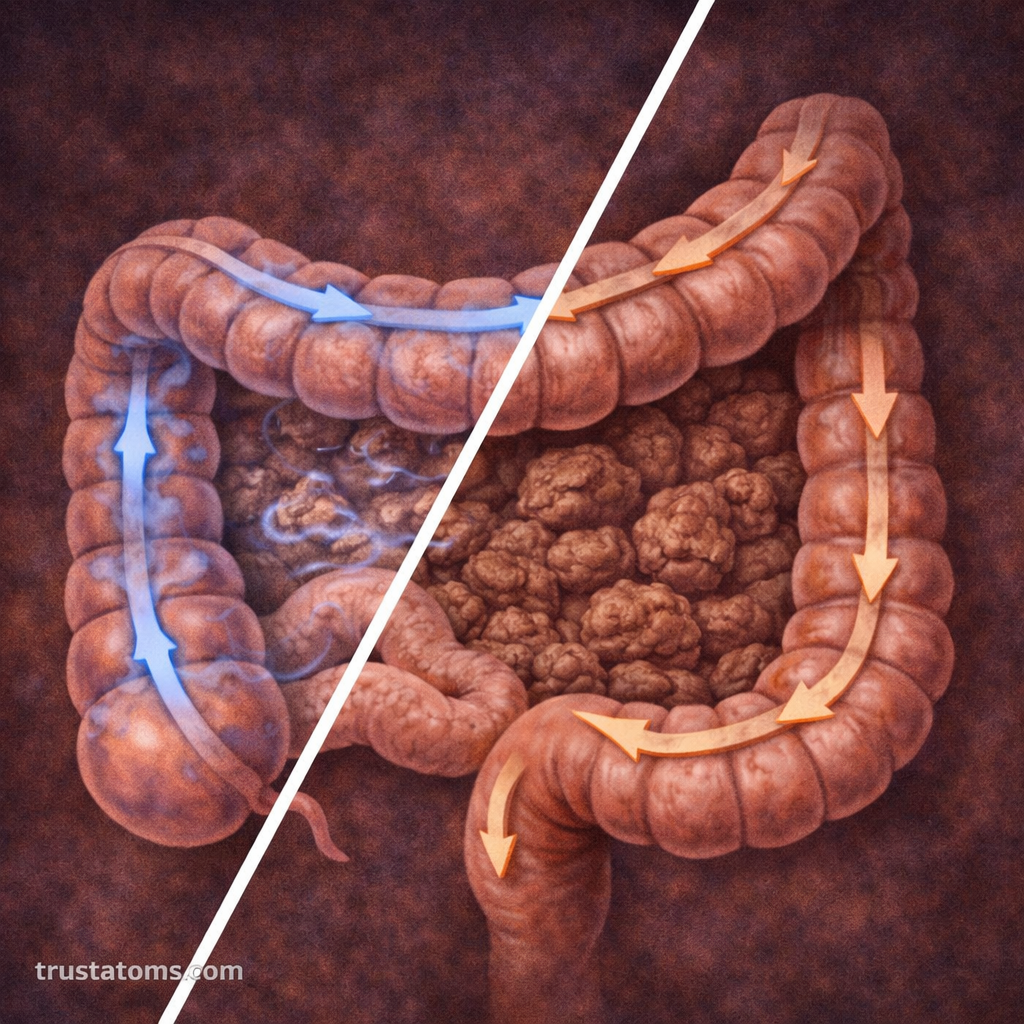
The timing of digestive movement affects how thoroughly contents are mixed, processed, and transported. Abnormal transit can contribute to uncomfortable symptoms, although movement speed is not the only cause of digestive problems.
Fast Intestinal Transit
When intestinal contents move unusually quickly, the colon may have less time to absorb water. This can contribute to loose stools or diarrhea. In some conditions, rapid small-intestinal transit can also interfere with digestion and nutrient absorption.
Slow Intestinal Transit
Slow movement through the colon allows more water to be absorbed, potentially producing hard, dry stools. Delayed stomach emptying can instead cause early fullness, nausea, or vomiting, depending on its cause.
Digestive Conditions Associated With Abnormal Motility
Several gastrointestinal disorders involve altered movement or coordination.
- Gastroparesis: Delayed stomach emptying without a mechanical blockage.
- Chronic constipation: May involve slow colonic transit, difficulty coordinating defecation, or other causes.
- Irritable bowel syndrome: Can involve changes in bowel habits, gut sensitivity, and motility.
- Intestinal pseudo-obstruction: Severe impairment of intestinal propulsion that produces obstruction-like symptoms without a physical blockage.
A mechanical intestinal obstruction is different from a motility disorder because a physical blockage prevents normal passage. Severe abdominal pain, persistent vomiting, marked abdominal swelling, or inability to pass gas or stool may require urgent medical evaluation.
Habits That Support Normal Gut Movement
Daily habits can influence bowel regularity, although they cannot correct every underlying motility disorder.
- Eat adequate fiber: Fiber can improve stool consistency and support regular bowel movements, particularly when increased gradually.
- Drink sufficient fluids: Adequate hydration supports normal stool formation.
- Stay physically active: Regular movement may help promote bowel regularity.
- Respond to bowel urges: Avoiding repeated delays can support normal defecation habits.
Some conditions require individualized dietary changes, medications, or other treatments. For example, increasing fiber may worsen symptoms in certain people with significant delayed gastric emptying.
Frequently Asked Questions
Is peristalsis voluntary or involuntary?
Peristalsis is largely involuntary. Enteric nerve circuits and smooth muscle activity coordinate digestive contractions automatically, although swallowing begins with a voluntary phase.
Does peristalsis happen only after eating?
No. Digestive muscles remain active between meals, including during fasting. The migrating motor complex produces recurring contraction patterns that help clear residual material through portions of the digestive tract.
Can stress affect gut motility?
Yes. Stress can influence digestive movement through communication between the brain and enteric nervous system. Depending on the individual and circumstances, this may contribute to changes in bowel habits or abdominal discomfort.
Gut motility combines forward-moving peristaltic waves with mixing contractions that help digestive organs process food at different rates. Neural circuits, smooth muscle, and sphincters coordinate movement from swallowing through bowel elimination. When this coordination changes, symptoms depend on which part of the digestive tract is affected and how its movement is disrupted.
This article is for general education and is not medical advice. Talk to a qualified health professional about any medical concern.
Sources: Guyton and Hall Textbook of Medical Physiology; Boron and Boulpaep Medical Physiology; National Institute of Diabetes and Digestive and Kidney Diseases (NIDDK).