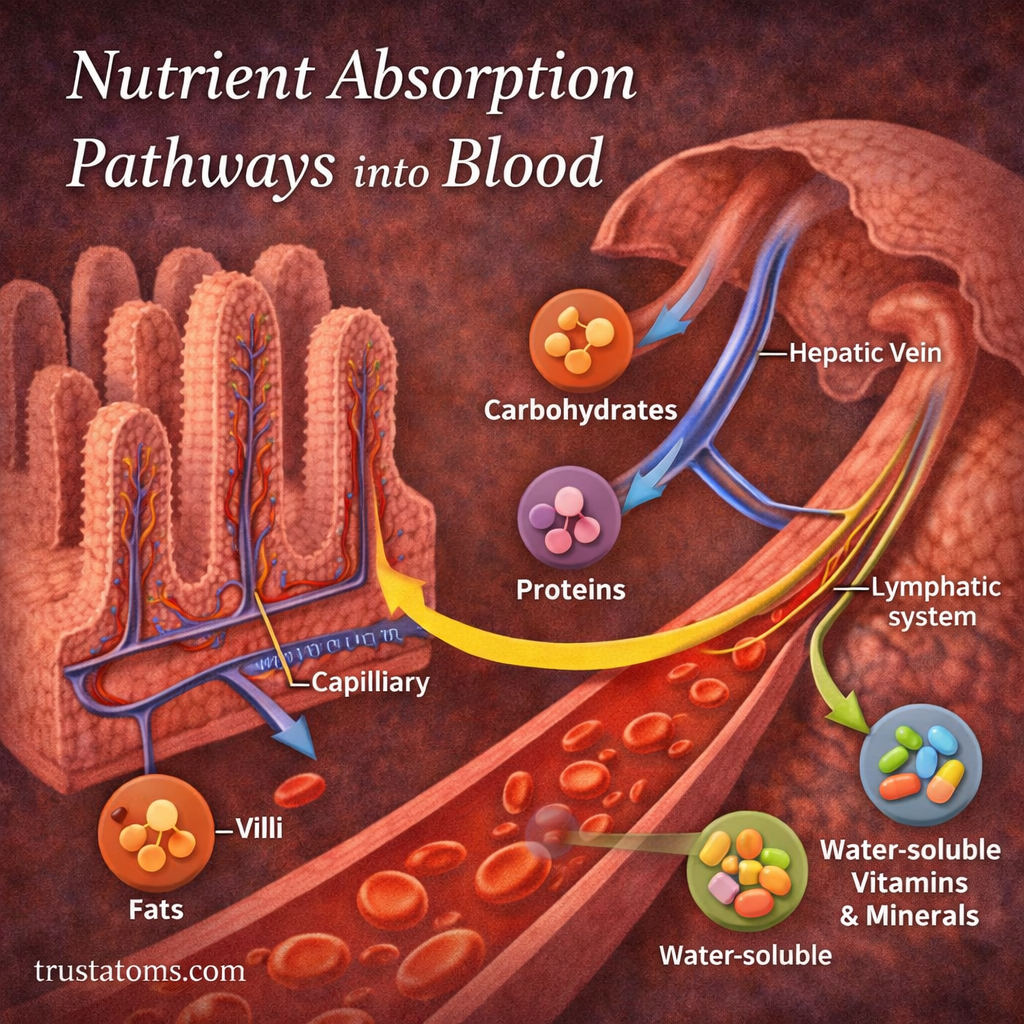
Nutrient absorption is the process by which digested food molecules cross the intestinal lining and enter the blood or lymphatic system for transport throughout the body. Most sugars, amino acids, minerals, and water-soluble vitamins enter blood capillaries, while most dietary long-chain fats initially travel through lymphatic vessels before reaching the bloodstream.
This process connects the digestive and circulatory systems, allowing cells to receive nutrients for energy, growth, and repair. Understanding these pathways is part of human anatomy because the structure of the small intestine determines how efficiently nutrients move from food into circulation.
For example, after eating a sandwich containing bread, chicken, and cheese, your body handles each component differently. Sugars from the bread and amino acids from the chicken mainly enter intestinal blood vessels, while much of the fat from the cheese is packaged into particles that first enter the lymphatic system.
What Is Nutrient Absorption?
Nutrient absorption occurs when molecules produced by digestion pass through the intestinal epithelium, the layer of cells lining the digestive tract. Most nutrient absorption takes place in the small intestine, although the large intestine also absorbs water and electrolytes.
Absorption connects digestion with transport. Digestive System Integration with Circulation explains how intestinal blood vessels and the hepatic portal system deliver absorbed substances to the liver and other tissues.
Not all nutrients follow the same route. Fat Digestion and Lipid Transport describes why many dietary lipids require additional processing before entering circulation.
How the Small Intestine Is Built for Absorption
The small intestine is specially designed for efficient absorption. Its inner surface contains folds and projections that greatly increase the area available for nutrient uptake.
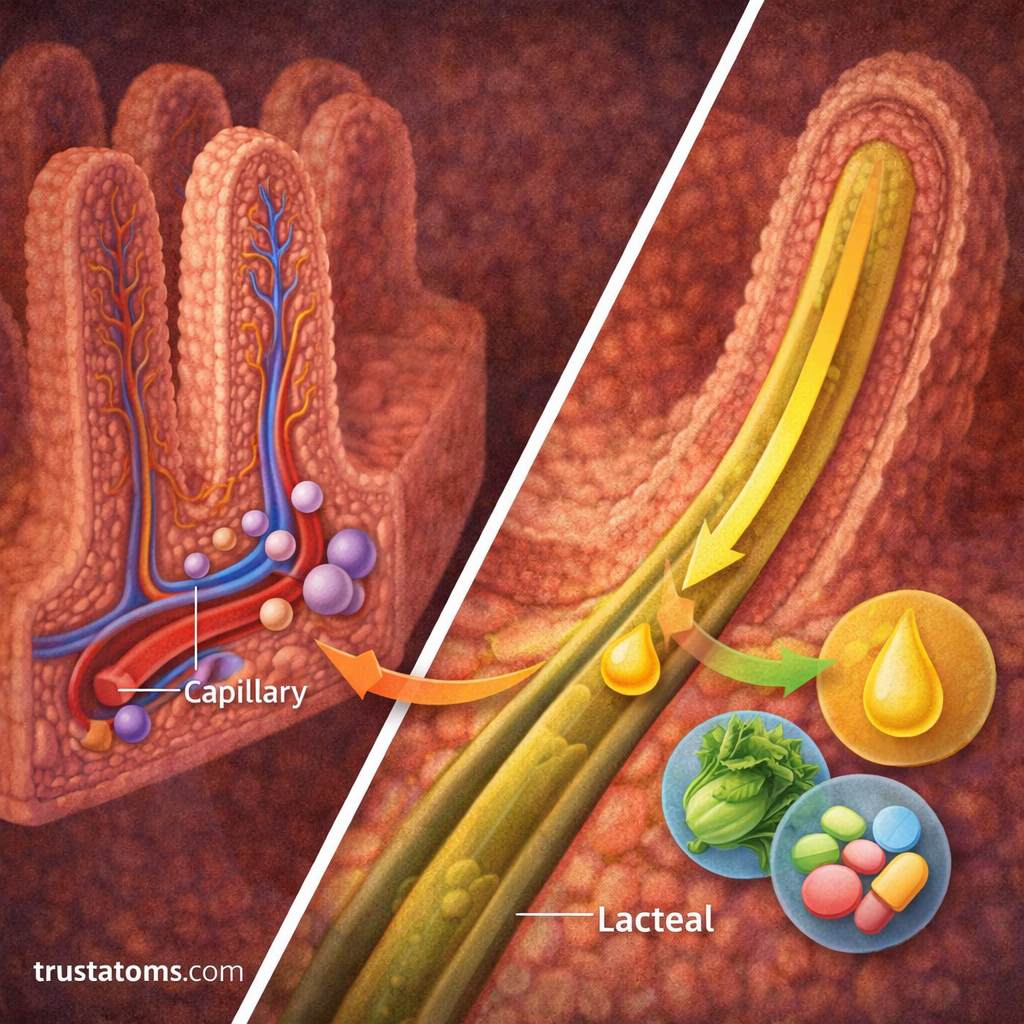
Absorption occurs across intestinal epithelial cells, particularly in structures called villi and microvilli. Villi are finger-like projections extending into the intestinal lumen, while microvilli are microscopic projections on the surface of absorptive cells.
Each villus contains two important transport structures:
- Blood capillaries: Receive many absorbed sugars, amino acids, minerals, and water-soluble nutrients.
- Lacteals: Specialized lymphatic capillaries that receive chylomicrons carrying absorbed dietary fats.
The intestinal lining also contains transport proteins that move specific nutrients across cell membranes. Some nutrients use energy-dependent transport, while others move through facilitated diffusion or other mechanisms.
How Nutrients Move from the Intestine into Circulation
Although absorption mechanisms differ, most nutrients pass through several stages before reaching body tissues.
- Digestion: Enzymes and other digestive substances break food into molecules suitable for absorption.
- Contact with the intestinal lining: Digested nutrients reach the surface of absorptive epithelial cells.
- Membrane transport: Nutrients cross the intestinal epithelium through specific transport mechanisms.
- Entry into circulation: Absorbed substances enter blood capillaries or lymphatic lacteals.
- Distribution: Blood circulation delivers nutrients to the liver and other tissues for processing, storage, or use.
Carbohydrate Absorption Pathway
Digestible carbohydrates are broken down into monosaccharides, mainly glucose, galactose, and fructose. These small sugars can cross the intestinal lining through specialized membrane transporters.
Glucose and galactose enter absorptive cells primarily through sodium-dependent transport, while fructose uses facilitated diffusion. The sugars then leave these cells and enter nearby blood capillaries.
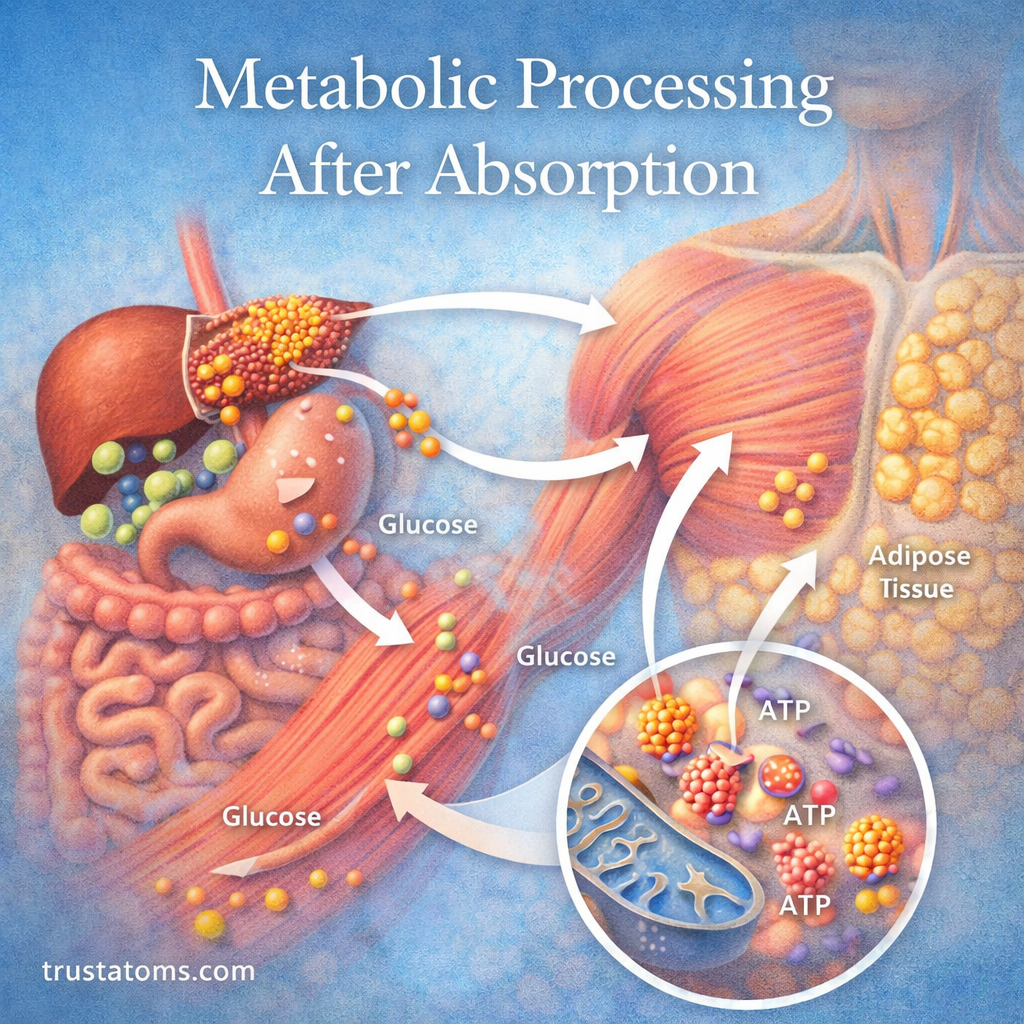
From there, they travel through the hepatic portal circulation to the liver. The liver can store some glucose as glycogen, use it for energy, or release glucose into the bloodstream according to the body’s needs.
Carbohydrate Digestion and Absorption explains how digestive enzymes and intestinal transporters work together to make dietary sugars available to cells.
Protein Absorption Pathway
Dietary proteins are broken into amino acids and small peptides by enzymes in the stomach and small intestine. Intestinal cells absorb these products using several specialized transport systems.
Some small peptides enter cells and are broken down further into amino acids. Most absorbed amino acids then enter intestinal blood capillaries and travel through the hepatic portal vein to the liver.
The liver uses some amino acids for its own metabolic needs, while others enter general circulation. Body tissues use amino acids to build proteins, repair structures, and produce important biological molecules.
Fat Absorption Pathway: Why Lipids Travel Through Lymph
Most dietary fats are triglycerides, which cannot be absorbed efficiently in their original form. Bile salts help emulsify fats, and pancreatic lipase breaks triglycerides into fatty acids and monoglycerides.
These digestion products are carried in mixed micelles that help deliver them to the intestinal surface. After entering absorptive cells, long-chain fatty acids and monoglycerides are reassembled into triglycerides and packaged with other lipids and proteins into particles called chylomicrons.
Chylomicrons are too large to enter intestinal blood capillaries readily, so they enter lacteals. Lymph carries them through larger lymphatic vessels and eventually into the bloodstream through the thoracic duct.
This route allows most absorbed long-chain dietary fats to enter systemic circulation before their remnants are taken up by the liver. Short- and medium-chain fatty acids are an important exception because they can enter portal blood more directly.
How Vitamins, Minerals, and Water Are Absorbed
Vitamins and minerals require different absorption mechanisms depending on their chemical properties.
- Fat-soluble vitamins: Vitamins A, D, E, and K are generally absorbed with dietary lipids and transported in chylomicrons.
- Water-soluble vitamins: Most B vitamins and vitamin C use intestinal transport systems and enter portal blood.
- Vitamin B12: Requires intrinsic factor and specialized absorption in the terminal ileum.
- Minerals: Iron, calcium, and other minerals use regulated transport pathways that vary with nutritional needs.
- Water: Moves largely by osmosis as dissolved substances are absorbed, with substantial absorption occurring in both the small and large intestines.
The Liver’s Role After Nutrient Absorption
Blood leaving the intestines flows through the hepatic portal vein to the liver before entering general circulation. This arrangement allows the liver to process many absorbed nutrients soon after a meal.
The liver regulates glucose metabolism, processes amino acids, stores selected vitamins and minerals, and modifies or removes certain absorbed substances. It also produces bile, which supports fat digestion and absorption.
Although most absorbed sugars and amino acids reach the liver first, chylomicron-associated fats initially enter systemic circulation through lymphatic transport.
What Can Reduce Nutrient Absorption?
Efficient absorption requires functioning digestive enzymes, a healthy intestinal lining, suitable transport proteins, and adequate blood and lymphatic flow.
Conditions such as celiac disease can damage intestinal villi, reducing the surface available for absorption. Pancreatic enzyme insufficiency can interfere with nutrient digestion, particularly fat digestion, while certain intestinal disorders or surgeries can reduce the amount of functioning absorptive tissue.
Impaired absorption, called malabsorption, may cause diarrhea, unintended weight loss, or nutrient deficiencies. The symptoms and nutrients affected depend on the underlying cause.
Frequently Asked Questions
Do all nutrients enter the bloodstream directly?
No. Most sugars, amino acids, and many water-soluble nutrients enter intestinal blood capillaries. Most long-chain dietary fats are packaged into chylomicrons and enter lymphatic vessels before reaching the bloodstream.
Why do absorbed nutrients travel to the liver?
The hepatic portal system carries blood from the digestive organs to the liver, allowing it to process, store, or modify many absorbed substances before they enter general circulation. This helps regulate nutrient availability after meals.
Where does most nutrient absorption occur?
Most nutrient absorption occurs in the small intestine, where villi, microvilli, and specialized transport proteins provide a large and efficient absorptive surface. Different nutrients are absorbed most efficiently in different intestinal regions.
Nutrient absorption depends on two connected transport routes: blood capillaries carry many water-soluble nutrients toward the liver, while lymphatic lacteals transport most absorbed long-chain dietary fats into systemic circulation. The structure of the intestinal lining and the liver’s processing functions allow these nutrients to reach tissues in usable forms. Understanding the difference between blood and lymphatic absorption explains how a single meal supplies the body with several kinds of essential nutrients.
This article is for general education and is not medical advice. Talk to a qualified health professional about any medical concern.
Sources: Guyton and Hall Textbook of Medical Physiology; OpenStax, Anatomy and Physiology 2e; Modern Nutrition in Health and Disease.