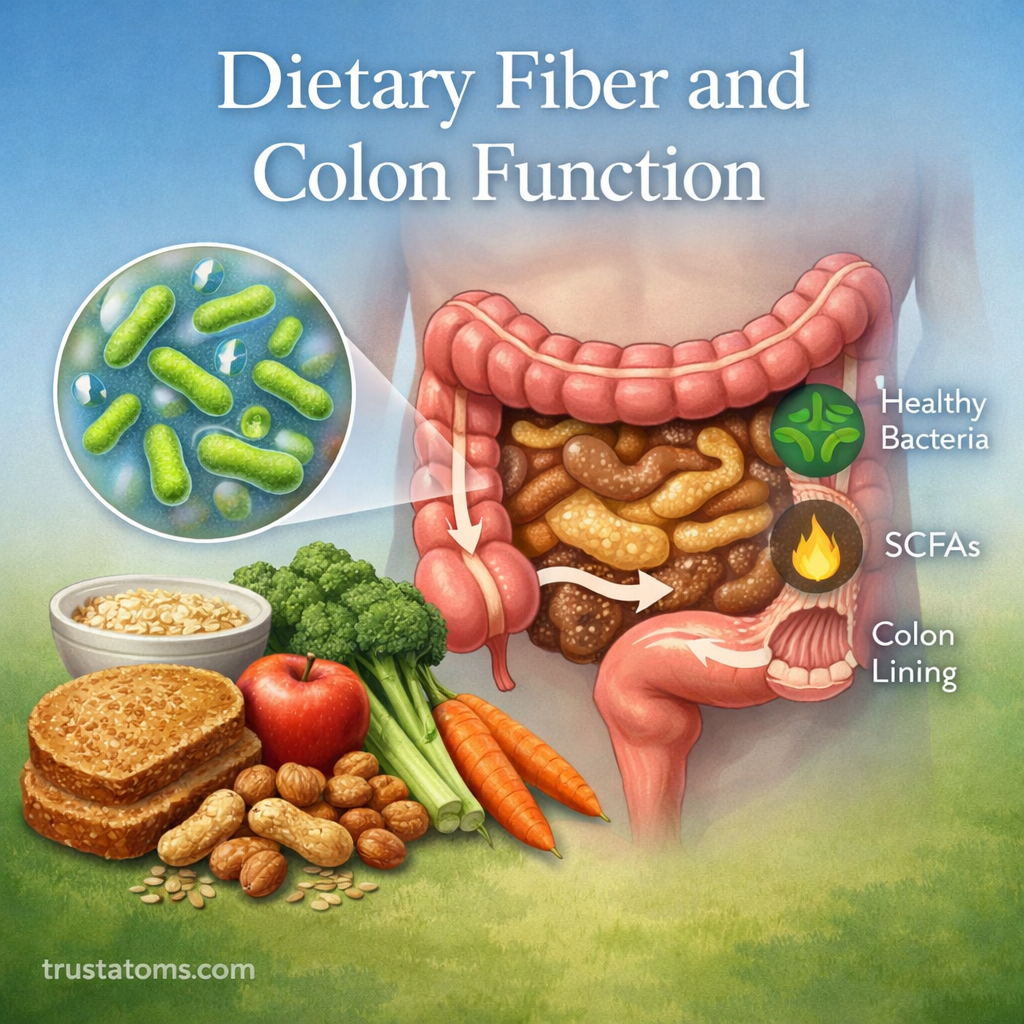
Dietary fiber supports colon function by adding bulk or retaining water in stool, helping regulate bowel movements, and providing fermentable material for beneficial gut bacteria. Unlike most digestible carbohydrates, fiber reaches the large intestine without being fully broken down by human digestive enzymes, where it influences stool formation and microbial activity.
Understanding these effects connects nutrition with human anatomy, particularly the structure and function of the large intestine. Different fibers behave differently, so the benefits depend on the foods consumed, the amount eaten, and individual digestive conditions.
What Is Dietary Fiber?
Dietary fiber consists mainly of plant carbohydrates that resist digestion and absorption in the small intestine. It includes substances such as cellulose, pectins, beta-glucans, and certain resistant starches. Some fibers are fermented by intestinal microorganisms, while others pass through largely unchanged.
Fiber differs from vitamins and minerals, which are absorbed through other digestive processes. Those processes are explained in Micronutrient Absorption.
Fiber can also influence signaling between the digestive system and nervous system through microbial metabolites and other mechanisms. The broader relationship is discussed in Gut–Brain Communication Pathways.
Soluble and Insoluble Fiber: What’s the Difference?
Soluble Fiber
Soluble fiber disperses or dissolves in water. Some soluble fibers, such as psyllium and oat beta-glucan, form viscous gels that influence stool consistency and slow the absorption of certain nutrients.
Common sources include oats, barley, beans, apples, and citrus fruits. Many soluble fibers are fermentable, although solubility does not automatically mean a fiber is readily fermented.
Insoluble Fiber
Insoluble fiber does not dissolve in water. Certain types increase stool bulk and can help speed intestinal transit, particularly when bowel movements are slow.
Whole wheat, wheat bran, vegetables, nuts, and seeds provide insoluble fiber. Most plant foods contain mixtures of soluble and insoluble fibers rather than just one type.
| Characteristic | Soluble Fiber | Insoluble Fiber |
|---|---|---|
| Behavior in water | Dissolves or disperses; some forms create gels | Does not dissolve |
| Common effects | Can retain water, influence stool consistency, and support fermentation | Can increase stool bulk and support intestinal transit |
| Food examples | Oats, beans, apples | Wheat bran, vegetables, nuts |
Overview of the Colon’s Role in Digestion
The colon is the main portion of the large intestine, located after the small intestine and before the rectum. Its functions include absorbing water and electrolytes, processing undigested material, supporting microbial fermentation, and moving stool toward elimination.
To see how the colon connects with the stomach and small intestine, explore Digestive Tract Anatomy.
As intestinal contents move through the colon, water absorption gradually changes them from relatively fluid material into more formed stool. Fiber affects this process by changing water retention, stool volume, and microbial activity.
How Fiber Supports Colon Function
Promoting Regular Bowel Movements
Fibers that retain water or increase stool bulk can make bowel movements easier. Larger, appropriately hydrated stools help stimulate movement through the colon and may reduce straining associated with constipation.
However, not every fiber has the same effect. Coarse wheat bran and gel-forming psyllium, for example, influence stool through different physical properties.
Supporting Gut Bacteria and Fermentation
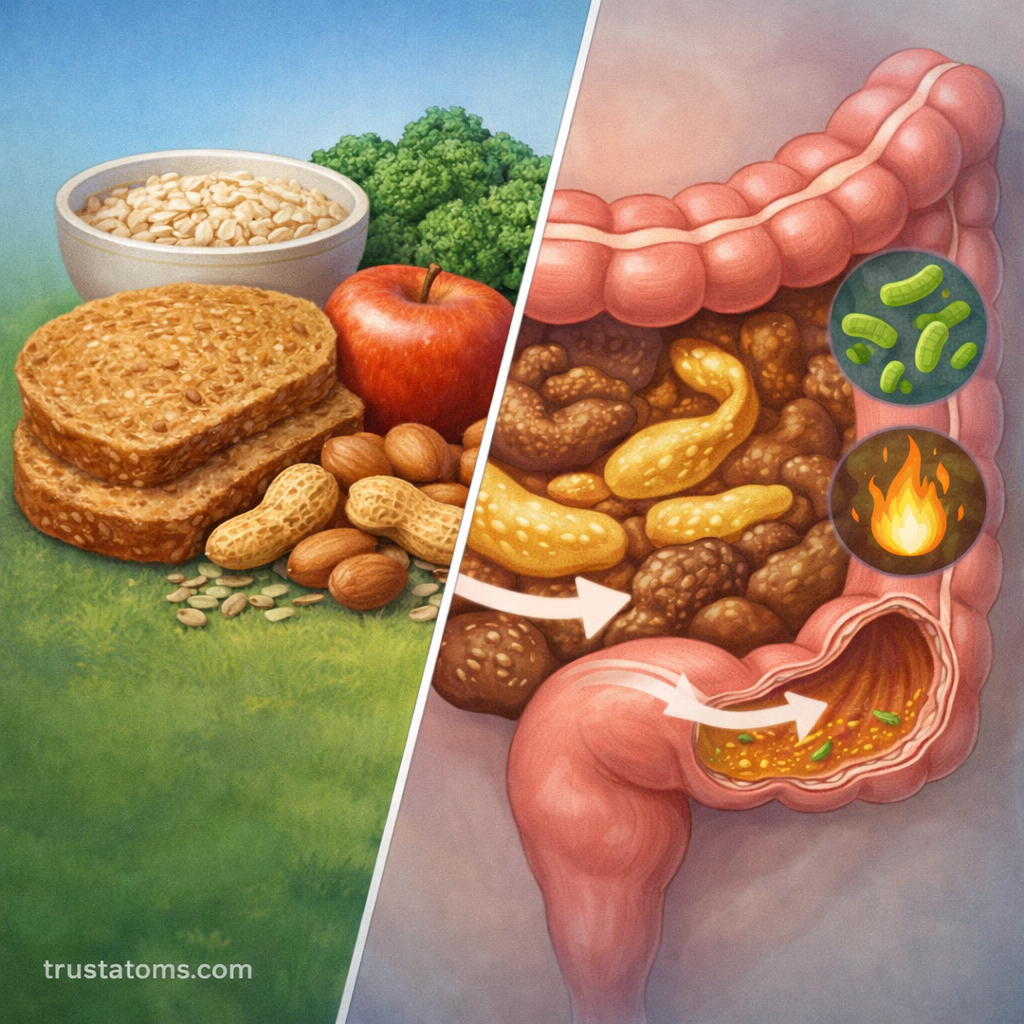
Many intestinal microorganisms can ferment fibers that human enzymes cannot digest. This process produces gases and short-chain fatty acids, including acetate, propionate, and butyrate.
Different bacterial species use different carbohydrates, so fiber variety can influence the composition and activity of the intestinal microbiome. Learn more about these organisms in Microbiome Basics in Digestive Function.
Nourishing the Colon Lining
Butyrate is an important energy source for many cells lining the colon. It also participates in processes associated with intestinal barrier maintenance and regulation of local inflammation.
These effects depend on microbial activity and the condition of the intestinal tissue. Fiber does not guarantee protection from every inflammatory or digestive disorder.
Regulating Water Content in Stool
Water-binding fibers can help stool retain moisture, while other fibers contribute physical bulk. The colon simultaneously absorbs water and electrolytes, adjusting stool consistency as material travels through it.
This interaction is closely related to Large Intestine Function, which explains how the bowel maintains fluid balance.
How Fiber Affects Intestinal Transit Time
Transit time is the time intestinal contents take to move through the digestive tract. Certain fibers can shorten prolonged colonic transit by increasing stool bulk and stimulating bowel movement, but the response varies by fiber type and individual physiology.
Very slow transit may contribute to constipation, while unusually rapid transit can be associated with diarrhea. Fiber can improve stool consistency in some circumstances, but it does not automatically normalize every bowel disorder.
How Much Fiber Should Adults Eat?
Dietary Reference Intakes establish an adequate intake of approximately 14 grams of total fiber per 1,000 calories consumed. Common age- and sex-based targets include:
| Adult Group | Adequate Intake Per Day |
|---|---|
| Men ages 19–50 | 38 grams |
| Women ages 19–50 | 25 grams |
| Men ages 51 and older | 30 grams |
| Women ages 51 and older | 21 grams |
These are general intake targets rather than individualized prescriptions. People with certain digestive conditions may need different fiber amounts or types under medical guidance.
A Practical Example: Adding Fiber to Breakfast
Suppose breakfast normally consists of white toast and a beverage. Replacing the toast with a bowl of cooked oatmeal, adding a medium pear, and including a tablespoon of chia seeds can provide roughly 12–13 grams of fiber, depending on portions and product preparation.
This combination supplies several fiber types, including soluble and insoluble components. It also illustrates how ordinary foods can contribute meaningfully toward a daily fiber target without relying entirely on supplements.
Foods That Provide Different Types of Fiber
A varied diet generally provides a broader mixture of fibers than relying on one food source.
- Legumes: Lentils, chickpeas, black beans, and split peas provide substantial fiber and fermentable carbohydrates.
- Whole grains: Oats, barley, whole wheat, and brown rice provide different combinations of soluble and insoluble fiber.
- Fruits: Pears, apples, berries, and oranges contribute fiber along with water and micronutrients.
- Vegetables: Broccoli, carrots, Brussels sprouts, and leafy greens add fiber and dietary variety.
- Nuts and seeds: Almonds, chia seeds, and ground flaxseeds contribute fiber alongside fats and other nutrients.
Fiber, Constipation, and Colon Disease Risk
Adequate fiber intake can help prevent or manage some forms of constipation. Certain fiber supplements, particularly psyllium, may also improve stool consistency, although effectiveness depends on the cause of symptoms.
Higher consumption of dietary fiber, especially from whole grains, is associated with a lower risk of colorectal cancer in large observational studies. This association does not mean fiber alone prevents cancer, and the evidence for other conditions, such as diverticular disease, varies by outcome and study design.
How to Increase Fiber Without Excessive Bloating
Increasing fiber abruptly can cause gas, bloating, or abdominal discomfort because some fibers are fermented by intestinal bacteria. Gradual changes are often easier to tolerate.
- Increase fiber-containing foods gradually over several days or weeks.
- Drink adequate fluids, particularly when adding bulk-forming fiber.
- Choose a mixture of fruits, vegetables, legumes, and whole grains.
- Adjust portions if certain foods consistently cause discomfort.
- Seek medical guidance for persistent symptoms or known intestinal narrowing or obstruction.
Frequently Asked Questions
Does dietary fiber get digested in the colon?
Human digestive enzymes do not break down most dietary fiber, but intestinal bacteria can ferment certain types in the colon. Other fibers remain largely intact and contribute to stool bulk.
Can too much fiber cause constipation?
Yes. Rapidly increasing fiber, particularly without adequate fluid intake, can worsen bloating or constipation in some people. Certain bowel disorders may also respond poorly to additional fiber.
Is soluble fiber better than insoluble fiber?
Neither type is universally better. Some soluble fibers help retain water or support microbial fermentation, while certain insoluble fibers increase stool bulk and promote transit. The most useful choice depends on the intended benefit and individual tolerance.
Dietary fiber influences colon function through three connected mechanisms: changing stool bulk and water retention, supporting intestinal movement, and supplying material for microbial fermentation. These effects vary by fiber type, so eating a range of plant foods provides more diverse benefits than focusing on a single source. Gradual increases and adequate hydration can help make a fiber-rich diet easier to maintain.
This article is for general education and is not medical advice. Talk to a qualified health professional about any medical concern.
Sources: National Academies of Medicine, Dietary Reference Intakes for Energy, Carbohydrate, Fiber, Fat, Fatty Acids, Cholesterol, Protein, and Amino Acids; National Institute of Diabetes and Digestive and Kidney Diseases; OpenStax, Anatomy and Physiology 2e.