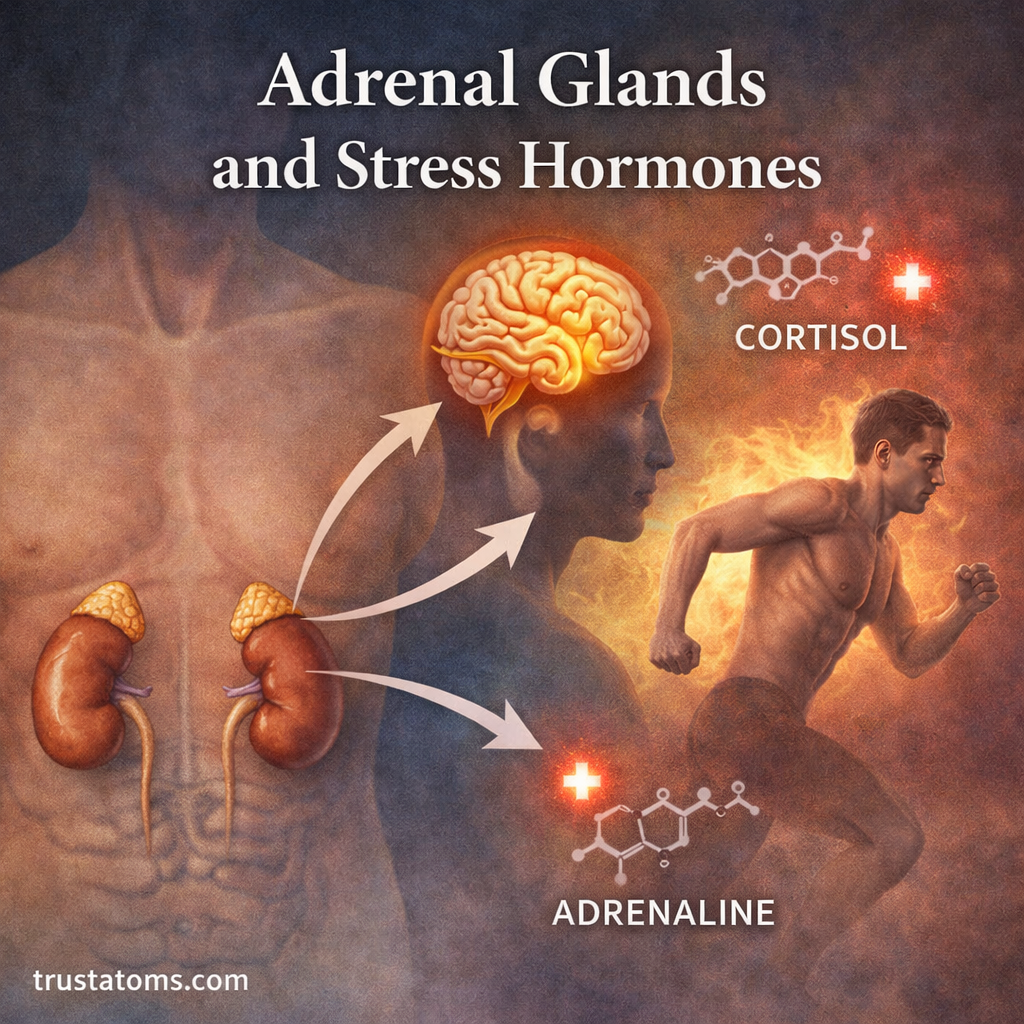
The adrenal glands are two small endocrine organs above the kidneys that produce hormones involved in stress responses, metabolism, blood pressure, and fluid balance. During stressful situations, they release hormones such as cortisol and adrenaline, helping the body mobilize energy and respond to changing demands.
In human anatomy, the adrenal glands connect hormonal regulation with the nervous system and cardiovascular function. Their outer and inner regions produce different hormones, allowing the body to respond both rapidly and over longer periods.
Although commonly associated with emergencies, adrenal hormones also support ordinary daily functions, including maintaining blood glucose, regulating blood pressure, and adapting to the sleep-wake cycle.
What Are the Adrenal Glands?
The adrenal glands sit above the kidneys, surrounded by protective tissue. Each gland contains two main regions: the adrenal cortex on the outside and the adrenal medulla in the center.
Both regions belong to the Endocrine System, which releases hormones into the bloodstream to coordinate functions across different organs.
The adrenal medulla also receives direct signals from sympathetic nerve fibers. Endocrine Integration with Nervous Systems explains how nerve signals and hormones cooperate during rapid physiological responses.
Adrenal Cortex: The Outer Region
The cortex produces steroid hormones in three layers. The zona glomerulosa produces aldosterone, which helps regulate sodium, potassium, and blood pressure. The zona fasciculata produces cortisol, while the zona reticularis produces adrenal androgens.
Adrenal Medulla: The Inner Region
The medulla contains specialized cells called chromaffin cells. These cells release catecholamines, mainly epinephrine (adrenaline) and smaller amounts of norepinephrine (noradrenaline), in response to sympathetic nervous system stimulation.
The Main Adrenal Hormones and Their Functions
| Hormone | Produced By | Main Functions |
|---|---|---|
| Cortisol | Adrenal cortex | Regulates metabolism, stress adaptation, and inflammation |
| Adrenaline | Adrenal medulla | Increases cardiac activity and mobilizes energy during acute stress |
| Norepinephrine | Adrenal medulla | Supports vascular responses and blood pressure regulation |
| Aldosterone | Adrenal cortex | Controls sodium and potassium balance and supports blood volume |
These hormones have overlapping effects, but they are controlled through different signaling pathways. Adrenaline responds quickly to sympathetic activation, whereas cortisol secretion is regulated mainly through a hormonal feedback system.
How the Fight-or-Flight Response Works
When the brain identifies a potential threat, sympathetic nervous system activity increases. Nerve signals stimulate the adrenal medulla, causing adrenaline and norepinephrine to enter the bloodstream.
These hormones help prepare the body for immediate action by producing several changes:
- Heart: Adrenaline increases heart rate and the force of contraction.
- Airways: Adrenaline promotes airway widening to support airflow.
- Blood vessels: Blood flow is redistributed according to tissue needs and receptor activity.
- Metabolism: Stored fuels become more readily available for energy production.
- Eyes: Sympathetic activation can dilate the pupils.
These changes can begin within seconds. Once the immediate challenge passes, sympathetic activity generally decreases and the body moves toward its usual resting state.
How Cortisol Supports Metabolism and Stress Adaptation
Cortisol acts more gradually than adrenaline. It helps maintain blood glucose by supporting glucose production in the liver and influencing how tissues use carbohydrates, fats, and proteins.
Cortisol also affects immune signaling and inflammation, supports normal vascular responsiveness, and helps the body cope with illness or other physiological challenges.
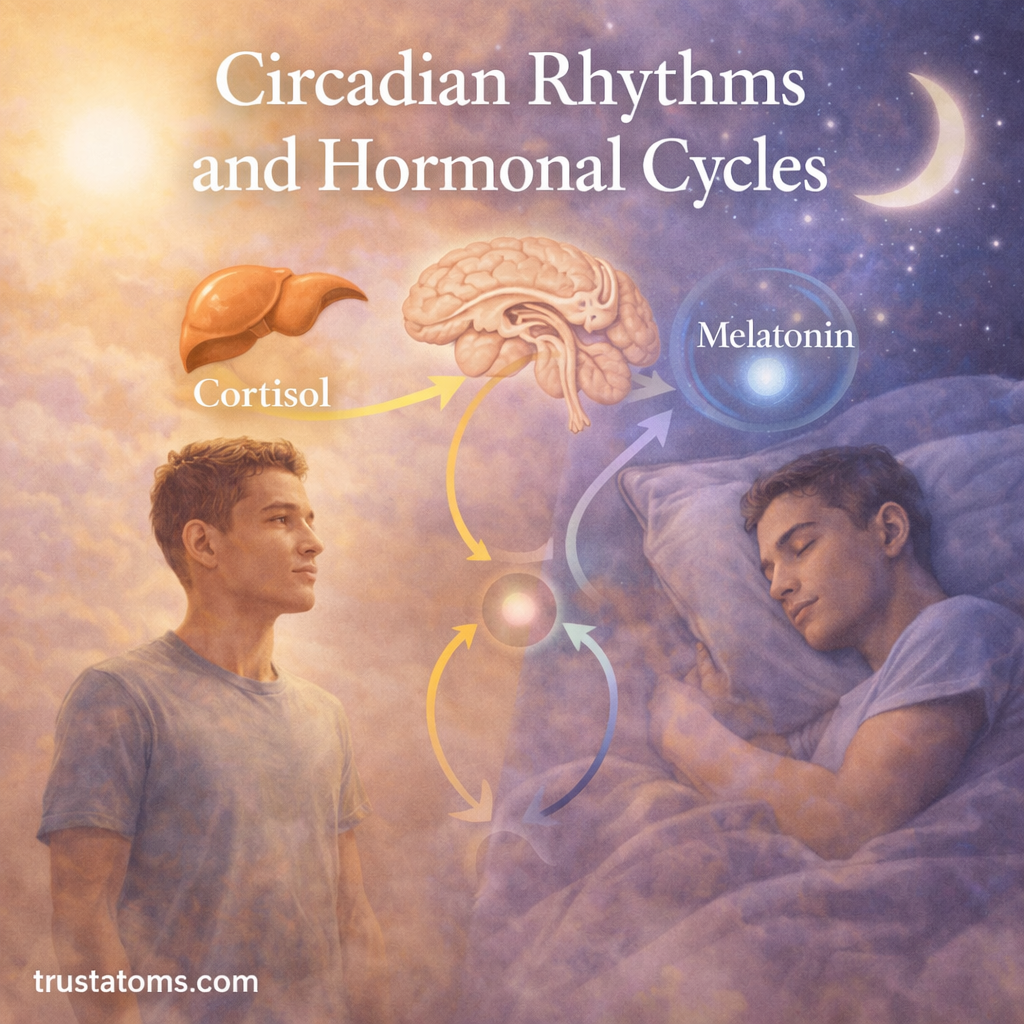
Its secretion follows a daily rhythm, typically reaching higher levels around waking and lower levels during the night in people with a conventional daytime schedule. Stress can temporarily alter this pattern.
The HPA Axis: How the Brain Controls Cortisol
The hypothalamic-pituitary-adrenal axis connects brain signaling with cortisol production. The HPA axis regulates hormone release through a feedback system.
- The hypothalamus releases corticotropin-releasing hormone (CRH).
- The pituitary gland releases ACTH (adrenocorticotropic hormone) in response to CRH.
- ACTH stimulates the adrenal cortex to produce and release cortisol.
- Cortisol provides negative feedback to the hypothalamus and pituitary, helping regulate further hormone secretion.
This system responds to stress but also operates throughout normal daily life. Its activity changes with sleep, illness, physical exertion, and the body’s internal clock.
Acute Stress Compared With Chronic Stress
Acute stress is a short-term response to a challenge. Temporary increases in adrenaline and cortisol can support alertness, energy availability, and physical performance when rapid action is needed.
Chronic stress involves repeated or prolonged exposure to stressful conditions. Rather than always producing continuously elevated cortisol, chronic stress can alter hormone rhythms and stress responsiveness in different ways depending on the person and circumstances.
How Chronic Stress Can Affect the Body
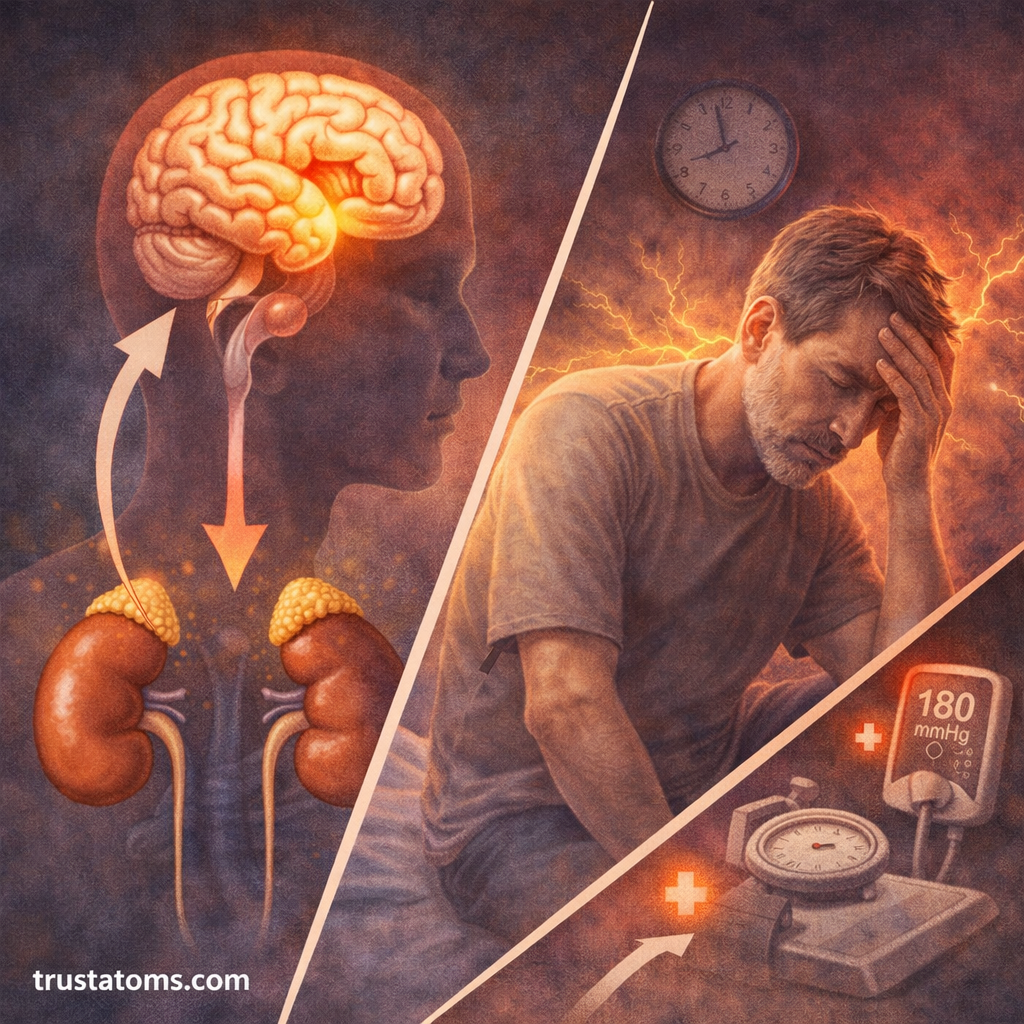
Prolonged stress can influence several physiological systems through changes in sleep, autonomic nervous system activity, behavior, and hormonal signaling. Possible effects include:
- Disrupted sleep and persistent tiredness
- Changes in appetite and body weight
- Increased blood pressure in some individuals
- Difficulty concentrating or changes in mood
- Altered immune and inflammatory responses
These effects are not specific to adrenal disease. Persistent symptoms require proper evaluation rather than assuming that cortisol levels or adrenal function are abnormal.
Everyday Example: A Sudden Fright Followed by Recovery
Imagine stepping into a crosswalk when a bicycle suddenly approaches. Within seconds, sympathetic activation can increase your heart rate, sharpen attention, and mobilize energy so you can react quickly.
After the bicycle passes, the immediate danger ends. Adrenaline’s effects begin to fade as sympathetic activity decreases, although the stress response may take longer to settle completely.
If the experience was particularly stressful, HPA axis activity may also increase cortisol secretion over the following minutes. This illustrates why adrenaline and cortisol operate on different timescales rather than performing identical functions.
Disorders That Affect Adrenal Hormone Production
Adrenal Insufficiency and Addison’s Disease
Adrenal insufficiency occurs when the body produces too little cortisol. Addison’s disease is a form of primary adrenal insufficiency that may also reduce aldosterone production. Symptoms can include fatigue, weight loss, low blood pressure, and weakness.
Cushing’s Syndrome
Cushing’s syndrome results from prolonged exposure to excessive glucocorticoids, including cortisol or certain medications. Possible signs include central weight gain, muscle weakness, easy bruising, and high blood pressure.
Pheochromocytoma
Pheochromocytoma is a rare tumor arising from adrenal medullary chromaffin cells. It may produce excess catecholamines, causing episodes of headache, sweating, palpitations, and elevated blood pressure.
Supporting Normal Stress Regulation
Consistent sleep, regular physical activity, balanced nutrition, and practical stress-management habits can support overall physiological regulation. Reducing excessive stimulant use and allowing recovery between demanding activities may also help.
These habits support general health but do not replace medical treatment for adrenal disorders. Conditions involving insufficient or excessive hormone production require appropriate diagnosis and management.
Frequently Asked Questions
What Hormones Do the Adrenal Glands Produce?
The adrenal cortex produces cortisol, aldosterone, and adrenal androgens. The adrenal medulla produces mainly adrenaline and smaller amounts of norepinephrine.
What Is the Difference Between Cortisol and Adrenaline?
Adrenaline acts rapidly during sympathetic activation, affecting heart function, airways, and energy availability. Cortisol has broader metabolic and regulatory effects that develop more gradually and also follow a daily secretion rhythm.
Can Chronic Stress Damage the Adrenal Glands?
Chronic stress can affect health and stress-response regulation, but it does not ordinarily cause the adrenal glands to become exhausted or stop producing hormones. Adrenal insufficiency is a recognized medical condition with specific causes that require clinical evaluation.
The adrenal glands coordinate rapid responses to immediate challenges and slower hormonal adjustments that support metabolism, circulation, and recovery. Understanding the differences between adrenaline, cortisol, and their control pathways helps explain both normal stress physiology and the effects of genuine adrenal hormone disorders.
This article is for general education and is not medical advice. Talk to a qualified health professional about any medical concern.
Sources: OpenStax, Anatomy and Physiology 2e; National Institute of Diabetes and Digestive and Kidney Diseases (NIDDK); Williams Textbook of Endocrinology.