Glucose (blood sugar) is the body’s primary source of energy, fueling everything from brain function to muscle activity. However, for glucose to be useful, it must be carefully regulated—and that’s where insulin plays a critical role.
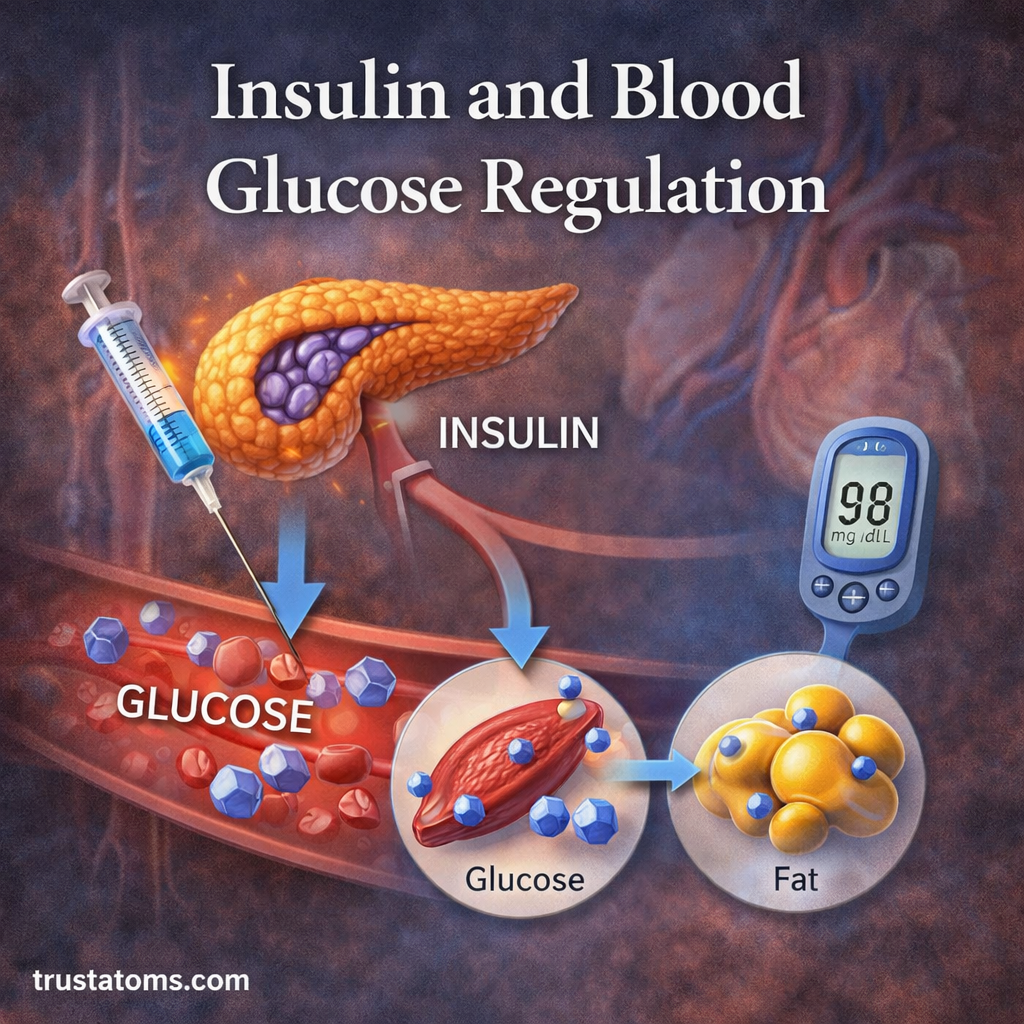
Insulin is a hormone that ensures glucose moves from the bloodstream into cells, where it can be used for energy or stored for later use. Without proper insulin function, blood sugar levels can become dangerously high or low, leading to serious health conditions.
What Is Insulin?
Insulin is a hormone produced by the beta cells of the pancreas, specifically within clusters of cells called the islets of Langerhans.
Primary Role of Insulin
The main function of insulin is to lower blood glucose levels by helping cells absorb glucose from the bloodstream.
Why Blood Glucose Regulation Matters
Maintaining stable blood sugar levels is essential for overall health.
Key Reasons
- Provides consistent energy for the brain and body
- Prevents damage to blood vessels and organs
- Supports metabolic balance
- Reduces risk of fatigue and mood swings
Even small imbalances in blood glucose can affect how you feel and function daily.
How Insulin Regulates Blood Glucose
After you eat, especially foods rich in carbohydrates, blood glucose levels rise. The body responds quickly to bring levels back to normal.
Step-by-Step Process
- Food is digested into glucose
- Glucose enters the bloodstream
- The pancreas detects rising blood sugar
- Insulin is released into the blood
- Cells absorb glucose for energy or storage
- Blood glucose levels return to normal
This system works continuously to keep blood sugar within a healthy range.
Insulin’s Effects on the Body
Insulin influences multiple tissues and metabolic processes.
In Muscle Cells
- Promotes glucose uptake for energy
- Supports glycogen storage (stored form of glucose)
In the Liver
- Encourages storage of glucose as glycogen
- Reduces glucose production
In Fat Tissue
- Promotes fat storage
- Inhibits fat breakdown
Together, these actions help regulate energy use and storage throughout the body.
The Role of Glucagon: Insulin’s Counterbalance
Insulin works alongside another hormone called glucagon, which has the opposite effect.
Key Differences
- Insulin: lowers blood glucose
- Glucagon: raises blood glucose
How Glucagon Works
When blood sugar levels drop:
- The pancreas releases glucagon
- The liver breaks down glycogen into glucose
- Glucose is released into the bloodstream
This balance between insulin and glucagon keeps blood sugar stable.
The Feedback System of Blood Sugar Control
Blood glucose regulation operates through a negative feedback loop.
How It Works
- Blood sugar rises → insulin is released
- Glucose is absorbed by cells → levels decrease
- Insulin release slows down
- If levels drop too low → glucagon is released
This system ensures that blood sugar remains within a healthy range at all times.
What Happens When Insulin Doesn’t Work Properly?
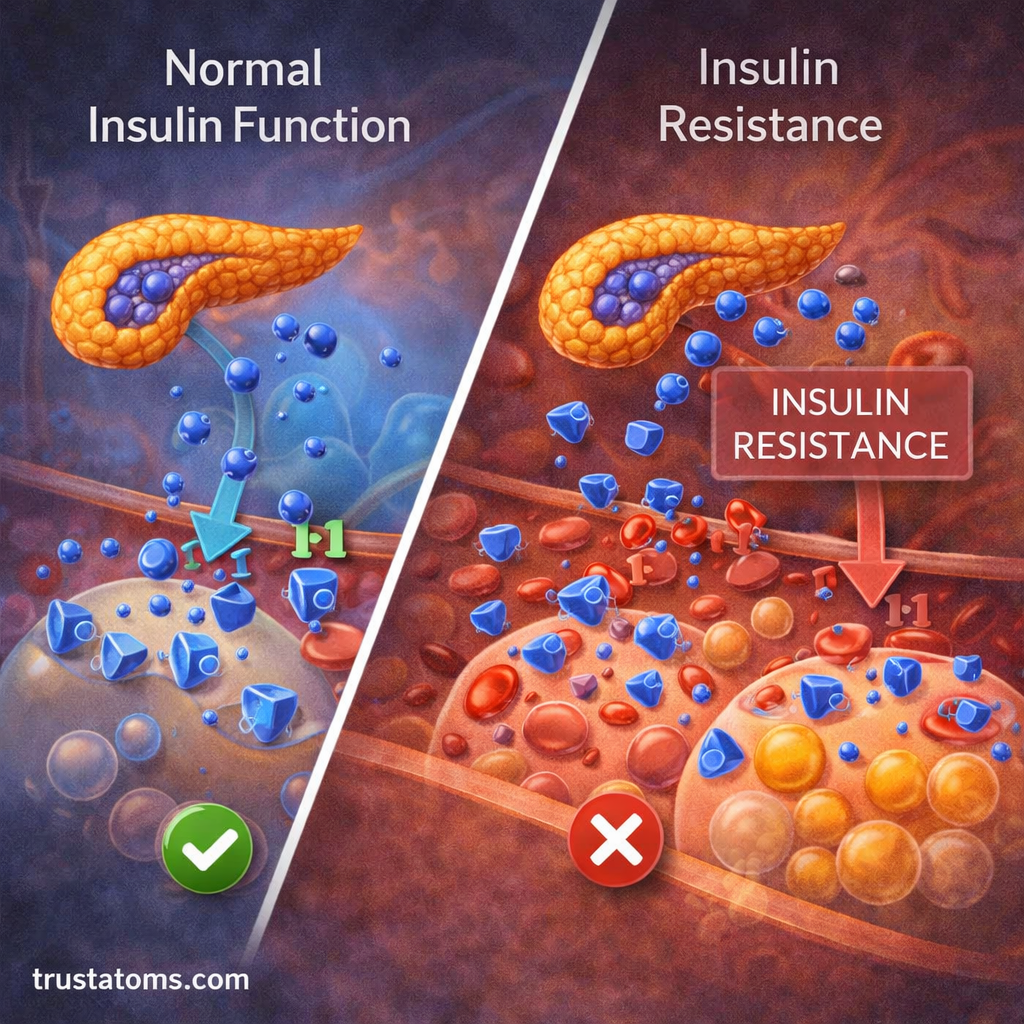
Disruptions in insulin function can lead to serious conditions.
Insulin Resistance
- Cells become less responsive to insulin
- More insulin is needed to control blood sugar
- Often linked to obesity and sedentary lifestyle
Type 1 Diabetes
- The immune system attacks insulin-producing cells
- Little to no insulin is produced
- Requires insulin therapy
Type 2 Diabetes
- The body becomes resistant to insulin
- Insulin production may decrease over time
- Leads to chronically high blood sugar
Effects of Poor Blood Glucose Control
Unregulated blood sugar levels can impact the entire body.
Short-Term Effects
- Fatigue
- Irritability
- Blurred vision
- Increased hunger and thirst
Long-Term Effects
- Damage to blood vessels
- Heart disease
- Nerve damage (neuropathy)
- Kidney disease
- Vision problems
Supporting Healthy Insulin Function
Healthy lifestyle choices can improve insulin sensitivity and glucose control.
Practical Tips
- Eat balanced meals with fiber, protein, and healthy fats
- Limit excessive sugar and refined carbohydrates
- Exercise regularly
- Maintain a healthy weight
- Get adequate sleep
- Manage stress levels
These habits help the body respond to insulin more effectively.
Key Takeaways
- Insulin is essential for lowering blood glucose and maintaining energy balance.
- It helps cells absorb glucose and supports storage in muscles, liver, and fat tissue.
- Glucagon works as a counterbalance to raise blood sugar when needed.
- Blood glucose is regulated through a precise feedback system.
- Insulin dysfunction can lead to conditions like diabetes and insulin resistance.
Final Thoughts
Insulin is one of the most important hormones in the human body, playing a central role in energy regulation and metabolic health. By understanding how insulin controls blood glucose, you gain insight into how the body maintains balance and why lifestyle choices have such a powerful impact on long-term health.
Keeping blood sugar levels stable isn’t just about avoiding disease—it’s about supporting consistent energy, mental clarity, and overall well-being.