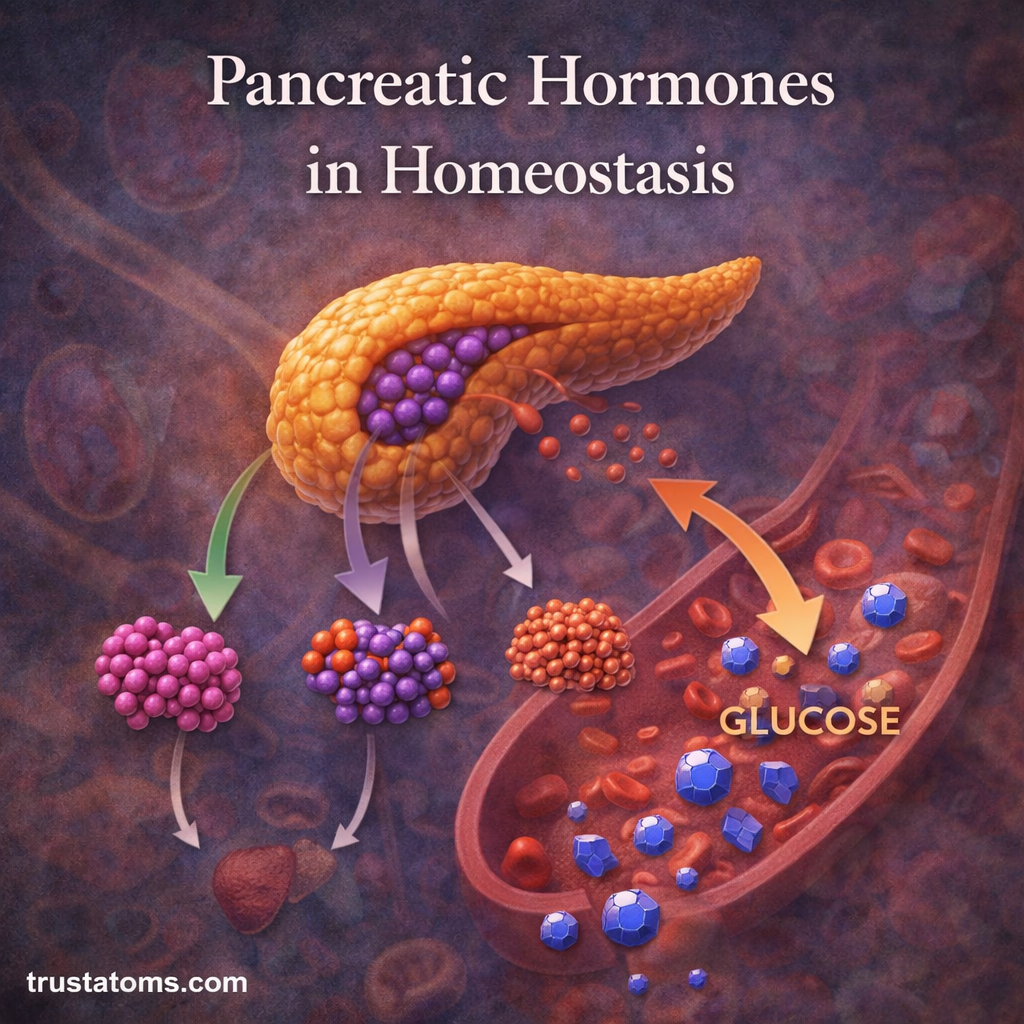
Pancreatic hormones maintain homeostasis by adjusting blood glucose levels, controlling energy storage, and coordinating the release of stored fuel between meals. The two main hormones, insulin and glucagon, respond to changing glucose levels and help keep the body’s energy supply within a healthy range.
Pancreatic hormones—primarily insulin and glucagon—work together to keep blood glucose levels within a healthy range. Understanding how these hormones function connects human anatomy with the body’s ability to maintain stable internal conditions despite changes in food intake, activity, and energy demand.
What Is the Pancreas?
The pancreas is an elongated gland located behind the stomach in the upper abdomen. It has two major functions: producing digestive secretions and releasing hormones that regulate metabolism.
Its endocrine function makes it part of the endocrine system, a network of glands and specialized cells that release hormones into the bloodstream.
The pancreas also has an exocrine function, producing digestive enzymes and bicarbonate that enter the small intestine through ducts. Pancreas Function in Digestion explains how these secretions help break down food and support nutrient absorption.
Within the pancreas, small clusters of endocrine cells called pancreatic islets, or islets of Langerhans, produce hormones that respond to changing metabolic conditions.
The Main Pancreatic Hormones and Their Functions
Several hormones are produced by pancreatic islet cells. Each has distinct effects, although their actions interact to maintain glucose and energy balance.
| Hormone | Cell Type | Main Function |
|---|---|---|
| Insulin | Beta cells | Promotes glucose uptake and energy storage |
| Glucagon | Alpha cells | Stimulates glucose release and production by the liver |
| Somatostatin | Delta cells | Restrains insulin and glucagon secretion |
| Pancreatic polypeptide | PP cells | Modulates pancreatic and gastrointestinal activity |
Insulin: Promoting Glucose Use and Storage
Insulin is released primarily when blood glucose rises after eating. It promotes glucose uptake into skeletal muscle and adipose tissue, encourages glycogen formation in the liver and muscles, and reduces glucose production by the liver.
Insulin also supports the synthesis and storage of fats and proteins. Its combined effects lower elevated blood glucose while helping tissues use or store incoming nutrients.
Glucagon: Maintaining Glucose Between Meals
Glucagon is released mainly when blood glucose falls. Its principal target is the liver, where it stimulates glycogen breakdown and gluconeogenesis, the production of glucose from noncarbohydrate materials.
These actions help maintain blood glucose during fasting, when glucose is no longer being absorbed from a recent meal. Glucagon’s effects complement insulin rather than simply reversing every action of insulin.
Somatostatin: Regulating Hormone Secretion
Somatostatin is produced by pancreatic delta cells. Within the islets, it helps regulate neighboring endocrine cells by inhibiting insulin and glucagon secretion.
Somatostatin is also produced elsewhere in the digestive system, where it can reduce gastrointestinal activity and secretion. Its regulatory effects help prevent excessive hormonal responses.
Pancreatic Polypeptide: Supporting Digestive Regulation
Pancreatic polypeptide is released by PP cells, particularly in response to eating and certain nervous system signals. It influences pancreatic exocrine secretion and gastrointestinal activity.
Its complete physiological role in humans remains less clearly defined than those of insulin and glucagon, but it contributes to communication between pancreatic and digestive functions.
How Insulin and Glucagon Maintain Blood Glucose Balance
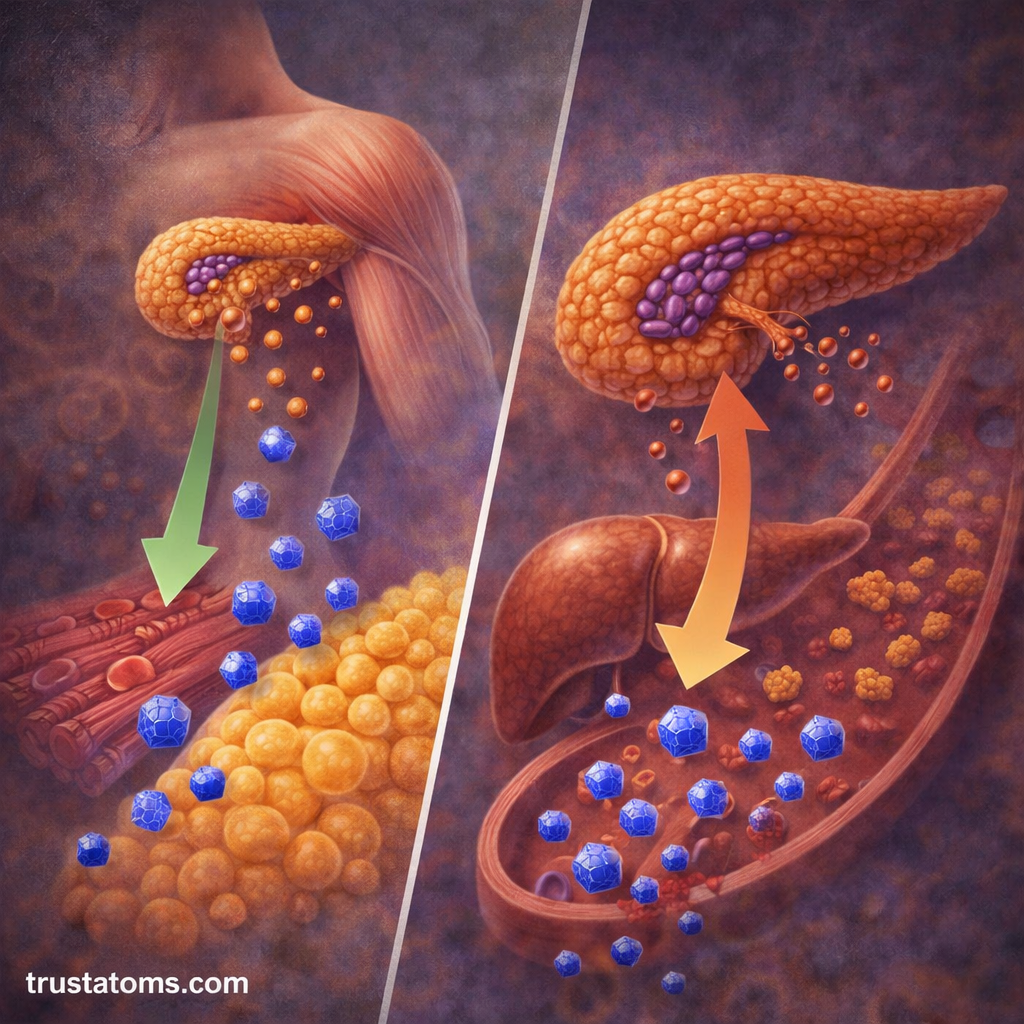
Blood glucose changes throughout the day as nutrients are absorbed, tissues consume energy, and the liver stores or releases glucose. Insulin and glucagon adjust these processes according to the body’s current needs.
After Eating: Insulin Becomes More Active
After a carbohydrate-containing meal, digestion releases glucose that enters the bloodstream. Rising blood glucose stimulates pancreatic beta cells to secrete insulin.
- Glucose from digested food enters the blood.
- Beta cells increase insulin secretion.
- Muscle and adipose tissue increase insulin-stimulated glucose uptake.
- The liver stores more glucose as glycogen and reduces glucose output.
- Blood glucose moves back toward its regulated range.
Between Meals: Glucagon Supports Glucose Availability
As absorbed nutrients become less available, insulin secretion decreases and glucagon becomes relatively more influential. The liver responds by releasing glucose from glycogen stores and producing additional glucose through gluconeogenesis.
This helps supply glucose-dependent tissues, including the brain and red blood cells, during periods without food intake.
An Everyday Example: From Breakfast to Lunchtime
Imagine eating oatmeal and fruit for breakfast. As carbohydrates are digested, glucose enters the blood and insulin secretion rises, helping muscle and other tissues use glucose while encouraging storage of excess fuel.
Several hours later, as lunchtime approaches, the intestine is supplying less glucose from that meal. Insulin levels decline, and glucagon helps the liver maintain the blood’s glucose supply.
This shift occurs automatically in a healthy person. The pancreas continually adjusts hormone secretion rather than switching completely between insulin and glucagon.
The Negative Feedback System of Blood Sugar Regulation
Blood glucose regulation is an example of negative feedback, in which a change triggers responses that oppose the original disturbance.
- When glucose rises: Insulin secretion generally increases, promoting glucose use and storage and reducing liver glucose output.
- When glucose falls: Insulin secretion decreases and glucagon secretion generally increases, helping the liver supply glucose.
As blood glucose returns toward its regulated range, the signals driving these hormonal changes diminish. Feedback Loops in Endocrine Control explains how similar mechanisms stabilize other physiological variables.
Glucose regulation also involves other hormones, including epinephrine, cortisol, and growth hormone. These can influence blood glucose during stress, prolonged fasting, and other metabolic demands.
What Happens When Pancreatic Hormone Regulation Fails?
Disruptions in hormone production or tissue responses can cause blood glucose to become too high or too low. Both conditions can interfere with normal cellular and organ function.
Diabetes Mellitus and Hyperglycemia
Type 1 diabetes results from the destruction of pancreatic beta cells, usually through an autoimmune process, causing severe insulin deficiency. Type 2 diabetes involves insulin resistance combined with progressive impairment of beta-cell function.
Persistently elevated blood glucose, called hyperglycemia, may cause increased thirst, frequent urination, fatigue, and blurred vision. Long-term uncontrolled hyperglycemia can damage blood vessels, nerves, kidneys, and other tissues.
Hypoglycemia and Inadequate Glucose Supply
Hypoglycemia occurs when blood glucose falls below an appropriate level. In people with diabetes, it is commonly associated with insulin or certain glucose-lowering medications, although other causes are possible.
Symptoms may include sweating, trembling, hunger, dizziness, and confusion. Severe hypoglycemia can cause seizures or loss of consciousness and requires urgent treatment.
Factors That Influence Pancreatic Hormone Activity
Pancreatic hormone secretion and tissue sensitivity respond to several everyday and physiological factors.
- Food intake: Carbohydrates influence glucose levels, while proteins and fats can also affect hormonal responses.
- Physical activity: Muscle contraction increases glucose use, and regular exercise can improve insulin sensitivity.
- Sleep: Insufficient or disrupted sleep can affect glucose regulation and insulin sensitivity.
- Stress: Stress hormones can increase glucose availability and alter insulin requirements.
- Body composition and genetics: Both can influence insulin sensitivity and the risk of metabolic disease.
Balanced nutrition, regular physical activity, adequate sleep, and appropriate medical care can support metabolic health. However, pancreatic hormone disorders cannot always be prevented through lifestyle measures.
Frequently Asked Questions
Which pancreatic hormones control blood sugar?
Insulin and glucagon are the primary pancreatic hormones regulating blood glucose. Insulin promotes glucose use and storage, while glucagon stimulates glucose release and production by the liver.
Why does the pancreas release insulin after eating?
As blood glucose rises after a meal, pancreatic beta cells increase insulin secretion. Insulin helps tissues use incoming glucose and encourages the storage of excess nutrients, reducing elevated blood glucose.
What happens if the pancreas produces too little insulin?
Insufficient insulin can cause blood glucose to remain elevated because glucose uptake and storage are impaired and the liver may release excessive glucose. Severe insulin deficiency can also lead to dangerous metabolic complications, including diabetic ketoacidosis.
Pancreatic homeostasis depends on coordinated hormone secretion rather than a single hormone acting alone. Insulin supports glucose use and storage after meals, while glucagon helps maintain glucose availability during fasting, with other pancreatic hormones fine-tuning these responses. When this regulation is disrupted, the consequences can extend beyond blood glucose to affect energy metabolism and long-term organ health.
This article is for general education and is not medical advice. Talk to a qualified health professional about any medical concern.
Sources: OpenStax, Anatomy and Physiology 2e; Guyton and Hall, Textbook of Medical Physiology; National Institute of Diabetes and Digestive and Kidney Diseases (NIDDK), Diabetes Overview.