Melatonin is a key hormone that regulates the body’s internal clock, also known as the circadian rhythm. It plays a crucial role in controlling sleep-wake cycles, helping the body align with day and night patterns.
Understanding how melatonin works provides insight into sleep quality, energy levels, and overall health.
What Is Melatonin?
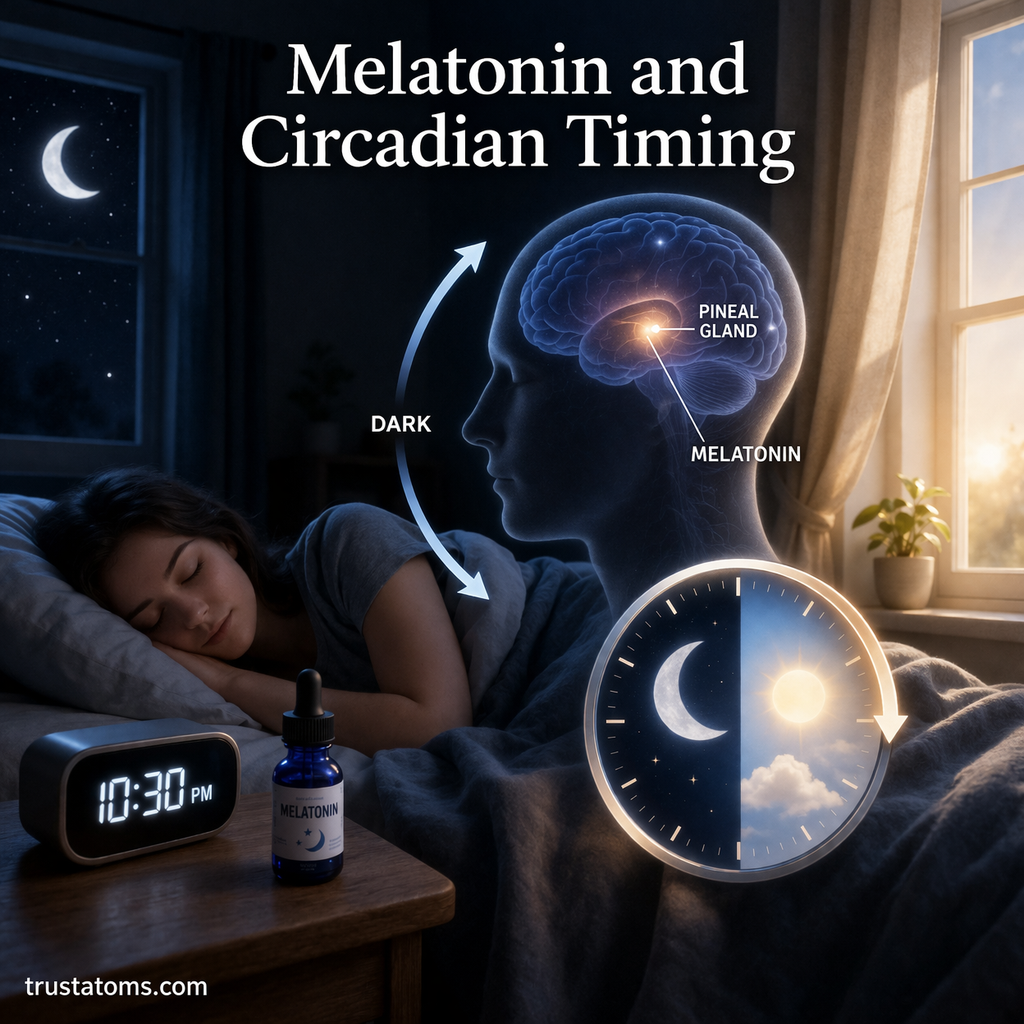
Melatonin is a hormone primarily produced by the pineal gland, a small structure located deep within the brain.
It is often referred to as the “sleep hormone” because of its role in promoting sleep. However, melatonin does more than just make you feel sleepy—it helps regulate the timing of biological processes across the body.
Key characteristics of melatonin:
- Produced in response to darkness
- Suppressed by exposure to light
- Follows a daily (circadian) rhythm
- Signals the body when it is time to rest
The Circadian Rhythm Explained
The circadian rhythm is a roughly 24-hour internal cycle that regulates physiological processes such as:
- Sleep and wakefulness
- Hormone release
- Body temperature
- Metabolism
This internal clock is controlled by a region in the brain called the suprachiasmatic nucleus (SCN), located in the hypothalamus.
How the Circadian Clock Works
- Light enters the eyes and is detected by specialized retinal cells
- Signals are sent to the SCN
- The SCN adjusts the body’s internal clock
- The pineal gland releases melatonin based on these signals
This system ensures that the body stays synchronized with the external environment.
How Melatonin Regulates Sleep
Melatonin levels fluctuate throughout the day and night.
Daily Melatonin Cycle
- Daytime:
- Light suppresses melatonin production
- Alertness increases
- Evening:
- Melatonin levels begin to rise
- The body prepares for sleep
- Night:
- Melatonin peaks
- Sleep is promoted
- Morning:
- Melatonin levels drop
- Wakefulness increases
Melatonin does not force sleep but signals that it is the appropriate time for rest.
Light Exposure and Melatonin Production

Light is the most powerful regulator of melatonin.
Effects of Light
- Bright light (especially blue light):
- Suppresses melatonin
- Delays sleep onset
- Darkness:
- Triggers melatonin release
- Promotes sleep readiness
Common sources of disruptive light include:
- Smartphones and tablets
- Computer screens
- LED lighting
Reducing light exposure in the evening can significantly improve sleep quality.
Factors That Affect Melatonin Levels
Melatonin production can vary based on several factors:
Age
- Children typically produce higher levels
- Production decreases with age
- Older adults may experience sleep difficulties
Lifestyle
- Irregular sleep schedules disrupt melatonin timing
- Night shift work alters circadian rhythms
- Travel across time zones leads to jet lag
Environment
- Exposure to artificial light at night
- Lack of natural daylight during the day
- Poor sleep environment conditions
Health Conditions
- Sleep disorders
- Neurological conditions
- Hormonal imbalances
Melatonin and Circadian Disruptions
When the circadian rhythm is disrupted, melatonin timing becomes misaligned.
Common Disruptions
- Jet lag
- Shift work disorder
- Insomnia
- Delayed sleep phase syndrome
These conditions can lead to:
- Difficulty falling asleep
- Daytime fatigue
- Reduced cognitive performance
- Mood changes
Role of Melatonin Beyond Sleep
Melatonin also contributes to several other biological functions:
- Regulation of immune system activity
- Antioxidant protection
- Support of cellular repair processes
- Influence on mood and seasonal patterns
Its role extends beyond sleep, making it an important hormone for overall health.
Tips for Supporting Healthy Melatonin Levels
Improving melatonin production naturally can enhance sleep and circadian alignment.
Practical Strategies
- Maintain a consistent sleep schedule
- Reduce screen time before bed
- Dim lights in the evening
- Get natural sunlight during the day
- Create a dark, quiet sleep environment
- Avoid caffeine late in the day
These habits help reinforce the body’s natural rhythm.
Final Thoughts
Melatonin is a central regulator of circadian timing, helping the body align with daily light and dark cycles. By signaling when it is time to sleep, it supports healthy rest, energy balance, and overall well-being.
Maintaining proper melatonin levels through lifestyle habits and environmental awareness is key to optimizing sleep and long-term health.