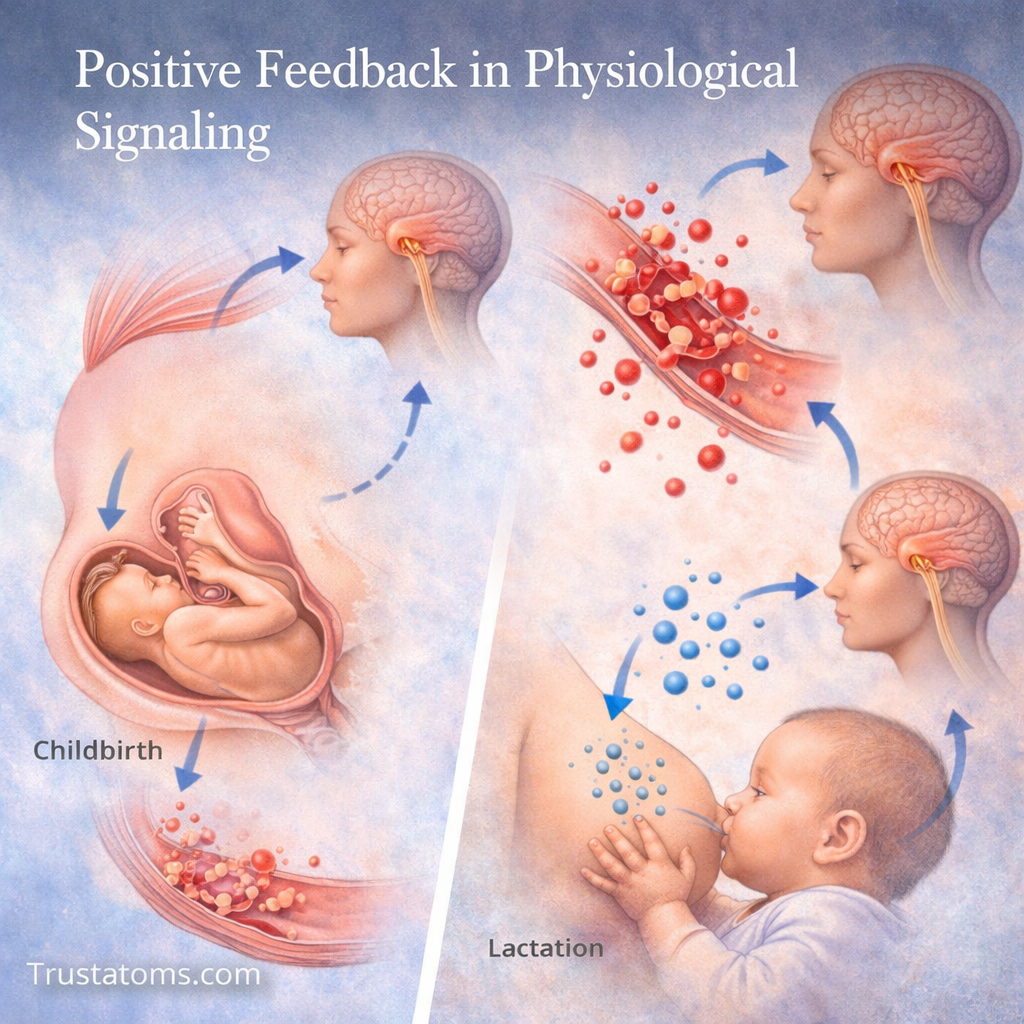
Positive feedback in physiological signaling occurs when a biological response strengthens the stimulus that triggered it, creating a self-reinforcing cycle. The body uses this mechanism to intensify processes such as childbirth, blood clotting, and milk ejection until a stopping condition interrupts the cycle.
Most regulatory systems keep internal conditions stable, but certain events require a response that grows rather than diminishes. Understanding these signaling mechanisms connects the study of human anatomy with physiology, which examines how body structures function together.
What Is Positive Feedback?
Positive feedback is a regulatory mechanism in which the output of a process increases the activity that produced it. Instead of maintaining balance like negative feedback, positive feedback:
- Strengthens the original stimulus or response.
- Produces additional activation through a reinforcing cycle.
- Continues until the stimulus disappears or another mechanism interrupts it.
For comparison, homeostatic control helps regulate functions such as blood pressure and heart rate through mechanisms that generally oppose disturbances. Positive feedback serves a different purpose: temporarily amplifying a response rather than returning a variable toward its usual level.
How Positive Feedback Amplifies a Signal
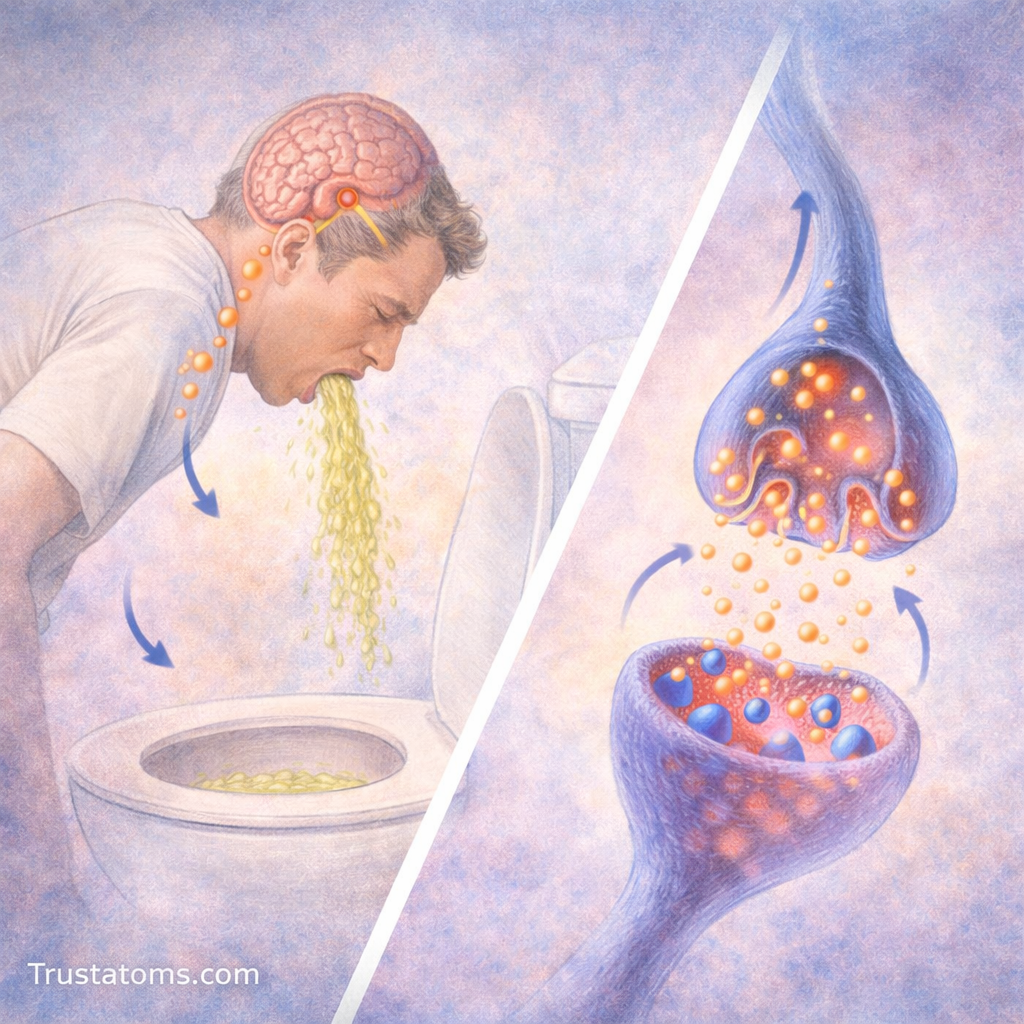
Positive feedback loops follow a reinforcing cycle:
- Stimulus: A change activates receptors or cells.
- Response: Nerves, hormones, or chemical messengers trigger an action.
- Amplification: The action strengthens the original stimulus or promotes more of the same response.
- Repetition: Additional stimulation produces further activation.
- Termination: The cycle stops when its initiating condition ends or regulatory mechanisms intervene.
The defining feature is reinforcement, not simply a strong or rapid response. A reflex can happen quickly without involving positive feedback. To qualify, the response must feed back into the process and increase its activity.
Childbirth: How Oxytocin Reinforces Contractions
Labor provides a classic example of positive feedback involving both nervous and endocrine signaling. As the baby’s head presses against the cervix, stretch receptors send signals through neural pathways that promote oxytocin release from the posterior pituitary gland.
Oxytocin increases uterine contractions, which push the baby downward and create additional cervical stretching. That stretching promotes further oxytocin release, reinforcing the cycle.
A Concrete Labor Scenario
Imagine a person in active labor whose contractions become progressively stronger as cervical stretching increases. Each contraction moves the baby farther downward, increasing pressure on the cervix and encouraging additional oxytocin release. The reinforcing cycle contributes to labor progression, alongside other factors such as prostaglandins and the uterus’s increasing responsiveness to stimulation.
After delivery, the baby’s pressure on the cervix is removed, interrupting this particular feedback loop. Oxytocin can still support uterine contractions after birth, but the cervical-stretch cycle no longer operates in the same way.
Blood Clotting: How Platelets Recruit More Platelets
When a blood vessel is injured, the body must limit bleeding while keeping clot formation localized. Positive feedback helps build a platelet plug at the damaged site.
- Damage exposes materials beneath the vessel lining that support platelet adhesion.
- Platelets attach to the injured area and become activated.
- Platelets release chemicals that attract more platelets, including signaling molecules that promote further platelet activation.
- Additional platelets accumulate, reinforcing plug formation.
Coagulation proteins also participate in amplification reactions that help generate fibrin, which stabilizes the developing clot. These processes are related but distinct from platelet recruitment.
Healthy blood vessels contain mechanisms that restrict clotting, including natural anticoagulants and signals that discourage platelet activation outside the injury. Clot formation therefore depends on both amplification and regulation; it does not simply continue until the vessel is fully repaired.
Lactation: The Oxytocin Milk Let-Down Reflex
Breastfeeding illustrates a stimulus-dependent feedback process. When an infant suckles, sensory nerves transmit signals that stimulate oxytocin release. Oxytocin causes myoepithelial cells surrounding the milk-producing structures to contract, pushing milk toward the nipple.
Milk flow can encourage continued suckling, maintaining the stimulation that triggers additional oxytocin release. The response generally diminishes when suckling stops.
Two hormones have different functions here: oxytocin supports milk ejection, while prolactin supports milk production. The distinction helps explain why milk synthesis and the let-down reflex are not the same process, even though both contribute to lactation.
Positive Feedback vs. Negative Feedback
Both mechanisms respond to changes, but they affect the original disturbance differently.
| Feature | Positive Feedback | Negative Feedback |
|---|---|---|
| Effect | Reinforces a stimulus or response | Opposes a disturbance |
| Primary function | Amplifies a process | Promotes stability |
| Typical duration | Often temporary or event-driven | Often operates continuously |
| Stopping condition | Stimulus removal or regulatory interruption | Reduced error relative to a regulated level |
| Example | Oxytocin release during labor | Blood glucose regulation |
Negative feedback is more common in everyday homeostatic regulation because it counteracts disturbances. Positive feedback is useful when reinforcement helps complete a particular event. Neither mechanism is inherently beneficial or harmful; the outcome depends on its physiological context and regulation.
How the Body Stops Positive Feedback
Because a reinforcing response can intensify, positive feedback requires conditions that limit its duration or magnitude. Different systems use different stopping mechanisms.
- Removal of the stimulus: Cervical stretching associated with labor ends after delivery.
- Interruption of stimulation: Stopping suckling reduces the neural input that drives milk ejection.
- Local inhibition: Anticoagulant and antiplatelet mechanisms restrict clot formation beyond an injury.
- Competing regulation: Other physiological processes may counteract or limit an amplifying response.
When amplification becomes excessive or occurs in the wrong location, it can contribute to disease. For example, inappropriate activation of clotting pathways can produce thrombosis, in which a clot forms within a blood vessel and may obstruct blood flow. This is one reason normal clotting includes multiple safeguards.
Frequently Asked Questions
Is positive feedback always harmful?
No. Positive feedback is a normal mechanism in childbirth and blood clotting. Problems arise when reinforcement becomes excessive, occurs inappropriately, or escapes normal regulation.
Why is positive feedback less common than negative feedback?
Most physiological variables need to remain within functional ranges. Negative feedback helps maintain those ranges, whereas positive feedback intensifies changes and is better suited to particular events that require amplification.
Can positive feedback involve both nerves and hormones?
Yes. During childbirth, cervical stretch activates sensory pathways that promote oxytocin release. The hormone strengthens uterine contractions, creating more stretching and reinforcing the original signal.
Positive feedback is best understood as a reinforcing cycle rather than simply a strong biological response. From childbirth to blood clotting and lactation, its effects depend on how signals amplify one another and how the body limits that amplification. Recognizing both parts of the cycle helps distinguish normal physiological responses from uncontrolled activity.
This article is for general education and is not medical advice. Talk to a qualified health professional about any medical concern.
Sources: Guyton and Hall Textbook of Medical Physiology; OpenStax Anatomy and Physiology 2e; Merck Manual Professional Edition.