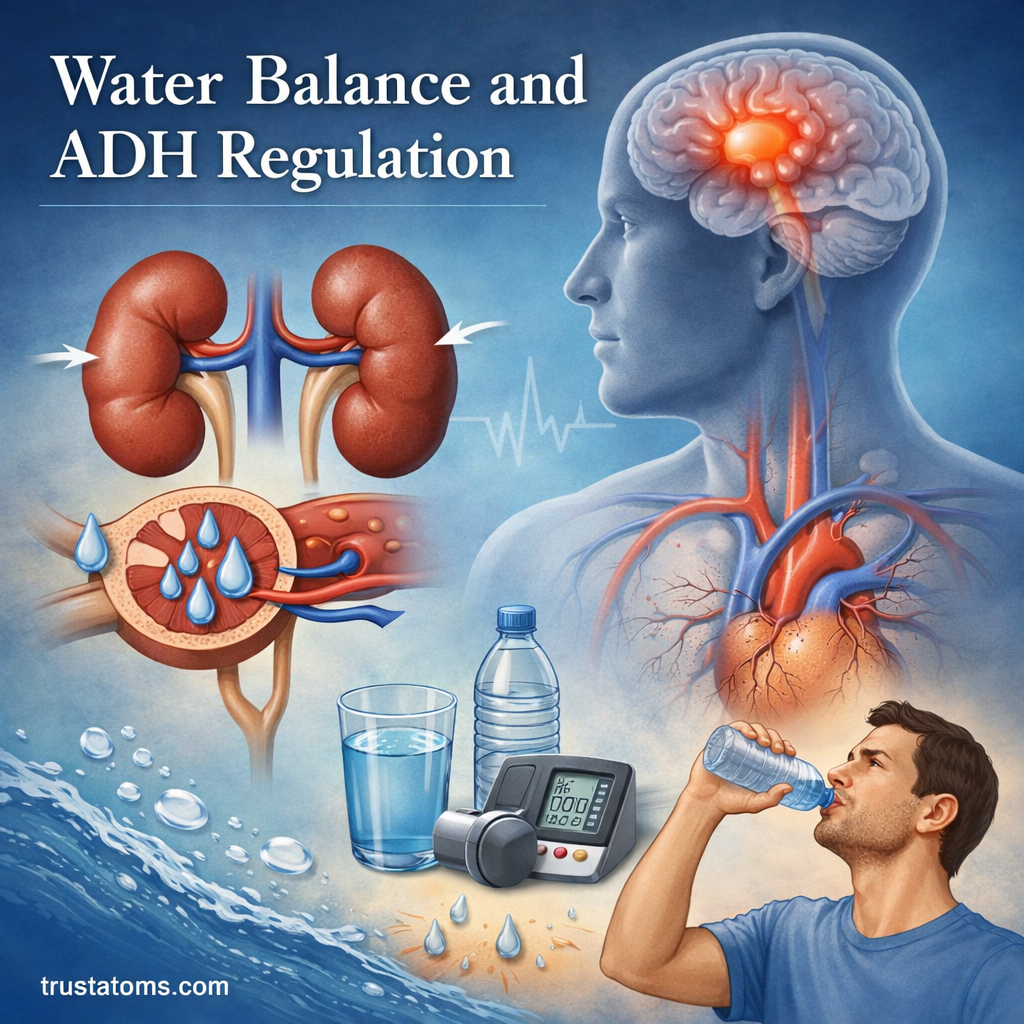
Water balance is a critical part of human physiology, ensuring that cells function properly, blood pressure remains stable, and essential biochemical processes occur efficiently. One of the key regulators of this balance is antidiuretic hormone (ADH), also known as vasopressin.
This article explains how the body maintains water balance and the central role ADH plays in regulating fluid levels.
What Is Water Balance?
Water balance refers to the equilibrium between water intake and water loss in the body. The human body is made up of about 50–60% water, and even small changes in this balance can affect normal function.
Sources of Water Intake
- Drinking fluids
- Water content in food
- Metabolic water (produced during cellular respiration)
Routes of Water Loss
- Urine (primary route)
- Sweat
- Breathing (water vapor)
- Feces
To maintain homeostasis, the body continuously adjusts how much water is retained or excreted.
What Is ADH (Antidiuretic Hormone)?
ADH is a hormone that helps control the body’s water levels by regulating how much water the kidneys reabsorb.
Key Facts About ADH
- Produced in the hypothalamus
- Stored and released by the posterior pituitary gland
- Acts mainly on the kidneys
Its primary function is to reduce water loss by concentrating urine.
How ADH Regulates Water Balance
ADH works by adjusting how much water is reabsorbed in the kidneys, specifically in the collecting ducts.
Mechanism of Action
- ADH is released into the bloodstream
- It binds to receptors in kidney tubules
- This triggers insertion of aquaporin (water channel) proteins
- More water is reabsorbed back into the bloodstream
- Urine becomes more concentrated and volume decreases
Without ADH, large amounts of dilute urine would be produced, leading to dehydration.
Triggers for ADH Release
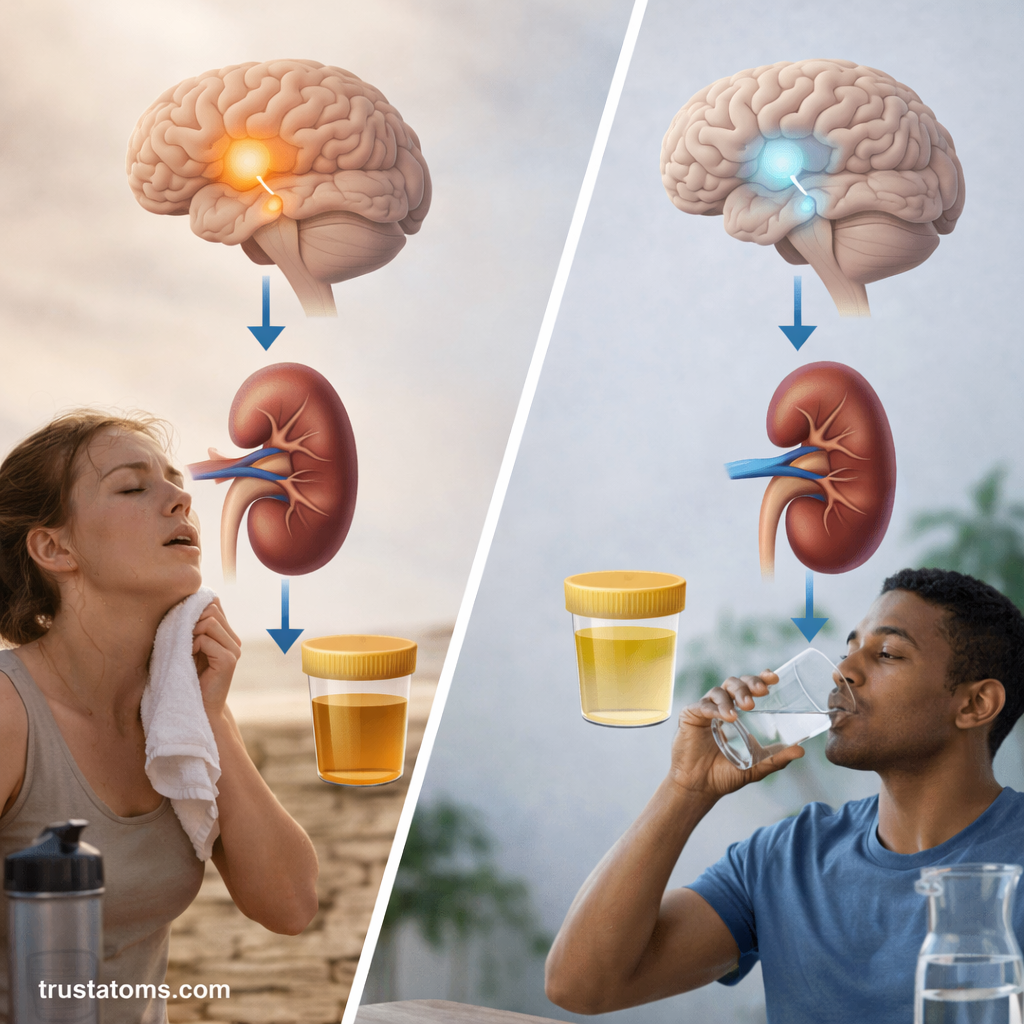
The body carefully monitors hydration status and releases ADH when needed.
1. Increased Blood Osmolarity
- Detected by osmoreceptors in the hypothalamus
- Occurs when the blood becomes more concentrated (e.g., dehydration)
- Leads to increased ADH secretion
2. Decreased Blood Volume or Pressure
- Detected by baroreceptors in blood vessels
- Common in cases of blood loss or dehydration
- Triggers ADH release to conserve water
3. Stress and Other Factors
- Pain, stress, and certain medications can also increase ADH secretion
Effects of ADH on the Body
ADH helps maintain fluid balance through several physiological effects:
Kidney Effects
- Increases water reabsorption
- Produces concentrated urine
- Reduces urine output
Circulatory Effects
- Slight vasoconstriction (narrowing of blood vessels)
- Helps maintain blood pressure
What Happens When ADH Levels Are Imbalanced?
Disruptions in ADH production or function can lead to medical conditions.
Too Little ADH: Diabetes Insipidus
- Kidneys cannot retain water properly
- Symptoms:
- Excessive urination (polyuria)
- Extreme thirst (polydipsia)
- Urine is very dilute
Too Much ADH: SIADH (Syndrome of Inappropriate ADH)
- Excess water retention
- Blood becomes diluted
- Symptoms:
- Low sodium levels (hyponatremia)
- Headaches, confusion
- In severe cases, seizures
Relationship Between Thirst and ADH
ADH works closely with the thirst mechanism to maintain fluid balance.
- When blood osmolarity increases:
- ADH is released
- Thirst is stimulated
- This dual response ensures:
- Immediate water conservation (via kidneys)
- Long-term correction (via drinking fluids)
Summary
Water balance is essential for maintaining stable internal conditions, and ADH plays a central role in this process. By regulating water reabsorption in the kidneys, ADH helps control urine concentration, blood volume, and overall hydration.
Key takeaways:
- ADH is produced in the hypothalamus and released by the posterior pituitary
- It increases water reabsorption in the kidneys
- It is triggered by high blood osmolarity and low blood volume
- Imbalances in ADH can lead to conditions like diabetes insipidus and SIADH
Understanding ADH regulation provides valuable insight into how the body maintains fluid homeostasis and responds to dehydration or fluid overload.