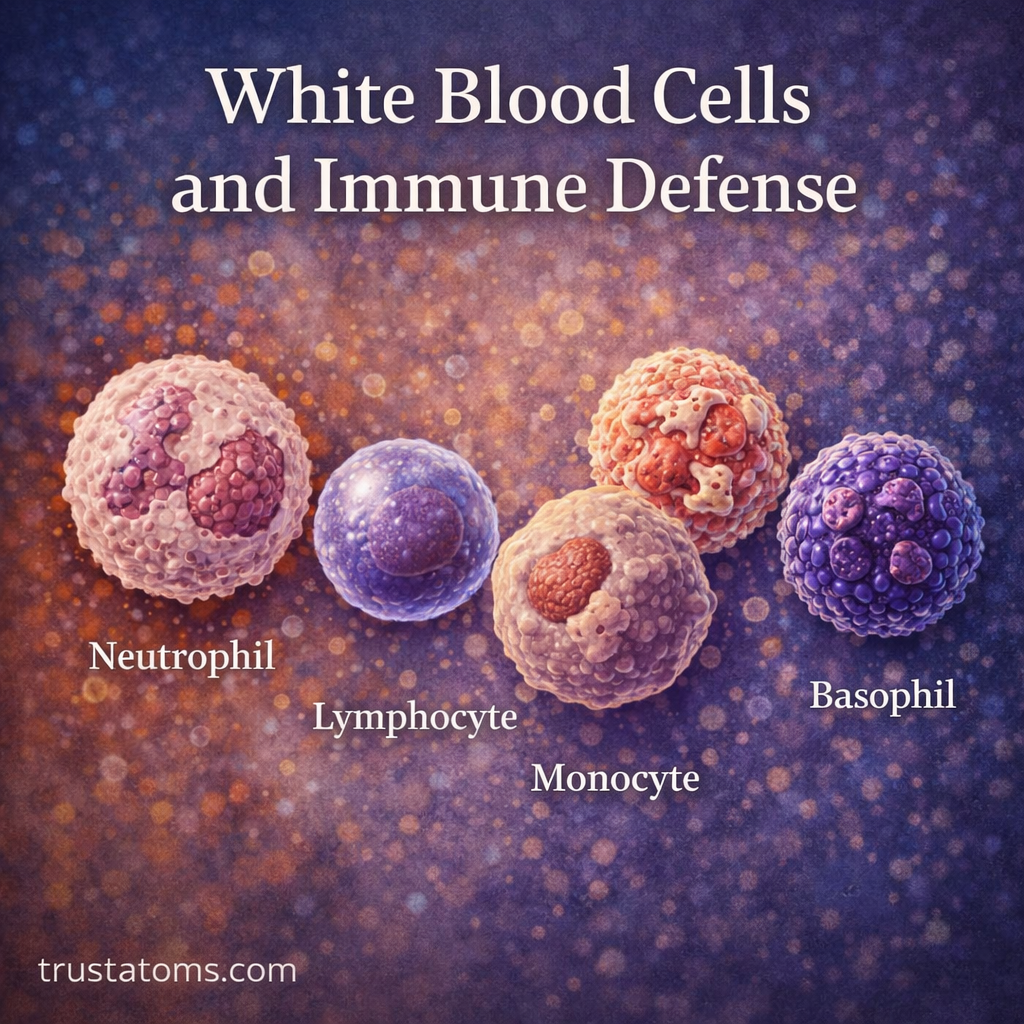
White blood cells, also called leukocytes, protect the body by detecting infections, destroying harmful microorganisms, and coordinating immune responses. Different types of white blood cells perform specialized tasks, from rapidly engulfing bacteria to producing antibodies and remembering previously encountered pathogens.
These cells connect the circulatory and lymphatic systems with the body’s defenses, demonstrating how human anatomy supports protection against disease. Their coordinated activity helps the body respond to infections, damaged tissues, and certain abnormal cells.
What Are White Blood Cells?
White blood cells, also known as leukocytes, are essential components of the immune system. They act as the body’s defense force, constantly patrolling for harmful invaders such as bacteria, viruses, parasites, and abnormal cells.
White blood cells are specialized immune cells produced primarily in the bone marrow. They circulate through the bloodstream and lymphatic system, ready to respond when the body detects a threat.
Unlike red blood cells, which transport oxygen, leukocytes recognize threats, communicate with other cells, and help eliminate pathogens. Many leave the bloodstream and enter tissues where infections or injuries occur.
The relationship between immune activity and blood flow is explained further in Immune System Integration with Circulation, including how circulating cells reach affected tissues.
The Five Main Types of White Blood Cells
White blood cells are commonly classified into five major groups. Each has distinctive functions, although immune defense depends on cooperation between them.
Neutrophils: Rapid Responders to Infection
Neutrophils are usually the most abundant white blood cells in adult blood. They respond quickly to many bacterial and fungal infections by moving toward inflammatory signals and engulfing microorganisms.
They also release antimicrobial substances and can form extracellular traps that help contain pathogens. Large numbers of dead neutrophils may contribute to pus at infected sites.
Lymphocytes: Targeted Defense and Immune Memory
Lymphocytes are central to adaptive immunity and include B cells and T cells. Natural killer cells are another major lymphocyte population involved primarily in innate immune defense.
- B cells: Can develop into plasma cells that produce antibodies that target specific pathogens.
- Helper T cells: Coordinate immune activity through signals that activate other immune cells.
- Cytotoxic T cells: Recognize and destroy certain infected or abnormal cells.
- Natural killer cells: Detect and eliminate some virus-infected and abnormal cells without requiring the same antigen-specific recognition used by T cells.
Some B and T cells become long-lived memory cells, allowing faster and more effective responses when the same pathogen is encountered again.
Monocytes: Phagocytosis and Tissue Defense
Monocytes circulate in the blood and can enter tissues, where they may develop into macrophages or certain dendritic cells. These cells engulf pathogens, remove damaged material, and help regulate inflammation.
Macrophages and dendritic cells can also present pieces of pathogens, called antigens, to T cells. This helps connect rapid innate defenses with more targeted adaptive responses.
Eosinophils: Parasites and Allergic Inflammation
Eosinophils participate in immune responses against certain parasites, especially multicellular worms. They contain granules with proteins that can damage targets but may also injure surrounding tissues.
These cells also contribute to allergic inflammation and conditions such as some forms of asthma.
Basophils: Allergic Signaling
Basophils are typically the least abundant white blood cell type in circulation. They contain granules with histamine and other substances involved in inflammation and allergic responses.
When activated, basophils can release chemical mediators that influence blood vessels and recruit additional immune cells.
Comparing White Blood Cell Functions
| Cell Type | Primary Function | Typical Adult Blood Proportion |
|---|---|---|
| Neutrophils | Rapid defense against bacteria and fungi | 40–70% |
| Lymphocytes | Targeted immunity, immune memory, and abnormal-cell detection | 20–40% |
| Monocytes | Phagocytosis and development into tissue immune cells | 2–8% |
| Eosinophils | Parasite defense and allergic inflammation | 1–4% |
| Basophils | Allergic signaling and inflammatory mediator release | 0–1% |
These percentages are approximate textbook ranges. Actual reference intervals vary between laboratories, and the proportions can change with age, illness, medication use, and other factors.
How White Blood Cells Fight an Infection
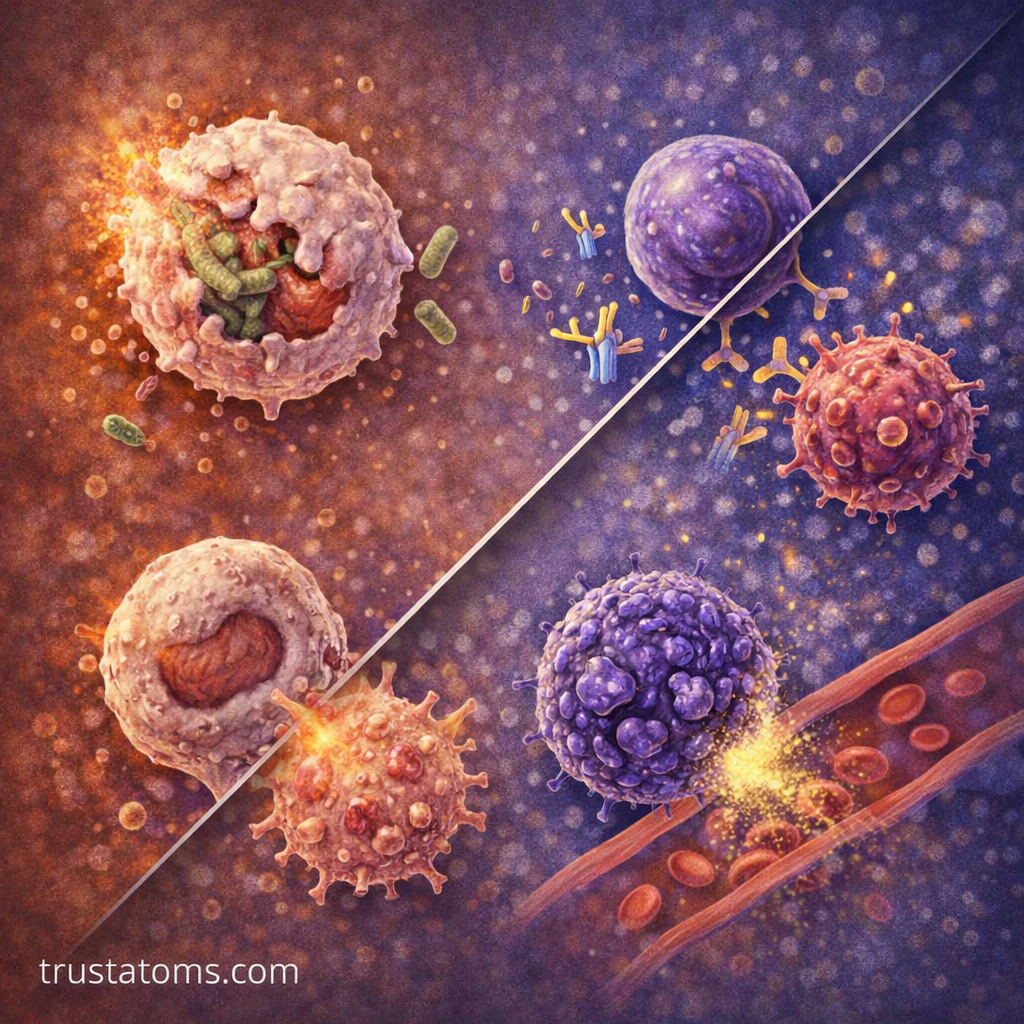
Consider a small cut that allows bacteria to enter the skin. Nearby immune cells detect signs of infection and release chemical signals that attract additional defenders.
- Threat detection: Resident immune cells recognize microbial molecules or signals from damaged tissue.
- Inflammatory signaling: Chemical messengers increase local blood flow and help recruit circulating leukocytes.
- Cell recruitment: Neutrophils and monocytes adhere to blood vessel walls and move into the affected tissue.
- Pathogen destruction: Phagocytic cells engulf and break down microorganisms.
- Targeted response: If needed, antigen presentation activates specific lymphocytes that support antibody production or infected-cell destruction.
This sequence illustrates how innate immunity provides a rapid response while adaptive immunity develops more specialized defenses. The two systems exchange signals throughout the process.
Where White Blood Cells Are Produced and Found
White blood cells are distributed across blood, lymph, and tissues rather than remaining in one organ.
- Bone marrow: Produces blood cell precursors and supports the development of many leukocytes.
- Bloodstream: Transports circulating immune cells throughout the body.
- Lymph nodes: Filter lymph and provide locations where immune cells encounter antigens.
- Spleen: Filters blood and supports responses to blood-borne pathogens.
- Body tissues: Contain resident immune cells and receive additional leukocytes during inflammation.
T cells also mature in the thymus, an immune organ located in the upper chest. Many immune cells continuously move between tissues, lymphatic vessels, and blood.
What Is a Normal White Blood Cell Count?
A white blood cell count measures the number of leukocytes in a blood sample. A commonly used adult reference range is approximately 4,000–11,000 cells per microliter, although laboratories may use different limits.
A complete blood count with differential also reports the proportions or absolute numbers of different leukocyte types. This helps distinguish changes affecting neutrophils, lymphocytes, or other cells.
High White Blood Cell Count
Leukocytosis means an elevated white blood cell count. It can occur during infection, inflammation, physical stress, medication use, and certain blood disorders.
Low White Blood Cell Count
Leukopenia means a reduced white blood cell count. Possible causes include some viral infections, medications, bone marrow disorders, and autoimmune conditions.
A total count alone does not determine whether immune function is normal. The affected cell types, symptoms, medical history, and laboratory reference intervals also matter.
Factors That Influence White Blood Cell Function
Immune cell production and activity can change in response to health conditions, environmental exposures, and everyday habits.
- Nutrition: Adequate protein, vitamins, and minerals support normal immune cell production and function.
- Sleep: Regular, sufficient sleep supports normal immune regulation.
- Physical activity: Moderate regular exercise supports general health and normal immune function.
- Age: Immune responses change throughout life, including reduced effectiveness of some responses in older adults.
- Medications and illness: Certain treatments and diseases can suppress immune cells or alter their activity.
Balanced nutrition, appropriate vaccination, hygiene, and management of underlying health conditions support the body’s defenses. No single food or supplement can guarantee an increased white blood cell count or stronger immunity.
Frequently Asked Questions
Which white blood cells fight bacterial infections?
Neutrophils are major early responders to many bacterial infections. Macrophages also engulf bacteria, while lymphocytes contribute targeted responses when needed.
Are white blood cells and antibodies the same thing?
No. White blood cells are living immune cells, while antibodies are proteins produced by plasma cells derived from B lymphocytes. Antibodies bind specific targets and help the immune system recognize or neutralize them.
Does a high white blood cell count always mean infection?
No. Infection is one possible cause, but inflammation, stress, certain medications, and blood disorders can also increase the count. Interpretation depends on the differential count and clinical circumstances.
White blood cells defend the body through complementary mechanisms: neutrophils and phagocytes respond rapidly, lymphocytes provide targeted responses, and other leukocytes regulate inflammation and specialized defenses. Their movement between blood, lymphatic organs, and tissues allows immune activity to reach sites of infection while supporting longer-term immune memory.
This article is for general education and is not medical advice. Talk to a qualified health professional about any medical concern.
Sources: Abbas, Lichtman, and Pillai’s Cellular and Molecular Immunology; Guyton and Hall Textbook of Medical Physiology; National Institute of Allergy and Infectious Diseases.