Every day, your body encounters harmful bacteria, viruses, and debris. One of the most powerful ways your immune system handles these threats is through phagocytosis—a process where specialized cells literally “eat” invaders.
Phagocytosis is a core function of innate immunity, your body’s fast, non-specific defense system. It acts quickly to neutralize threats before they can spread or cause serious harm.
What Is Phagocytosis?
Phagocytosis is a cellular process in which immune cells engulf, digest, and eliminate harmful particles such as:
- Bacteria
- Viruses (in some cases)
- Dead or damaged cells
- Foreign debris
The word comes from Greek:
- Phago = to eat
- Cytosis = cell process
Together, it literally means “cell eating.”
Why Phagocytosis Is Important
Phagocytosis is essential for maintaining health and preventing infection.
Key Functions
- Rapidly removes pathogens before they multiply
- Cleans up dead cells and tissue debris
- Triggers further immune responses
- Helps activate adaptive immunity
Without phagocytosis, infections would spread much more easily throughout the body.
The Main Cells Involved in Phagocytosis
Several types of immune cells act as phagocytes, each with a specific role.
Macrophages
- Large, long-lived cells found in tissues
- Engulf pathogens and dead cells
- Signal other immune cells using chemical messengers
Neutrophils
- Most abundant white blood cells
- First responders to infection
- Highly efficient at engulfing and destroying bacteria
Dendritic Cells
- Capture pathogens and present them to T cells
- Bridge innate and adaptive immunity
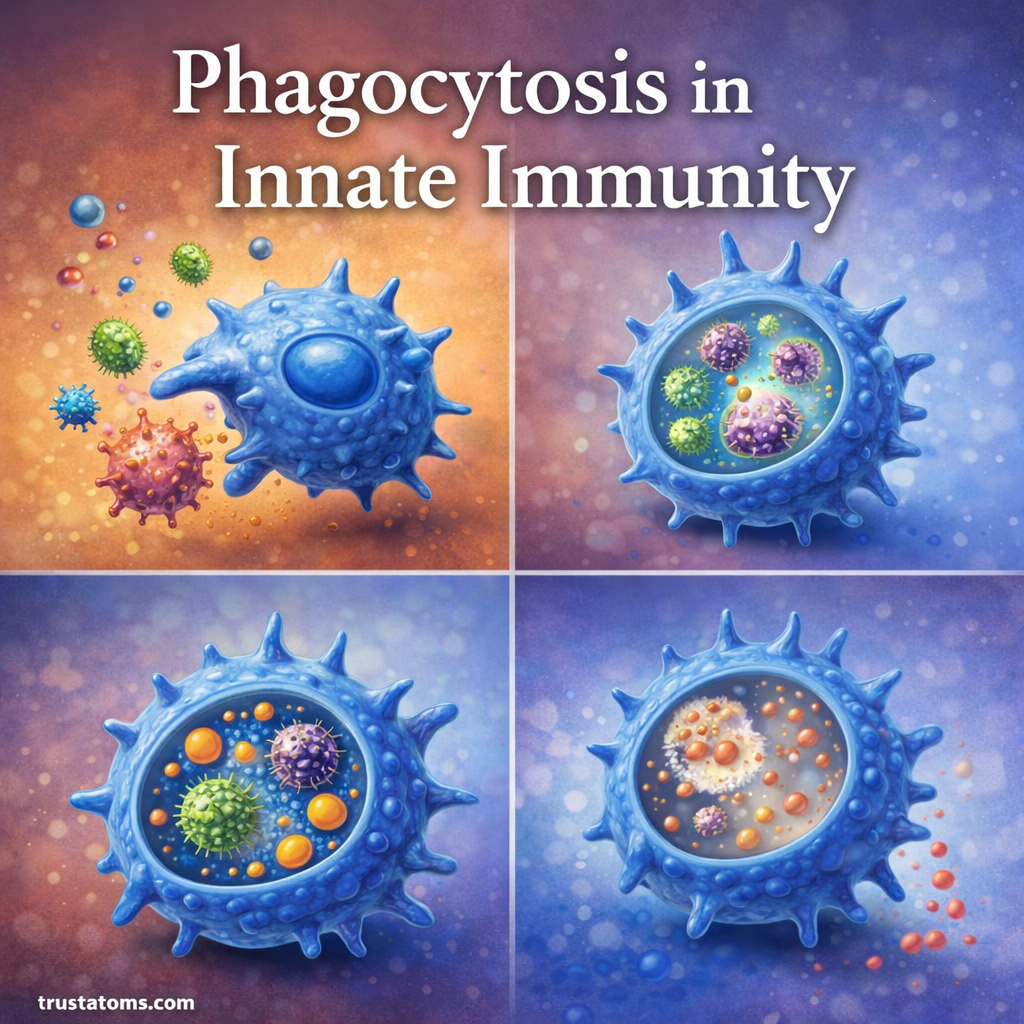
The Steps of Phagocytosis
Phagocytosis follows a structured, multi-step process. Each step ensures that invaders are effectively recognized and destroyed.
1. Recognition and Attachment
Phagocytes identify harmful particles using receptors on their surface.
- Detect common pathogen patterns
- Bind directly or via antibodies
- Opsonization enhances recognition
2. Engulfment
The phagocyte surrounds the particle with its membrane.
- Forms a structure called a phagosome
- The particle is now enclosed inside the cell
3. Fusion with Lysosome
The phagosome merges with a lysosome, creating a phagolysosome.
- Lysosomes contain digestive enzymes
- The environment becomes highly acidic
4. Digestion and Destruction
The pathogen is broken down by enzymes and reactive molecules.
- Proteins, lipids, and DNA are degraded
- Harmful microbes are neutralized
5. Waste Removal
The remaining debris is expelled or recycled.
- Some fragments are presented to other immune cells
- Helps activate adaptive immunity
How Phagocytosis Supports Innate Immunity
Phagocytosis is a cornerstone of innate immunity because it acts quickly and broadly.
Key Characteristics
- Non-specific (targets many types of pathogens)
- Immediate response (no prior exposure needed)
- Works alongside inflammation and chemical defenses
This rapid action helps contain infections in their early stages.
The Role of Opsonization
Opsonization enhances phagocytosis by marking pathogens for destruction.
How It Works
- Molecules like antibodies or complement proteins coat pathogens
- Phagocytes recognize these markers more easily
- Increases efficiency of engulfment
Think of opsonization as placing a “target” on harmful invaders.
Phagocytosis and Inflammation
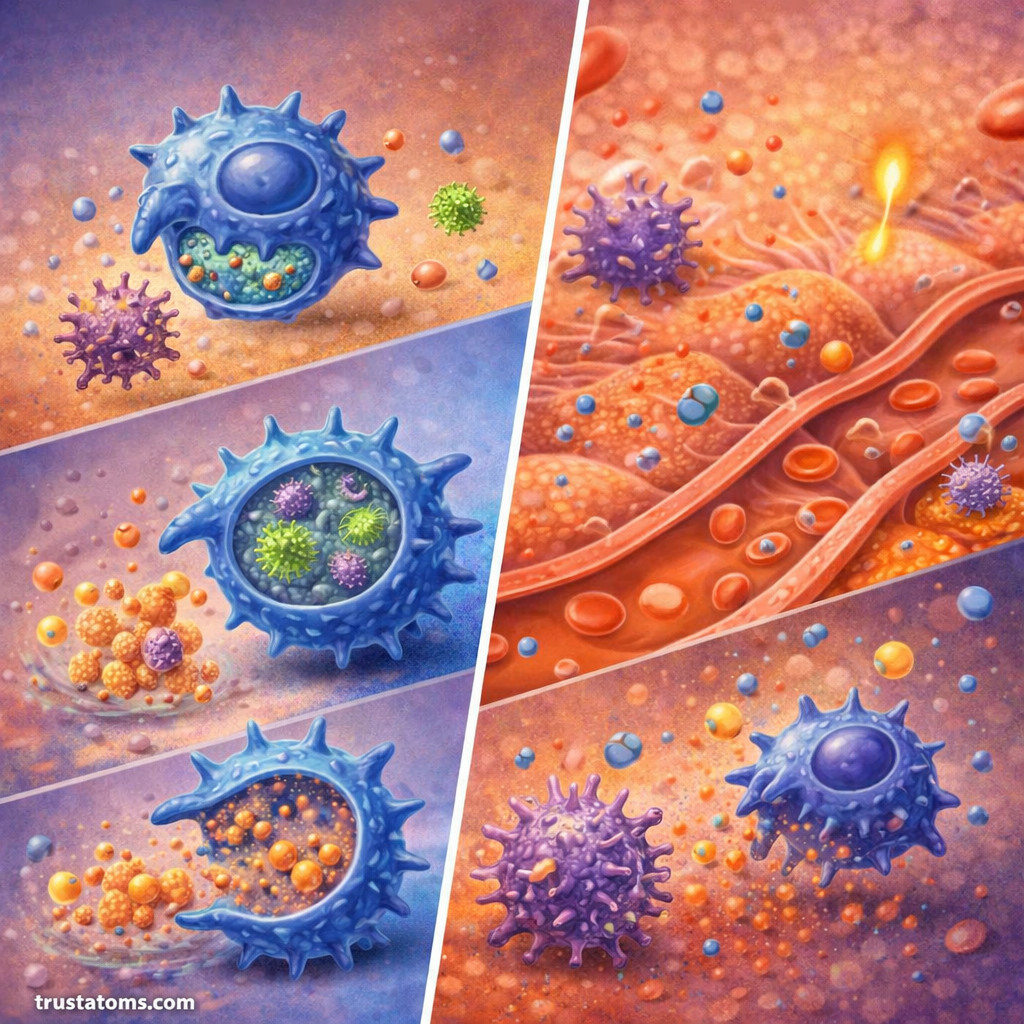
Phagocytosis is closely linked to inflammation, another key immune response.
During Infection
- Damaged tissues release signaling molecules
- Blood vessels become more permeable
- Phagocytes are recruited to the site
What Happens Next
- Phagocytes engulf pathogens
- Release cytokines to amplify the response
- Help coordinate healing
What Can Affect Phagocytosis?
Phagocytosis efficiency can vary depending on several factors.
Factors That May Reduce Function
- Chronic stress
- Poor nutrition
- Sleep deprivation
- Aging
- Certain diseases or immune disorders
Factors That Support Healthy Function
- Balanced diet (especially vitamins and minerals)
- Regular sleep
- Physical activity
- Proper hydration
Phagocytosis vs Other Immune Responses
Phagocytosis works alongside other immune mechanisms but has a distinct role.
Compared to Adaptive Immunity
- Faster response
- Less specific targeting
- No long-term memory
Compared to Antibody Responses
- Direct destruction of pathogens
- Does not rely solely on recognition
- Works immediately upon detection
Why Phagocytosis Matters
Phagocytosis is one of the body’s most fundamental defense mechanisms. It helps:
- Prevent infections from spreading
- Remove harmful debris
- Activate more advanced immune responses
- Maintain overall tissue health
Without it, even minor infections could become serious threats.
Final Thoughts
Phagocytosis is a powerful and efficient process that keeps your body protected on a daily basis. By rapidly identifying, engulfing, and destroying harmful invaders, phagocytes serve as frontline defenders in your immune system.
Understanding how phagocytosis works highlights just how active and dynamic your immune system truly is—even when you don’t notice it.