The spleen filters blood by removing aging or damaged red blood cells and helping immune cells detect and eliminate pathogens circulating in the bloodstream. It also supports antibody production, recycles useful materials such as iron, and stores a portion of the body’s platelets.
Located in the upper left abdomen, the spleen connects several important functions of human anatomy, particularly those involving blood circulation and immunity. Its specialized internal tissues allow it to monitor blood continuously while helping protect the body against certain serious infections.
What Is the Spleen and Where Is It Located?
The spleen is part of the lymphatic system, but unlike lymph nodes, it filters blood instead of lymph fluid.
In most adults, the spleen is approximately fist-sized and lies beneath the left side of the rib cage, behind and to the left of the stomach. Its position near the diaphragm provides some protection, although significant abdominal trauma can still injure it.
Blood enters through the splenic artery and leaves through the splenic vein. Inside the organ, a network of blood vessels and specialized tissues exposes circulating blood to cells responsible for filtration and immune surveillance.
White Pulp and Red Pulp: The Spleen’s Two Main Regions
The spleen contains two major functional tissue regions called white pulp and red pulp. Although they are closely connected, each performs different tasks.
White Pulp Detects Blood-Borne Pathogens
White pulp consists largely of immune tissue organized around branches of the splenic arteries. It contains lymphocytes, including B cells and T cells, that recognize foreign substances and participate in immune responses.
When immune cells encounter a relevant antigen, they can become activated. B cells may develop into antibody-producing plasma cells, while T cells help coordinate immune activity or respond to infected cells.
Red Pulp Removes Damaged Blood Cells
Red pulp contains blood-filled spaces called splenic sinusoids and tissue cords rich in macrophages. These immune cells help identify and remove red blood cells that have become old, damaged, or unusually rigid.
Red pulp also participates in removing certain microorganisms and particles from circulating blood. Its filtering structure helps distinguish flexible, functioning blood cells from cells that cannot pass normally through narrow openings.
How the Spleen Filters Blood
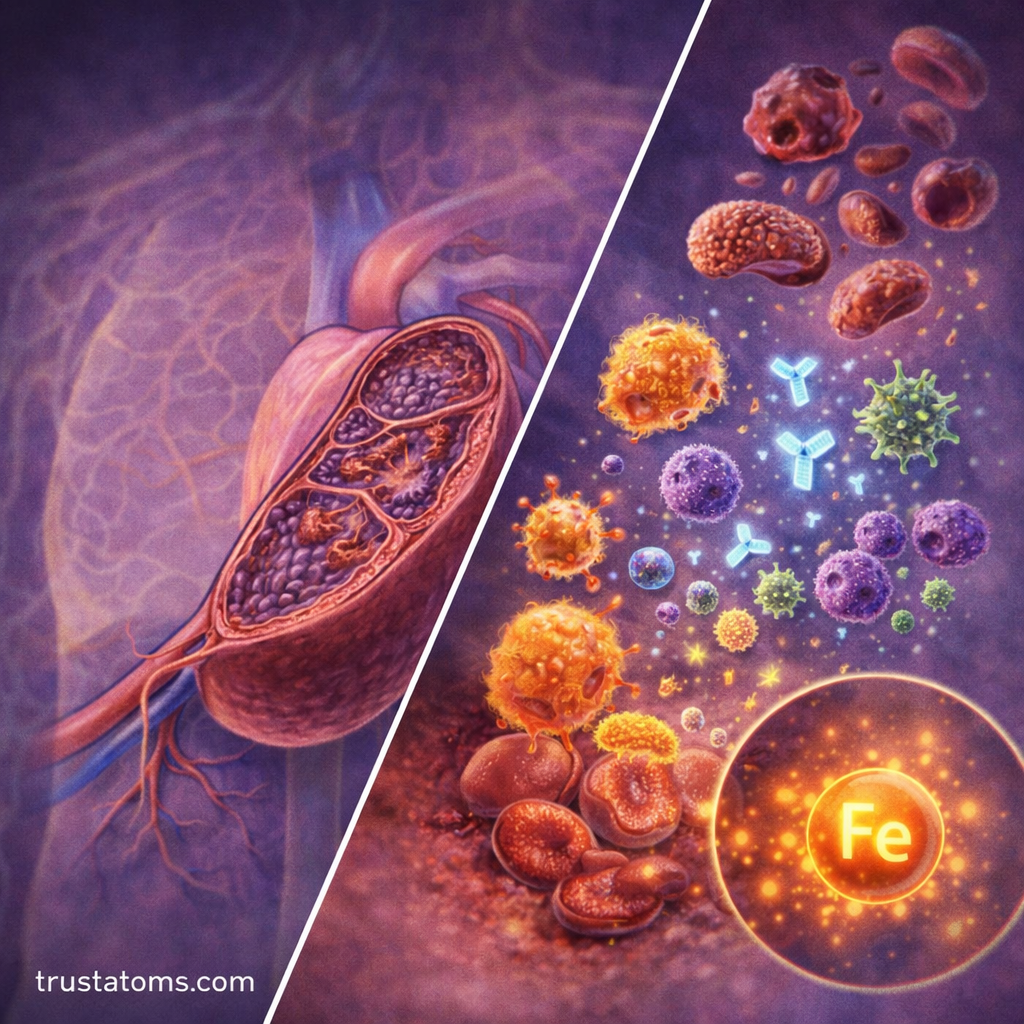
Blood filtration occurs as circulating blood moves through the spleen’s specialized vascular network. The process combines mechanical screening with recognition and removal by immune cells.
- Blood enters: The splenic artery delivers blood into progressively smaller vessels within the spleen.
- Blood cells encounter filtering tissues: In the red pulp, many cells must navigate narrow passages before returning to the circulation.
- Abnormal cells are identified: Older or less flexible red blood cells may become trapped or recognized by macrophages.
- Macrophages remove material: These cells engulf damaged blood cells, cellular debris, and certain pathogens.
- Blood returns to circulation: Cells that successfully pass through the filtering system continue into venous channels.
Macrophages are among the immune cells described in white blood cells and immune defense. Their ability to engulf unwanted material is especially useful in an organ that directly examines circulating blood.
The movement of immune cells between blood and tissues is also covered in white blood cells in circulation.
How the Spleen Supports Immune Defense
Unlike lymph nodes, which monitor fluid draining from tissues, the spleen is positioned to recognize antigens traveling through the bloodstream. This makes it particularly important when bacteria or other pathogens enter circulation.
The spleen supports several connected immune activities:
- Pathogen recognition: Immune cells detect foreign antigens carried in blood.
- Antibody production: Activated B cells can generate antibodies that recognize specific pathogens.
- Phagocytosis: Macrophages engulf microorganisms and particles, including those marked by antibodies or complement proteins.
- Immune coordination: Different immune cells communicate to organize responses against circulating threats.
These activities illustrate immune system integration with circulation, where blood transport and immune surveillance operate together.
The spleen is especially important in defending against encapsulated bacteria, including Streptococcus pneumoniae, because these organisms can be difficult to clear without effective antibody-mediated recognition and splenic filtering.
How the Spleen Recycles Aging Red Blood Cells
A typical red blood cell circulates for approximately 120 days. As it ages, its membrane becomes less flexible and it may be less able to pass through the spleen’s narrow filtering spaces.
Macrophages remove these cells and break down their hemoglobin. Iron is recovered and transported for reuse, particularly in the production of new red blood cells in bone marrow.
The heme portion of hemoglobin is also processed into bilirubin, which travels to the liver for further handling and eventual elimination through bile.
This recycling conserves valuable materials while helping remove blood cells that are no longer functioning normally. The liver and bone marrow also participate in blood cell processing and turnover.
Does the Spleen Store Blood and Platelets?
The spleen normally holds a portion of the body’s circulating platelets, often around one-third in healthy adults. These platelets remain available within the splenic circulation and can exchange with platelets in the bloodstream.
When the spleen becomes enlarged, it may retain an unusually large proportion of platelets, contributing to a reduced platelet count in circulating blood.
Although the spleen contains blood, humans do not depend on it as a major emergency blood reservoir in the same way that certain other mammals do. Its main functions are filtration, immune surveillance, and blood cell handling.
What Happens When Someone Has No Spleen?
A person may lose their spleen after a severe injury or undergo splenectomy because of certain blood disorders or other medical conditions. Some individuals also have a spleen that functions poorly even though the organ remains present.
People can live without a spleen because other organs continue many immune and blood-processing activities. However, the loss of splenic function increases susceptibility to certain serious bacterial infections.
For example, a person who has undergone splenectomy may require specific vaccinations against pneumococcal, meningococcal, and Haemophilus influenzae type b infections, according to medical guidance.
Fever in someone without a functioning spleen can signal a rapidly developing infection and requires urgent medical assessment. Preventive care may also include individualized antibiotic plans and education about infection risks.
Spleen vs. Lymph Nodes: How Their Filtering Functions Differ
| Feature | Spleen | Lymph Nodes |
|---|---|---|
| Fluid monitored | Blood | Lymph |
| Main filtering target | Blood-borne pathogens and abnormal blood cells | Antigens and particles carried from tissues |
| Blood cell recycling | Major function | Not a primary function |
| Immune activity | Responses to circulating antigens | Responses to antigens arriving through lymphatic drainage |
Both organs contain immune cells and support antibody responses, but they monitor different fluid pathways. This division allows the immune system to detect threats traveling through either blood or lymph.
Frequently Asked Questions
Does the spleen filter blood or lymph?
The spleen filters blood. Although it belongs to the lymphatic system, its specialized tissues monitor circulating blood rather than filtering lymph fluid, which is primarily handled by lymph nodes.
Can a person live normally without a spleen?
Many people live active lives without a spleen, but they face an increased risk of certain serious infections. Recommended vaccinations, appropriate preventive care, and prompt medical attention for fever help reduce that risk.
Why does the spleen remove old red blood cells?
As red blood cells age, they lose flexibility and may no longer move efficiently through narrow blood vessels. The spleen’s macrophages remove many of these cells and recover useful components, including iron, for reuse.
The spleen combines two distinct tasks: screening blood for aging or abnormal cells and organizing immune responses to pathogens in circulation. Its red pulp supports blood cell removal and recycling, while its white pulp helps recognize antigens and activate lymphocytes. Together, these functions explain both the spleen’s contribution to healthy circulation and the increased infection risks associated with losing it.
This article is for general education and is not medical advice. Talk to a qualified health professional about any medical concern.
Sources: OpenStax, Anatomy and Physiology 2e; Abbas, Lichtman, and Pillai, Cellular and Molecular Immunology; Centers for Disease Control and Prevention.