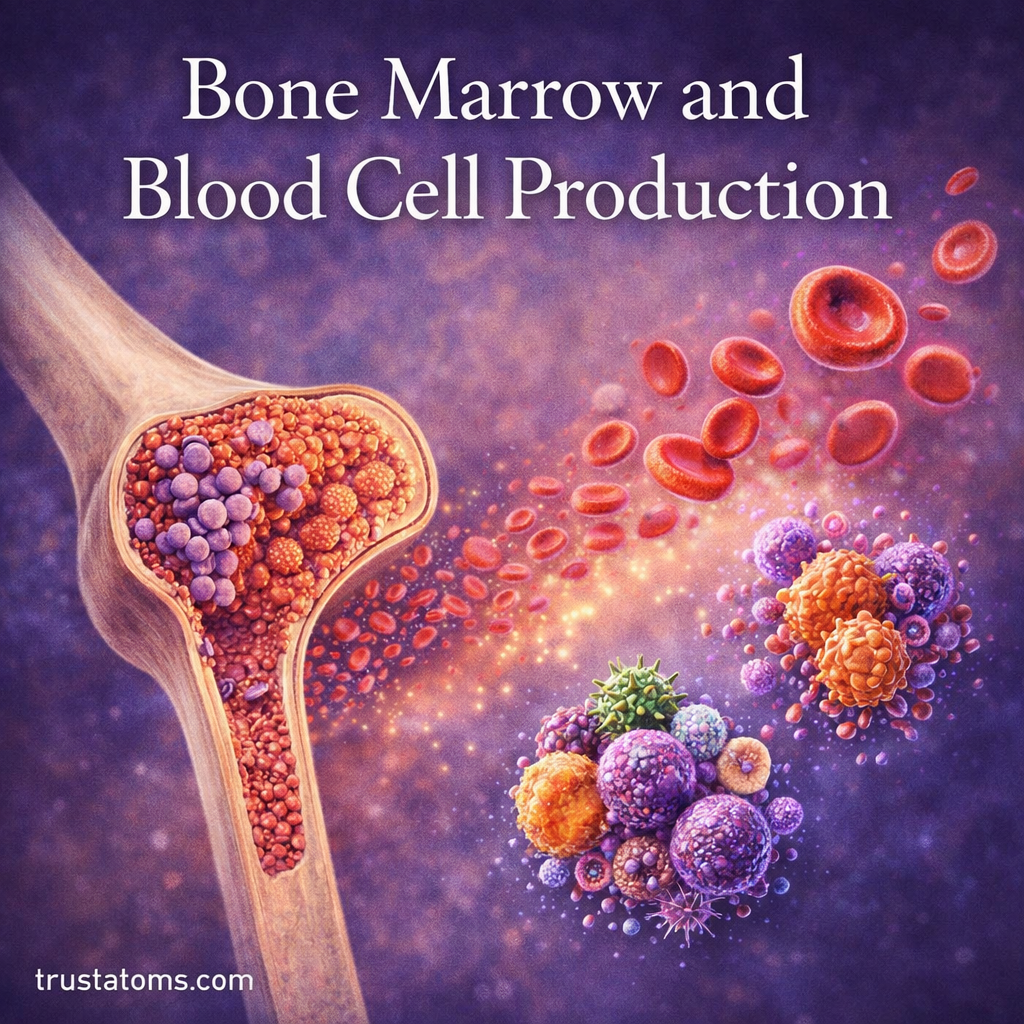
Bone marrow is a soft, spongy tissue found inside bones that plays a critical role in producing the cells your body needs to survive. From oxygen-carrying red blood cells to infection-fighting white blood cells, bone marrow is the foundation of the circulatory and immune systems.
This process of blood cell formation is known as hematopoiesis, and it occurs continuously throughout your life.
What Is Bone Marrow?
Bone marrow is located within the hollow centers of certain bones, especially:
- Hip bones (pelvis)
- Sternum (breastbone)
- Ribs
- Vertebrae
- Long bones (like femur and humerus)
It is highly vascular, meaning it has a rich blood supply to support cell production and distribution.
Types of Bone Marrow
There are two main types:
Red Bone Marrow
- Responsible for blood cell production
- Rich in stem cells
- Found in flat bones and ends of long bones
Yellow Bone Marrow
- Primarily composed of fat cells
- Acts as an energy reserve
- Can convert to red marrow in emergencies
What Is Hematopoiesis?
Hematopoiesis is the process by which all blood cells are produced from a common source—hematopoietic stem cells.
These stem cells have two key abilities:
- Self-renewal (they can make copies of themselves)
- Differentiation (they can become specialized cell types)
Types of Blood Cells Produced
Bone marrow produces three main categories of blood cells.
1. Red Blood Cells (Erythrocytes)
- Carry oxygen from the lungs to tissues
- Contain hemoglobin
- Give blood its red color
2. White Blood Cells (Leukocytes)
- Defend against infections
- Include types such as:
- Neutrophils
- Lymphocytes (B cells and T cells)
- Monocytes
- Eosinophils
- Basophils
3. Platelets (Thrombocytes)
- Help blood clot
- Prevent excessive bleeding
- Form from large cells called megakaryocytes
How Blood Cells Are Formed
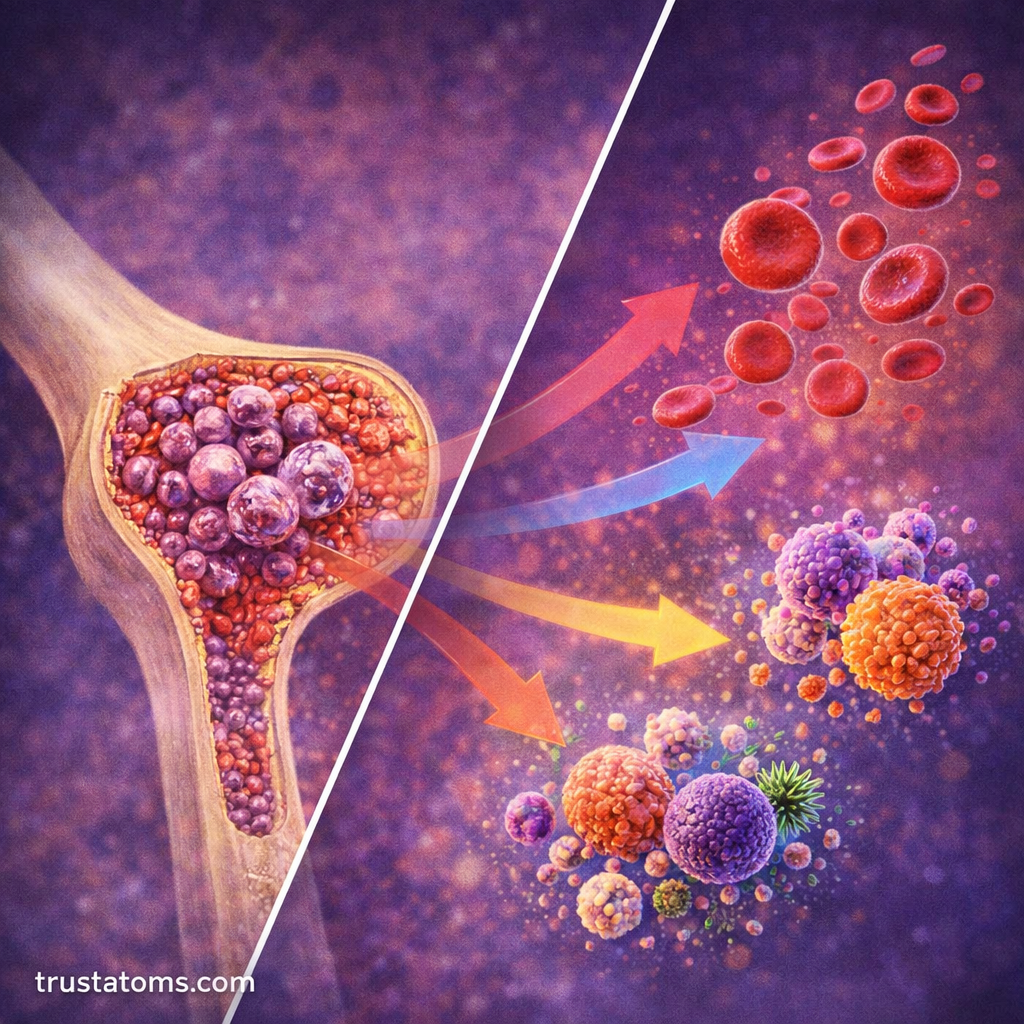
The process of blood cell production follows a structured pathway.
Step-by-Step Overview
- Hematopoietic stem cells reside in bone marrow
- Stem cells divide and differentiate into precursor cells
- Precursor cells specialize into specific blood cell types
- Mature cells enter the bloodstream
This process is tightly regulated to maintain balance in the body.
Regulation of Blood Cell Production
The body carefully controls hematopoiesis through signaling molecules and environmental factors.
Key Regulators
- Erythropoietin (EPO)
- Stimulates red blood cell production
- Released by the kidneys in response to low oxygen
- Colony-stimulating factors (CSFs)
- Promote white blood cell development
- Thrombopoietin
- Regulates platelet production
These signals ensure that the body produces the right number of cells based on its needs.
Role of Bone Marrow in the Immune System
Bone marrow is not just a production site—it also plays a role in immune development.
Immune Functions
- Produces B cells, which mature in the bone marrow
- Generates precursor T cells (which later mature in the thymus)
- Supports the production of immune signaling molecules
This makes bone marrow essential for both innate and adaptive immunity.
What Happens When Bone Marrow Malfunctions?
Disorders of bone marrow can affect blood cell production and overall health.
Common Conditions
- Anemia
- Low red blood cell count
- Leukemia
- Cancer of blood-forming tissues
- Aplastic anemia
- Failure to produce enough blood cells
- Thrombocytopenia
- Low platelet count
These conditions can lead to fatigue, infections, and bleeding problems.
Bone Marrow Transplants
In some cases, damaged or diseased bone marrow can be replaced through a transplant.
How It Works
- Healthy stem cells are introduced into the body
- These cells travel to the bone marrow
- They begin producing new, healthy blood cells
Bone marrow transplants are often used to treat cancers and severe blood disorders.
Supporting Healthy Blood Cell Production
Maintaining bone marrow health is essential for overall well-being.
Helpful Practices
- Eat a nutrient-rich diet (iron, vitamin B12, folate)
- Stay physically active
- Avoid exposure to toxins
- Manage chronic conditions
- Get regular medical checkups
Why Bone Marrow Is Essential
Bone marrow is critical for:
- Continuous production of blood cells
- Oxygen transport and energy delivery
- Immune defense against infections
- Blood clotting and injury repair
Without proper bone marrow function, the body cannot maintain these essential processes.
Final Thoughts
Bone marrow is the engine behind blood cell production and a cornerstone of human health. Through hematopoiesis, it ensures that the body has a constant supply of cells needed for oxygen transport, immune defense, and healing.
Understanding how bone marrow works provides valuable insight into the interconnected systems that keep the body functioning efficiently.