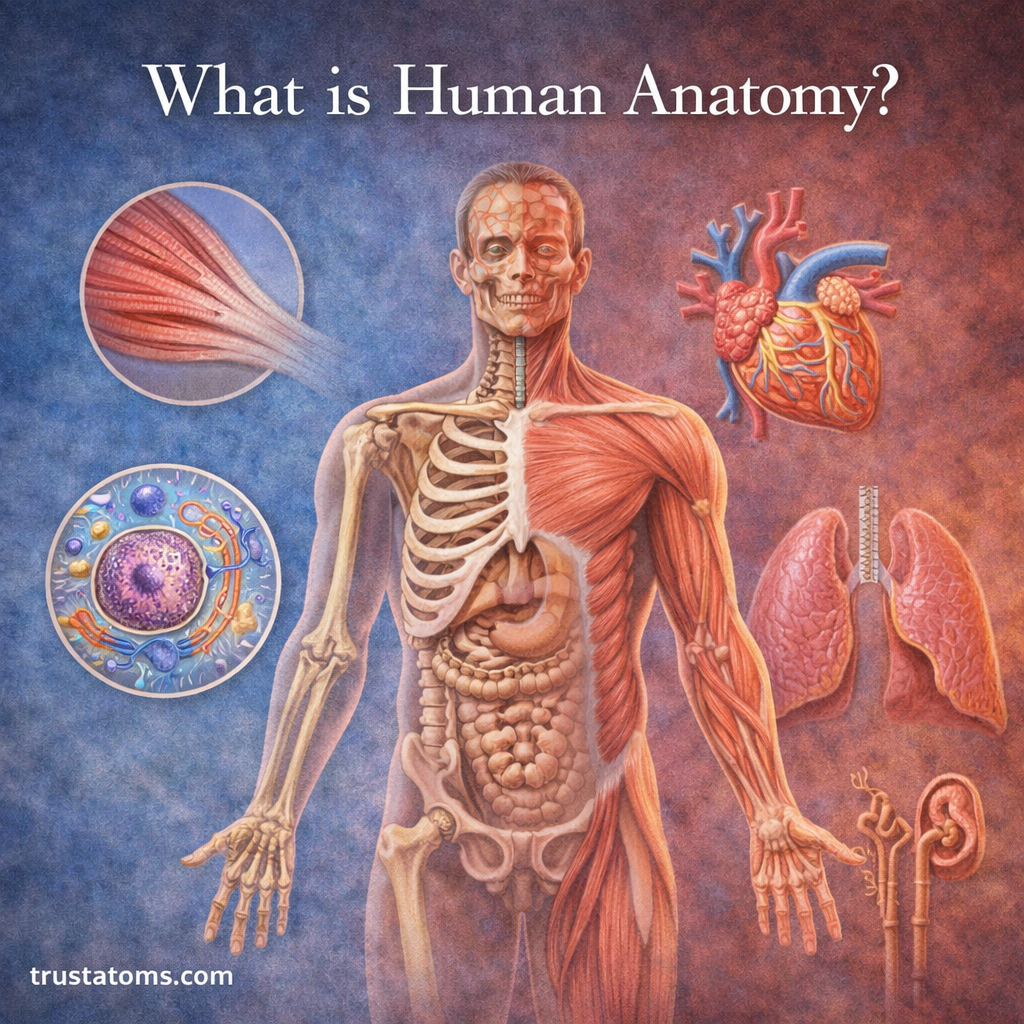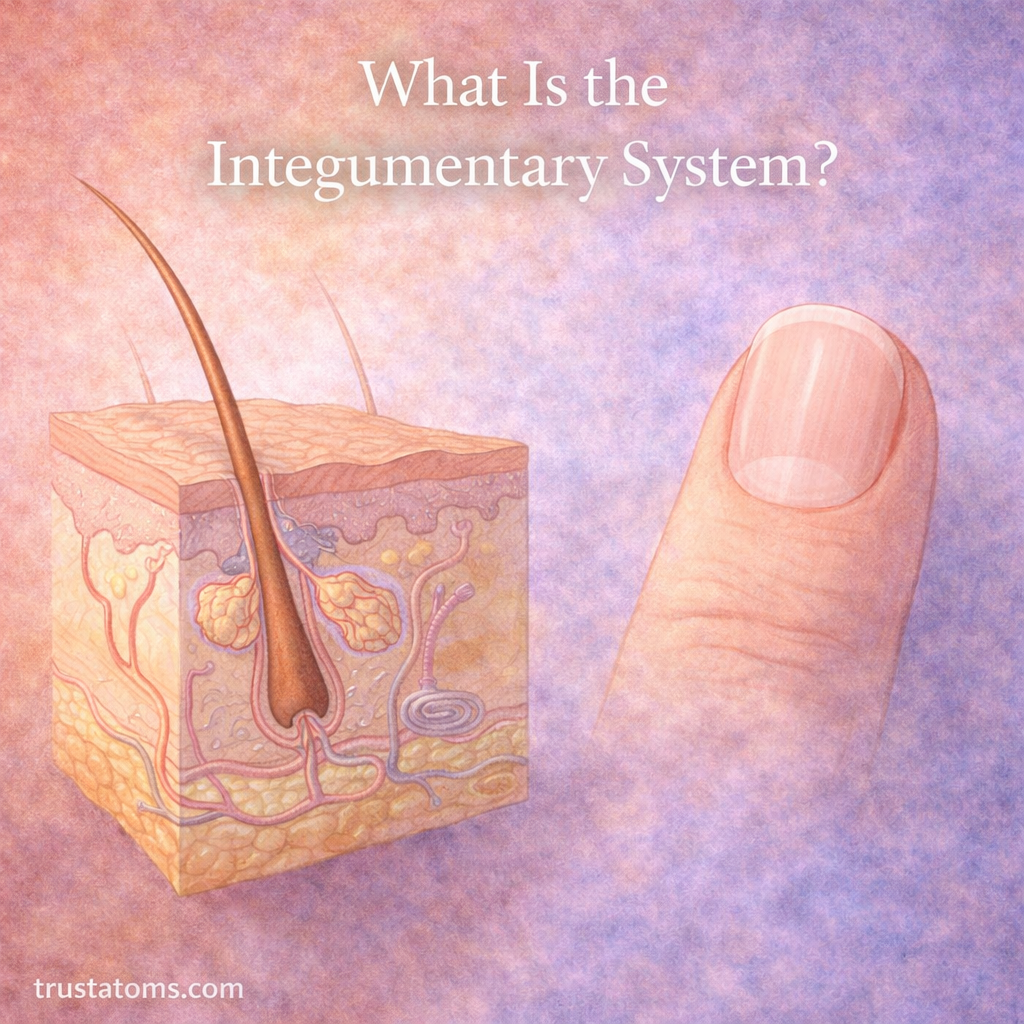
The integumentary system is the body system made up of the skin, hair, nails, sweat glands, and oil glands. It protects the body from injury and harmful microorganisms, limits water loss, helps regulate temperature, and allows us to sense the environment.
Think of it as a living protective boundary between your internal organs and the outside world. In human anatomy, the integumentary system is studied as a group of connected structures that work with the nervous, circulatory, and immune systems to maintain normal body functions.
Everyday activities demonstrate its functions. Your skin detects the heat of a cup, sweat helps cool you during exercise, and a small cut gradually closes as damaged tissue repairs itself.
What Makes Up the Integumentary System?
The integumentary system includes the skin and several structures that develop from it. Although these components look different, they contribute to protection, sensation, and regulation.
| Structure | Main Function | Everyday Example |
|---|---|---|
| Skin | Protects tissues and limits water loss | Forms a barrier against germs and friction |
| Hair | Provides protection and sensory assistance | Eyelashes help keep particles away from the eyes |
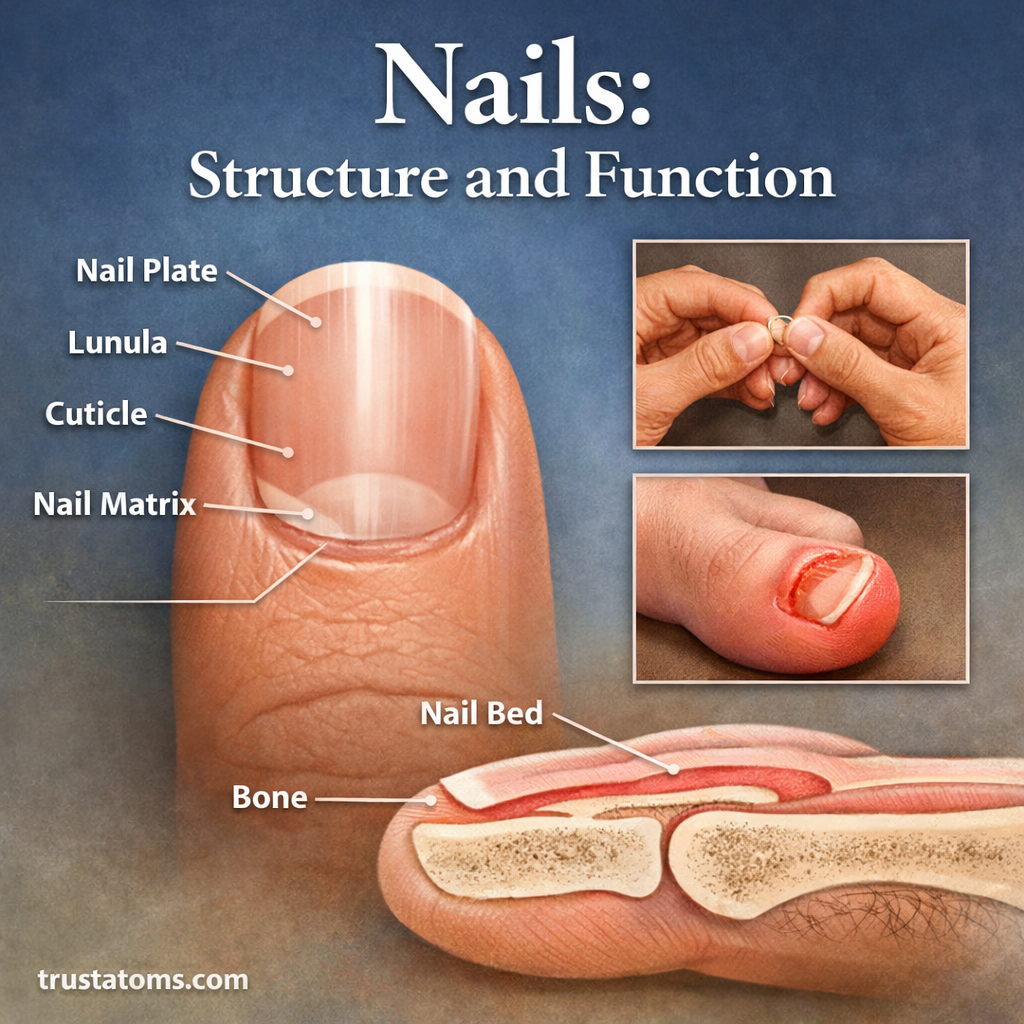
| Nails | Protect fingertips and support precise movements | Help you pick up small objects |
| Sweat glands | Produce sweat for cooling | Release sweat during exercise |
| Sebaceous glands | Produce oil that lubricates skin and hair | Help prevent skin and hair from becoming excessively dry |
These structures do not operate independently. Hair follicles interact with nerves, glands release substances onto the skin, and blood vessels beneath the surface help control heat exchange.
Structure of the Skin
The skin is the body’s largest organ by surface area. It has two principal layers, the epidermis and dermis, supported by a deeper region called the hypodermis. Each region has a different structure and purpose.
Epidermis: The Outer Protective Layer
The epidermis is the outermost skin layer. It contains keratinocytes, cells that produce keratin and help form a tough, water-resistant barrier. Its outermost cells are continually shed and replaced by cells produced deeper in the epidermis.
The epidermis also contains melanocytes, which produce melanin. This pigment contributes to skin color and helps reduce some damage caused by ultraviolet radiation. Melanin does not provide complete protection against sunlight.
Dermis: Strength, Sensation, and Circulation
The dermis lies beneath the epidermis and contains collagen and elastic fibers that provide strength and flexibility. Unlike the epidermis, it contains blood vessels that deliver nutrients and participate in temperature regulation.
The dermis also houses sensory nerve endings, hair follicles, and many sweat and oil glands. These structures help explain why skin can detect pressure, respond to temperature changes, and produce sweat.
Hypodermis: Insulation and Cushioning
The hypodermis, also called subcutaneous tissue, lies beneath the dermis. It consists largely of fat and connective tissue and is generally considered a supporting layer rather than part of the skin proper.
It cushions deeper tissues, stores energy, reduces heat loss, and helps anchor the skin to underlying structures. Its thickness varies considerably across different body regions and between individuals.
For a closer look at the arrangement of these tissues, see Skin Structure: Epidermis and Dermis.
Other structures extend into or develop from the skin. Hair Structure and Growth Cycle explains how follicles produce hair and how individual hairs pass through growth and resting phases. Sebaceous Glands and Skin Oils examines the glands that release sebum into many hair follicles.
How the Integumentary System Protects the Body
Protection involves more than creating a physical covering. The skin uses structural, chemical, and immune defenses to limit damage from the environment.
- Physical protection: Closely packed epidermal cells and keratin resist friction and help prevent microorganisms from entering.
- Water retention: Lipids between outer skin cells reduce excessive evaporation and dehydration.
- Chemical defense: Skin secretions and its normally mildly acidic surface can discourage the growth of some harmful microorganisms.
- Immune surveillance: Specialized immune cells recognize potential threats and help coordinate defensive responses.
- UV protection: Melanin absorbs and disperses some ultraviolet radiation, although sunlight can still damage skin cells.
The skin also supports communities of microorganisms collectively called the skin microbiome. Many of these organisms coexist harmlessly with the body and can help limit the establishment of certain pathogens.
How Skin Regulates Body Temperature
The integumentary system helps keep internal temperature within a range compatible with normal cellular activity. It does this primarily through sweating and changes in blood flow near the skin surface.
Sweat glands release moisture to cool the body. More precisely, cooling occurs when sweat evaporates and carries heat away from the skin. Sweat that simply drips off without evaporating provides much less cooling.
When the body becomes warm, blood vessels supplying the skin can widen, increasing blood flow near the surface and allowing more heat to escape. In cold conditions, these vessels narrow, helping reduce heat loss.
Worked Example: Cooling During Exercise
Imagine a person exercising on a warm day. Their muscles generate heat, their internal temperature begins to rise, and the nervous system activates cooling responses.
- Sweat glands release fluid onto the skin surface.
- Warm blood circulates through vessels near the skin.
- As sweat evaporates, it absorbs heat from the skin.
- Heat loss helps counteract the additional heat produced by working muscles.
Under favorable conditions, evaporating 100 grams of sweat can remove approximately 240 kilojoules of heat. This is a simplified physical estimate, not a guarantee of actual body cooling. Humidity, airflow, clothing, and the amount of sweat that evaporates all affect the result.
How Skin Detects Touch, Pain, and Temperature
Sensory nerve endings and specialized receptors in the skin detect mechanical forces, temperature changes, and potentially damaging stimuli. They transmit electrical signals through sensory nerves to the spinal cord and brain.
Different receptors respond to different types of stimulation. Mechanoreceptors detect touch, pressure, and vibration; thermoreceptors detect temperature changes; and nociceptors respond to potentially harmful conditions associated with pain.
For example, touching a hot baking tray activates temperature-sensitive and pain-related nerve endings. The nervous system can trigger a rapid withdrawal reflex through spinal cord circuits, helping move the hand away before further injury occurs.
Hair and Nails: Protection and Everyday Function
Hair
Hair consists primarily of keratin and grows from follicles embedded in the skin. Scalp hair provides some protection against sunlight, eyebrows help divert moisture, and eyelashes reduce the likelihood of particles reaching the eyes.
Hair also assists sensation. When a hair bends, nerve endings associated with its follicle can detect the movement, allowing the body to notice light contact.
Nails
Nails are made of keratin and protect the tips of fingers and toes.
The hard nail plate supports the sensitive fingertip during tasks such as scratching, gripping, and picking up small objects. Nails grow from specialized tissue called the nail matrix, located near their base.
Changes in nail appearance can sometimes reflect injury or health conditions, but nail color, ridges, or texture alone cannot reliably diagnose a disease.
Sweat and Oil Glands
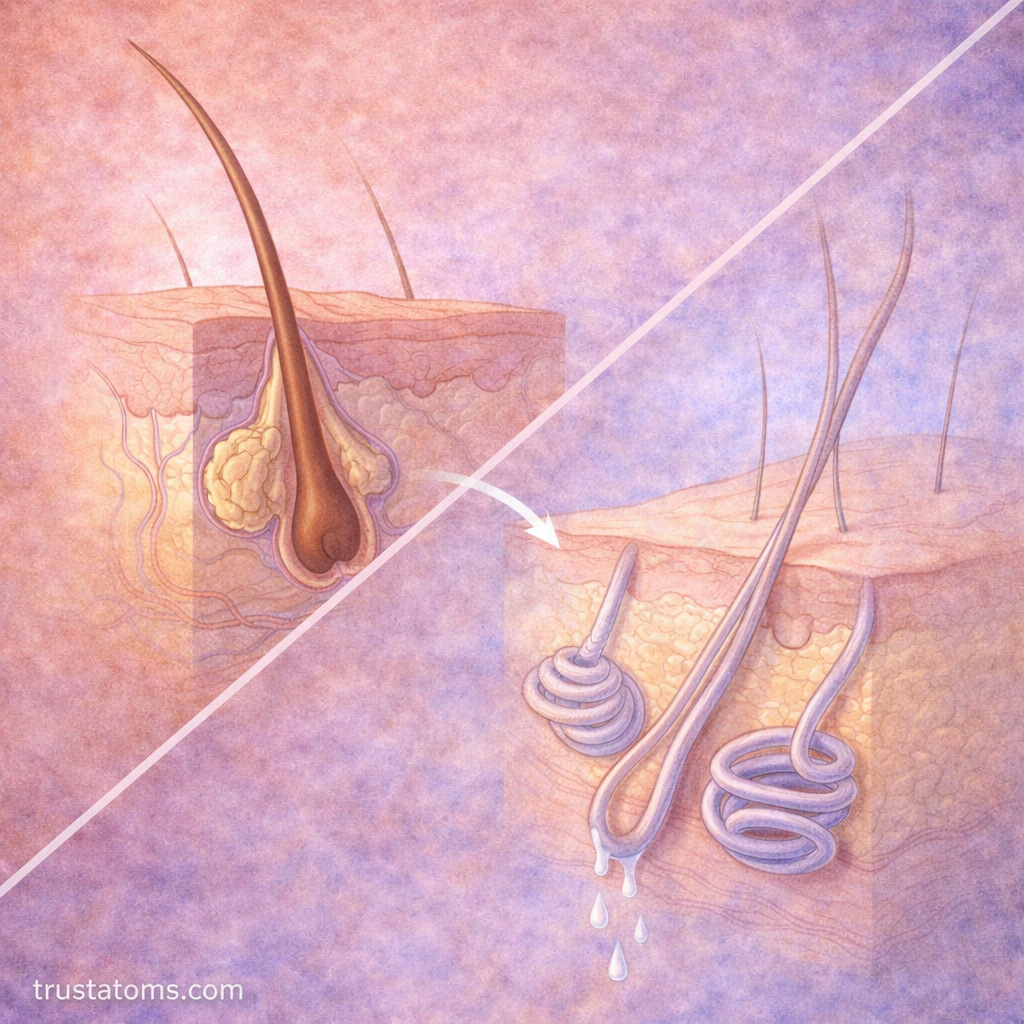
Eccrine and Apocrine Sweat Glands
Eccrine sweat glands occur across much of the body, including the palms, soles, and forehead. They produce a mostly watery secretion that reaches the skin surface and supports evaporative cooling.
Apocrine sweat glands are concentrated in certain regions, including the armpits. Their secretions enter hair follicles and can contribute to body odor when skin bacteria break down components of the fluid.
Sebaceous Glands
Sebaceous glands produce sebum, an oily mixture that lubricates the skin and hair. Most are associated with hair follicles, although some occur independently.
Sebum contributes to the skin’s surface environment and helps reduce dryness. Excess sebum, clogged follicles, and inflammation can contribute to acne, but sebum itself is a normal and useful secretion.
Vitamin D Production and Other Skin Functions
When ultraviolet B radiation reaches the skin, it initiates a chemical process that produces vitamin D3 from a cholesterol-derived compound. The liver and kidneys subsequently process vitamin D into forms used by the body to regulate calcium and phosphate balance.
Vitamin D supports bone mineralization and other physiological processes. However, excessive UV exposure increases the risk of skin damage and skin cancer, so vitamin D production is not a reason to seek sunburn or prolonged unprotected sunlight.
Sweat also contains small quantities of salts and metabolic waste products. Nevertheless, the kidneys and liver handle most waste removal and chemical processing. Sweating is primarily a cooling mechanism, not a major detoxification pathway.
How Skin Repairs a Small Cut
Skin repair demonstrates how the integumentary, circulatory, and immune systems cooperate. Consider a shallow cut that extends into the dermis.
- Clotting: Platelets and clotting proteins help form a blood clot that limits bleeding.
- Inflammation: Immune cells remove damaged material and help defend against microorganisms.
- Tissue formation: Skin cells migrate across the wound while connective tissue and small blood vessels develop beneath them.
- Remodeling: Collagen is reorganized over time, strengthening the repaired area, although scar tissue may differ from the original skin.
Healing time depends on wound depth, location, circulation, infection risk, and overall health. A superficial scrape and a deep cut therefore follow related biological processes but may require very different recovery periods.
Common Conditions Affecting the Integumentary System
Skin, hair, nails, and glands can be affected by inflammatory, infectious, genetic, and environmental conditions.
| Condition | What Happens |
|---|---|
| Acne | Hair follicles become clogged and inflamed, sometimes forming pimples |
| Eczema | Skin inflammation often causes dryness, itching, and irritation |
| Psoriasis | Immune-related inflammation produces thickened, scaly skin patches |
| Sunburn | Excessive UV exposure damages skin cells and causes inflammation |
| Skin infections | Bacteria, fungi, or viruses affect skin tissues |
Routine skin care includes gentle cleansing, protecting skin from excessive UV exposure, avoiding unnecessary irritation, and keeping wounds clean. Persistent rashes, changing skin lesions, or signs of infection deserve assessment by a qualified health professional.
Common Misconceptions
Misconception: Skin Is Just a Passive Covering
Skin is a living organ containing active cells, nerves, immune defenses, and specialized structures. It continually responds to environmental changes and repairs many forms of damage.
Misconception: Sweating Removes Most Toxins
Although sweat contains small amounts of waste substances, its main purpose is temperature regulation. The kidneys and liver perform the body’s principal waste-processing and elimination functions.
Misconception: Darker Skin Cannot Be Damaged by Sunlight
Higher melanin levels provide some natural protection against ultraviolet radiation, but people of every skin tone can experience UV damage and develop skin cancer.
Misconception: Hair and Nails Are Entirely Living Tissue
The visible hair shaft and nail plate consist mainly of dead, keratinized cells. Their growth depends on living cells within hair follicles and nail matrices.
Frequently Asked Questions
What Are the Five Main Parts of the Integumentary System?
The five commonly listed components are skin, hair, nails, sweat glands, and sebaceous glands. Together they provide protection, sensory information, lubrication, and temperature regulation.
What Are the Main Functions of the Integumentary System?
Its major functions include protecting the body, limiting water loss, regulating temperature, detecting sensory stimuli, supporting immune defenses, and initiating vitamin D production in response to UVB radiation.
Is the Hypodermis Part of the Skin?
The hypodermis lies directly beneath the dermis and supports the skin, but anatomically it is usually classified as subcutaneous tissue rather than one of the skin’s two principal layers.
How Does the Integumentary System Work With the Nervous System?
Skin receptors send information about touch, temperature, and potentially harmful stimuli to the nervous system. Nerve signals also help control sweating and blood vessel responses involved in temperature regulation.
Why Is the Skin Considered an Organ?
Skin qualifies as an organ because it contains multiple tissue types working together to perform specific functions. Its epithelial, connective, nervous, and vascular components cooperate to protect and regulate the body.
The integumentary system combines a durable outer barrier with active sensory, immune, and temperature-control mechanisms. Understanding its skin layers, glands, hair, and nails helps explain familiar experiences such as sweating, feeling heat, and healing after a minor injury.
This article is for general education and is not medical advice. Talk to a qualified health professional about any medical concern.
Sources: OpenStax, Anatomy and Physiology 2e; National Cancer Institute, SEER Training Modules: Integumentary System; National Library of Medicine, MedlinePlus; National Institute of Arthritis and Musculoskeletal and Skin Diseases (NIAMS).