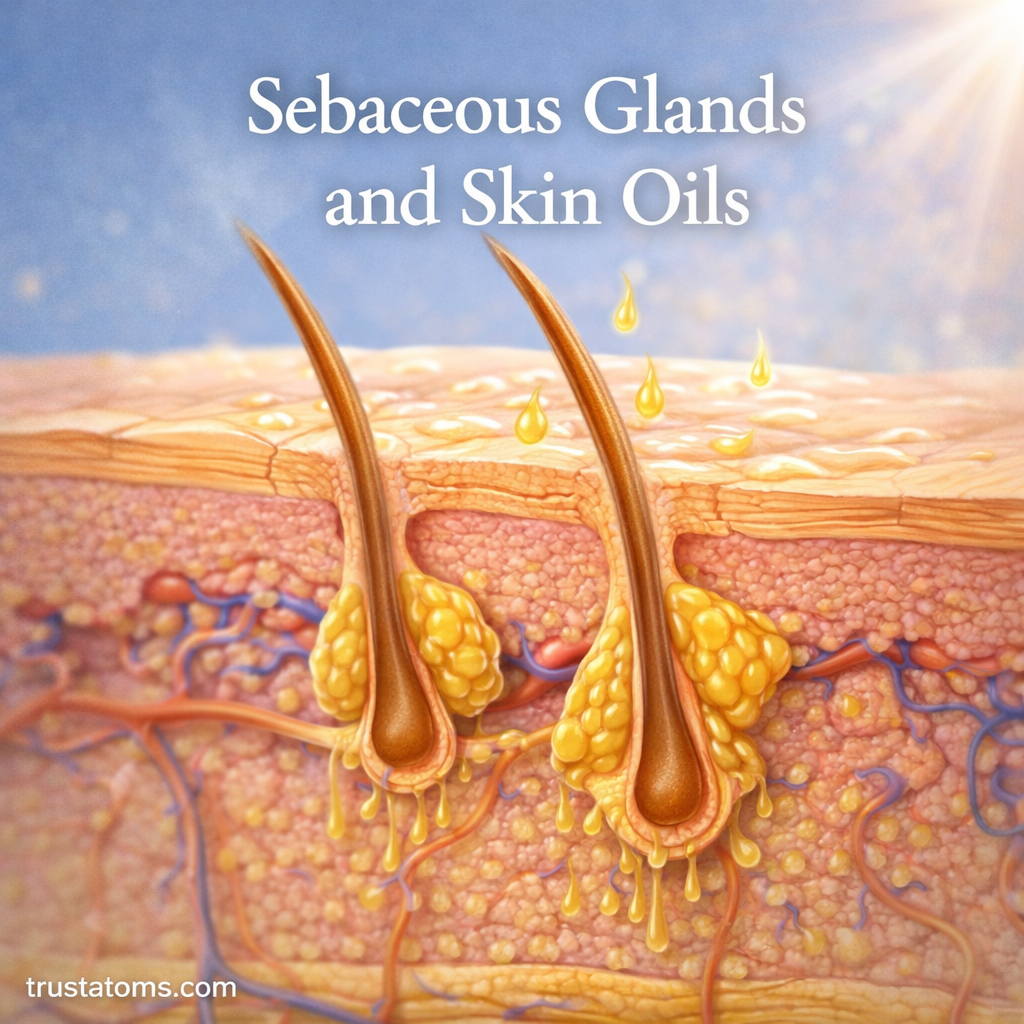
Sebaceous glands are small glands in the skin that produce sebum, an oily mixture that lubricates the skin and hair and contributes to surface protection. Their activity is influenced by hormones, genetics, and age, and changes in sebum production can contribute to oily skin, acne, and other skin concerns.
Most sebaceous glands connect to hair follicles, allowing sebum to reach the skin surface through the follicular opening. Understanding these glands adds detail to human anatomy and explains why oil production differs between body regions and across different stages of life.
What Are Sebaceous Glands?
Sebaceous glands are microscopic, oil-producing glands located mainly in the dermis. Most are attached to hair follicles, forming part of structures called pilosebaceous units.
These units combine a hair follicle, its associated sebaceous gland, and supporting structures. The relationship between follicles and skin oils is easier to understand alongside Hair Structure and Growth Cycle.
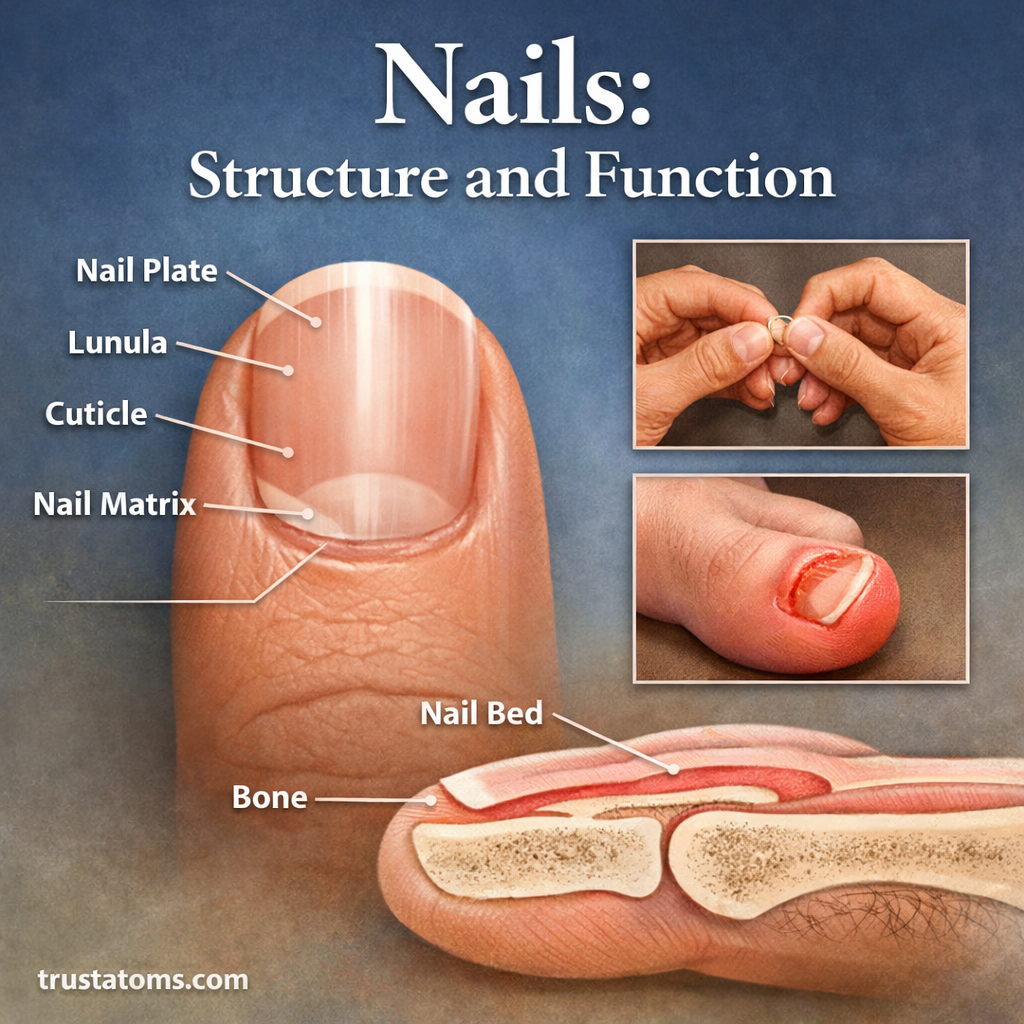
Sebaceous glands belong to the Integumentary System, which includes the skin, hair, nails, and associated glands. Unlike sweat glands, sebaceous glands primarily produce lipids rather than watery secretions. Sweat Glands and Thermoregulation explains how sweat production contributes to cooling the body.
Sebaceous glands occur across much of the skin but are absent from the palms and soles. They are particularly numerous on the face, scalp, chest, and upper back. Some specialized sebaceous glands open directly onto skin or mucosal surfaces rather than into hair follicles.
How Sebaceous Glands Produce and Release Sebum
Sebaceous glands use a secretion process called holocrine secretion. Cells within the gland accumulate lipids as they mature, then break down and release their contents into the gland’s duct.
New cells replace those that are lost, allowing sebum production to continue. In most locations, the oily material enters a hair follicle and travels toward the skin surface.
This process differs from sweat secretion because the entire mature sebaceous cell contributes to the released material. Sebum then spreads over nearby skin and hair through ordinary movement and contact.
What Is Sebum Made Of?
Sebum is a complex mixture of lipids rather than a single type of oil. Its composition helps explain how it spreads across skin, interacts with microorganisms, and conditions hair.
| Sebum Component | Function or Characteristic |
|---|---|
| Triglycerides | Major lipid components that can be broken down into free fatty acids. |
| Wax esters | Contribute to the oily coating of skin and hair. |
| Squalene | A characteristic human sebum lipid that contributes to surface lubrication. |
| Free fatty acids | Influence skin surface chemistry and interactions with microorganisms. |
| Cholesterol and cholesterol esters | Form smaller portions of the overall lipid mixture. |
The proportions of these substances vary among individuals and body regions. Sebum also mixes with lipids from epidermal cells after reaching the skin surface.
How Sebum Supports Skin and Hair
Lubricating the Skin
Sebum forms part of the skin’s surface lipid film. It helps reduce friction and contributes to the skin’s smooth, flexible feel.
However, the skin’s main barrier against water loss comes from the outer epidermis, particularly its organized lipid layers. Sebum contributes to surface conditioning but does not replace this deeper barrier.
Conditioning Hair
As sebum moves along hair shafts, it helps lubricate the fibers and reduces friction. This coating contributes to the appearance and feel of hair, although the amount reaching different parts of a hair shaft varies with hair length, texture, and grooming.
Interacting With Skin Microorganisms
Some components of sebum and their breakdown products have antimicrobial activity. Sebum also provides nutrients for certain microorganisms that normally inhabit the skin.
These interactions are complex: skin oils can support normal microbial communities while also contributing to conditions involving inflammation or altered microbial activity.
How Hormones and Age Affect Sebum Production
Androgens are major regulators of sebaceous gland activity. These hormones are present in people of all sexes and can stimulate gland development and lipid production.
Sebaceous glands become more active during puberty as androgen signaling increases. This helps explain why oily skin and acne commonly emerge during adolescence.
Sebum production can also change with age, genetic background, and hormonal conditions. Gland activity often decreases later in adulthood, although the pattern varies between individuals.
Environmental conditions and skincare products can influence how oily the skin feels, but surface shine does not always reveal the precise amount of sebum a gland produces.
How Sebaceous Glands Contribute to Acne
Acne develops within pilosebaceous units when several processes occur together. Increased sebum production can contribute, but oil alone does not explain every breakout.
The main processes include:
- Increased sebum production: Hormonal activity can raise the amount of oil entering follicles.
- Abnormal follicular shedding: Skin cells accumulate and contribute to blocked follicular openings.
- Microbial activity: Cutibacterium acnes interacts with sebum and the follicular environment.
- Inflammation: Immune responses contribute to redness, swelling, and painful lesions.
Blocked follicles may form open comedones, commonly called blackheads, or closed comedones, called whiteheads. More inflamed lesions can develop into papules, pustules, or deeper nodules.
For example, an adolescent may notice increased shine across the forehead and nose during puberty. If excess sebum combines with follicular blockage and inflammation, acne lesions may develop in those areas, but oily skin does not guarantee acne.
Oily vs Dry Skin: Understanding the Difference
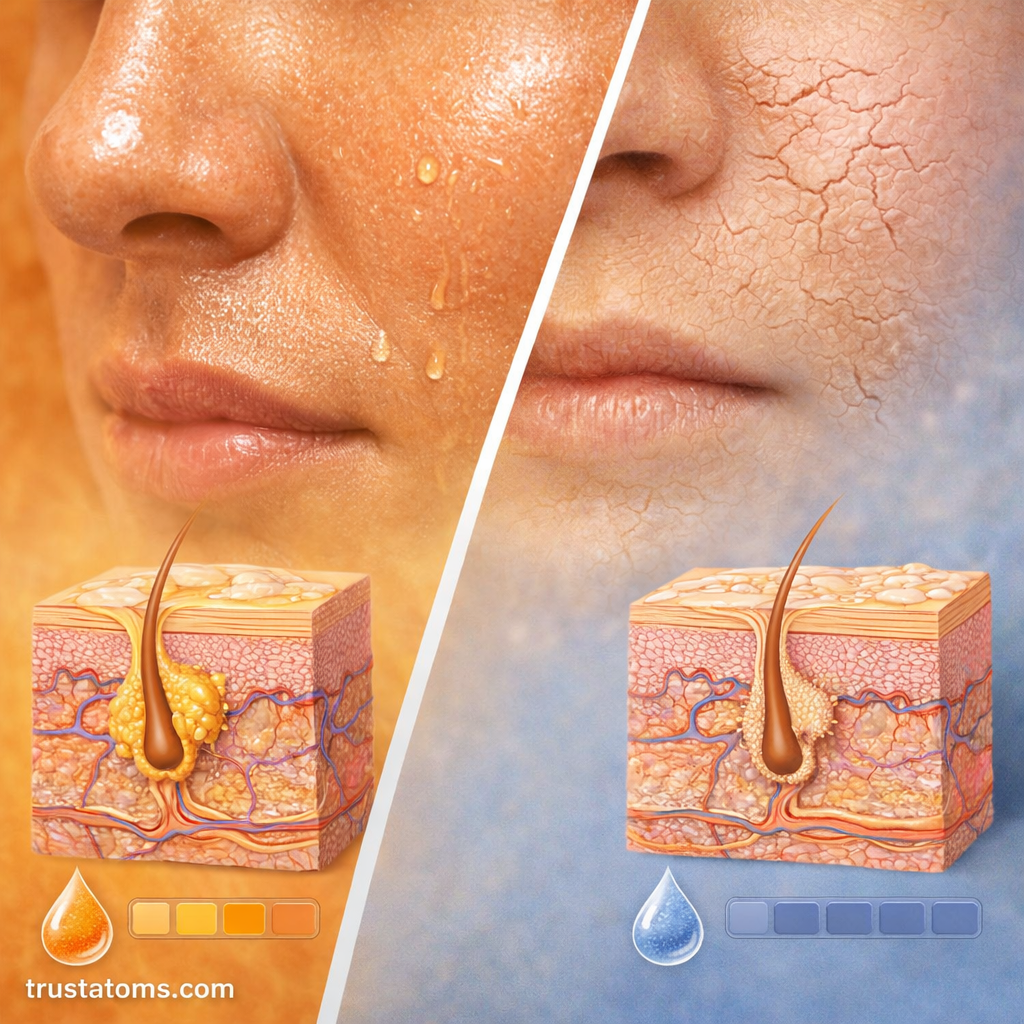
Oily skin typically has a noticeable surface sheen and may be associated with more visible pores. Dry skin often feels rough, tight, or flaky, but dryness is not always caused by low sebaceous gland activity.
The skin’s ability to retain water depends heavily on the outer epidermis. Skin Barrier Function and Protection explains how structural lipids and skin cells limit water loss.
Understanding Skin Structure also helps distinguish the dermis, where most sebaceous glands are located, from the epidermis, which forms the primary protective barrier.
Oily skin can still become dehydrated when its water content is low. Similarly, dry skin may result from environmental exposure, harsh cleansing, or barrier disruption even when sebaceous glands remain active.
Other Conditions Associated With Sebaceous Glands
Several conditions involve sebaceous glands or the oil-rich environments surrounding hair follicles.
- Seborrheic dermatitis: An inflammatory condition associated with Malassezia yeasts and individual skin responses, often affecting oily regions such as the scalp and face.
- Sebaceous hyperplasia: Enlargement of sebaceous glands that can produce small, often yellowish bumps, particularly on the face.
- Acne: Inflammation and follicular blockage involving the pilosebaceous unit.
- Oily scalp: Accumulation of sebum on the scalp and hair, which may affect appearance and grooming needs.
These conditions have different causes and should not all be treated as simple excess oil production. Persistent or changing skin lesions may require professional evaluation.
How to Care for Oily or Dry Skin
Skin care should support the protective barrier while addressing discomfort, excess surface oil, or clogged pores.
- Cleanse gently: Use a mild cleanser suited to your skin and avoid repeated harsh scrubbing.
- Moisturize when needed: Lightweight, noncomedogenic moisturizers can support hydration without feeling excessively greasy.
- Protect against sunlight: Choose broad-spectrum sunscreen appropriate for your skin type.
- Manage clogged pores carefully: Salicylic acid may help reduce follicular blockage, although irritation can occur.
- Avoid aggressive oil removal: Excessive washing can irritate and dry the skin without reliably reducing glandular sebum production.
Ingredients such as niacinamide may help some people with oiliness, while humectants such as glycerin and hyaluronic acid support hydration. Results depend on the formulation, skin condition, and individual response.
Frequently Asked Questions
What is the main function of sebaceous glands?
Their main function is to produce sebum, which lubricates skin and hair and contributes to the skin’s surface lipid environment. Sebum also interacts with microorganisms and other protective substances on the skin.
Does oily skin always cause acne?
No. Excess sebum can contribute to acne, but follicular blockage, microbial activity, and inflammation are also involved. Some people have oily skin without frequent breakouts.
Can washing your face too often increase oil production?
Frequent harsh washing can remove surface oils and irritate the skin, but it does not reliably cause sebaceous glands to produce more sebum. Gentle cleansing is generally preferable to repeated aggressive washing.
Sebaceous glands continually produce the lipid mixture that coats skin and hair, with activity shaped strongly by hormones and individual biology. Healthy skin depends not on eliminating sebum but on maintaining a functional epidermal barrier and addressing excess oil or inflammation when it causes problems.
This article is for general education and is not medical advice. Talk to a qualified health professional about any medical concern.
Sources: Bolognia Dermatology; Fitzpatrick’s Dermatology; American Academy of Dermatology.