Deserts are often seen as barren and lifeless, but they are some of the most dynamic landscapes on Earth. Shaped primarily by wind and limited water, deserts feature unique landforms created through erosion, transportation, and deposition.
Understanding desert landforms and wind erosion reveals how even the harshest environments are constantly changing over time.
What Defines a Desert?
A desert is a region that receives very little precipitation—typically less than 250 mm (10 inches) per year.
Common characteristics include:
- Sparse vegetation
- Extreme temperature variations
- Dry, loose surface materials
- Strong winds
These conditions make wind a dominant force in shaping the landscape.
What Is Wind Erosion?
Wind erosion is the process by which wind removes, transports, and deposits sediment.
It is especially effective in deserts because:
- There is little vegetation to hold soil in place
- The ground is often dry and loose
- Winds can travel long distances without obstruction
Processes of Wind Erosion
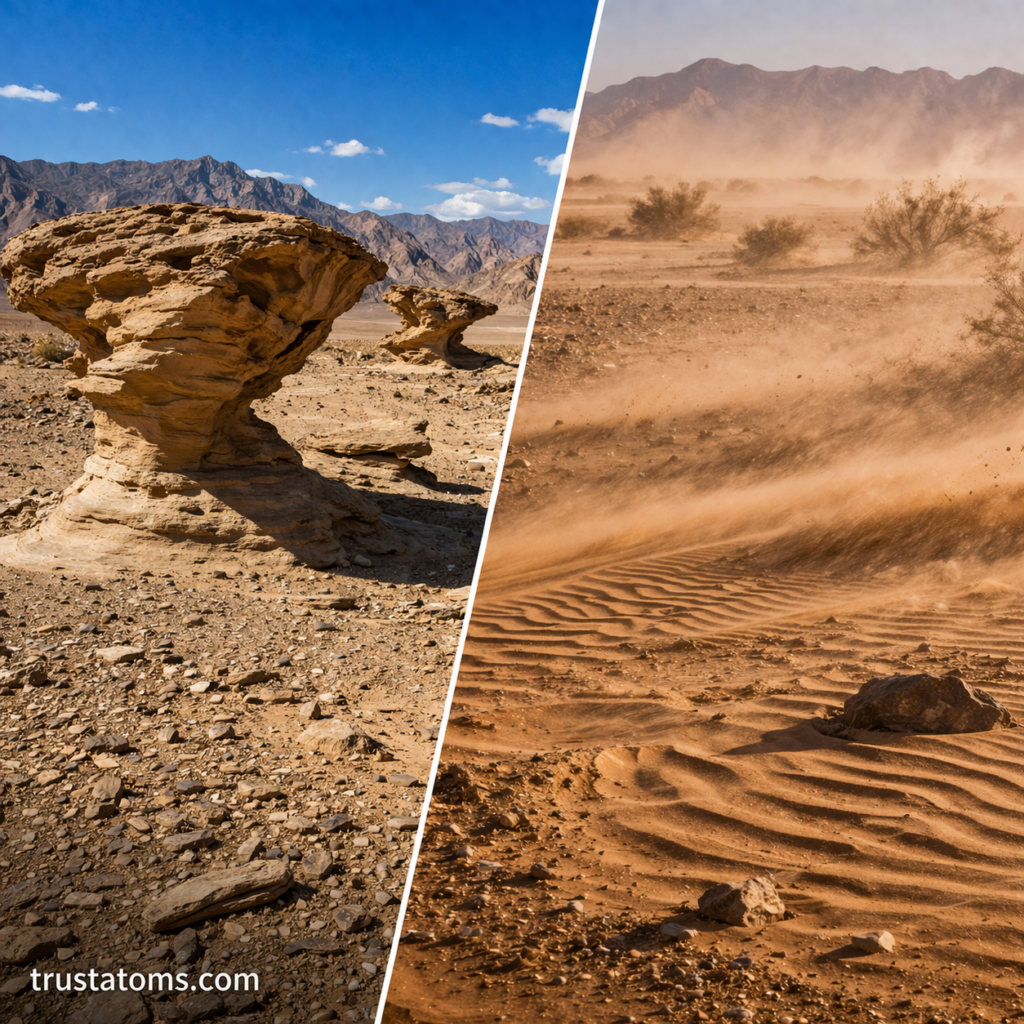
Wind shapes desert landscapes through three main processes:
Deflation
- Removal of loose, fine particles
- Leaves behind larger rocks and gravel
- Can create depressions in the ground
Abrasion
- Wind-driven sand particles scrape surfaces
- Smooths and polishes rocks
- Can carve unique shapes over time
Attrition
- Particles collide and break into smaller pieces
- Produces finer sediments like sand and dust
Transportation of Sediment
Wind moves particles in different ways depending on their size:
Suspension
- Fine dust and silt carried high into the air
- Can travel thousands of miles
Saltation
- Small particles bounce along the ground
- Most common form of movement in deserts
Surface Creep
- Larger particles roll or slide along the surface
Major Desert Landforms
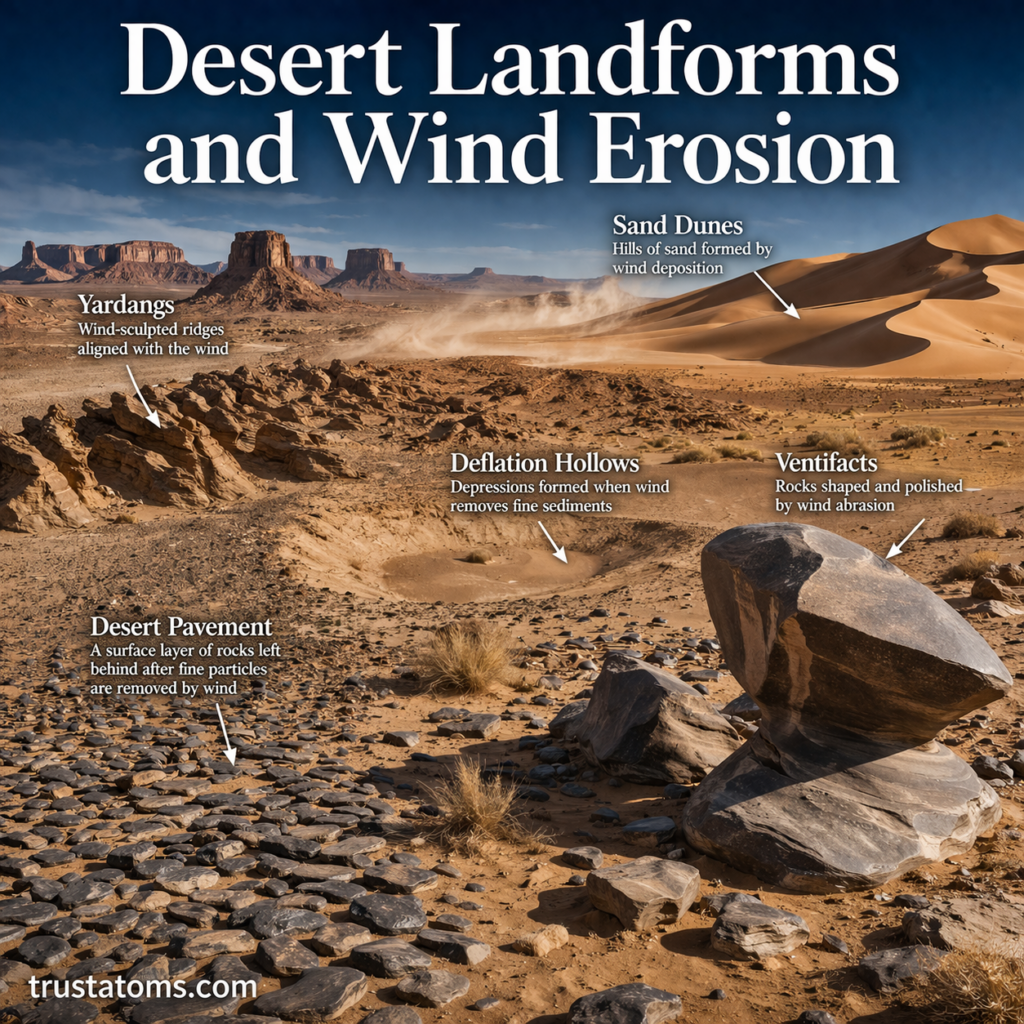
Wind erosion and deposition create a variety of distinct landforms.
Sand Dunes
- Formed by deposited sand
- Shaped by wind direction and strength
- Types include:
- Barchan dunes (crescent-shaped)
- Transverse dunes (wave-like ridges)
- Longitudinal dunes (parallel ridges)
Desert Pavement
- Surface covered with tightly packed stones
- Formed after fine particles are removed
- Creates a stable, rocky surface
Ventifacts
- Rocks shaped by wind abrasion
- Often have smooth, flat faces
- Can appear polished or faceted
Yardangs
- Streamlined ridges carved by wind
- Aligned with prevailing wind direction
- Formed in soft rock or sediment
Deflation Hollows
- Depressions formed by removal of loose material
- Can become large basins over time
Role of Water in Deserts
Although deserts are dry, water still plays a role in shaping landforms.
- Flash floods can rapidly erode land
- Temporary streams (wadis) form after rain
- Water helps transport sediments during rare events
Wind and water often work together to shape desert landscapes.
Factors Affecting Wind Erosion
Several factors influence how wind erosion occurs:
- Wind speed and consistency
- Surface texture and sediment size
- Vegetation cover (or lack of it)
- Moisture levels
- Topography
Changes in any of these factors can alter erosion patterns.
Human Impact on Desert Landscapes
Human activity can accelerate wind erosion:
- Overgrazing removes protective vegetation
- Deforestation exposes soil
- Poor land management increases soil loss
This can lead to desertification, where fertile land becomes desert-like.
Evidence of Wind Erosion
Scientists identify wind-shaped landscapes through:
- Smooth, polished rock surfaces
- Sand deposits and dune patterns
- Orientation of landforms like yardangs
- Dust accumulation in distant regions
These features help reconstruct environmental conditions.
Why Desert Landforms Matter
Desert landforms are important for several reasons:
- Provide insight into climate and environmental change
- Influence ecosystems and habitats
- Affect human activities like agriculture and settlement
- Help scientists understand erosion processes
Deserts are not static—they are constantly evolving systems.
Common Misconceptions
Deserts Are Lifeless
Many deserts support diverse plant and animal life adapted to harsh conditions.
Wind Is Always Strong
Wind varies in intensity, but even moderate winds can shape landscapes over time.
Sand Covers All Deserts
Many deserts are rocky or gravel-covered, not sandy.
Final Thoughts
Desert landforms and wind erosion highlight the power of natural forces in shaping Earth’s surface. Through deflation, abrasion, and deposition, wind creates dunes, rock formations, and vast desert plains.
By understanding these processes, we gain a clearer picture of how even the driest regions of the planet are constantly changing and evolving.