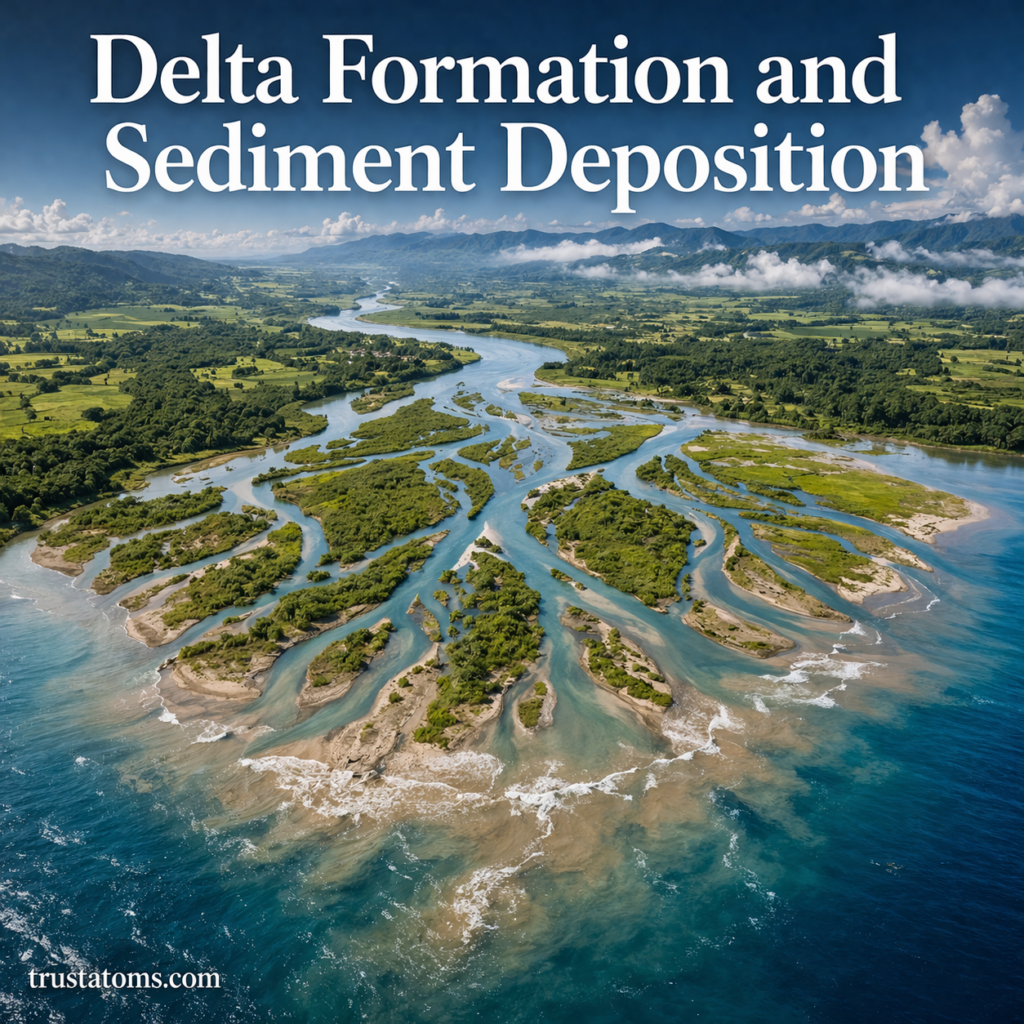
River deltas are some of the most fertile and dynamic landforms on Earth. Found where rivers meet larger bodies of water such as oceans, seas, or lakes, deltas are created through the gradual process of sediment deposition.
These landscapes are constantly changing, shaped by the balance between river flow, sediment supply, and wave or tidal activity. Understanding how deltas form helps explain not only Earth’s surface processes but also the development of ecosystems and human settlements.
What Is a Delta?
A delta is a landform that develops at the mouth of a river where it slows down and deposits sediment. Over time, these deposits build outward into the body of water, forming a fan-shaped or triangular area.
Deltas are typically characterized by:
- Multiple branching channels (distributaries)
- Flat, low-lying terrain
- Rich, fertile soils
- Wetlands and marshes
Famous examples include the Nile Delta, the Mississippi River Delta, and the Ganges-Brahmaputra Delta.
How Sediment Deposition Works
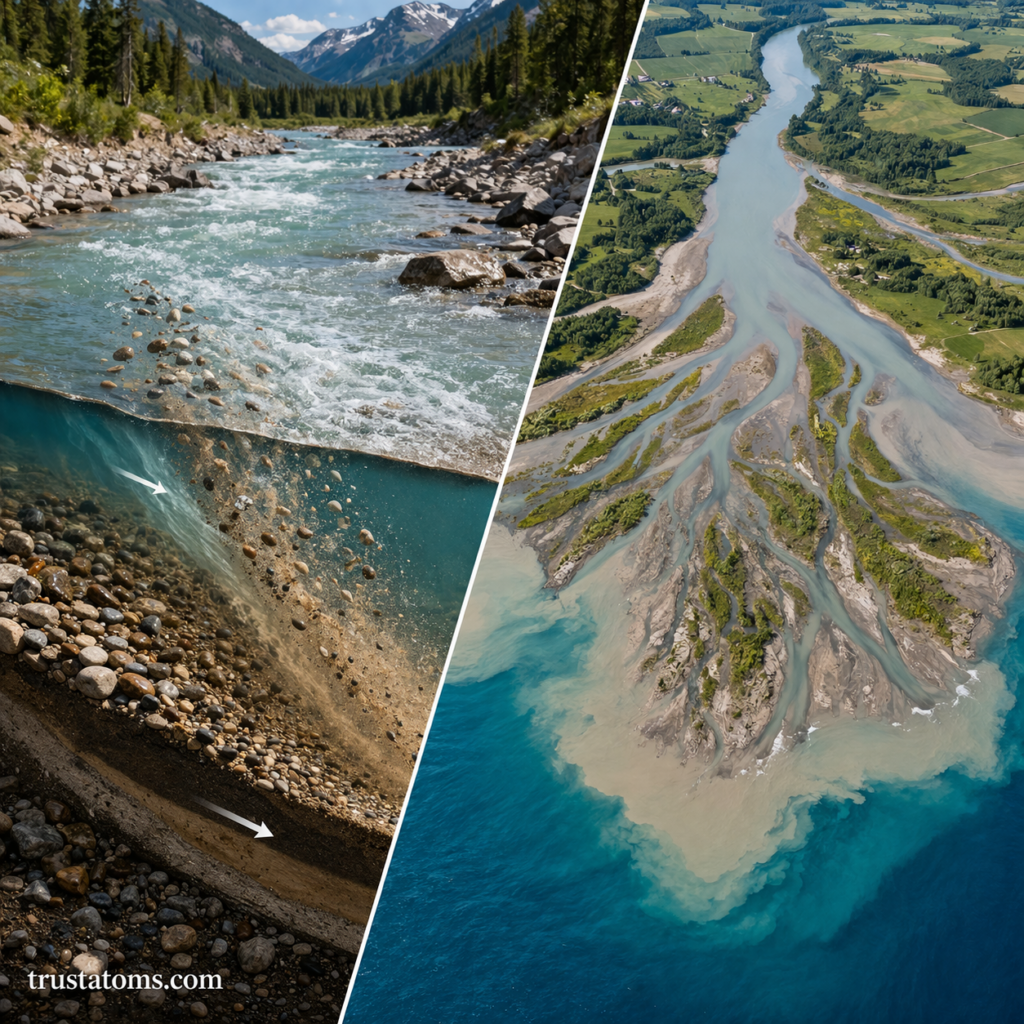
Sediment deposition is the key process behind delta formation.
As rivers flow downstream, they carry sediments such as:
- Sand
- Silt
- Clay
- Organic material
When the river reaches a larger body of water, its velocity decreases significantly. This causes the river to lose energy and drop the sediments it was carrying.
Why Deposition Occurs
- Water slows down at the river mouth
- Heavier particles settle first
- Finer particles are carried farther before settling
This gradual buildup of sediment creates new land over time.
Stages of Delta Formation
Delta formation is not a single event—it occurs through a series of stages over long periods.
1. Initial Sediment Accumulation
Sediments begin to collect at the river mouth as water slows down. Small deposits form underwater.
2. Channel Splitting (Distributaries)
As sediment builds up, the river channel becomes blocked and splits into smaller channels called distributaries.
3. Delta Expansion
More sediment is deposited, causing the delta to grow outward into the body of water.
4. Maturation
The delta becomes more complex, with multiple channels, wetlands, and ecosystems forming across the landscape.
Types of Deltas
Not all deltas look the same. Their shape and structure depend on environmental conditions such as wave action, tides, and sediment supply.
River-Dominated Deltas
- Form where river processes are stronger than waves or tides
- Feature long, narrow distributaries
- Example: Mississippi River Delta
Wave-Dominated Deltas
- Shaped by strong wave action that redistributes sediment
- Tend to have smoother, more uniform shorelines
- Example: Nile Delta
Tide-Dominated Deltas
- Influenced by strong tidal currents
- Feature wide channels and tidal flats
- Example: Ganges-Brahmaputra Delta
Key Features of a Delta
Deltas include a variety of landforms and environments.
Distributaries
Smaller channels that branch off from the main river, carrying water and sediment across the delta.
Levees
Raised banks formed by sediment deposited along the edges of river channels during floods.
Floodplains
Flat areas that are regularly flooded, adding more sediment and nutrients to the soil.
Wetlands and Marshes
Waterlogged areas rich in plant and animal life, often found in mature deltas.
Factors That Influence Delta Formation
Several variables determine how a delta forms and evolves.
Sediment Supply
- High sediment loads lead to faster delta growth
- Low sediment supply slows development
River Discharge
- Strong river flow carries more sediment
- Seasonal floods can increase deposition
Wave and Tidal Activity
- Strong waves can erode or reshape delta edges
- Tides can redistribute sediment and alter channels
Sea Level Changes
- Rising sea levels can submerge deltas
- Falling sea levels can expose more land
Importance of Deltas
Deltas are among the most valuable landscapes on Earth.
Agricultural Productivity
- Fertile soils support farming
- Ideal for crops like rice and wheat
Biodiversity
- Home to diverse ecosystems
- Support fish, birds, and plant species
Human Settlements
- Many major cities are located in deltas
- Provide access to water and transportation routes
Environmental Challenges Facing Deltas
Despite their benefits, deltas are vulnerable to both natural and human impacts.
Erosion and Land Loss
- Reduced sediment supply can cause deltas to shrink
- Coastal erosion can remove newly formed land
Flooding
- Low elevation makes deltas prone to flooding
- Storm surges and heavy rainfall increase risks
Pollution
- Industrial and agricultural runoff can contaminate water
- Affects ecosystems and human health
Subsidence
- Natural compaction or human activities can cause land to sink
- Increases vulnerability to sea level rise
Human Impact on Delta Systems
Human activities have significantly altered many delta environments.
Dam Construction
Dams trap sediment upstream, reducing the amount that reaches the delta.
Urban Development
Building on delta land can disrupt natural water flow and increase flood risk.
Water Diversion
Redirecting river water for irrigation or industry can reduce sediment delivery and weaken delta growth.
Managing and Protecting Deltas
Sustainable management is essential to preserve delta environments.
Key Strategies
- Restoring natural river flow
- Reducing pollution
- Managing sediment supply
- Protecting wetlands and natural barriers
Balancing development with environmental protection is crucial for long-term stability.
Final Thoughts
Delta formation is a powerful example of how rivers shape the Earth’s surface through sediment deposition. Over time, these processes create rich, fertile landscapes that support ecosystems and human life.
However, deltas are fragile and constantly changing. Understanding how they form—and the challenges they face—is key to protecting these vital environments for future generations.