Air pressure plays a major role in shaping everyday weather. Whether it’s a clear, sunny day or a cloudy, stormy one often depends on whether a high-pressure system or a low-pressure system is in control.
Understanding how these systems work helps explain wind patterns, cloud formation, and why weather conditions change.
What Is Air Pressure?
Air pressure is the force exerted by the weight of air above a given area.
- Measured using a barometer
- Typically expressed in millibars (mb) or inches of mercury (inHg)
- Changes with altitude and temperature
Warm air is generally less dense and associated with lower pressure, while cold air is denser and associated with higher pressure.
What Is a High-Pressure System?
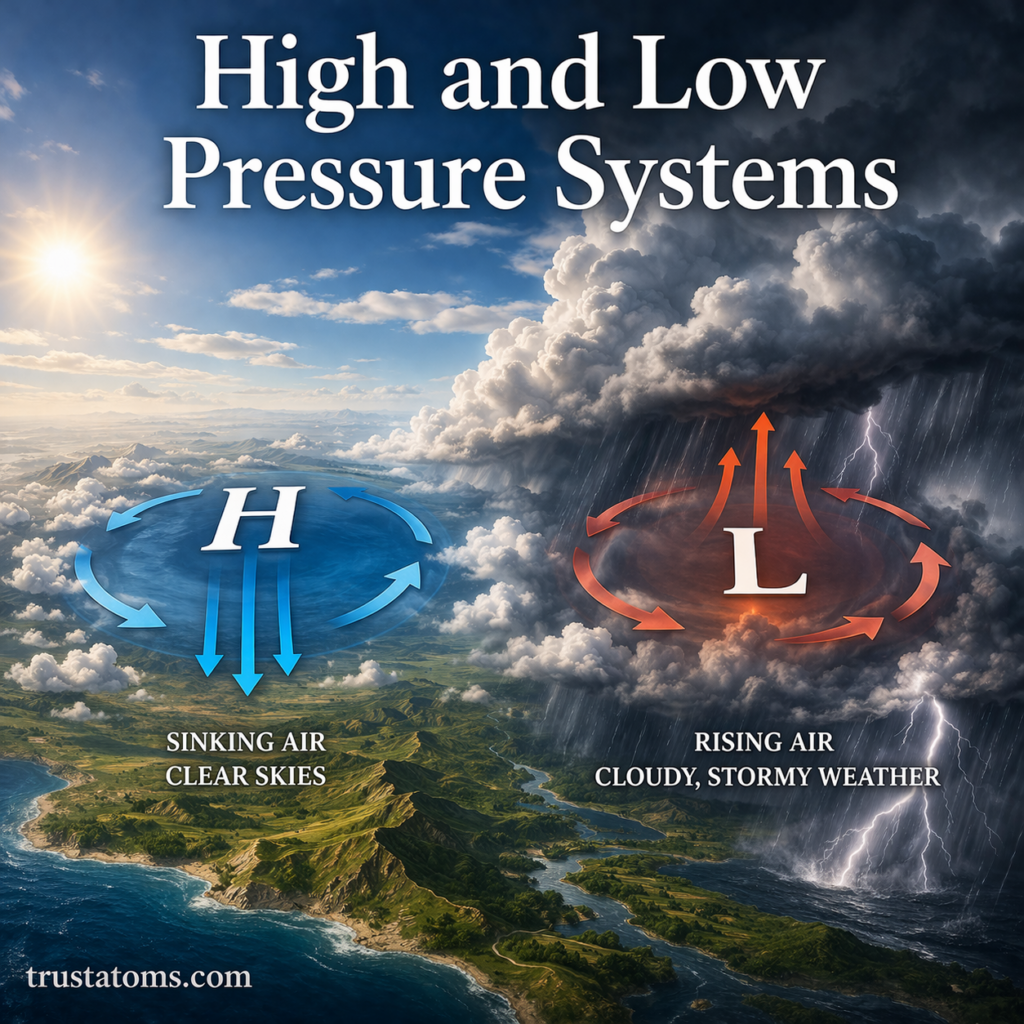
A high-pressure system is an area where the atmospheric pressure is higher than the surrounding environment.
Key Characteristics
- Air sinks toward the surface (subsidence)
- Skies are usually clear
- Weather is stable and calm
- Winds are generally light
Why High Pressure Brings Clear Skies
As air sinks, it warms and dries out. This prevents cloud formation, leading to sunny conditions.
What Is a Low-Pressure System?
A low-pressure system is an area where the atmospheric pressure is lower than the surrounding environment.
Key Characteristics
- Air rises upward
- Clouds form easily
- Weather is often unsettled
- Increased chance of precipitation
Why Low Pressure Brings Stormy Weather
Rising air cools as it expands, causing water vapor to condense into clouds. This process often leads to rain, snow, or storms.
How Air Moves: Wind and Pressure
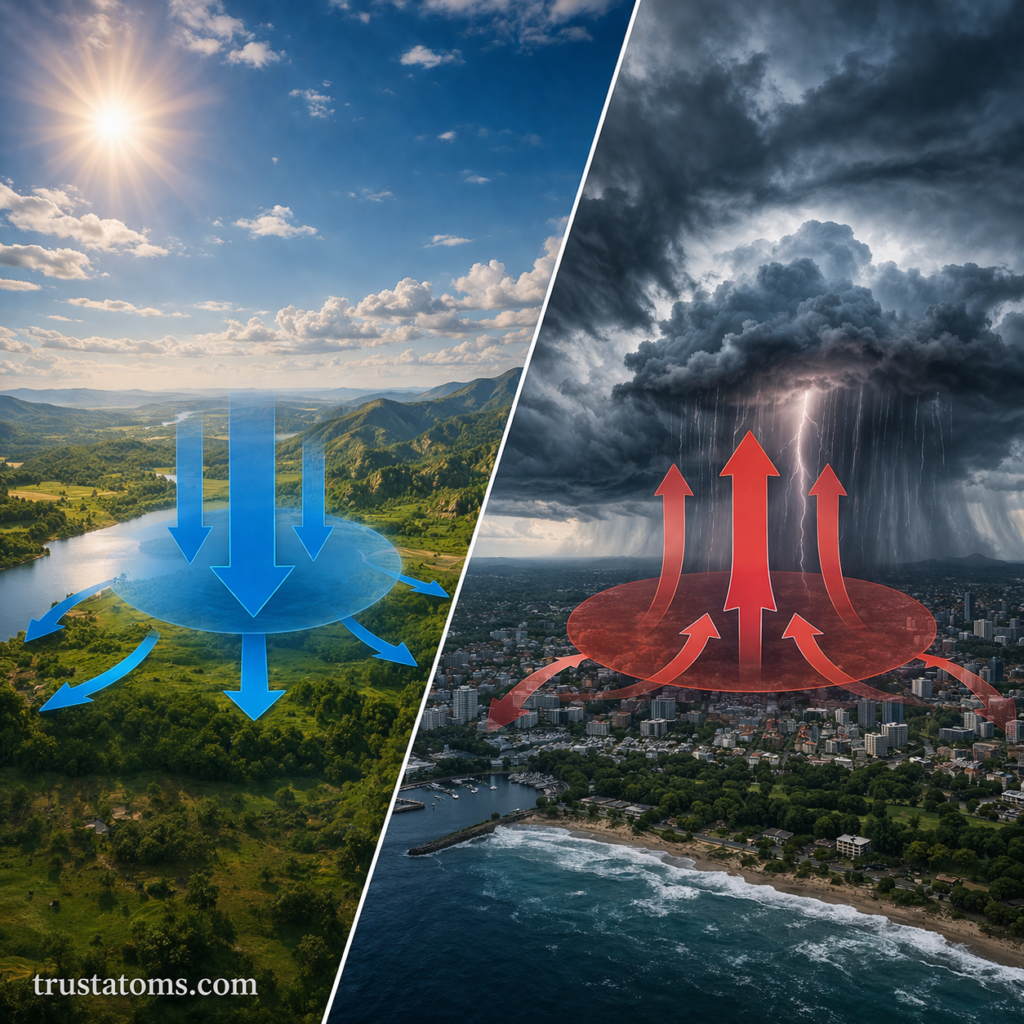
Air naturally moves from areas of high pressure to areas of low pressure.
What Drives Wind?
- Pressure differences (pressure gradient)
- Earth’s rotation (Coriolis effect)
- Surface friction
The greater the pressure difference, the stronger the wind.
Rotation of Pressure Systems
Pressure systems rotate differently depending on the hemisphere.
In the Northern Hemisphere
- High-pressure systems: Rotate clockwise
- Low-pressure systems: Rotate counterclockwise
In the Southern Hemisphere
- The rotation is reversed due to the Coriolis effect
This rotation influences wind direction and storm development.
High vs. Low Pressure: Key Differences
High-Pressure Systems
- Sinking air
- Clear skies
- Dry conditions
- Calm weather
Low-Pressure Systems
- Rising air
- Cloudy skies
- Wet conditions
- Stormy weather
Pressure Systems and Weather Patterns
High and low pressure systems often move across regions, bringing changing weather.
Typical Progression
- High pressure brings clear skies
- A low-pressure system approaches
- Clouds increase
- Precipitation develops
- The system passes and conditions improve
This cycle explains many day-to-day weather changes.
Fronts and Pressure Systems
Pressure systems are closely linked with frontal systems.
- Low-pressure systems are often associated with fronts and storms
- High-pressure systems tend to follow, bringing calmer weather
Low-pressure systems are especially important in driving large-scale weather patterns.
Why Pressure Systems Matter
Understanding pressure systems helps with:
- Weather forecasting
- Predicting storms and severe weather
- Planning daily activities
- Understanding climate patterns
Meteorologists rely heavily on pressure data to track and predict weather systems.
Final Thoughts
High and low pressure systems are the foundation of weather patterns. From calm, sunny days to intense storms, these systems control how air moves and how weather develops.
By learning how pressure influences the atmosphere, you gain a clearer understanding of why the weather behaves the way it does.