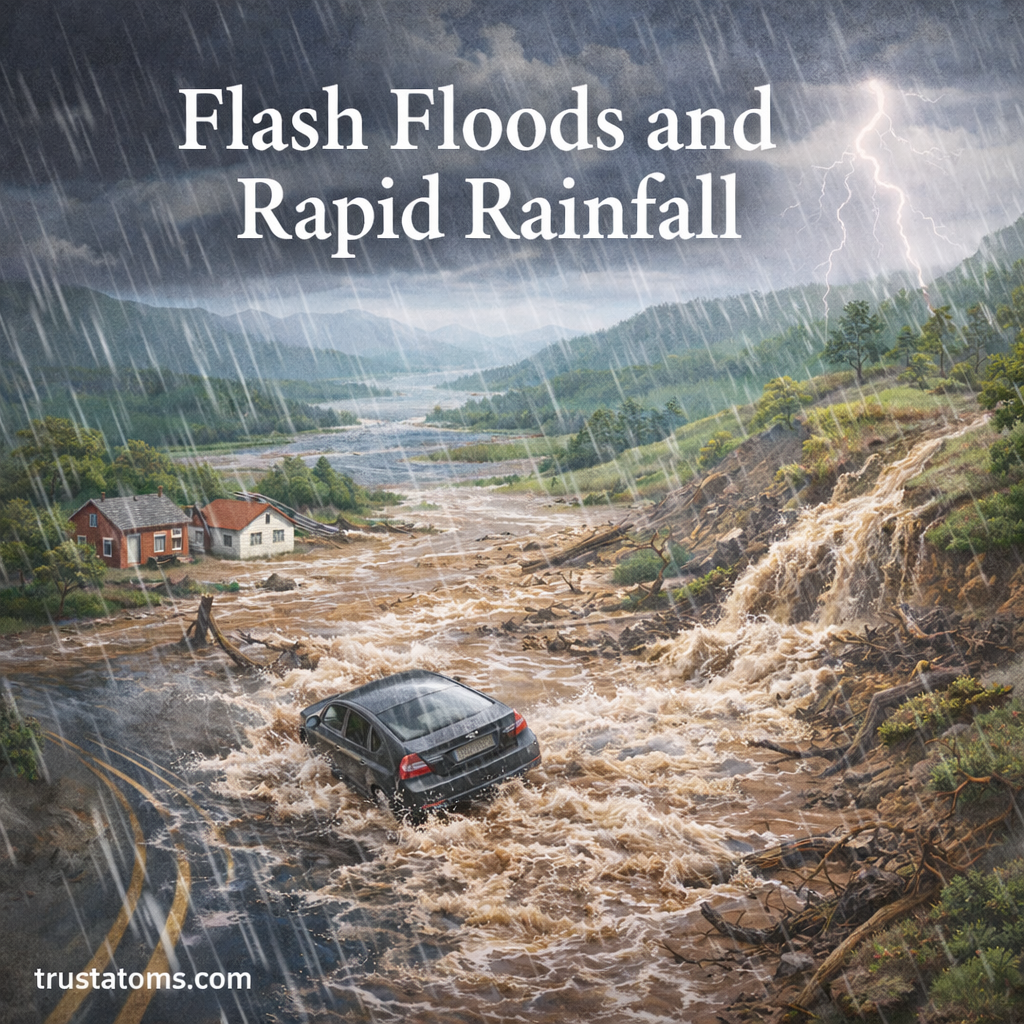
Flash floods are among the most dangerous and unpredictable natural disasters. Unlike slow-developing floods, flash floods occur rapidly—often within minutes or hours of intense rainfall—leaving little time for warning or evacuation.
Understanding how rapid rainfall leads to flash flooding can help individuals and communities stay safer and better prepared.
What Is a Flash Flood?
A flash flood is a sudden surge of water that flows over land, typically caused by heavy or intense rainfall in a short period.
These floods are characterized by:
- Fast-moving water
- Sudden onset
- High potential for destruction
Flash floods can occur in both rural and urban areas, including places that are not typically prone to flooding.
How Rapid Rainfall Triggers Flash Floods
Flash floods are closely tied to rainfall intensity rather than duration.
Key Factors
- Rainfall Intensity
When rain falls faster than the ground can absorb it, excess water becomes surface runoff. - Soil Saturation
If the soil is already wet from previous rainfall, it cannot absorb additional water. - Terrain and Slope
Steep slopes cause water to flow downhill quickly, increasing flood speed and force. - Drainage Capacity
Poor or overwhelmed drainage systems can lead to water buildup, especially in cities. - Vegetation Cover
Areas with little vegetation experience more runoff because plants normally help absorb water.
Common Locations for Flash Floods

Flash floods can happen almost anywhere, but certain areas are more vulnerable.
Urban Areas
Cities with concrete and asphalt surfaces prevent water from soaking into the ground, increasing runoff.
Mountainous Regions
Steep slopes and narrow valleys can funnel water rapidly, creating dangerous surges.
Dry Regions (Deserts)
Dry, compact soil absorbs little water, making even short storms capable of causing flash floods.
River Valleys and Low-Lying Areas
Water naturally collects in these regions, increasing flood risk.
Warning Signs of a Flash Flood
Flash floods can develop quickly, but there are often early signs to watch for.
- Sudden heavy rainfall or thunderstorms
- Rising water levels in streams or drainage areas
- Water rapidly flowing across roads or low areas
- A loud roaring sound from moving water
- Dark, fast-moving clouds
Recognizing these signs early can provide critical seconds or minutes to act.
Dangers of Flash Floods
Flash floods are particularly dangerous due to their speed and force.
Physical Hazards
- Strong currents can sweep away vehicles and people
- Debris such as rocks and branches increases impact force
- Roads and bridges may collapse or become unstable
Limited Reaction Time
Flash floods often occur with little warning, making evacuation difficult.
Water Contamination
Floodwater may contain:
- Sewage
- Chemicals
- Debris and hazardous materials
How to Stay Safe During a Flash Flood
Knowing what to do can save lives.
Before a Flash Flood
- Monitor weather forecasts and alerts
- Identify safe routes to higher ground
- Prepare an emergency kit
During a Flash Flood
- Move to higher ground immediately
- Avoid walking or driving through floodwaters
- Follow emergency instructions from authorities
A key rule:
“Turn around, don’t drown.” Even a small amount of moving water can be dangerous.
After a Flash Flood
- Avoid standing water
- Check for structural damage before entering buildings
- Be cautious of downed power lines and debris
Preventing and Reducing Flash Flood Risk
While flash floods cannot always be prevented, their impact can be reduced through proper planning.
Infrastructure Improvements
- Upgrading stormwater drainage systems
- Building retention basins to hold excess water
- Designing flood-resistant roads and bridges
Environmental Strategies
- Planting vegetation to improve water absorption
- Preserving wetlands that act as natural buffers
- Reducing soil erosion
Urban Planning
- Limiting construction in flood-prone areas
- Using permeable materials for roads and sidewalks
- Implementing flood warning systems
Flash Floods and Climate Change
Climate change is increasing the frequency and intensity of extreme weather events, including heavy rainfall.
This leads to:
- More frequent flash floods
- Greater rainfall intensity in shorter periods
- Increased risk in previously low-risk areas
Adapting to these changes requires improved forecasting, infrastructure, and community awareness.
Final Thoughts
Flash floods caused by rapid rainfall are fast, powerful, and often unpredictable. Their sudden nature makes them especially dangerous, but understanding the risks and taking proactive steps can significantly reduce their impact.
Preparedness, awareness, and smart planning are key to staying safe in the face of flash flooding.