Severe weather can develop quickly and pose serious risks to people, property, and infrastructure. From thunderstorms and tornadoes to hurricanes and flash floods, early detection and timely alerts are critical for safety.
Severe weather warning systems are designed to monitor atmospheric conditions, predict dangerous events, and communicate alerts to the public so people can take action before conditions worsen.
What Are Severe Weather Warning Systems?
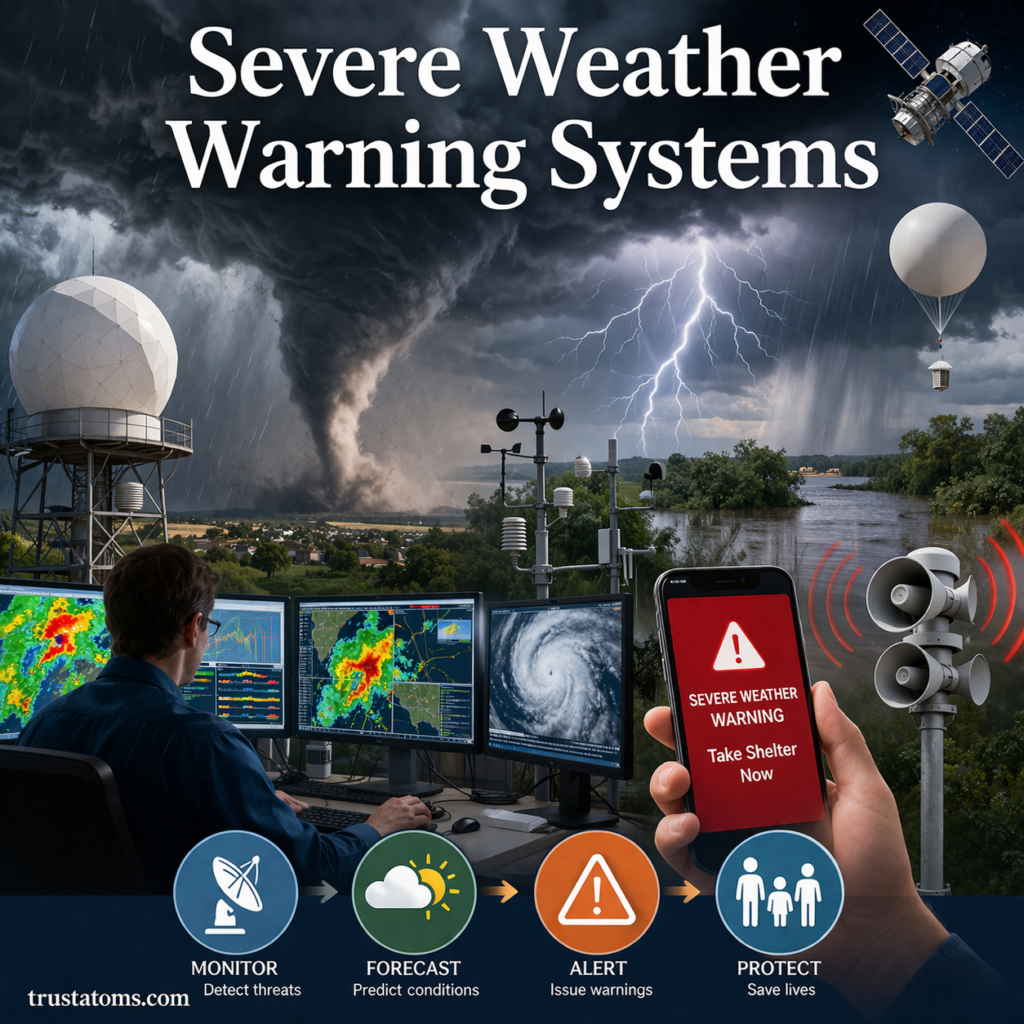
Severe weather warning systems are networks of technologies, agencies, and communication methods that work together to:
- Detect hazardous weather conditions
- Forecast potential threats
- Issue alerts and warnings
- Inform the public in real time
These systems combine science, technology, and communication to reduce the impact of extreme weather.
Key Components of Warning Systems
Effective warning systems rely on multiple tools and processes working together.
1. Weather Monitoring Technology
Meteorologists use advanced tools to track atmospheric changes.
Common technologies include:
- Doppler radar (detects precipitation and wind patterns)
- Weather satellites (monitor cloud systems and storms from space)
- Weather stations (measure temperature, pressure, humidity, and wind)
- Weather balloons (collect upper-atmosphere data)
2. Forecasting Models
Computer models analyze weather data to predict future conditions.
- Simulate atmospheric behavior
- Identify storm development patterns
- Estimate storm intensity and movement
Forecasting models improve accuracy and provide early warnings.
3. Detection of Severe Conditions
Meteorologists look for specific indicators of severe weather:
- Rapid temperature changes
- Strong wind shear
- High humidity levels
- Instability in the atmosphere
These signals help determine whether a storm could become dangerous.
Types of Weather Alerts
Weather alerts are issued in stages to give people time to prepare and respond.
1. Watch
A watch means conditions are favorable for severe weather.
- Be aware and stay informed
- Prepare for possible action
2. Warning
A warning means severe weather is occurring or imminent.
- Take immediate action
- Seek shelter or follow safety instructions
3. Advisory
An advisory indicates less severe but still potentially hazardous conditions.
- Exercise caution
- Monitor updates
How Warnings Are Communicated
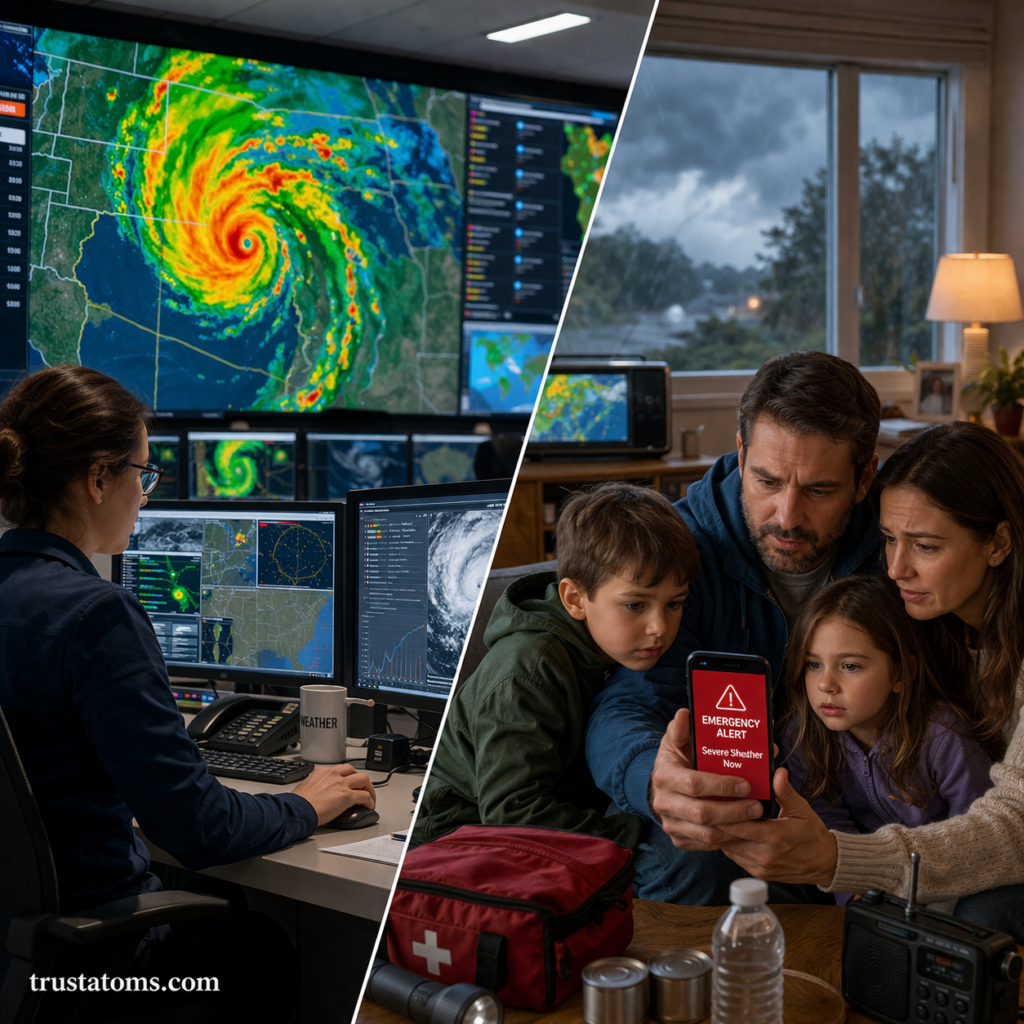
Once a warning is issued, it must reach the public quickly and clearly.
Common Alert Methods
- Mobile phone alerts (Wireless Emergency Alerts)
- Weather apps and websites
- Television and radio broadcasts
- Outdoor warning sirens
- Social media updates
Importance of Speed and Clarity
Effective communication must be:
- Fast
- Easy to understand
- Widely accessible
Delays or confusion can reduce the effectiveness of warnings.
Examples of Severe Weather Warning Systems
Different systems are used depending on the type of weather event.
Tornado Warning Systems
- Use Doppler radar to detect rotation
- Provide short lead times (minutes to an hour)
- Often include sirens and emergency alerts
Hurricane Warning Systems
- Track storms over days or weeks
- Use satellites and ocean data
- Provide evacuation guidance
Flood Warning Systems
- Monitor rainfall and river levels
- Predict flash floods and rising waters
- Issue alerts to vulnerable areas
Why Severe Weather Warning Systems Matter
Warning systems play a critical role in saving lives and reducing damage.
Key Benefits
- Provide time to prepare or evacuate
- Reduce injuries and fatalities
- Protect infrastructure and property
- Improve emergency response coordination
Challenges in Warning Systems
Despite advances, warning systems still face limitations.
Common Challenges
- Forecast uncertainty
- False alarms (which can reduce public trust)
- Communication gaps in remote or underserved areas
- Rapid storm development with little warning time
How Technology Is Improving Warning Systems
Modern technology continues to enhance severe weather detection and communication.
Recent Improvements
- More accurate forecasting models
- Real-time satellite data
- AI and machine learning for pattern detection
- Improved mobile alert systems
These advancements help deliver faster and more reliable warnings.
What You Can Do During Severe Weather Alerts
Knowing how to respond to warnings is just as important as receiving them.
Safety Tips
- Stay informed through reliable sources
- Have an emergency plan in place
- Keep emergency supplies ready
- Follow evacuation or shelter instructions immediately
Key Takeaways
- Severe weather warning systems detect, predict, and communicate dangerous conditions
- They rely on technology, forecasting models, and communication networks
- Alerts include watches, warnings, and advisories
- Quick and clear communication is essential for effectiveness
- Ongoing technological advancements are improving accuracy and response times
Final Thoughts
Severe weather warning systems are a vital part of modern society. They bridge the gap between scientific prediction and public safety, helping people respond to potentially life-threatening situations.
As technology continues to evolve, these systems will become even more accurate and accessible—providing better protection against the increasing risks of extreme weather.