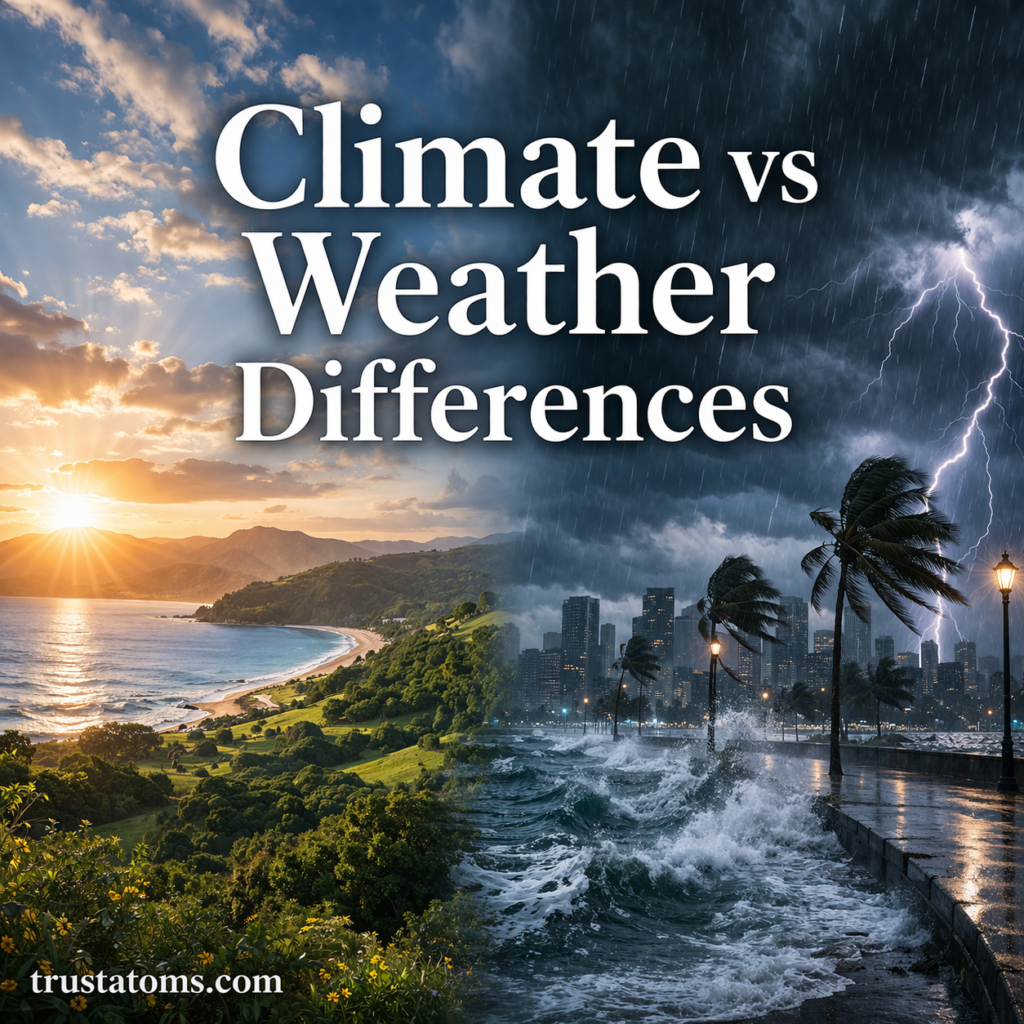
Climate and weather are often used interchangeably, but they describe very different aspects of Earth’s atmosphere. Understanding the distinction is essential for interpreting forecasts, studying environmental changes, and making sense of global patterns.
In simple terms, weather tells you what is happening right now, while climate tells you what usually happens over time.
What Is Weather?
Weather refers to the short-term state of the atmosphere at a specific time and place.
It includes conditions you experience daily, such as:
- Temperature
- Rain or snow
- Wind speed and direction
- Humidity
- Cloud cover
Weather can change quickly—sometimes within minutes or hours.
Examples of Weather
- A thunderstorm this afternoon
- A sunny morning followed by rain
- A cold front moving in overnight
What Is Climate?
Climate describes the long-term average of weather conditions in a region, typically measured over 30 years or more.
It reflects patterns and trends rather than daily changes.
Examples of Climate
- A region that is generally hot and dry (desert climate)
- An area with cold winters and warm summers (continental climate)
- A location with frequent rainfall year-round (tropical climate)
Key Differences Between Climate and Weather
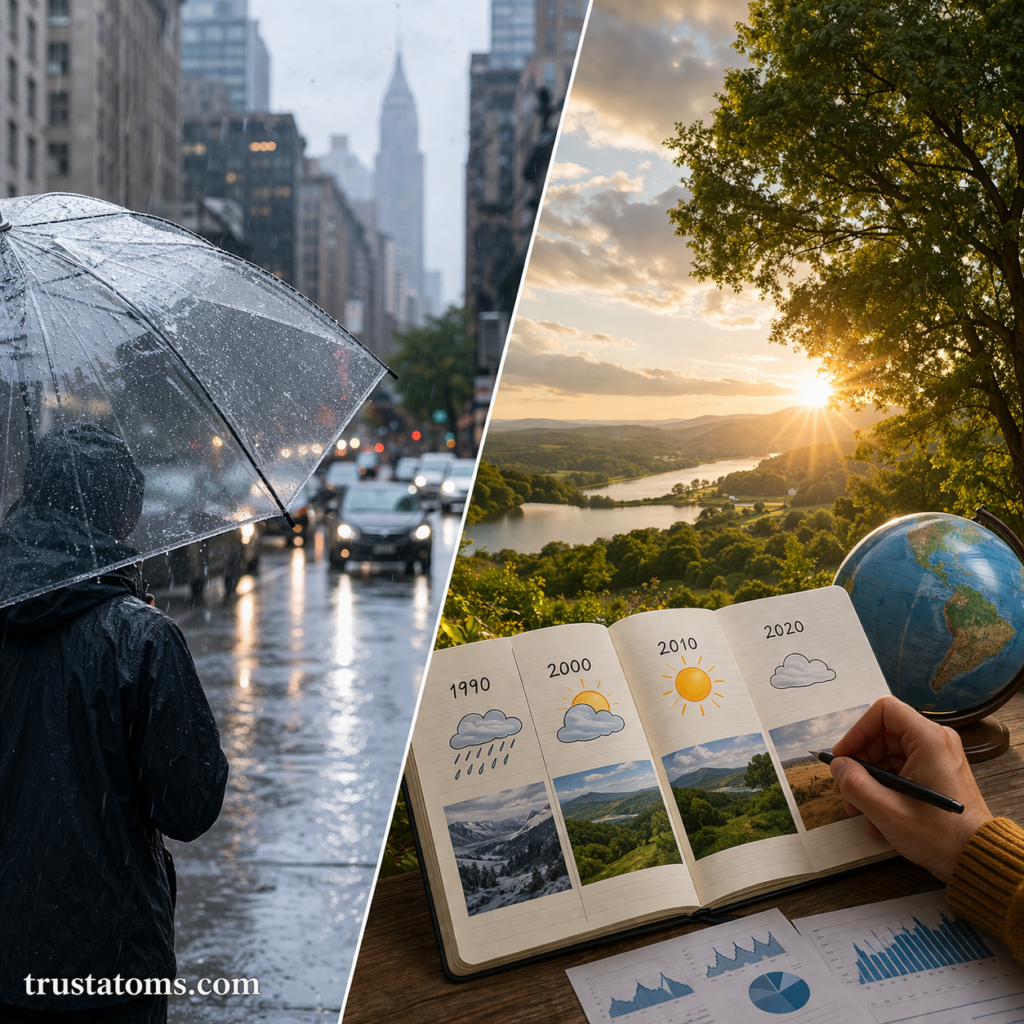
Understanding the differences becomes easier when comparing them directly.
Time Scale
- Weather: Short-term (minutes to days)
- Climate: Long-term (decades or longer)
Predictability
- Weather: Can be forecast for a few days with reasonable accuracy
- Climate: Based on long-term trends and patterns, not daily predictions
Variability
- Weather: Highly variable and changes rapidly
- Climate: More stable and consistent over time
Scope
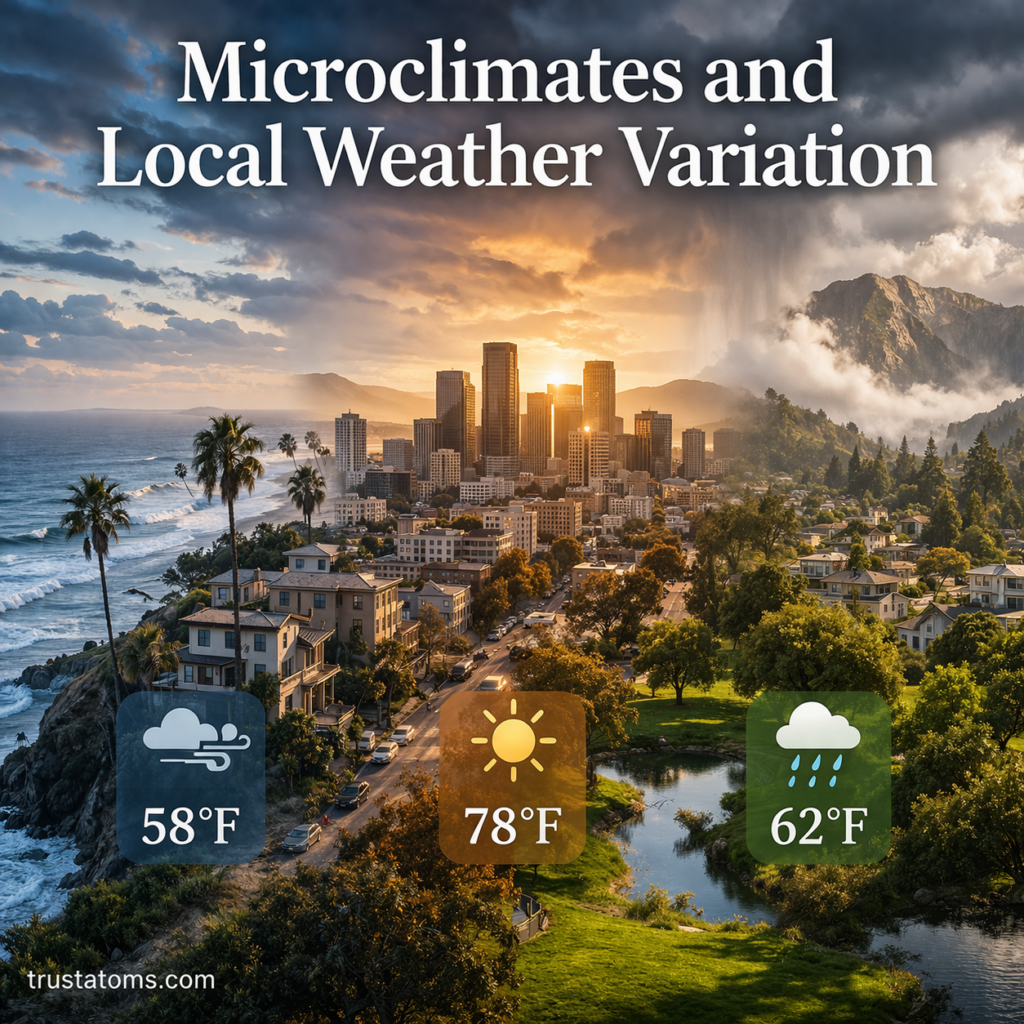
- Weather: Local and immediate
- Climate: Regional to global
Simple Comparison Breakdown
Here’s a quick way to remember:
- Weather = What you get today
- Climate = What you expect over time
For example:
- If it rains today, that’s weather
- If a region gets heavy rainfall every year, that’s climate
Why People Confuse Climate and Weather
The confusion often comes from everyday language and short-term experiences.
Common Reasons
- People use “weather” and “climate” interchangeably
- Short-term events feel more noticeable
- Extreme weather events are often linked to climate discussions
How Scientists Study Weather vs Climate
Although related, weather and climate are studied differently.
Weather Analysis
Meteorologists focus on:
- Real-time data from radar and satellites
- Short-term forecasting models
- Immediate atmospheric conditions
Climate Analysis
Climate scientists focus on:
- Long-term data trends
- Historical records (decades to centuries)
- Large-scale patterns like ocean currents and atmospheric cycles
The Role of Climate in Shaping Weather
Climate influences the type of weather a region typically experiences.
For example:
- Tropical climates often produce frequent rain and storms
- Polar climates lead to cold, dry conditions
- Desert climates result in minimal rainfall
In other words, climate sets the “baseline,” while weather shows the day-to-day variation.
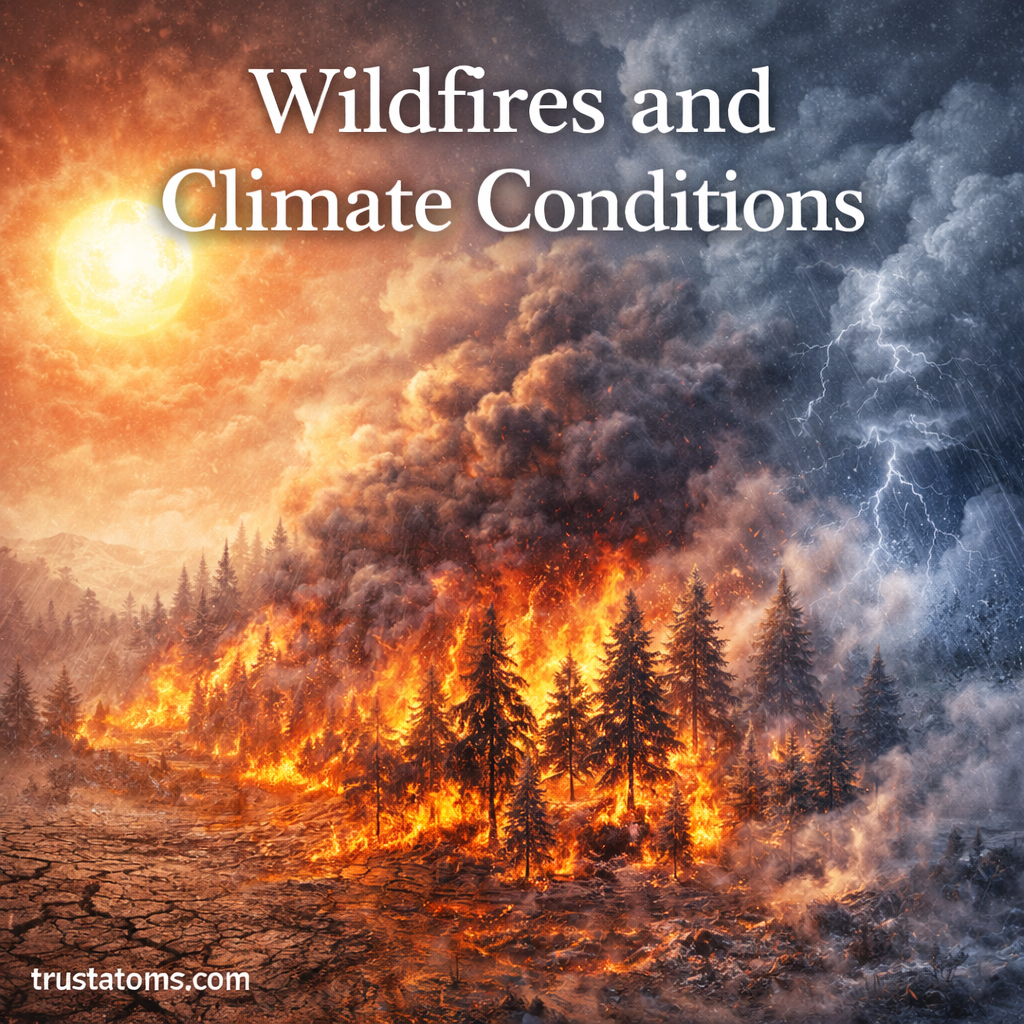
Climate Change and Weather Extremes
One of the most important modern discussions involves how climate change affects weather.
Key Points
- Climate change alters long-term temperature and precipitation patterns
- It can increase the frequency and intensity of extreme weather events
- Examples include stronger storms, longer heatwaves, and heavier rainfall
However, a single weather event does not define climate—it’s the long-term trend that matters.
Real-World Examples
Example 1: Cold Day vs Cold Climate
- A cold day in a warm region is just weather
- A region that stays cold most of the year has a cold climate
Example 2: Rainy Week vs Rainy Region
- A week of rain is weather
- A rainforest with constant rainfall reflects climate
Example 3: Heatwave vs Warming Trend
- A heatwave is a weather event
- Rising average temperatures over decades indicate climate change
Why Understanding the Difference Matters
Knowing the difference between climate and weather helps you:
- Interpret forecasts correctly
- Understand environmental changes
- Avoid common misconceptions about climate change
- Make better decisions in agriculture, travel, and planning
Common Misconceptions
“A cold day means global warming isn’t real”
Weather fluctuates daily, but climate trends are measured over decades.
“Climate changes overnight”
Climate shifts occur gradually over long periods, not instantly.
“Weather predictions and climate predictions are the same”
They use different data, time scales, and scientific methods.
Final Thoughts
Climate and weather are closely connected but fundamentally different. Weather describes the immediate conditions you experience, while climate represents the long-term patterns that define a region.
By understanding both, you gain a clearer picture of how Earth’s atmosphere behaves—and why long-term trends matter just as much as daily changes.