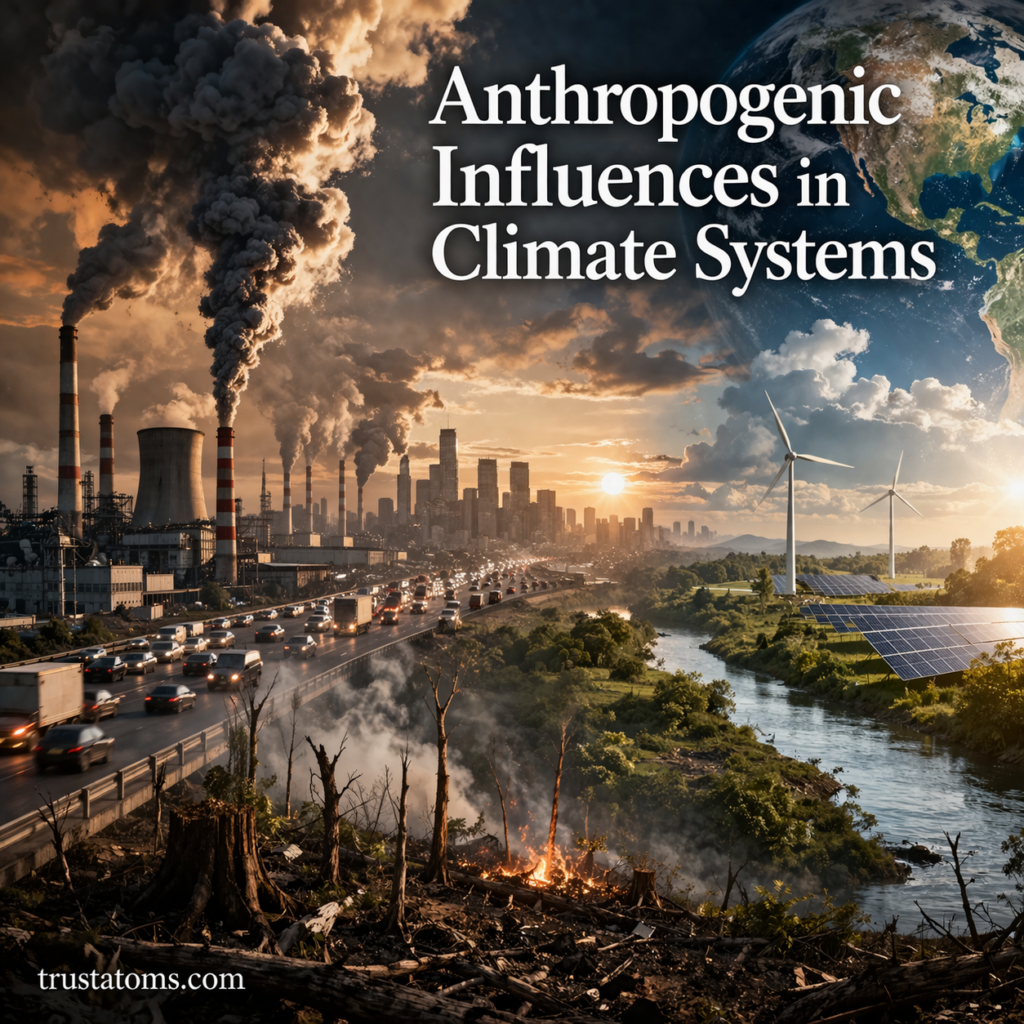
Anthropogenic influences refer to the impact of human activities on Earth’s natural systems. In the context of climate, these influences have become the dominant driver of recent global changes, affecting temperature, weather patterns, oceans, and ecosystems.
Understanding how human actions alter climate systems is essential for addressing environmental challenges and planning for the future.
What Are Anthropogenic Influences?
“Anthropogenic” simply means originating from human activity.
In climate science, it refers to:
- Emissions of greenhouse gases
- Land use changes
- Industrial processes
- Energy production and consumption
These activities disrupt Earth’s natural energy balance and carbon cycle.
The Greenhouse Effect and Human Impact
The greenhouse effect is a natural process that keeps Earth warm enough to support life. However, human activities have intensified this effect.
Key Greenhouse Gases
- Carbon dioxide (CO₂)
- Methane (CH₄)
- Nitrous oxide (N₂O)
How Humans Influence It
- Burning fossil fuels increases CO₂ levels
- Agriculture and livestock produce methane
- Industrial activities release various greenhouse gases
Result
- More heat is trapped in the atmosphere
- Global temperatures rise over time
Major Sources of Anthropogenic Emissions
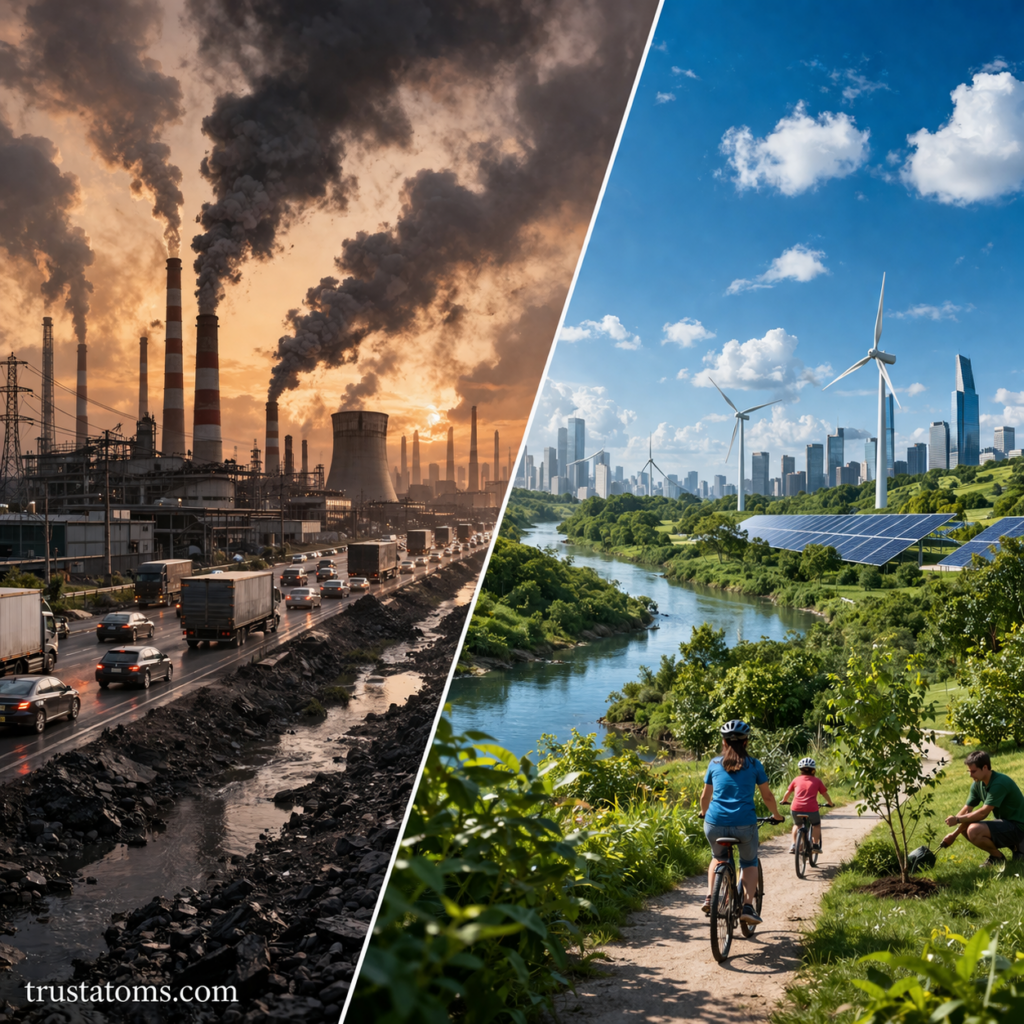
1. Fossil Fuel Combustion
The largest source of human-caused emissions.
- Power generation
- Transportation
- Manufacturing
2. Deforestation
- Reduces the number of trees that absorb CO₂
- Releases stored carbon into the atmosphere
3. Agriculture
- Methane from livestock digestion
- Nitrous oxide from fertilizers
4. Industrial Processes
- Cement production
- Chemical manufacturing
These sources collectively contribute to rising greenhouse gas concentrations.
Impact on Earth’s Energy Balance
Human activities alter the balance between incoming and outgoing energy.
Positive Radiative Forcing
- Greenhouse gases trap outgoing heat
- Leads to warming
Negative Influences
- Some aerosols reflect sunlight
- Can temporarily cool the atmosphere
However, warming effects from greenhouse gases far outweigh cooling effects.
Changes in the Carbon Cycle
The carbon cycle naturally moves carbon between the atmosphere, oceans, and land.
Human Disruption
- Rapid release of carbon from fossil fuels
- Reduced carbon absorption due to deforestation
Consequences
- Increased atmospheric CO₂ levels
- Ocean absorption leading to acidification
Ocean Impacts
Oceans are heavily affected by anthropogenic climate change.
Ocean Warming
- Oceans absorb most excess heat
- Leads to thermal expansion and sea level rise
Ocean Acidification
- CO₂ dissolves in seawater
- Lowers pH levels
- Affects marine organisms like corals and shellfish
Deoxygenation
- Warmer water holds less oxygen
- Impacts marine ecosystems
Effects on Weather and Climate Patterns
Human influences are changing global and regional climate systems.
Observed Changes
- More frequent heatwaves
- Increased intensity of storms
- Shifts in rainfall patterns
- Prolonged droughts in some regions
These changes affect agriculture, water resources, and human safety.
Cryosphere Changes
The cryosphere includes ice sheets, glaciers, and sea ice.
Human Impact
- Rising temperatures accelerate ice melt
- Reduces albedo (reflectivity)
- Contributes to further warming
Consequences
- Sea level rise
- Loss of polar habitats
- Disruption of global climate systems
Feedback Loops and Amplification
Anthropogenic influences can trigger feedback mechanisms.
Positive Feedback Examples
- Ice melt → less reflection → more warming
- Permafrost thaw → methane release → increased warming
These feedbacks amplify initial changes, accelerating climate impacts.
Air Pollution and Aerosols
Not all human emissions warm the planet.
Aerosol Effects
- Reflect sunlight (cooling effect)
- Influence cloud formation
Health and Environmental Impact
- Air pollution harms human health
- Affects ecosystems and visibility
Despite some cooling effects, aerosols do not offset greenhouse gas warming.
Evidence of Human Influence
Scientists use multiple lines of evidence to confirm anthropogenic climate change.
Key Indicators
- Rising global temperatures
- Increasing greenhouse gas concentrations
- Melting glaciers and ice sheets
- Sea level rise
- Ocean heat content increases
Scientific Consensus
- The vast majority of climate scientists agree that recent warming is primarily human-driven
Mitigation and Adaptation
Addressing anthropogenic climate change involves two main strategies.
Mitigation (Reducing Causes)
- Transition to renewable energy
- Improve energy efficiency
- Reduce emissions from industry and agriculture
Adaptation (Managing Impacts)
- Strengthen infrastructure
- Improve water management
- Protect vulnerable ecosystems
Both approaches are necessary for long-term resilience.
Why Anthropogenic Influences Matter
Human activities now play a central role in shaping Earth’s climate.
Global Significance
- Affects ecosystems and biodiversity
- Impacts economies and livelihoods
- Influences long-term environmental stability
Understanding these influences is key to making informed decisions about the future.
Key Takeaways
- Anthropogenic influences are human-driven impacts on climate systems
- Greenhouse gas emissions are the primary cause of recent warming
- Human activities disrupt natural cycles like the carbon cycle
- Climate change affects oceans, weather, and ice systems
- Mitigation and adaptation are essential for addressing climate impacts
Conclusion
Anthropogenic influences have fundamentally altered Earth’s climate system. From greenhouse gas emissions to land use changes, human activities now drive many of the changes observed in the environment.
Recognizing this impact is the first step toward meaningful action. By understanding how human behavior shapes climate systems, societies can work toward solutions that promote sustainability and long-term stability.