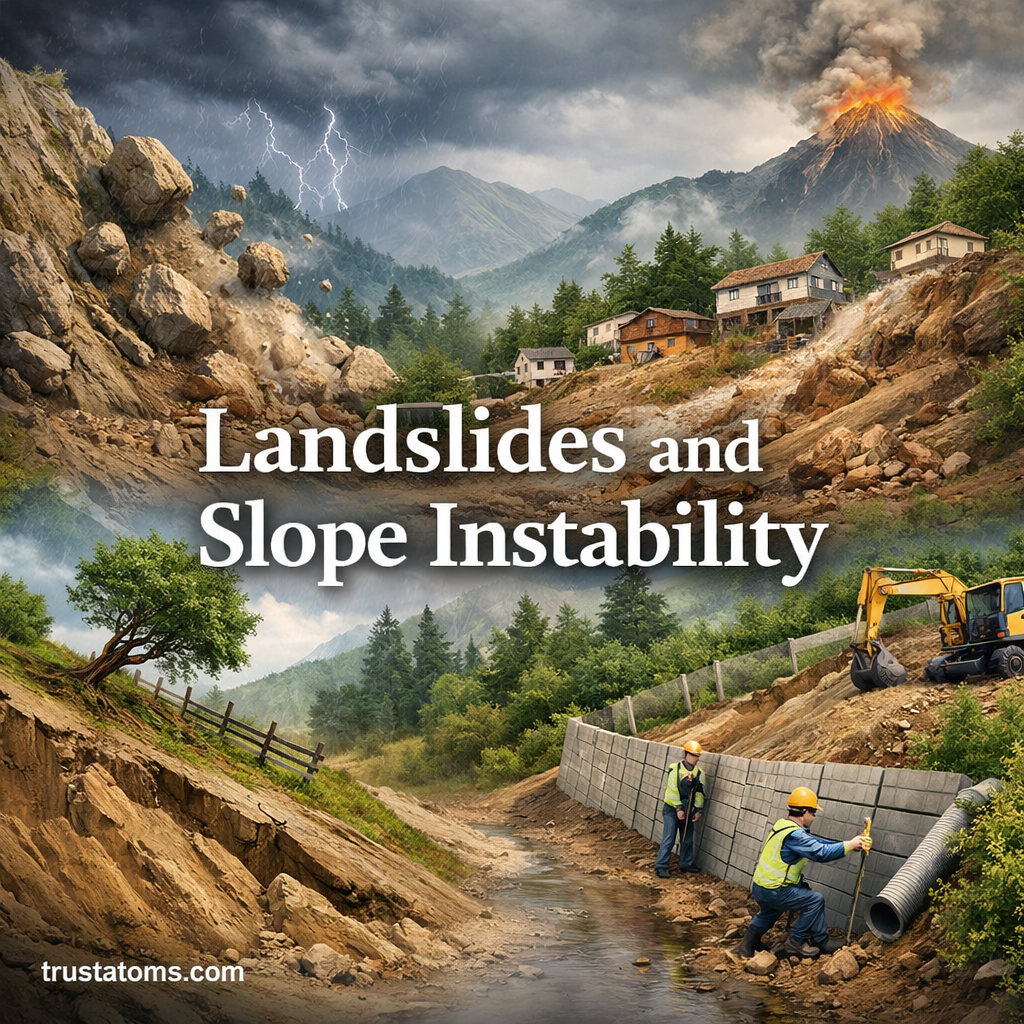
Landslides are one of the most powerful and unpredictable natural hazards on Earth. They occur when masses of rock, soil, or debris move down a slope due to gravity. While some landslides happen suddenly and cause major destruction, others develop slowly over time as slopes gradually weaken.
Understanding how slope instability works can help communities reduce risks, protect infrastructure, and save lives.
What Is a Landslide?
A landslide is the movement of earth materials—such as rock, soil, or debris—down a slope. This movement happens when the force of gravity exceeds the strength of the materials holding the slope together.
Slope stability depends on a balance between:
- Driving forces (gravity pulling material downhill)
- Resisting forces (friction, cohesion, and vegetation holding it in place)
When this balance is disrupted, a landslide can occur.
What Causes Landslides?
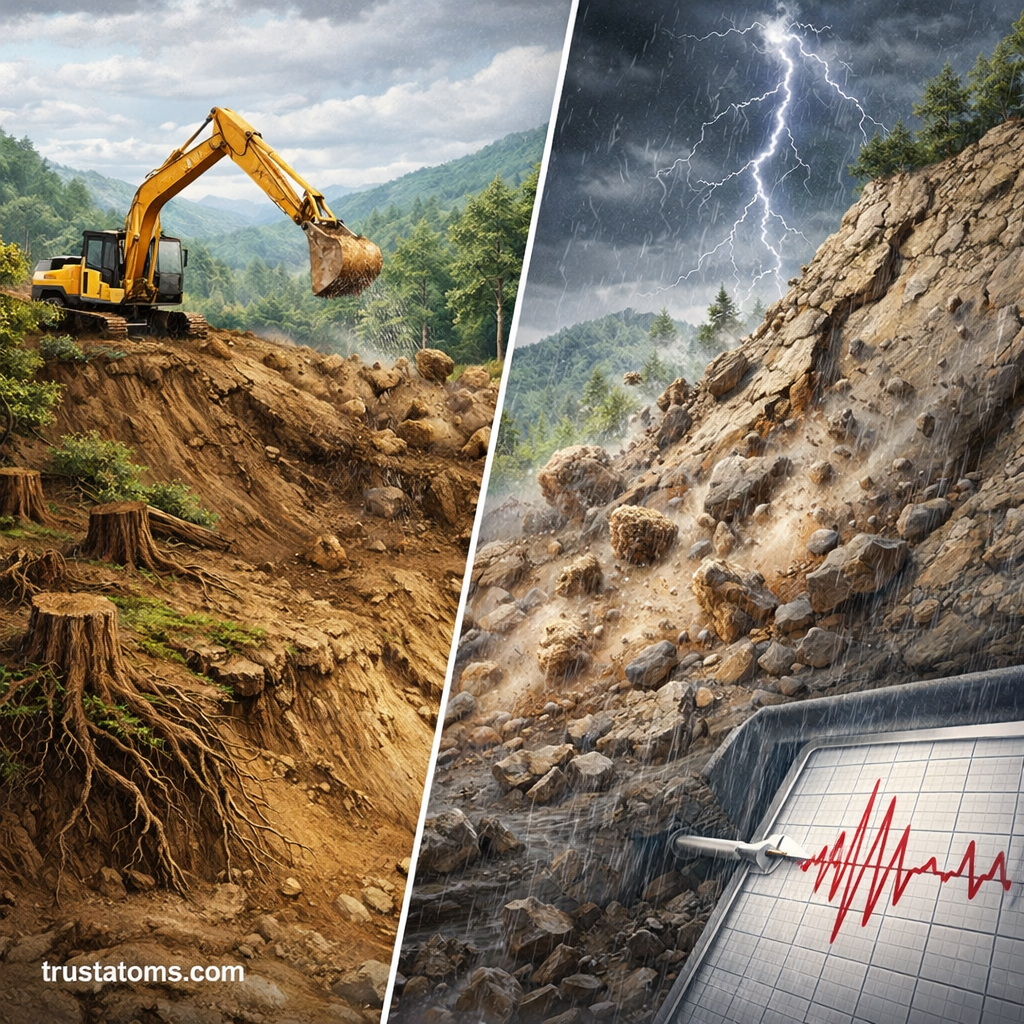
Landslides are triggered by a combination of natural processes and human activities. The most common causes include:
1. Heavy Rainfall
- Water seeps into the ground, increasing weight and reducing friction
- Saturated soil becomes weaker and more prone to sliding
- Common in regions with intense storms or prolonged rainfall
2. Earthquakes
- Ground shaking loosens soil and rock
- Slopes can collapse instantly during seismic activity
- Especially dangerous in mountainous or coastal areas
3. Volcanic Activity
- Eruptions can melt snow and ice, creating fast-moving mudflows (lahars)
- Ash deposits can weaken slopes
4. Erosion
- Rivers, waves, or wind remove material at the base of slopes
- This undercuts support, making slopes unstable
5. Human Activities
- Deforestation removes root systems that stabilize soil
- Construction and road cutting alter natural slope angles
- Mining and excavation weaken structural integrity
Types of Landslides
Landslides vary depending on the type of material involved and how it moves. Here are the main types:
Rockfalls
- Sudden falling of rocks from steep cliffs
- Often caused by weathering or earthquakes
- Fast and highly dangerous
Slides (Translational and Rotational)
- Material moves along a defined surface
- Rotational slides (slumps) curve downward
- Translational slides move along a flat plane
Debris Flows
- Fast-moving mixtures of water, soil, and rocks
- Often triggered by heavy rain
- Can travel long distances and destroy everything in their path
Mudflows
- Similar to debris flows but with finer materials
- Move quickly and behave like flowing liquid
Creep
- Very slow movement of soil downhill
- May not be noticeable immediately
- Causes gradual damage to buildings and infrastructure
What Is Slope Instability?
Slope instability refers to the condition where a slope is at risk of failure. It does not always result in an immediate landslide but indicates that the balance of forces is weakening.
Signs of slope instability include:
- Cracks forming in the ground
- Tilting trees or utility poles
- Bulging at the base of slopes
- Water seepage in unusual areas
Recognizing these warning signs early can help prevent disasters.
Factors That Influence Slope Stability
Several environmental and geological factors determine whether a slope remains stable:
Soil and Rock Type
- Loose soils are more prone to sliding than solid rock
- Clay can become slippery when wet
Slope Angle
- Steeper slopes are more likely to fail
- Gentle slopes are generally more stable
Water Content
- Excess water reduces friction between particles
- Increases weight and pressure within the slope
Vegetation
- Plant roots anchor soil and absorb water
- Removal of vegetation increases landslide risk
Weathering
- Over time, rocks break down into weaker materials
- This reduces overall slope strength
Real-World Impacts of Landslides
Landslides can have devastating consequences for both people and the environment:
- Destruction of homes and infrastructure
- Loss of life and displacement of communities
- Blocked roads and transportation routes
- River blockage leading to flooding
- Damage to ecosystems and habitats
In mountainous and coastal regions, landslides are a major natural hazard that must be carefully managed.
How Landslides Are Monitored and Predicted
Scientists use a combination of technology and observation to monitor landslide risk:
- Satellite imagery to track ground movement
- Sensors to detect soil moisture and slope changes
- Geological surveys to assess risk areas
- Weather monitoring for rainfall patterns
Although predicting exact timing is difficult, these tools help identify high-risk zones.
How to Prevent and Reduce Landslide Risk
While landslides cannot always be avoided, their impact can be reduced through proper planning and engineering.
Engineering Solutions
- Retaining walls to support slopes
- Drainage systems to remove excess water
- Slope grading to reduce steepness
Environmental Approaches
- Replanting vegetation to stabilize soil
- Controlling erosion with ground cover
Land Use Planning
- Avoiding construction on unstable slopes
- Zoning high-risk areas for limited use
Emergency Preparedness
- Early warning systems
- Evacuation plans for vulnerable communities
Key Takeaways
- Landslides occur when gravity overcomes the strength of slope materials
- Water, earthquakes, and human activity are major triggers
- Different types include rockfalls, slides, debris flows, and creep
- Slope instability can often be detected through early warning signs
- Prevention focuses on engineering, vegetation, and smart land use
Final Thoughts
Landslides are a powerful reminder of how dynamic Earth’s surface can be. While they can cause sudden destruction, many landslides are preventable with the right knowledge and planning.
By understanding slope instability and recognizing the warning signs, individuals and communities can reduce risks and better prepare for these natural events.