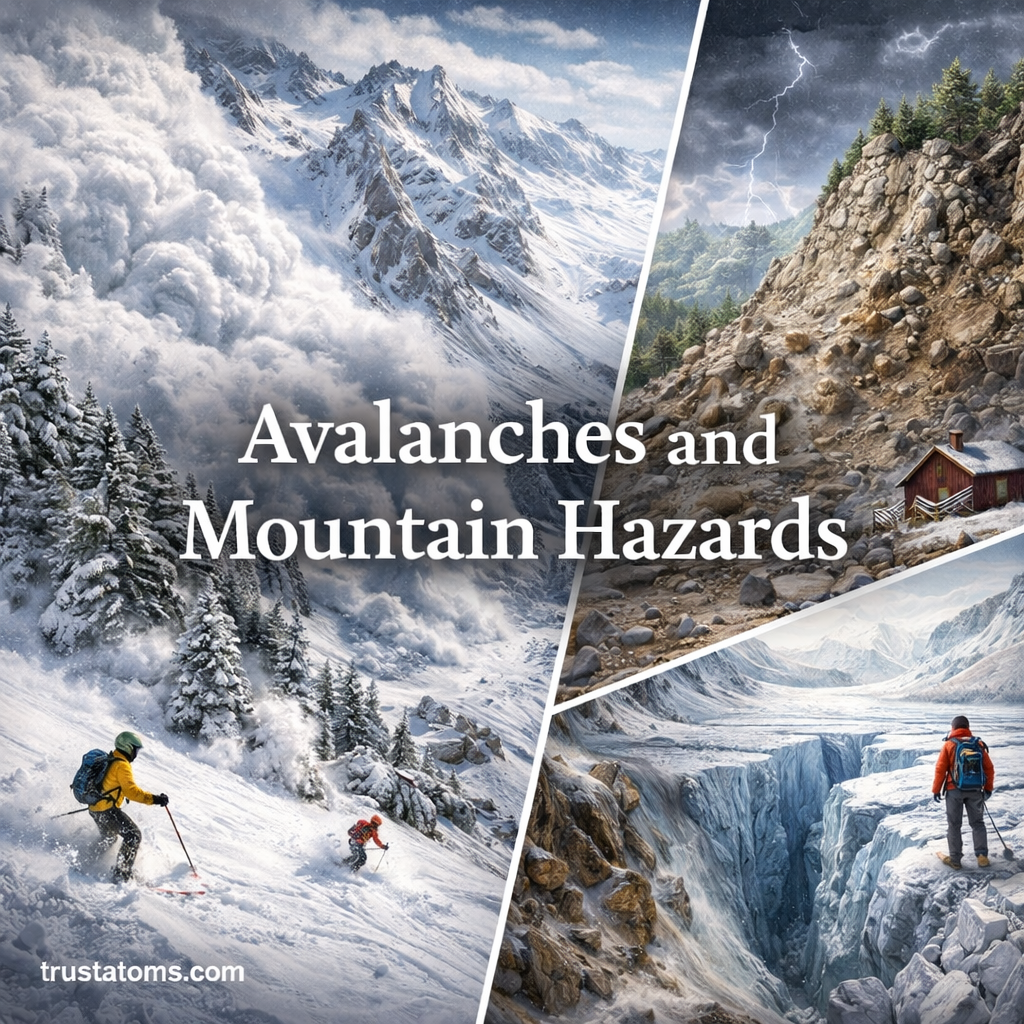
Avalanches are one of the most dangerous natural hazards in mountainous regions. These powerful flows of snow, ice, and debris can travel at high speeds, posing serious risks to people, infrastructure, and ecosystems.
Understanding how avalanches form and what makes mountain environments hazardous is essential for safety, especially for hikers, skiers, and communities living near steep terrain.
What Is an Avalanche?
An avalanche is a rapid flow of snow down a slope. It occurs when a layer of snow collapses and slides, often carrying additional snow, ice, rocks, and debris as it moves downhill.
Avalanches can vary in size and speed:
- Small avalanches may only affect a limited area
- Large avalanches can travel miles and destroy everything in their path
What Causes Avalanches?
Avalanches occur when the balance between the snowpack’s stability and gravity is disrupted. Several factors contribute to this instability.
1. Snowpack Structure
- Snow accumulates in layers over time
- Weak layers (such as loose or icy snow) can fail under pressure
- The bond between layers determines stability
2. Heavy Snowfall
- Rapid accumulation adds weight to the slope
- New snow may not bond well with older layers
- Increases the likelihood of collapse
3. Temperature Changes
- Warming can weaken snow bonds
- Melting and refreezing create unstable layers
- Sudden temperature shifts increase risk
4. Wind
- Wind redistributes snow across slopes
- Creates dense “wind slabs” that can easily break
- Often forms uneven snowpack conditions
5. Human Activity
- Skiers, snowboarders, or hikers can trigger avalanches
- Even small disturbances can cause large failures
- Many avalanches are unintentionally human-triggered
Types of Avalanches
Avalanches are classified based on how the snow moves and what triggers the collapse.
Loose Snow Avalanches
- Start from a single point and spread outward
- Usually involve dry, powdery snow
- Common on steep slopes
Slab Avalanches
- Occur when a large slab of snow breaks away
- Slide as a cohesive unit over a weak layer
- Most dangerous and destructive type
Wet Avalanches
- Occur when snow becomes saturated with water
- Move more slowly but are very heavy
- Common during warmer conditions
Powder Avalanches
- Large, fast-moving clouds of snow
- Can travel at speeds over 100 mph
- Extremely dangerous due to speed and force
What Are Mountain Hazards?
Avalanches are just one of many hazards found in mountain environments. Other risks include:
- Rockfalls and landslides
- Crevasses in glaciers
- Extreme weather conditions
- Falling ice (icefall)
- Rapid temperature changes
These hazards often interact, increasing overall danger in mountainous regions.
Where Do Avalanches Occur?
Avalanches are most common in areas with:
- Steep slopes (typically 30–45 degrees)
- Heavy snowfall
- Cold climates with seasonal snowpack
Common regions include:
- The Rocky Mountains (North America)
- The Alps (Europe)
- The Himalayas (Asia)
- The Andes (South America)
Warning Signs of Avalanche Risk
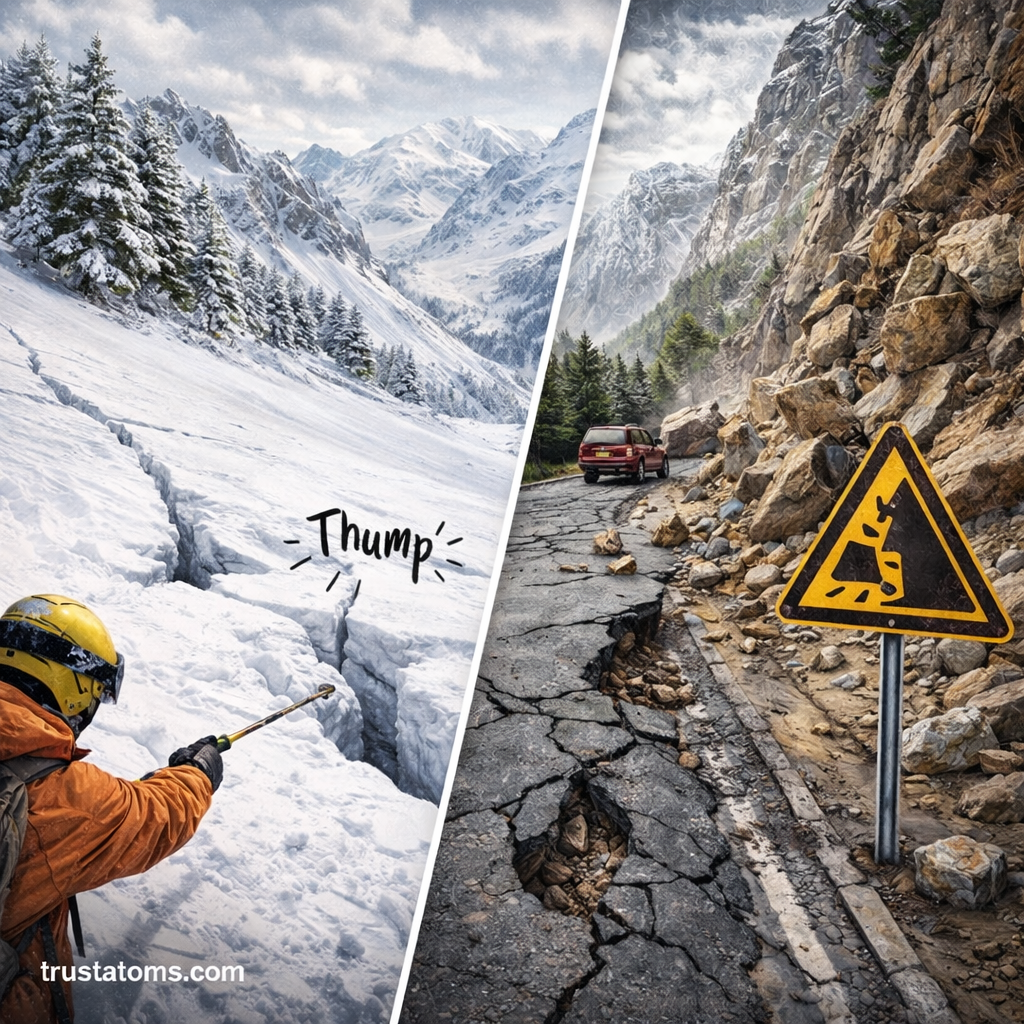
Recognizing warning signs can help prevent accidents:
- Recent avalanches in the area
- Cracks forming in the snow surface
- “Whumpf” sounds indicating collapsing layers
- Heavy snowfall within the past 24–48 hours
- Rapid warming or rain on snow
These signs suggest that the snowpack is unstable.
Impacts of Avalanches
Avalanches can have severe consequences:
- Burial and suffocation of individuals
- Destruction of homes, roads, and ski resorts
- Damage to forests and ecosystems
- Disruption of transportation routes
Even small avalanches can be deadly under the right conditions.
How Avalanches Are Monitored and Forecasted
Experts use a combination of science and technology to assess avalanche risk:
- Snowpack analysis and field observations
- Weather data and snowfall tracking
- Remote sensors and satellite imagery
- Avalanche forecasting systems
Daily avalanche forecasts are often issued in high-risk regions to guide public safety.
How to Stay Safe in Avalanche-Prone Areas
Safety depends on preparation, awareness, and proper equipment.
Before You Go
- Check local avalanche forecasts
- Avoid high-risk slopes after heavy snowfall
- Travel with experienced companions
Essential Safety Gear
- Avalanche beacon (transceiver)
- Probe for locating buried individuals
- Shovel for rescue
- Helmet and protective gear
During Travel
- Move one person at a time across risky slopes
- Watch for warning signs
- Stay in safe zones away from avalanche paths
If an Avalanche Occurs
- Try to move to the side of the flow
- Drop heavy gear to stay afloat
- Create an air pocket near your face if buried
Key Takeaways
- Avalanches occur when unstable snow layers collapse and slide
- Snowpack structure, weather, and human activity are major factors
- Slab avalanches are the most dangerous type
- Mountain hazards include more than just avalanches
- Awareness and preparation are critical for safety
Final Thoughts
Avalanches are a powerful natural force that highlights the dynamic nature of mountain environments. While they can be unpredictable, understanding how they form and recognizing warning signs can significantly reduce risk.
Whether you’re exploring mountains for recreation or living in alpine regions, knowledge and preparation are your best tools for staying safe.