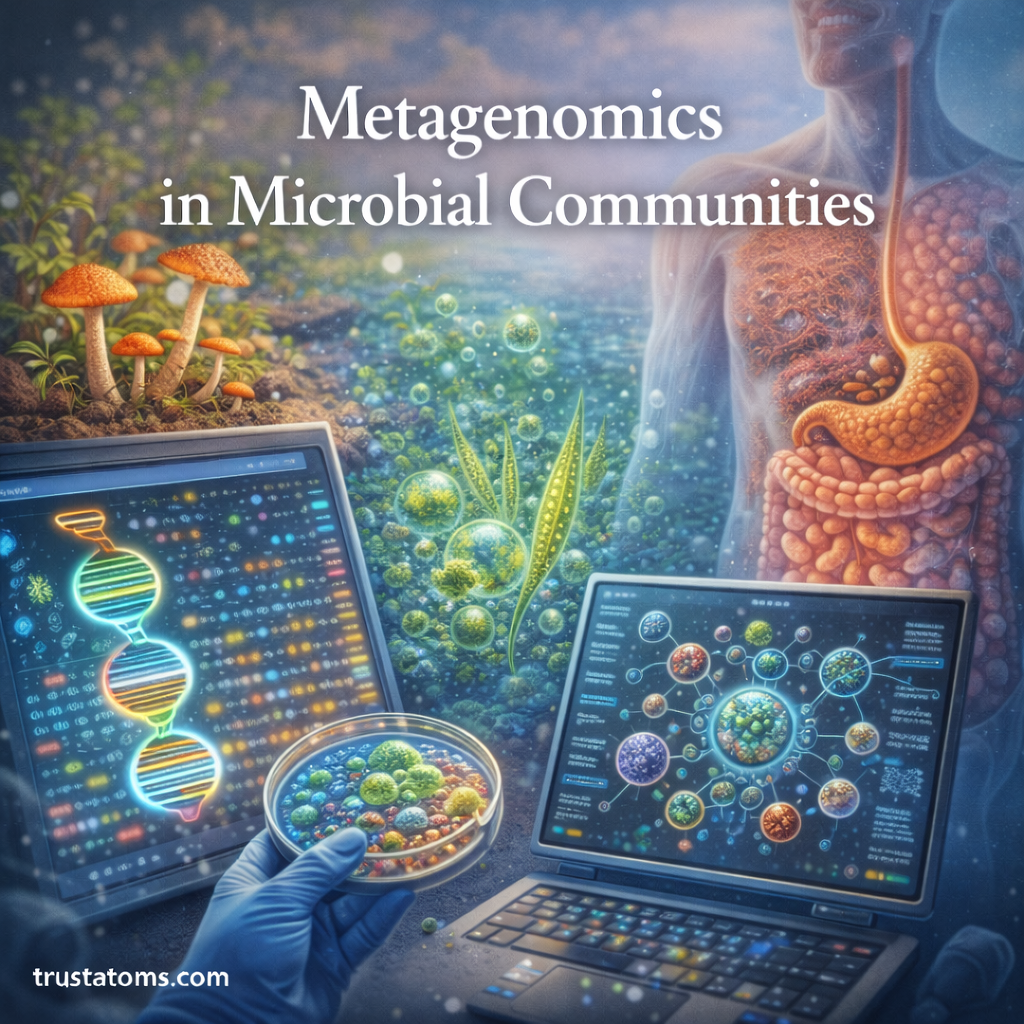
Metagenomics in Microbial Communities

Illustration showing DNA sequencing and analysis of microbial communities from soil, water, and the human microbiome.
Educational illustration showing metagenomic analysis of microbial communities from environments such as soil, aquatic systems, and the human microbiome. trustatoms.com.

Metagenomics is a powerful scientific approach used to study the genetic material of entire microbial communities directly from environmental samples. Instead of isolating and growing individual microorganisms in a laboratory, metagenomics analyzes all the DNA present in a sample, allowing scientists to understand the diversity and function of microbes living together in complex ecosystems.

This approach has transformed microbiology and environmental science by revealing the vast number of microorganisms that cannot easily be cultured using traditional laboratory techniques.

Continue reading “Metagenomics in Microbial Communities”
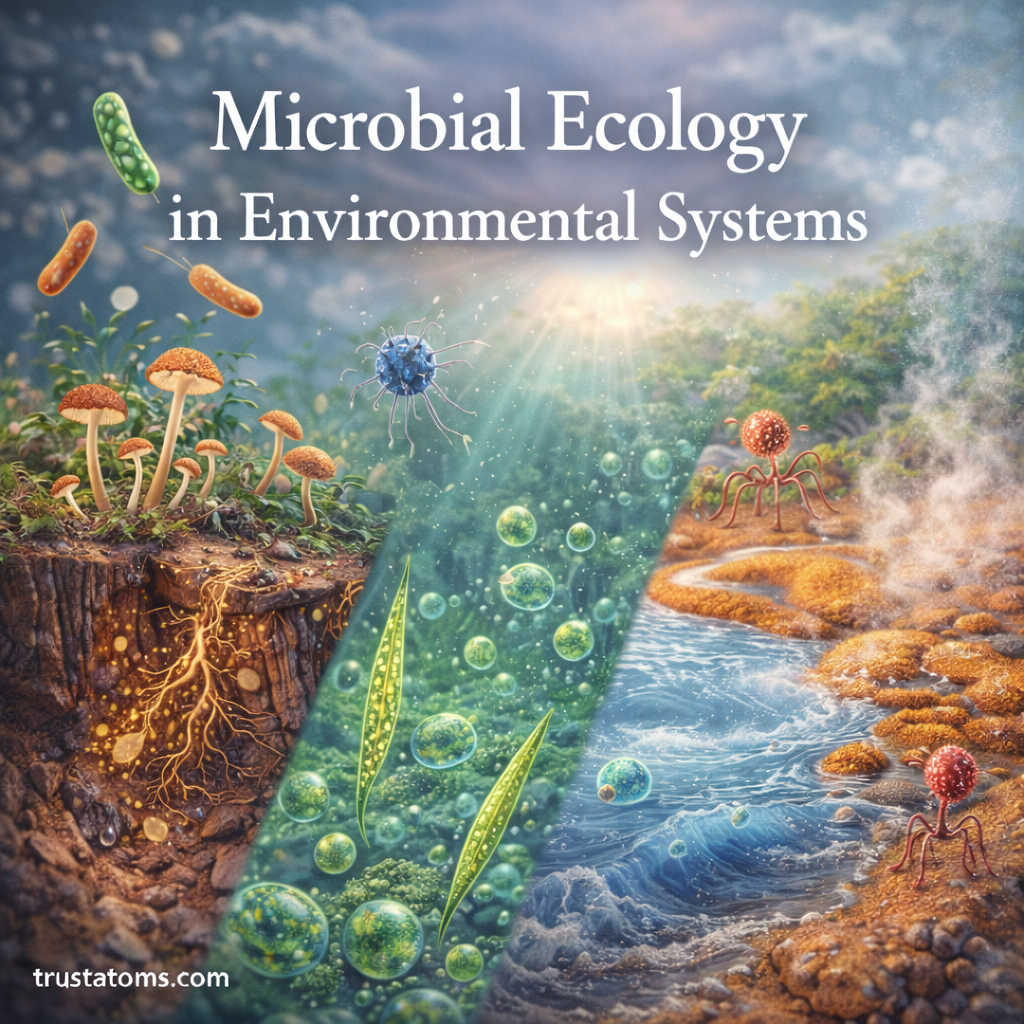
Microbial Ecology in Environmental Systems

Illustration showing microorganisms in soil, aquatic environments, and extreme habitats representing microbial ecology in environmental systems.
Educational illustration showing microbes across environmental systems such as soil ecosystems, aquatic habitats, and extreme environments. trustatoms.com.

Microbial ecology is the study of how microorganisms interact with each other and with their surrounding environments. In environmental systems, microbes play critical roles in nutrient cycling, ecosystem stability, and energy flow. These microscopic organisms—such as bacteria, fungi, protists, and some viruses—are essential for maintaining the balance of natural ecosystems.

Microbes exist in almost every environment on Earth, including soil, oceans, freshwater systems, extreme environments, and even within living organisms. By studying microbial ecology, scientists gain insight into how ecosystems function and how environmental changes affect microbial communities.

Continue reading “Microbial Ecology in Environmental Systems”

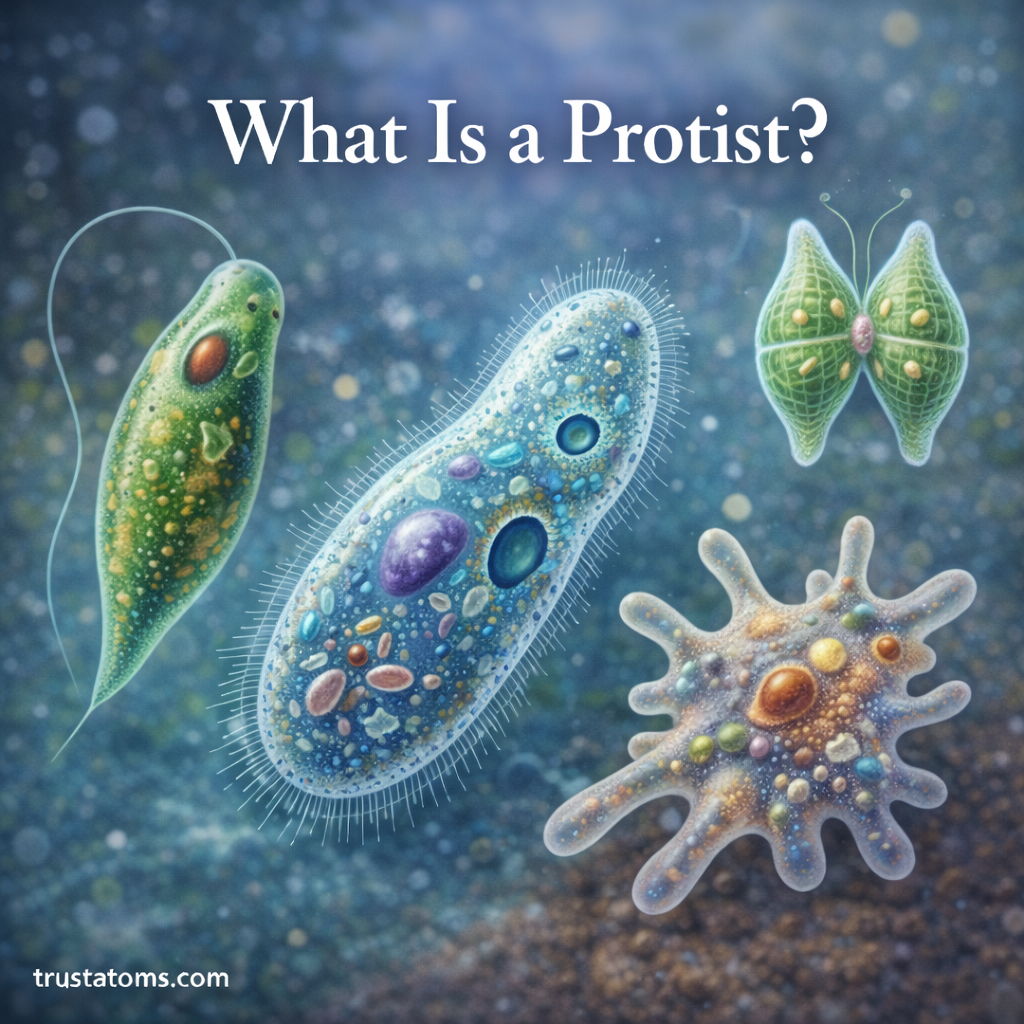
What Is a Protist?

Educational illustration showing different protists including amoeba, paramecium, euglena, and algae-like protists.
Educational biology illustration showing several protists such as amoeba, paramecium, and euglena to explain what protists are. trustatoms.com.

Protists are a diverse group of mostly microscopic organisms that belong to the kingdom Protista. They are eukaryotic organisms, meaning their cells contain a nucleus and other specialized structures called organelles. Protists are incredibly varied and include organisms that resemble plants, animals, and fungi.

Many protists live in aquatic environments such as oceans, lakes, and ponds, while others inhabit moist soil or live inside other organisms. Despite their diversity, most protists share one common trait: they are not classified as plants, animals, or fungi, but still belong to the broader domain of eukaryotic life.

Studying protists helps scientists better understand the evolution of complex life and the functioning of ecosystems.

Continue reading “What Is a Protist?”

What Is a Fungi?

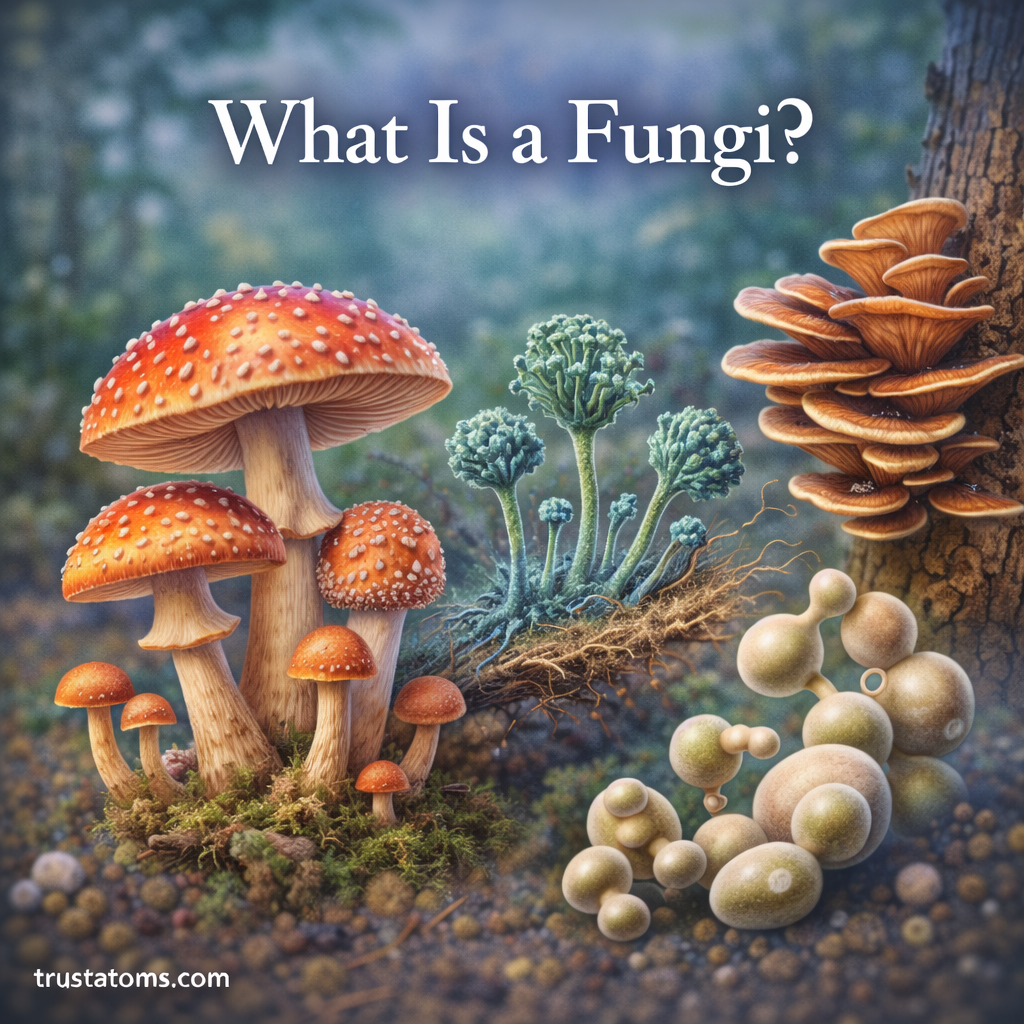
Educational illustration showing different types of fungi including mushrooms, mold structures, and yeast cells.
Educational illustration showing common fungi such as mushrooms, mold, and yeast used to explain what fungi are in biology. trustatoms.com.

Fungi are a group of living organisms that include mushrooms, molds, yeasts, and other microscopic species. They belong to their own biological kingdom, separate from plants, animals, and bacteria. Fungi play essential roles in ecosystems by decomposing organic matter, recycling nutrients, and forming symbiotic relationships with plants and animals.

Although fungi often resemble plants, they differ in many important ways. For example, fungi do not perform photosynthesis and instead obtain nutrients by absorbing organic material from their surroundings.

Understanding fungi is an important part of biology, microbiology, medicine, and environmental science.

Continue reading “What Is a Fungi?”

Viral Replication in Host Cells

Educational diagram showing a virus entering a host cell, replicating genetic material, assembling new viruses, and releasing viral particles.
Educational illustration showing the stages of viral replication inside a host cell, including entry, genome replication, assembly, and release of new viruses. trustatoms.com.

Viral replication is the process by which viruses reproduce inside the cells of a host organism. Unlike bacteria or other living cells, viruses cannot reproduce on their own. Instead, they must infect a host cell and use its biological machinery to create new virus particles.

Understanding viral replication is essential in microbiology, medicine, and virology. By studying how viruses replicate, scientists can develop vaccines, antiviral medications, and strategies to control infectious diseases.

Continue reading “Viral Replication in Host Cells”

What Is a Virus?

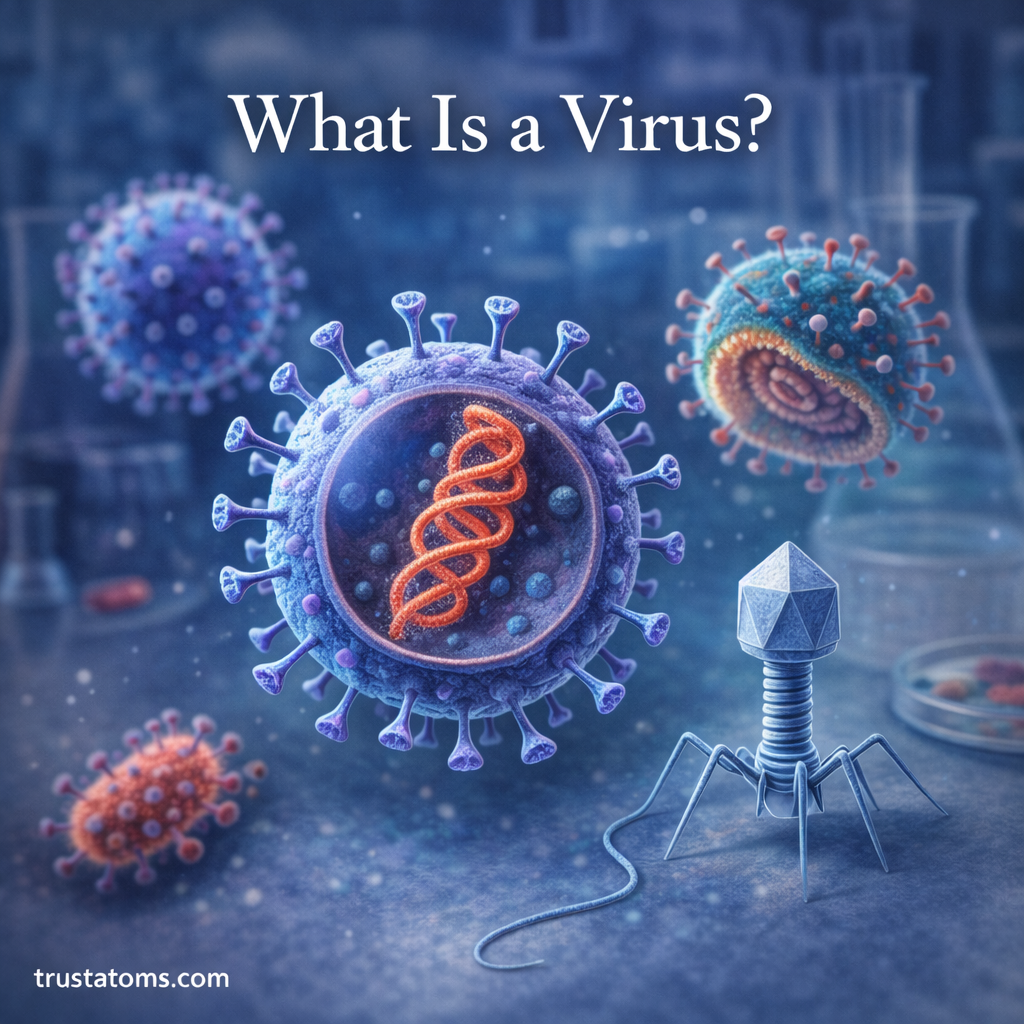
Educational illustration showing different virus types including a spherical virus and a bacteriophage with visible genetic material.
Educational illustration showing different virus structures including a spherical virus and a bacteriophage used to explain what viruses are in microbiology. trustatoms.com.

A virus is an extremely small infectious particle that can only reproduce inside the cells of living organisms. Viruses infect animals, plants, fungi, bacteria, and even other microorganisms. Because they cannot grow or reproduce independently, viruses are often described as being on the border between living and nonliving entities.

Viruses play important roles in biology, medicine, and ecology. Some viruses cause diseases in humans and animals, while others influence ecosystems or are used in scientific research and biotechnology.

Continue reading “What Is a Virus?”

Bacterial Cell Structure in Microbiology

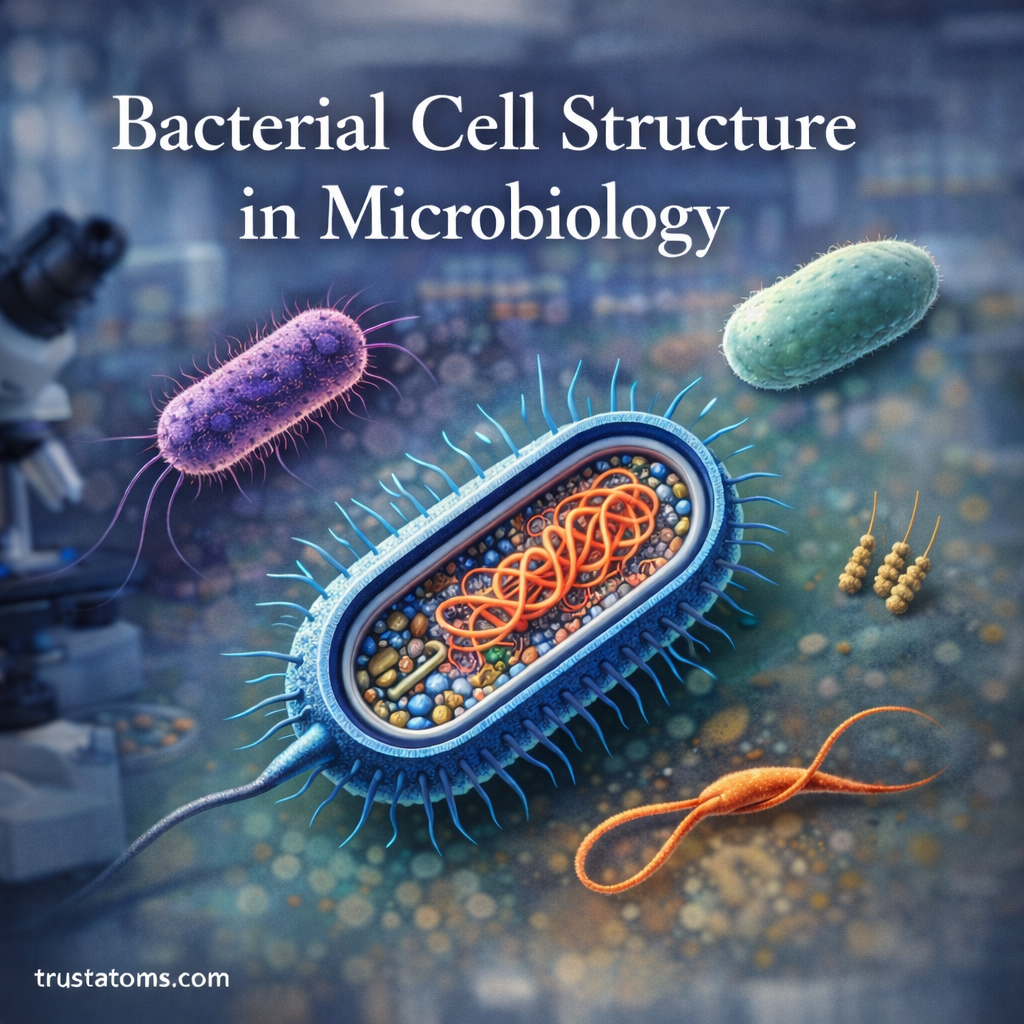
Illustrated diagram showing the internal structure of a bacterial cell with DNA, cell membrane, ribosomes, pili, and flagellum.
Educational illustration showing the structure of a bacterial cell with internal components such as DNA, ribosomes, and external features like pili and flagellum. trustatoms.com.

Bacteria are among the simplest forms of life, yet their cellular structure is highly efficient and well adapted for survival. In microbiology, studying bacterial cell structure helps scientists understand how bacteria grow, reproduce, move, and interact with their environment.

Although bacterial cells are much smaller and simpler than plant or animal cells, they contain specialized components that allow them to perform essential life processes. Understanding these structures is fundamental in fields such as medicine, biotechnology, and environmental science.

Continue reading “Bacterial Cell Structure in Microbiology”

What Is a Bacterium?

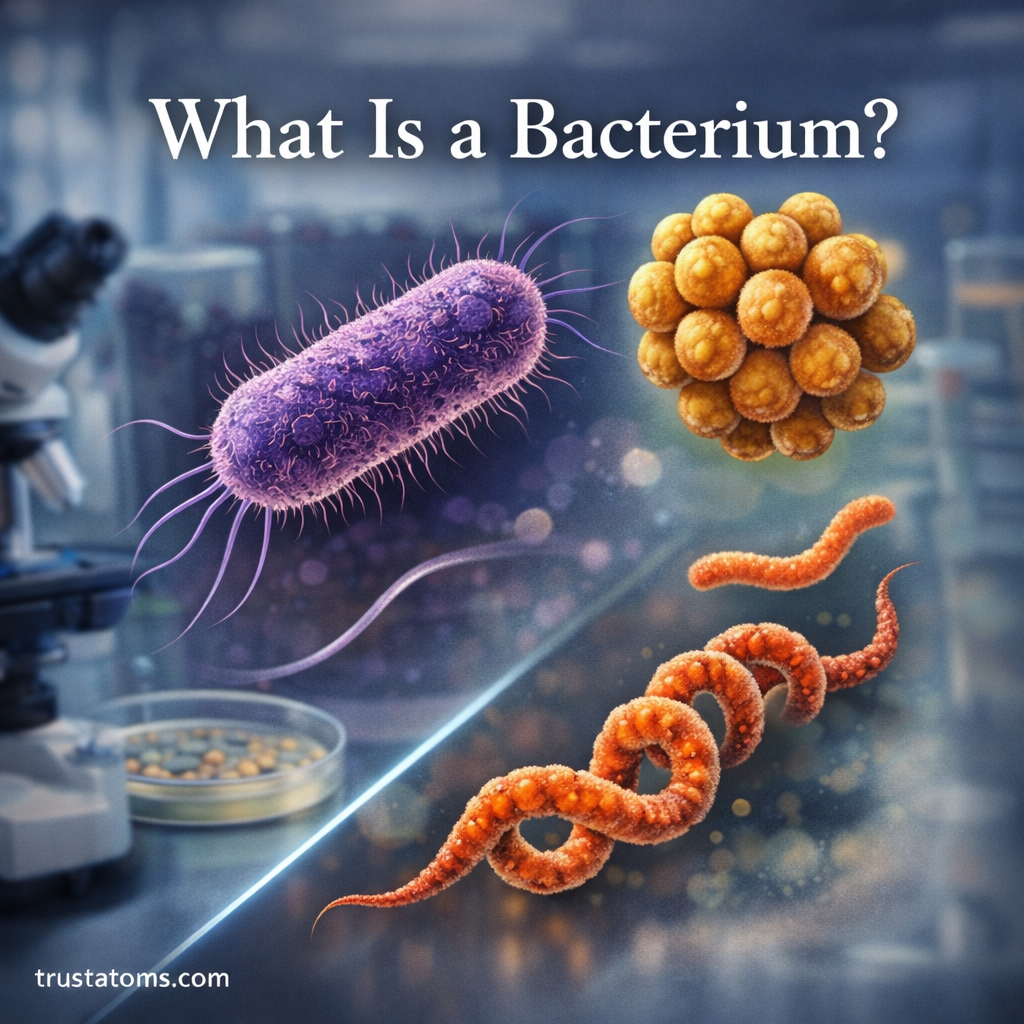
Illustrated diagram showing different bacterial shapes including rod-shaped bacillus, spherical cocci cluster, and spiral bacterium.
Educational illustration showing common bacterial shapes such as rod-shaped bacilli, spherical cocci, and spiral bacteria in a laboratory context. trustatoms.com.

A bacterium is a single-celled microscopic organism that belongs to a group of life forms known as bacteria. These organisms are among the simplest and most abundant living things on Earth. Despite their tiny size, bacteria play essential roles in ecosystems, human health, food production, and biotechnology.

Bacteria exist almost everywhere — in soil, water, air, extreme environments, and even inside the human body. Some bacteria cause disease, but many are beneficial and necessary for life.

Continue reading “What Is a Bacterium?”

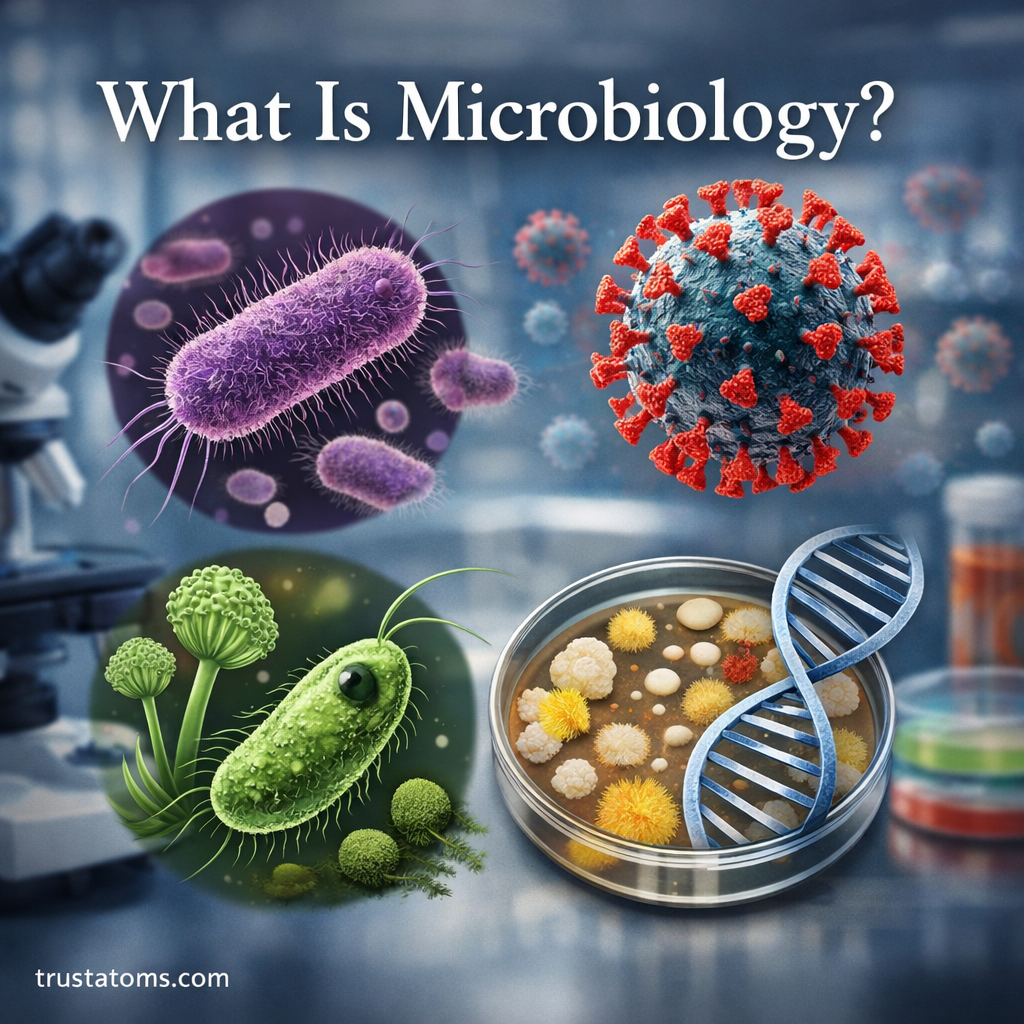
What Is Microbiology?

Illustrated microbiology diagram showing bacteria, viruses, fungi, protozoa, and DNA with a microscope in the background.
Educational illustration representing microbiology with microbes such as bacteria, viruses, fungi, and protozoa in a laboratory setting. trustatoms.com.

Microbiology is the branch of biology that studies microscopic organisms—living things so small they can only be seen with a microscope. These organisms include bacteria, viruses, fungi, protozoa, and certain algae. Despite their tiny size, microorganisms play massive roles in ecosystems, medicine, industry, and even the human body.

Microbiology helps scientists understand how these organisms live, grow, interact, and influence the world around us. From causing infectious diseases to helping produce foods like yogurt and cheese, microbes are both powerful and essential to life on Earth.

Continue reading “What Is Microbiology?”

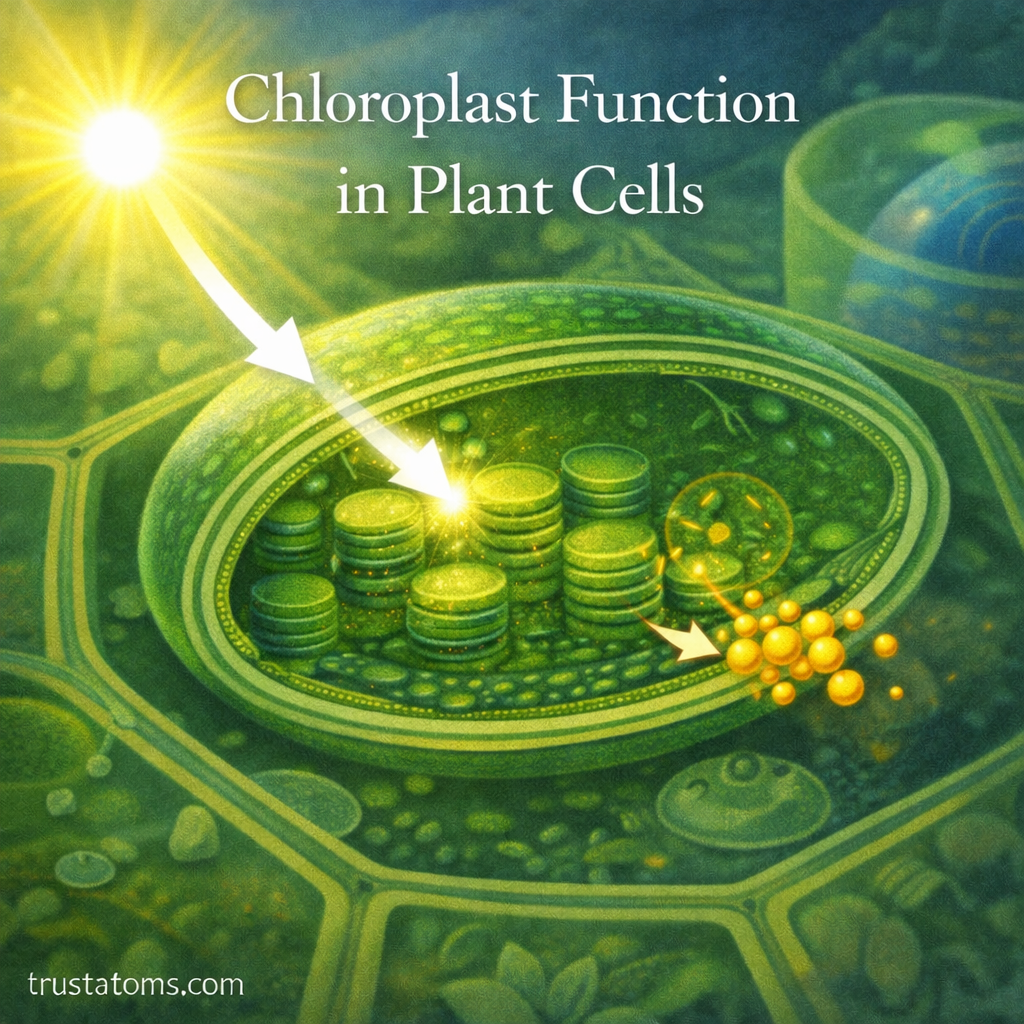
Chloroplast Function in Plant Cells

Illustration showing a chloroplast inside a plant cell capturing sunlight and producing sugars through photosynthesis.
Diagram illustrating chloroplast function in plant cells, where sunlight powers photosynthesis to produce energy-rich sugars. trustatoms.com.

Chloroplasts are specialized structures inside plant cells responsible for carrying out photosynthesis. These organelles allow plants to capture energy from sunlight and convert it into chemical energy stored in sugars.

Without chloroplasts, plants would not be able to produce the organic molecules required for growth and survival. Because plants form the foundation of most food chains, chloroplast function ultimately supports life across entire ecosystems.

Understanding how chloroplasts work helps explain how plants produce energy, build biological structures, and contribute to the global carbon cycle.

Continue reading “Chloroplast Function in Plant Cells”