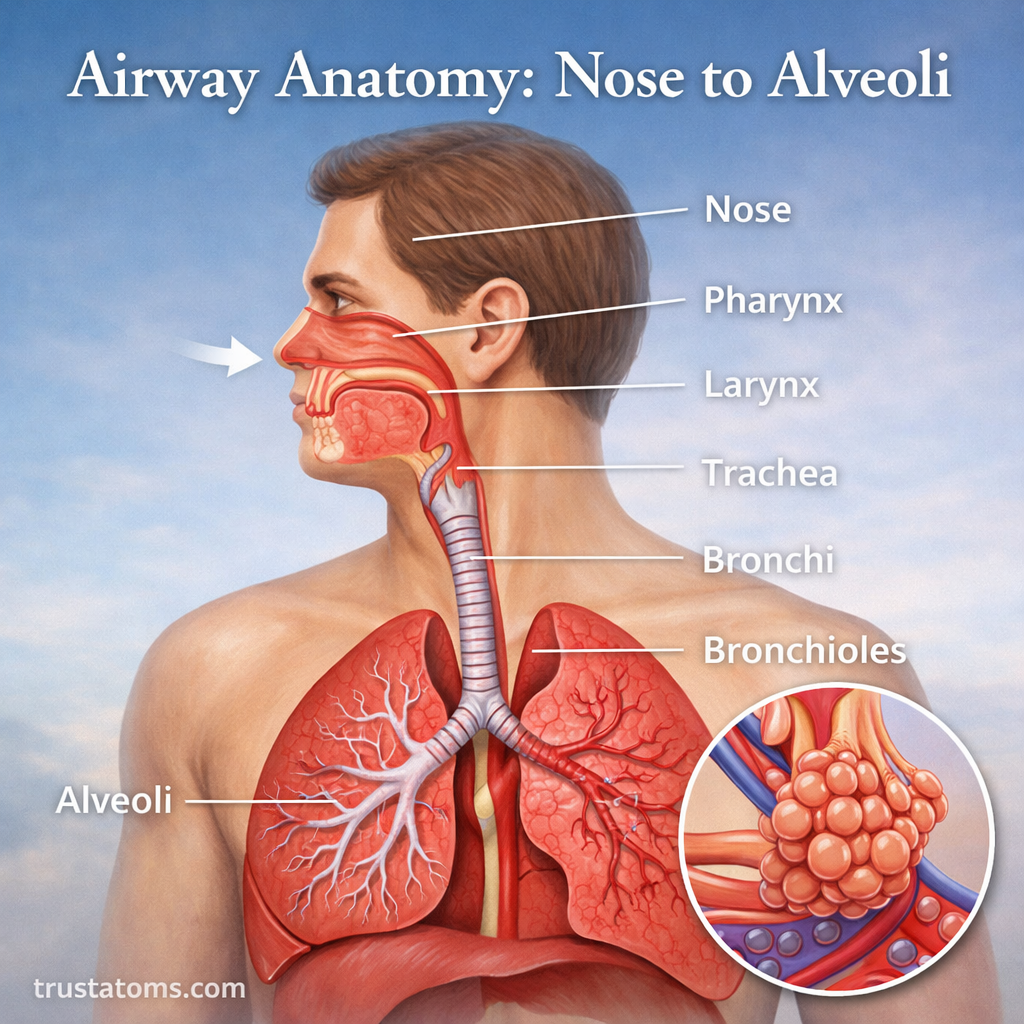
Airway Anatomy: Nose to Alveoli

Diagram of airway anatomy showing the path of air from the nose through the pharynx, larynx, trachea, bronchi, and into the alveoli in the lungs.
Illustration of airway anatomy from the nose to the alveoli showing how air travels through the respiratory system. trustatoms.com.

Airway anatomy refers to the structures that carry air from the outside environment into the lungs, where oxygen enters the bloodstream and carbon dioxide is removed. This pathway—from the nose to the alveoli—is carefully designed to filter, warm, and transport air efficiently.

Understanding how each part of the airway works helps explain how the body breathes, protects itself from harmful particles, and supports overall health.

Continue reading “Airway Anatomy: Nose to Alveoli”
What Is the Respiratory System?

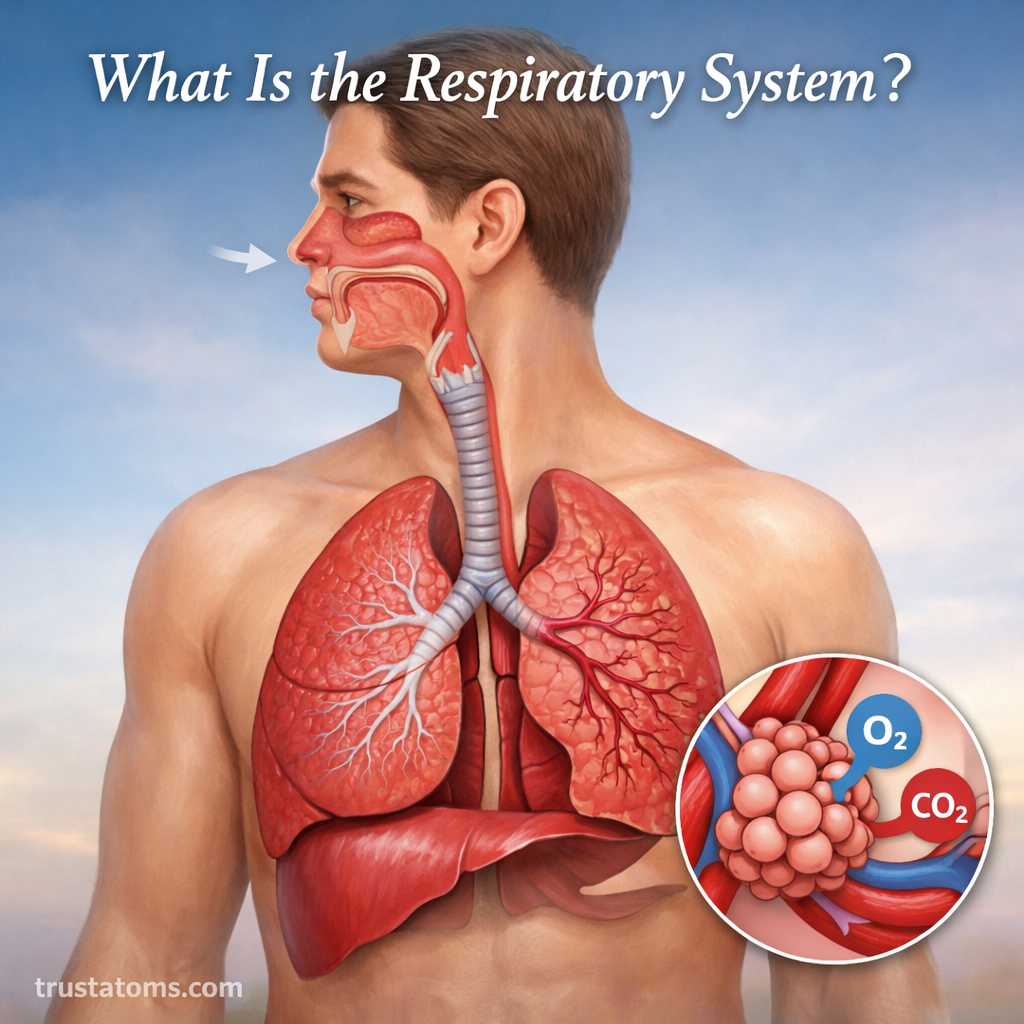
Illustration showing the human respiratory system including nose, trachea, lungs, and alveoli with oxygen and carbon dioxide exchange.
Simple diagram of the human respiratory system showing how oxygen enters the body and carbon dioxide exits. trustatoms.com.

The respiratory system is the body’s network of organs and tissues responsible for breathing. Its main job is to bring oxygen into the body and remove carbon dioxide, a waste gas produced by cells. This process is essential for survival because every cell depends on oxygen to produce energy.

From the moment you take your first breath, your respiratory system works continuously—often without you even noticing.

Continue reading “What Is the Respiratory System?”

Circulatory Adaptations During Exercise: How Your Body Responds to Physical Activity

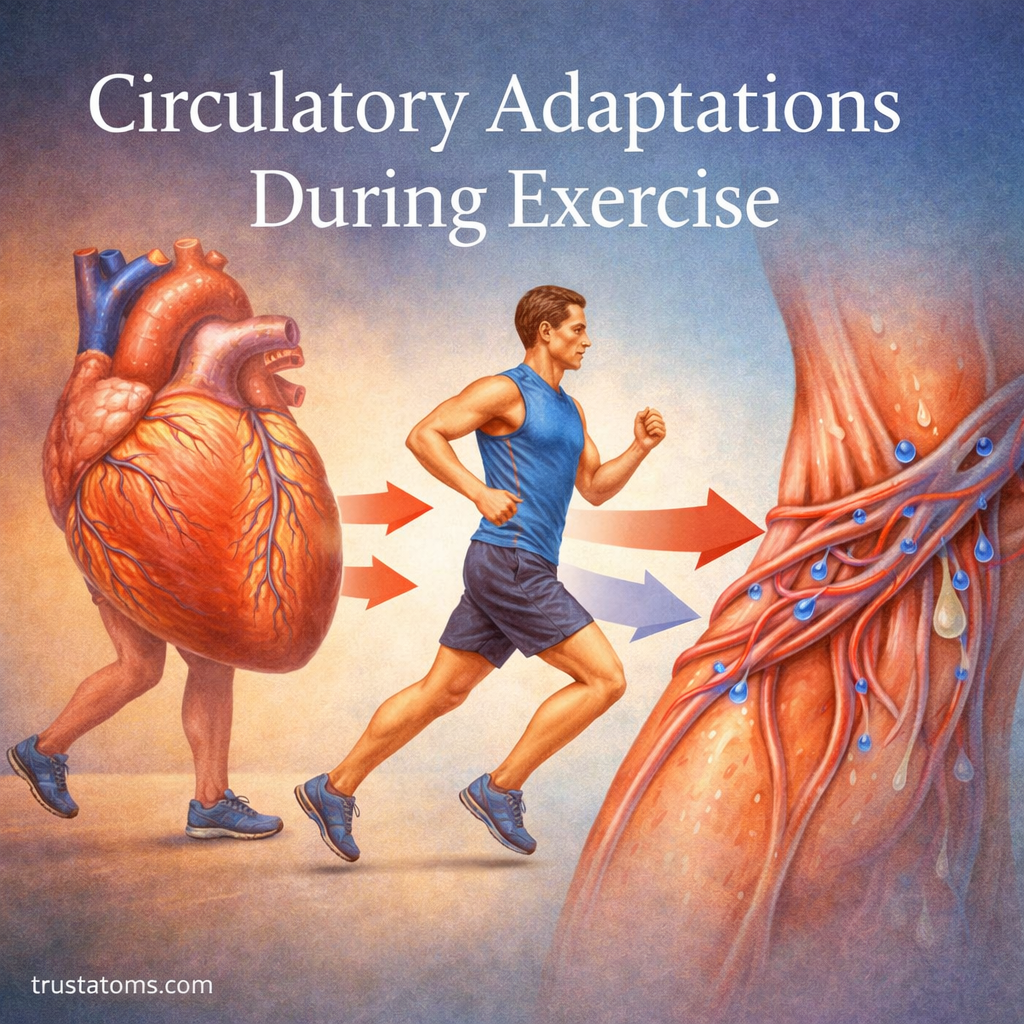
Illustration showing increased heart activity, blood flow to muscles, and oxygen delivery during exercise.
Visual representation of how the circulatory system adapts during exercise to increase blood flow and oxygen delivery. trustatoms.com.

When you exercise, your body undergoes rapid and coordinated changes to meet increased energy demands. One of the most important systems involved is the circulatory system, which adjusts to deliver more oxygen and nutrients to working muscles.

In this guide, you’ll learn how the circulatory system adapts during exercise, why these changes happen, and how they improve performance and overall health.

Continue reading “Circulatory Adaptations During Exercise: How Your Body Responds to Physical Activity”

Edema and Fluid Exchange Principles: How the Body Balances Fluid Movement

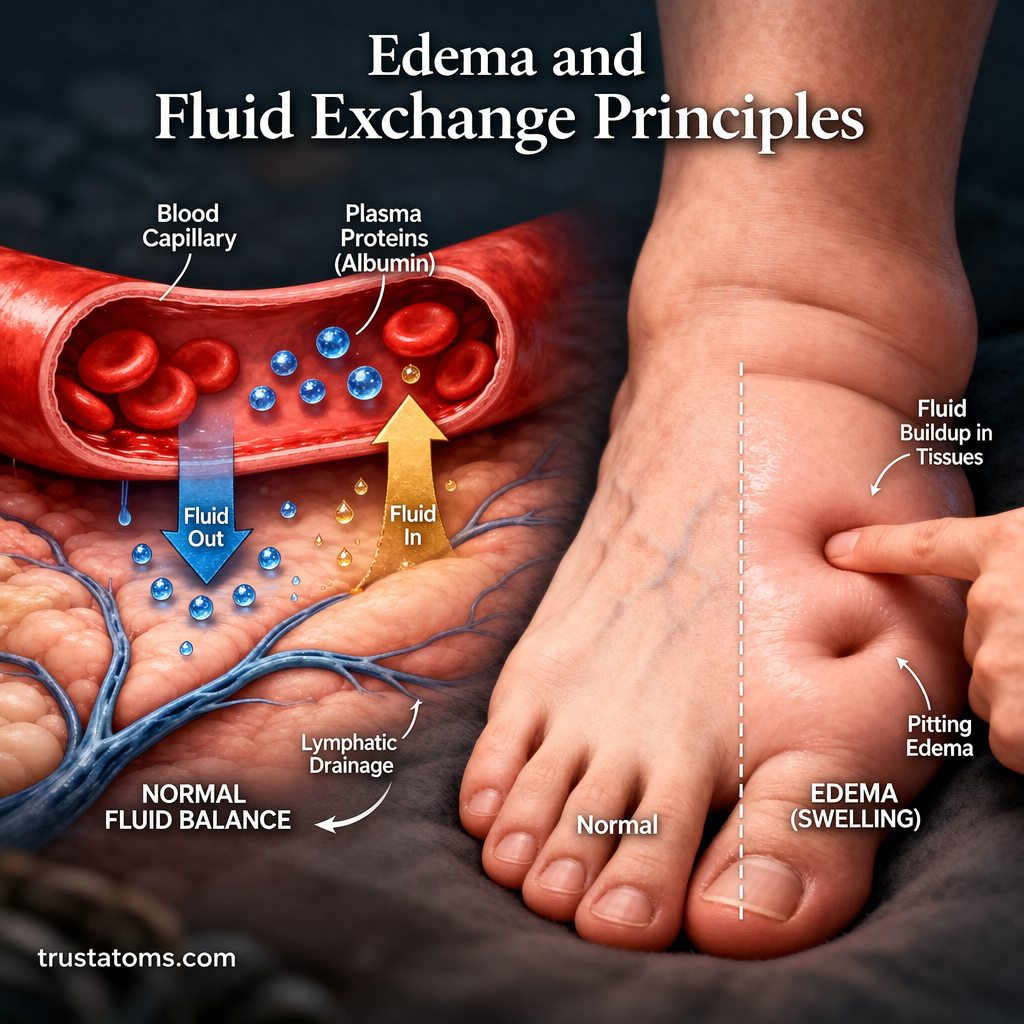
Illustration showing normal fluid exchange in capillaries versus edema with fluid buildup and swelling in tissues.
Visual comparison of normal fluid balance and edema caused by disrupted fluid exchange in the body. trustatoms.com.

Fluid constantly moves between blood vessels and surrounding tissues. This exchange is essential for delivering nutrients, removing waste, and maintaining healthy cells. However, when this balance is disrupted, it can lead to edema, or swelling caused by excess fluid buildup.

In this guide, you’ll learn how fluid exchange works, what causes edema, and why maintaining this balance is critical for overall health.

Continue reading “Edema and Fluid Exchange Principles: How the Body Balances Fluid Movement”

Plasma Proteins and Osmotic Pressure: How Blood Maintains Fluid Balance

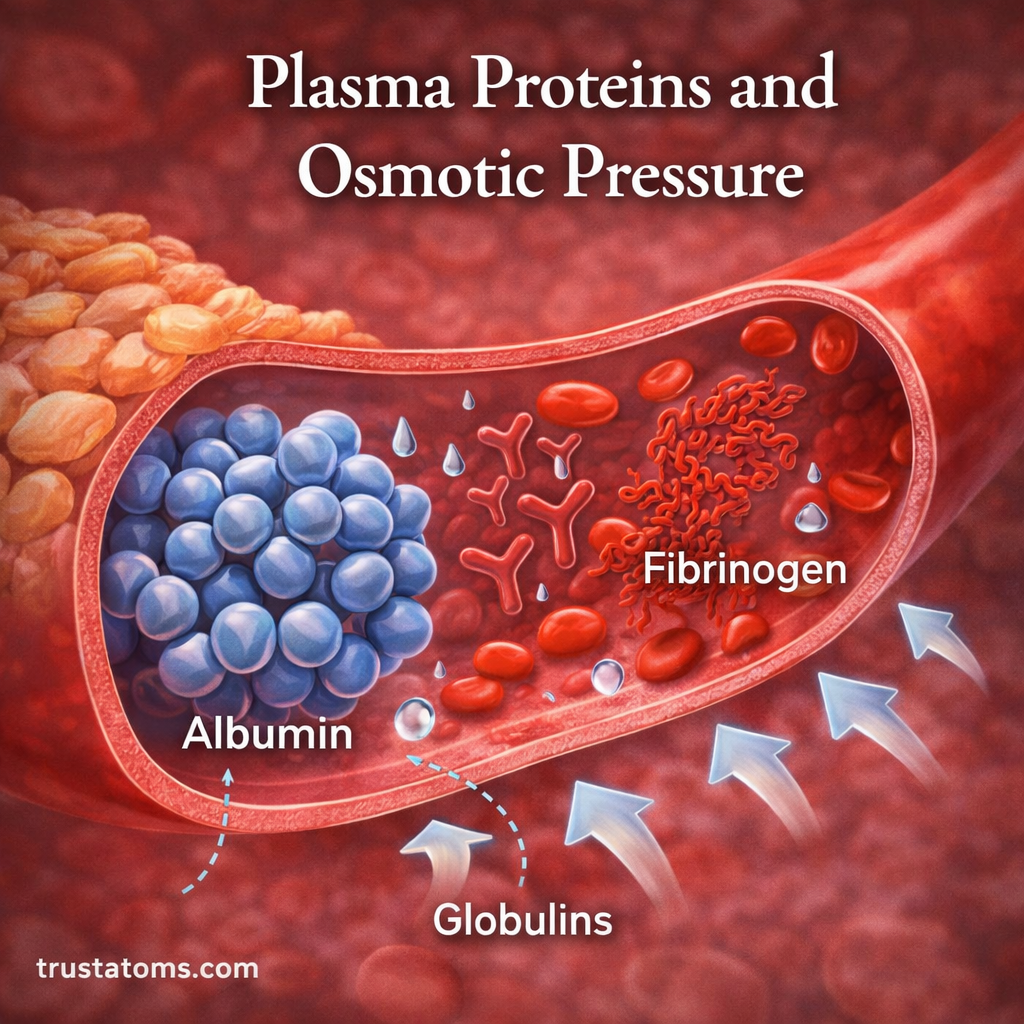
Illustration showing plasma proteins like albumin, globulins, and fibrinogen regulating osmotic pressure in a blood vessel.
Visual representation of plasma proteins and their role in maintaining osmotic pressure and fluid balance in the bloodstream. trustatoms.com.

Blood plasma is more than just a transport medium—it plays a crucial role in maintaining fluid balance throughout the body. One of the key ways it does this is through plasma proteins and their effect on osmotic pressure.

In this guide, you’ll learn how plasma proteins work, what osmotic pressure is, and why this balance is essential for healthy circulation and tissue function.

Continue reading “Plasma Proteins and Osmotic Pressure: How Blood Maintains Fluid Balance”

Hematocrit and Blood Viscosity: Understanding Thickness and Flow in Blood

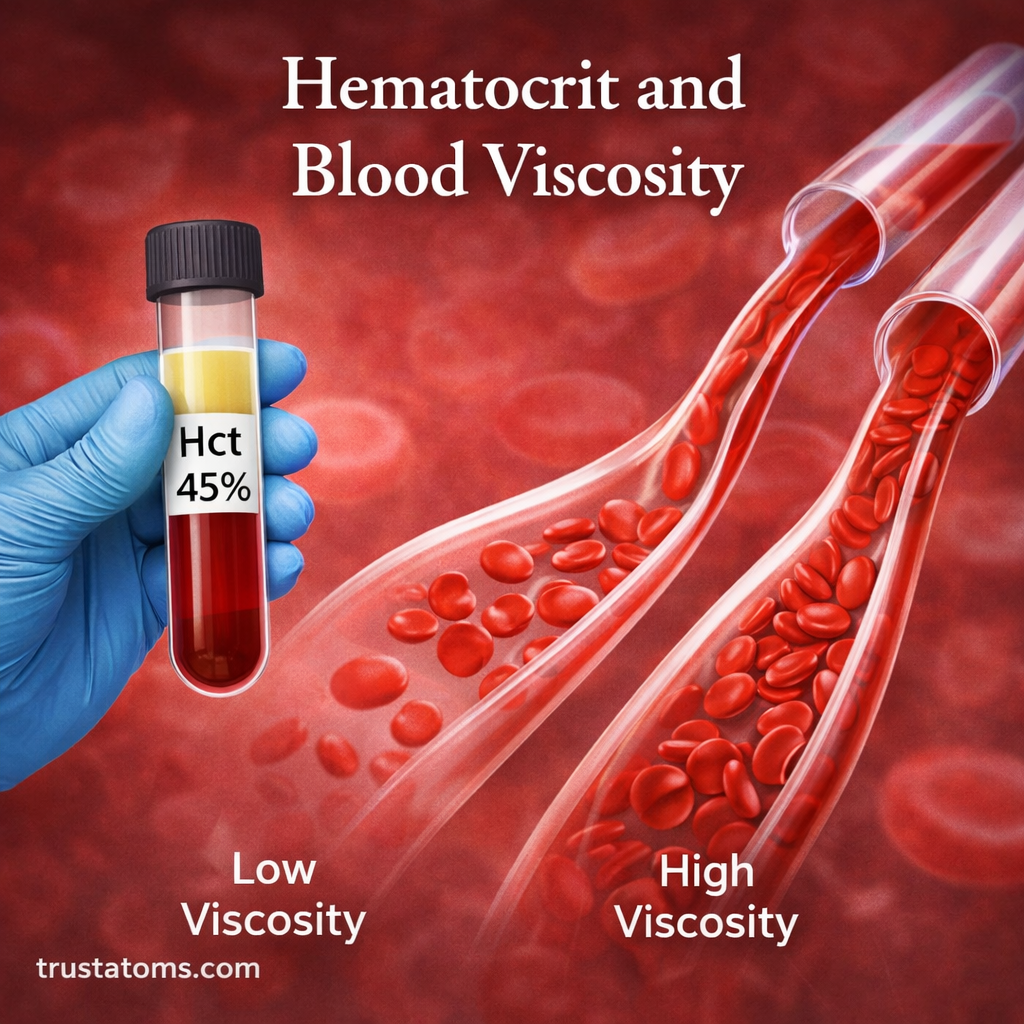
Illustration showing hematocrit levels in a blood sample and comparison of low vs high blood viscosity in blood vessels.
Visual representation of hematocrit percentage and how blood thickness (viscosity) affects blood flow. trustatoms.com.

Blood is more than just a red liquid—it’s a dynamic tissue with properties that directly affect how well oxygen and nutrients are delivered throughout the body. Two key factors that influence blood flow are hematocrit and blood viscosity.

In this guide, you’ll learn what these terms mean, how they are connected, and why they matter for overall health and medical care.

Continue reading “Hematocrit and Blood Viscosity: Understanding Thickness and Flow in Blood”

Blood Typing and the ABO/Rh Systems

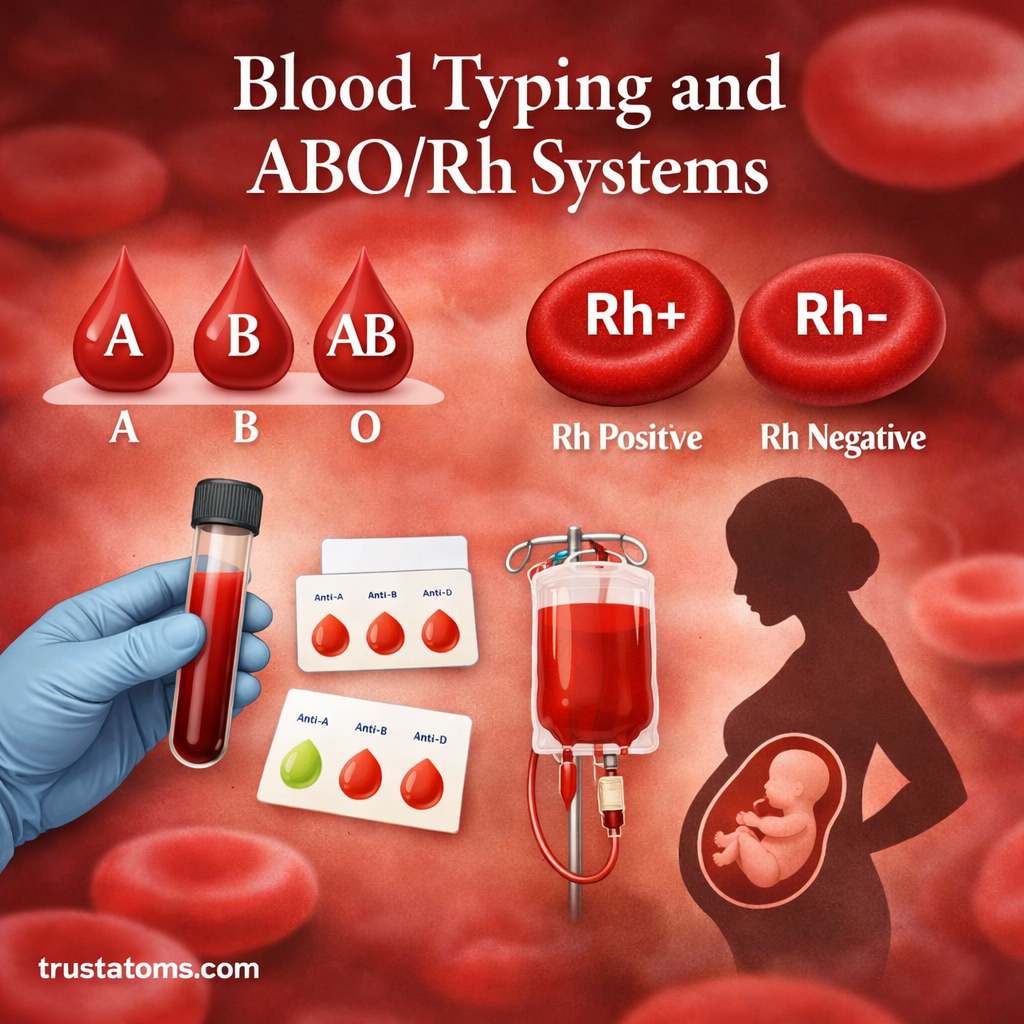
Illustration showing ABO blood types A, B, AB, O and Rh positive and negative systems with blood sample testing and transfusion context.
Visual overview of blood typing, including ABO groups and Rh factor classification. trustatoms.com.

Blood typing is one of the most important concepts in human anatomy and medicine. It determines how blood can be safely transfused, plays a role in pregnancy, and helps doctors prevent life-threatening immune reactions.

In this guide, you’ll learn how the ABO and Rh blood group systems work, why they matter, and how they affect real-world medical decisions.

Continue reading “Blood Typing and the ABO/Rh Systems”

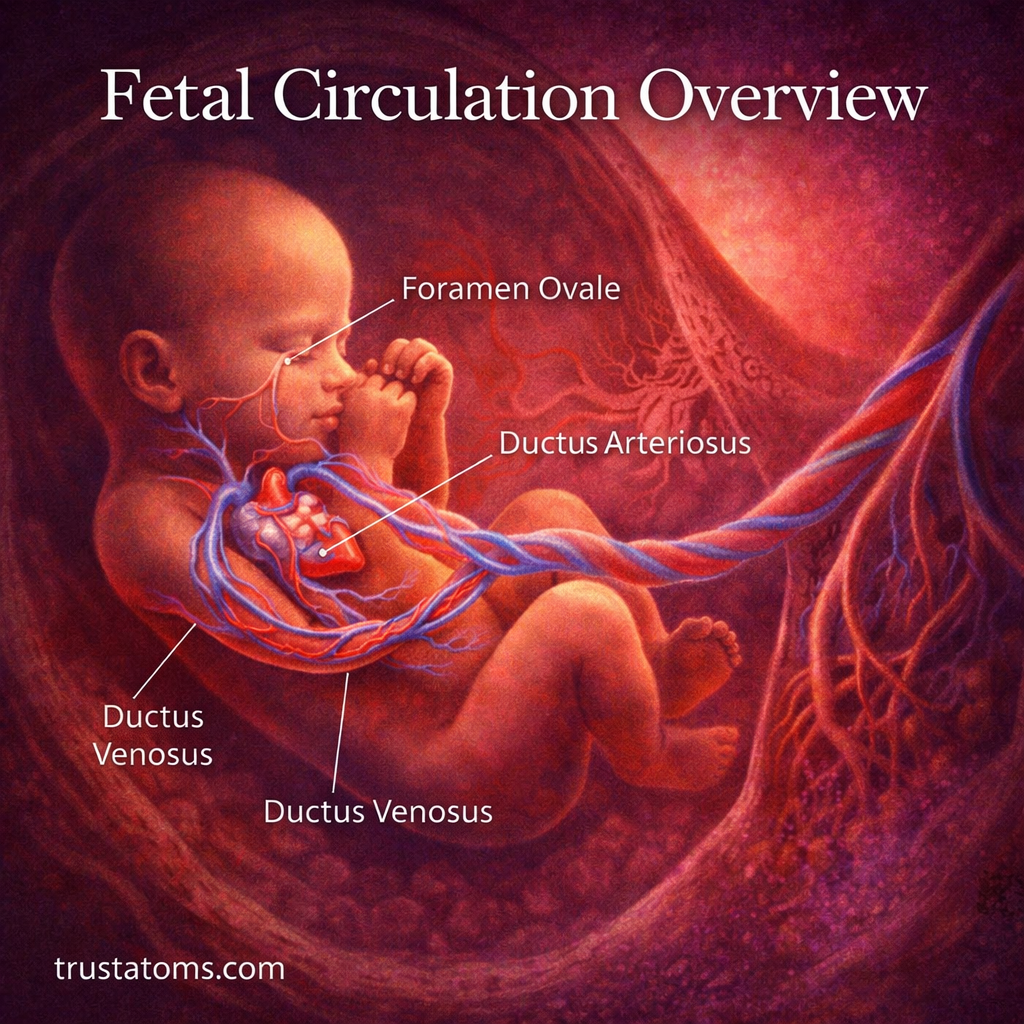
Fetal Circulation Overview

Illustration of fetal circulation showing blood flow through the placenta, foramen ovale, ductus arteriosus, and ductus venosus.
Diagram of fetal circulation highlighting key shunts and blood flow before birth. trustatoms.com

Fetal circulation is a specialized system that allows a developing baby to receive oxygen and nutrients from the mother while its own lungs are not yet functioning. Unlike postnatal circulation, fetal blood flow uses unique structures to bypass the lungs and liver, ensuring efficient delivery of oxygen-rich blood.

Understanding fetal circulation provides insight into how the body adapts before birth—and how it transitions immediately after delivery.

Continue reading “Fetal Circulation Overview”

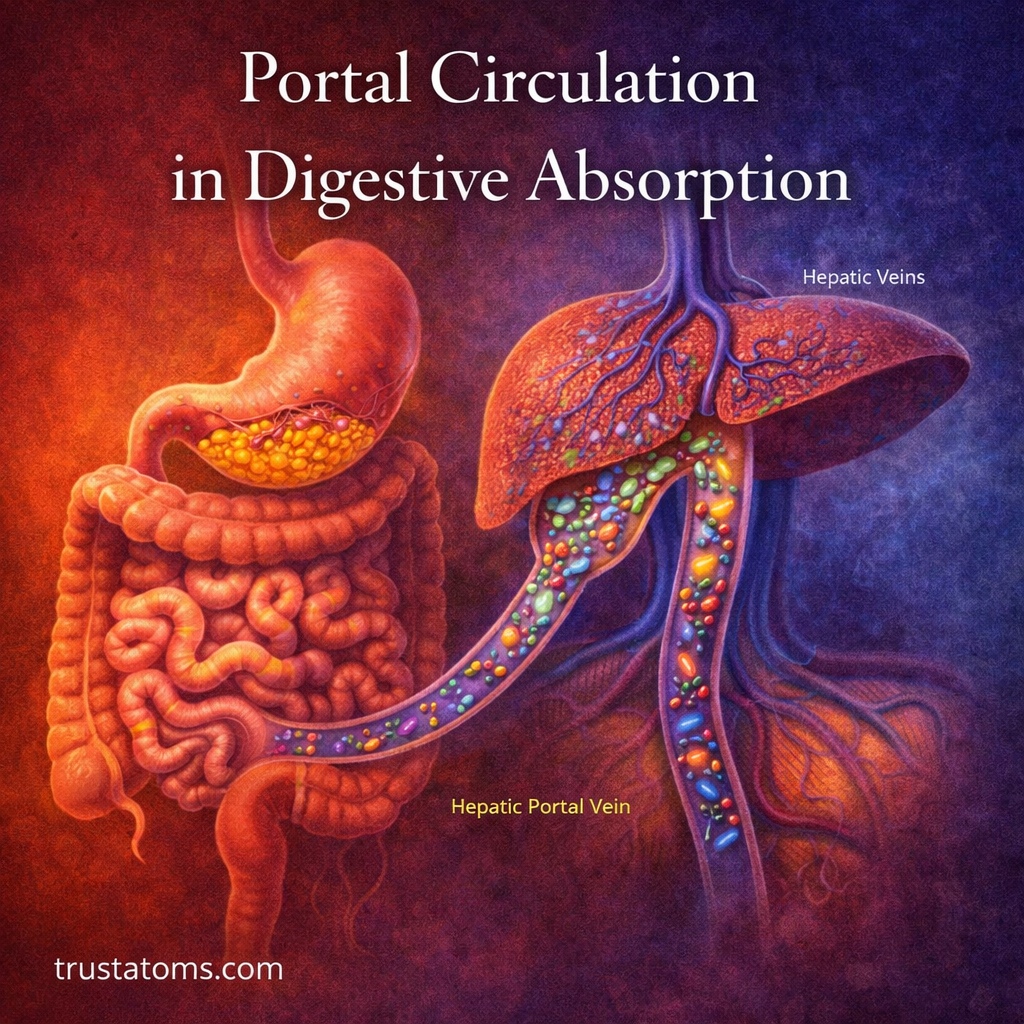
Portal Circulation in Digestive Absorption

Illustration of portal circulation showing nutrient-rich blood flowing from the intestines to the liver through the hepatic portal vein.
Diagram of portal circulation transporting nutrients from the digestive system to the liver. trustatoms.com

The human digestive system does more than break down food—it also ensures that nutrients are efficiently transported to where they are needed. A key part of this process is portal circulation, a specialized pathway that carries nutrient-rich blood from the digestive organs to the liver.

Understanding portal circulation helps explain how the body processes nutrients, detoxifies substances, and maintains metabolic balance.

Continue reading “Portal Circulation in Digestive Absorption”

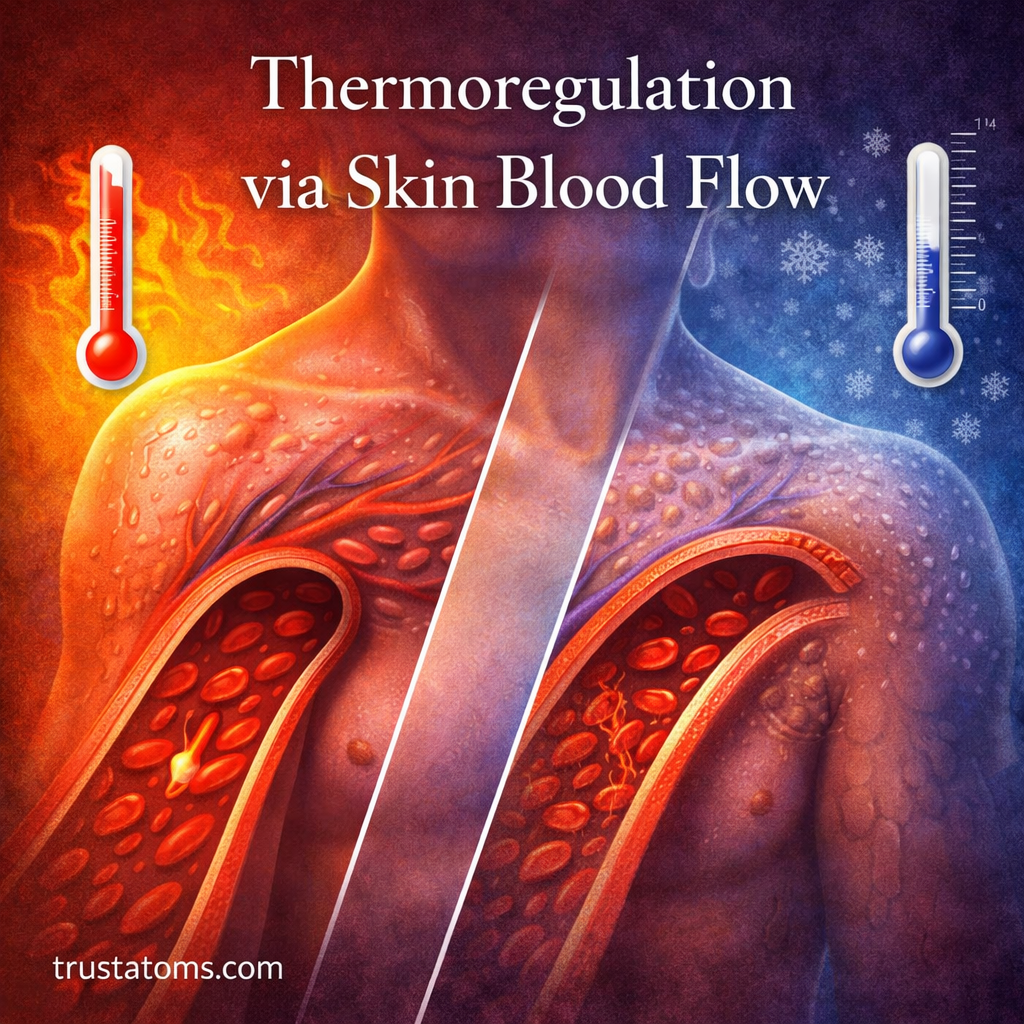
Thermoregulation via Skin Blood Flow

Illustration showing thermoregulation via skin blood flow with vasodilation in heat and vasoconstriction in cold conditions.
Diagram of thermoregulation through skin blood flow showing heat loss and heat conservation. trustatoms.com

The human body maintains a stable internal temperature despite changes in the external environment. One of the most important mechanisms behind this balance is thermoregulation via skin blood flow.

By adjusting how much blood flows to the skin, the body can either release heat or conserve it—helping maintain optimal conditions for cellular function.

Continue reading “Thermoregulation via Skin Blood Flow”