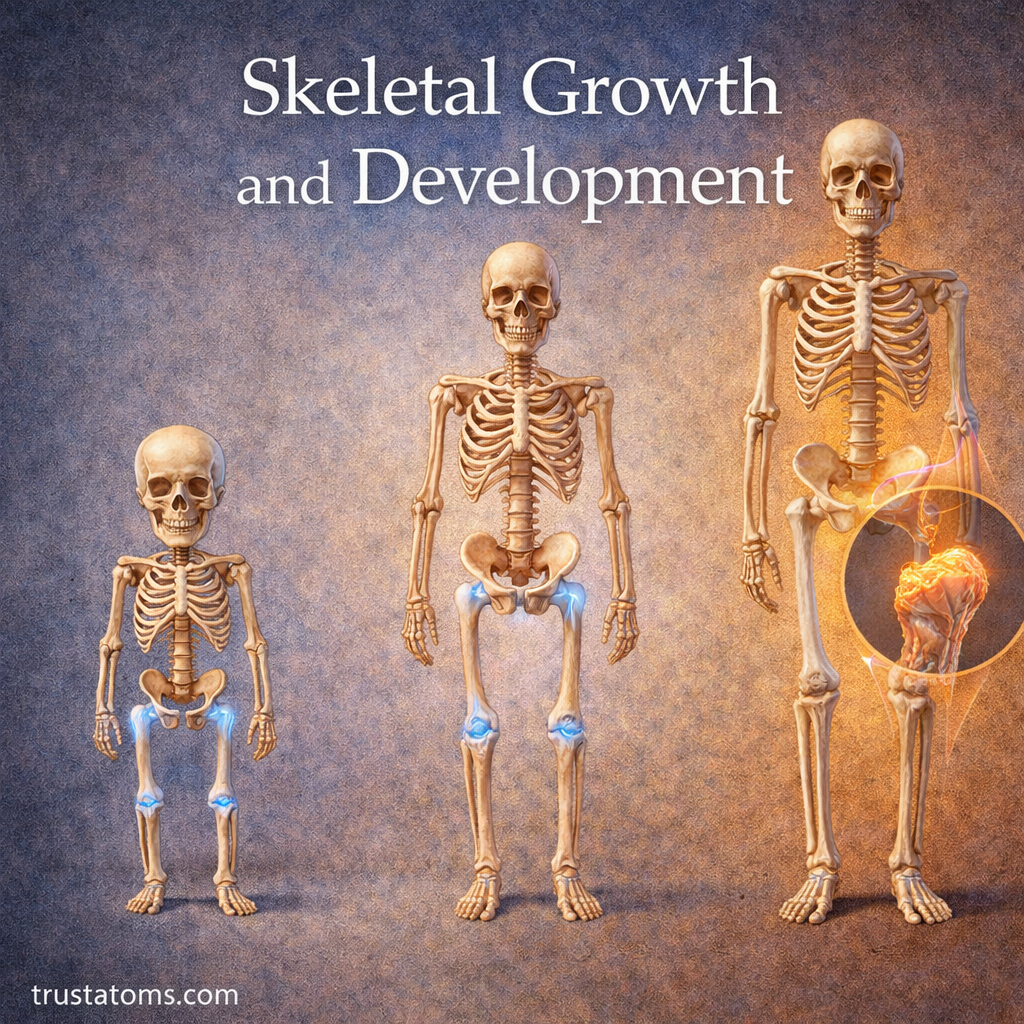
Skeletal Growth and Development

Illustration of skeletal growth and development showing infant, child, and adult skeleton stages.
Visual representation of skeletal growth from infancy to adulthood. trustatoms.com.

The human skeleton is not a fixed structure—it grows, adapts, and changes throughout life. From infancy to adulthood, bones develop in size, shape, and strength to support movement, protect organs, and maintain overall body structure.

Understanding skeletal growth and development helps explain how the body matures, how bones heal, and why proper nutrition and activity are essential for long-term health.

Continue reading “Skeletal Growth and Development”
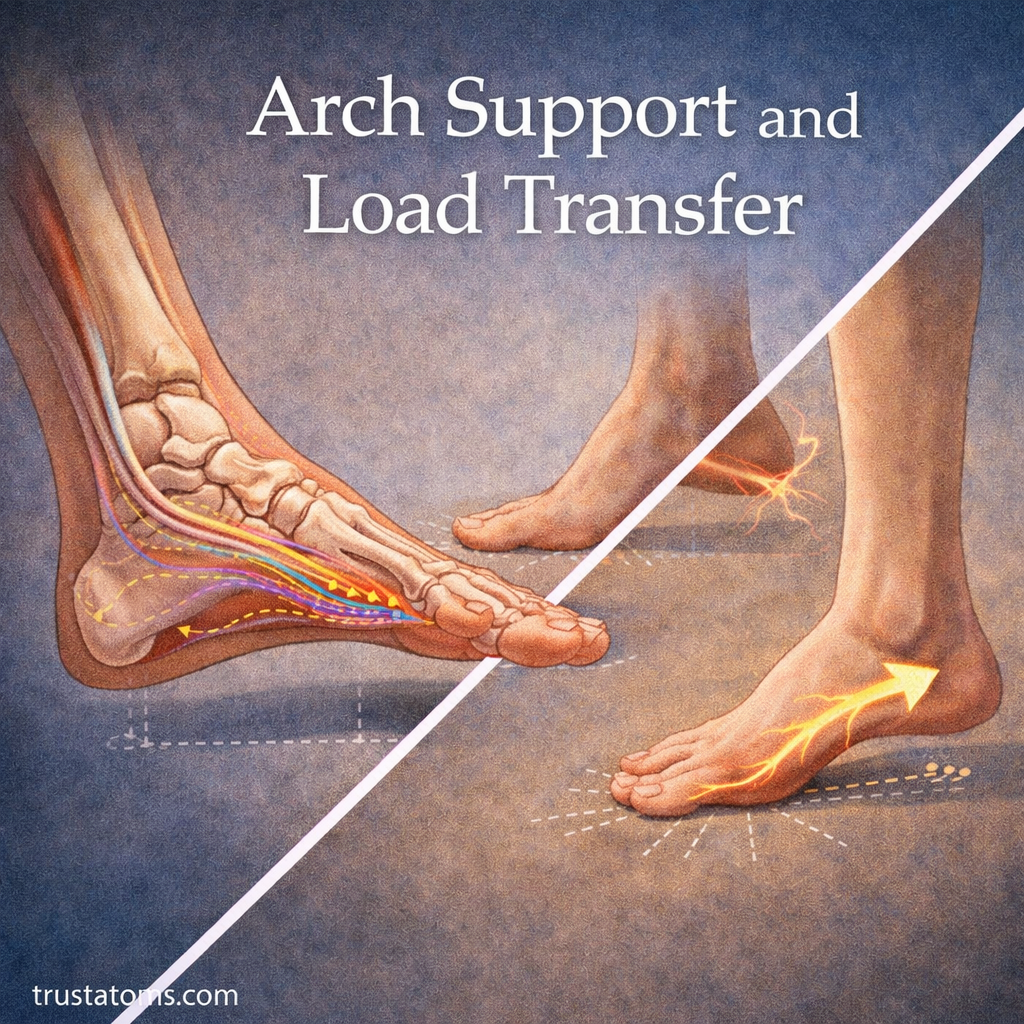
Arch Support and Load Transfer

Illustration of foot arches and load transfer showing how forces move through the foot during walking.
Visual explanation of arch support and how load is transferred through the foot. trustatoms.com.

The human foot is designed to support body weight, absorb impact, and transfer forces efficiently during movement. A key component of this system is the arch, which acts as a natural shock absorber and load distributor.

Arch support and load transfer are essential for maintaining balance, reducing stress on joints, and enabling smooth, efficient movement in activities like standing, walking, and running.

Continue reading “Arch Support and Load Transfer”

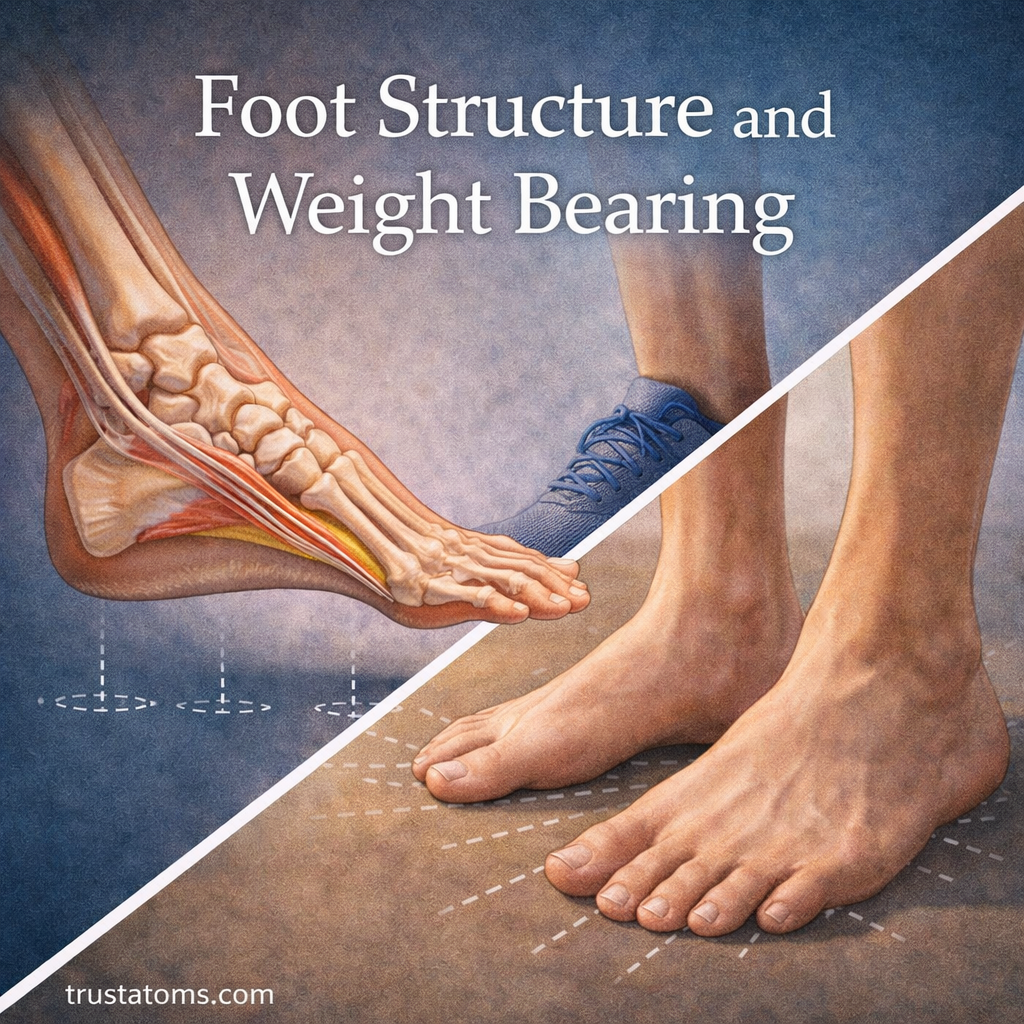
Foot Structure and Weight Bearing

Illustration of foot structure showing bones, arches, and weight distribution during standing.
Visual overview of foot structure and how weight is distributed across the foot. trustatoms.com.

The human foot is a highly specialized structure designed to support body weight, absorb shock, and enable movement. Whether standing still or walking, the foot plays a crucial role in maintaining balance and distributing forces throughout the body.

Understanding foot structure and weight bearing helps explain how the body stays stable, moves efficiently, and prevents injury during everyday activities.

Continue reading “Foot Structure and Weight Bearing”

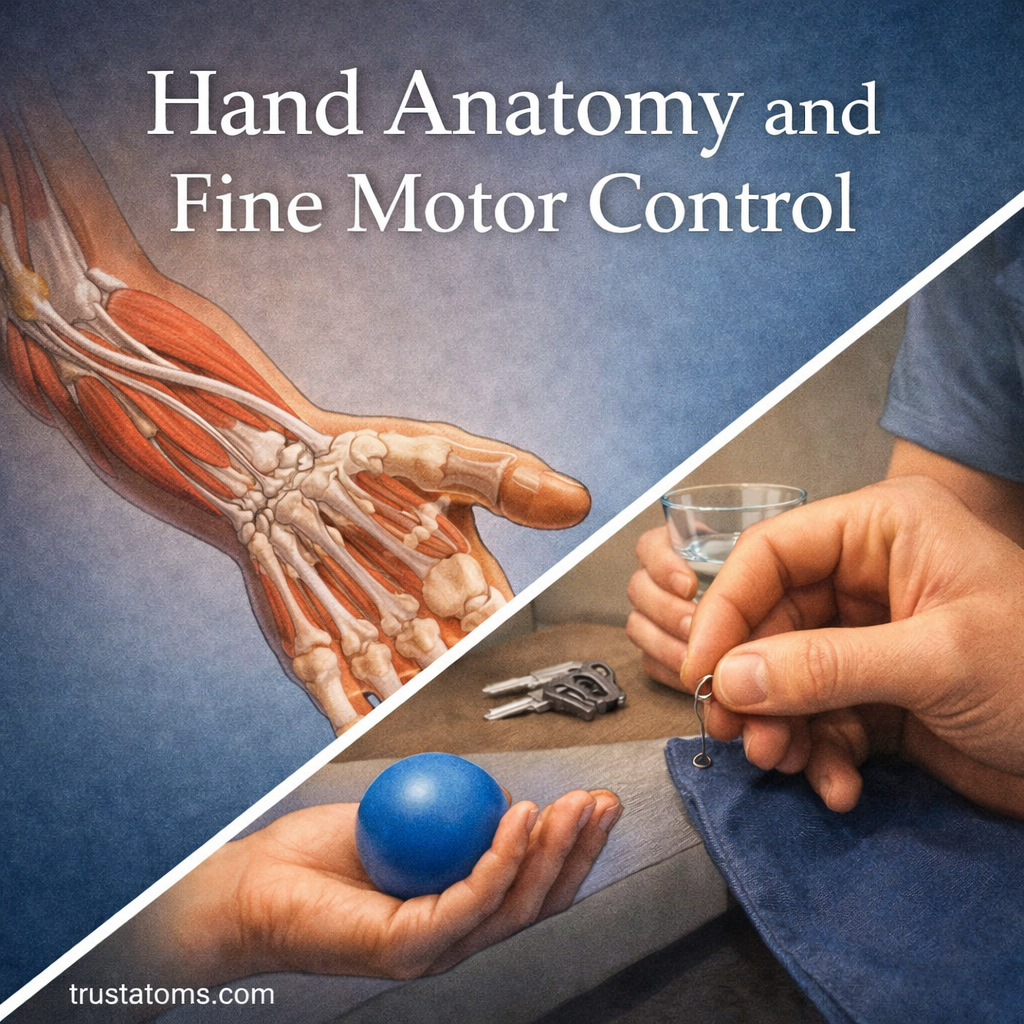
Hand Anatomy and Fine Motor Control

Illustration of hand anatomy and fine motor control showing muscles, bones, and precise finger movements.
Visual representation of hand anatomy and fine motor control in everyday tasks. trustatoms.com.

The human hand is one of the most intricate and functionally advanced structures in the body. It allows us to perform precise tasks like writing, typing, and buttoning a shirt, as well as powerful actions like gripping and lifting.

Hand anatomy and fine motor control work together to enable these movements. This coordination involves bones, muscles, tendons, nerves, and sensory feedback systems operating with remarkable precision.

Continue reading “Hand Anatomy and Fine Motor Control”

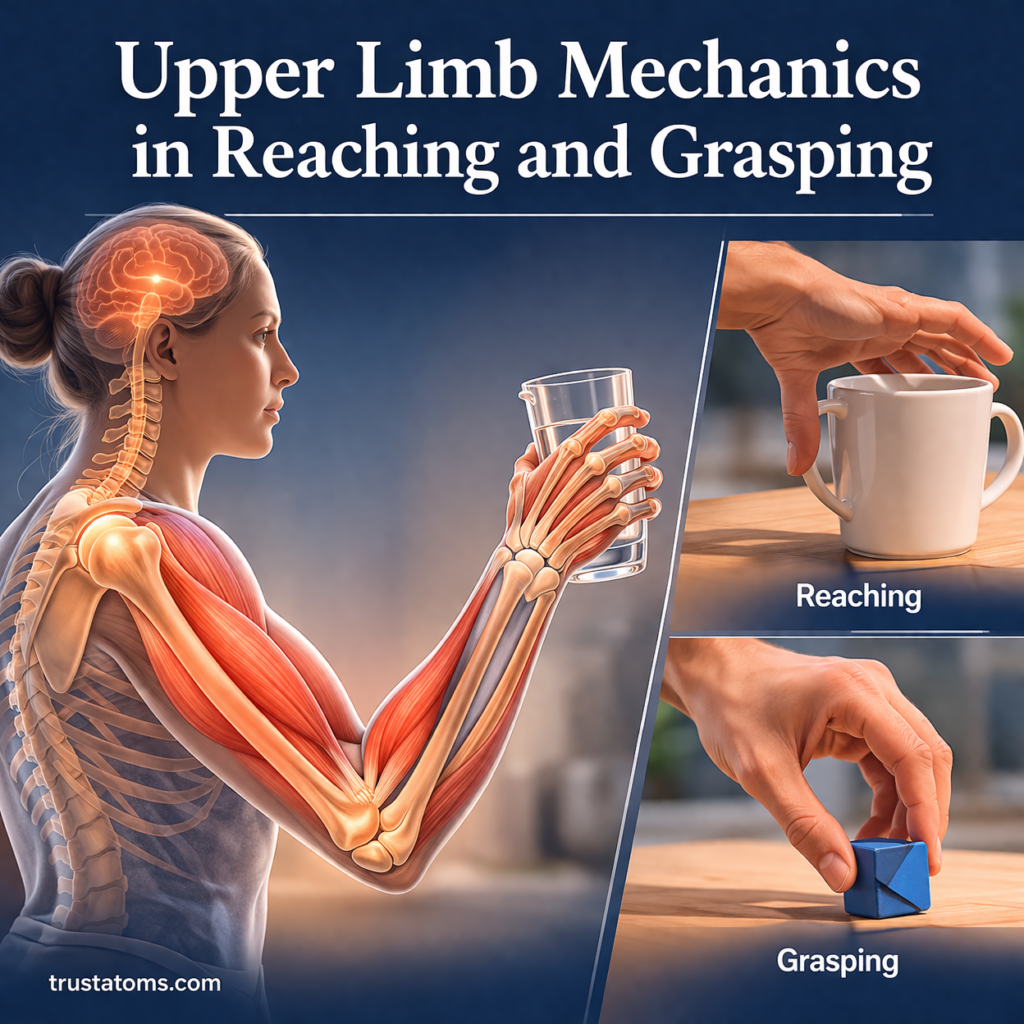
Upper Limb Mechanics in Reaching and Grasping

Illustration of upper limb mechanics showing arm movement during reaching and hand grasping actions.
Visual overview of reaching and grasping mechanics in the upper limb. trustatoms.com.

Reaching and grasping are essential human movements used in everyday tasks—from picking up a cup to typing on a keyboard. These actions rely on precise coordination between the shoulder, elbow, wrist, and hand, along with input from the nervous system.

Upper limb mechanics refers to how these structures work together to allow smooth, accurate, and controlled movement. Understanding this system is important in anatomy, rehabilitation, and performance optimization.

Continue reading “Upper Limb Mechanics in Reaching and Grasping”

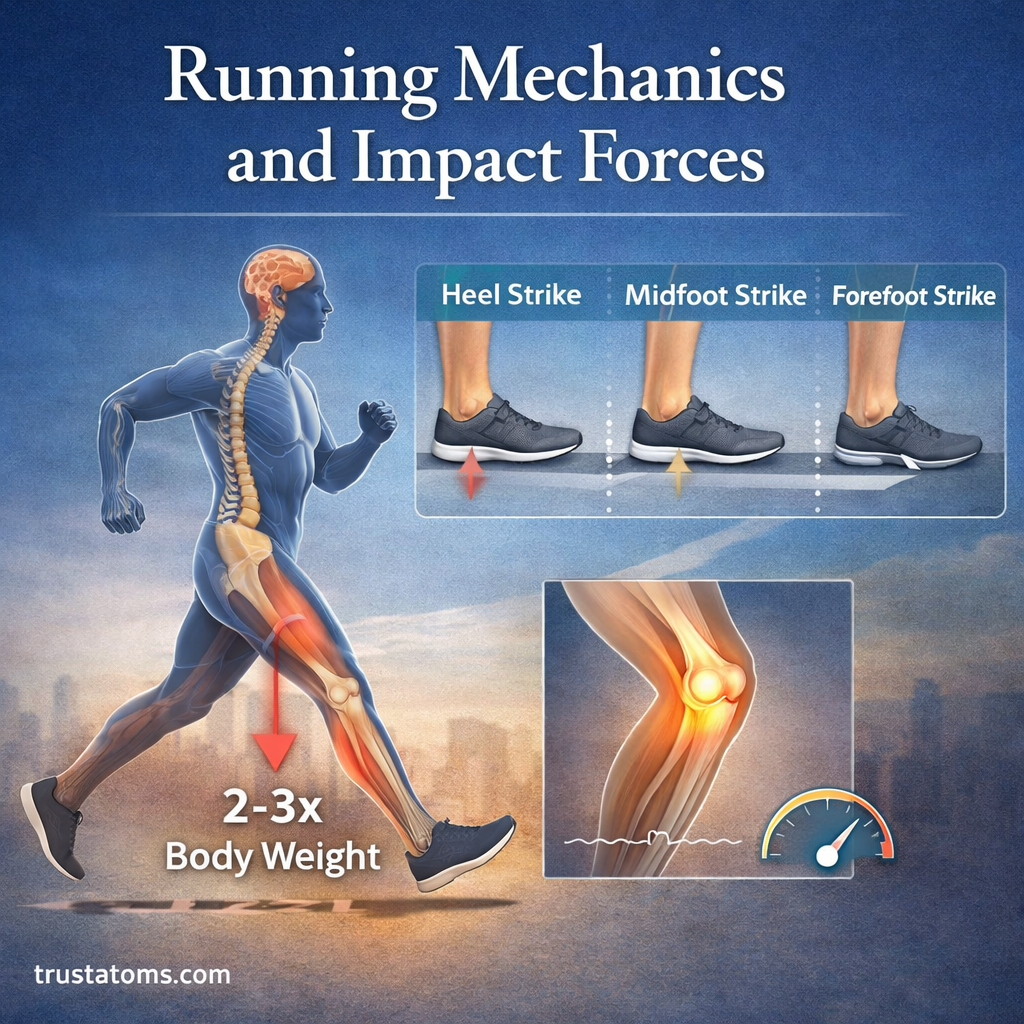
Running Mechanics and Impact Forces

Illustration of running mechanics showing foot strike patterns and impact forces on the body.
Visual representation of running mechanics and how impact forces affect the body during movement. trustatoms.com.

Running is a dynamic, high-impact form of human movement that places greater demands on the body compared to walking. Each stride involves coordinated muscle activity, joint motion, and force absorption to propel the body forward efficiently.

Understanding running mechanics and impact forces is essential for improving performance, preventing injury, and optimizing movement patterns in both recreational and competitive runners.

Continue reading “Running Mechanics and Impact Forces”

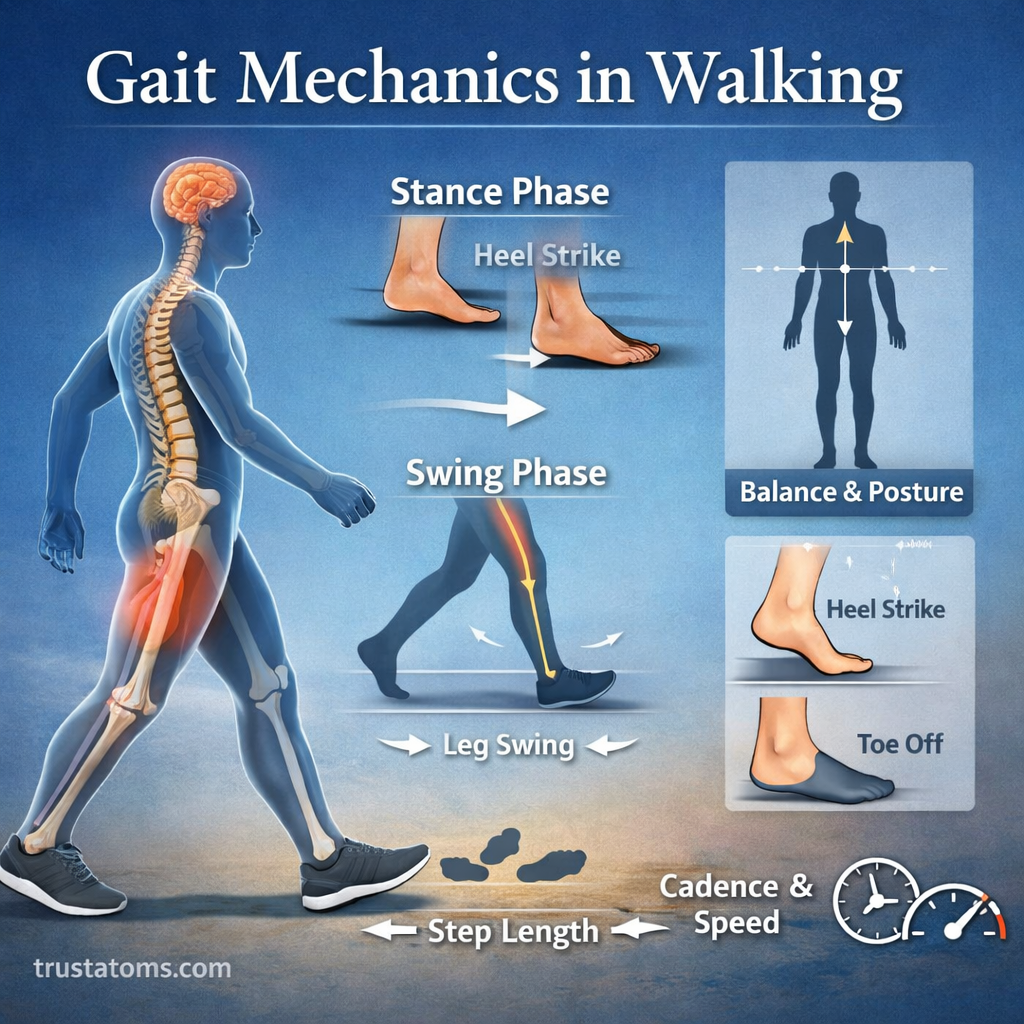
Gait Mechanics in Walking

Illustration of gait mechanics in walking showing stance phase, swing phase, and basic human movement patterns.
Visual overview of gait mechanics in walking including stance and swing phases. trustatoms.com.

Walking is one of the most fundamental human movements, yet it involves a highly coordinated interaction between muscles, joints, nerves, and balance systems. Gait mechanics refers to how the body moves during walking—an efficient, repeatable pattern that allows humans to travel with minimal energy expenditure.

Understanding gait mechanics is important in fields like physical therapy, sports science, and rehabilitation, as even small abnormalities can affect posture, balance, and long-term joint health.

Continue reading “Gait Mechanics in Walking”

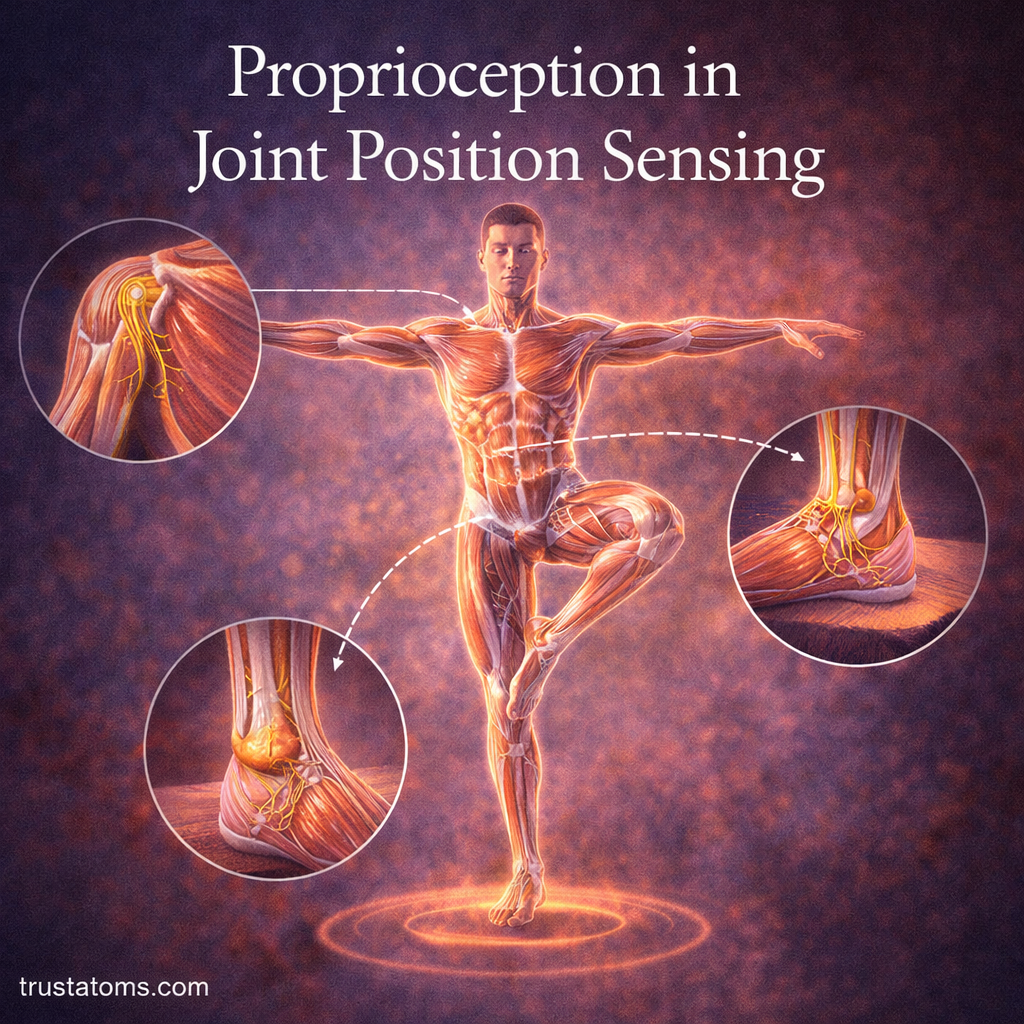
Proprioception in Joint Position Sensing

Illustration of proprioception in joint position sensing showing a person balancing with highlighted joints and nerve pathways.
Illustration showing how proprioception helps sense joint position and maintain balance. trustatoms.com

Have you ever touched your nose with your eyes closed or walked without constantly looking at your feet? These actions are possible because of proprioception—your body’s ability to sense its position, movement, and orientation in space.

Proprioception plays a critical role in joint position sensing, coordination, balance, and injury prevention.

Continue reading “Proprioception in Joint Position Sensing”

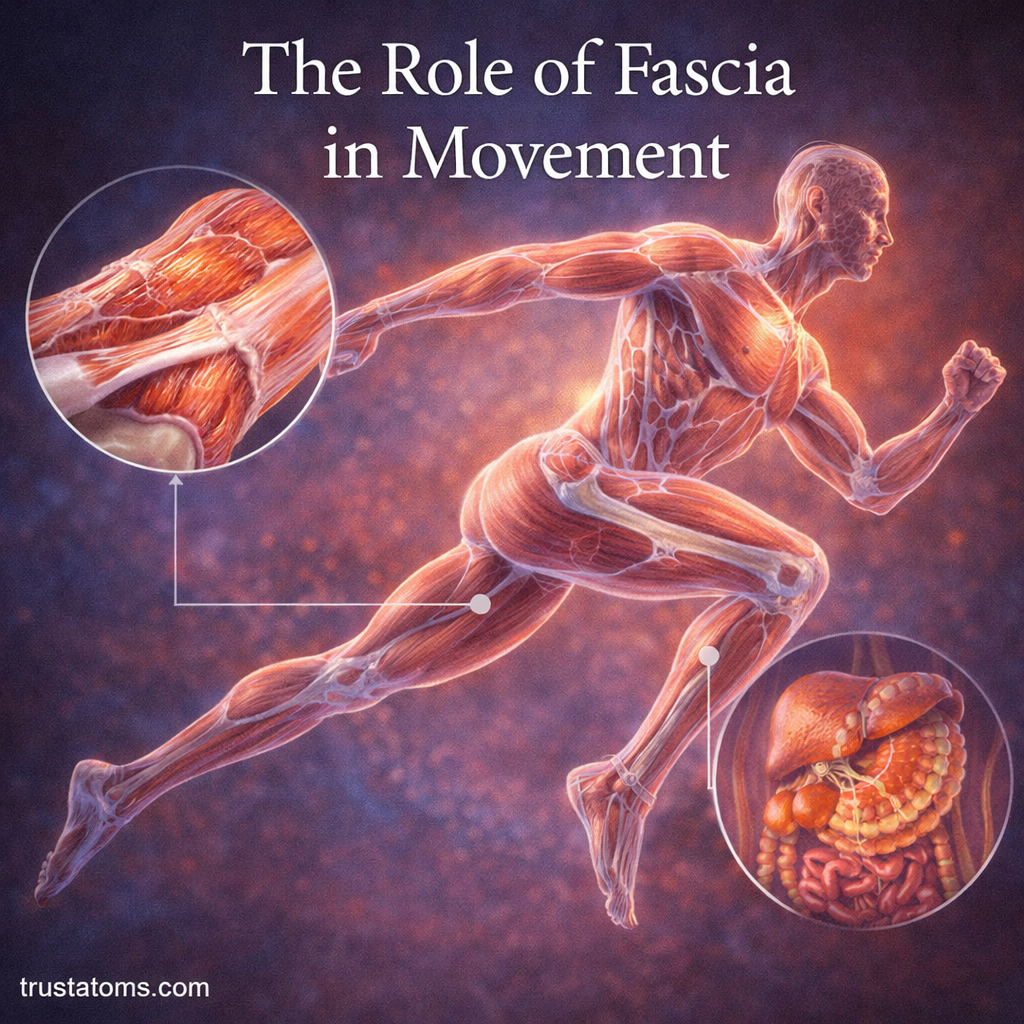
The Role of Fascia in Movement

Illustration showing the role of fascia in movement with connective tissue network surrounding muscles and supporting body motion.
Illustration of fascia connecting muscles and supporting movement throughout the body. trustatoms.com

When most people think about movement, they focus on muscles, bones, and joints. However, an often-overlooked component plays a critical role in how the body moves: fascia.

Fascia is a connective tissue network that surrounds and links muscles, organs, and structures throughout the body. It not only supports movement but also helps coordinate force, stability, and flexibility.

Continue reading “The Role of Fascia in Movement”

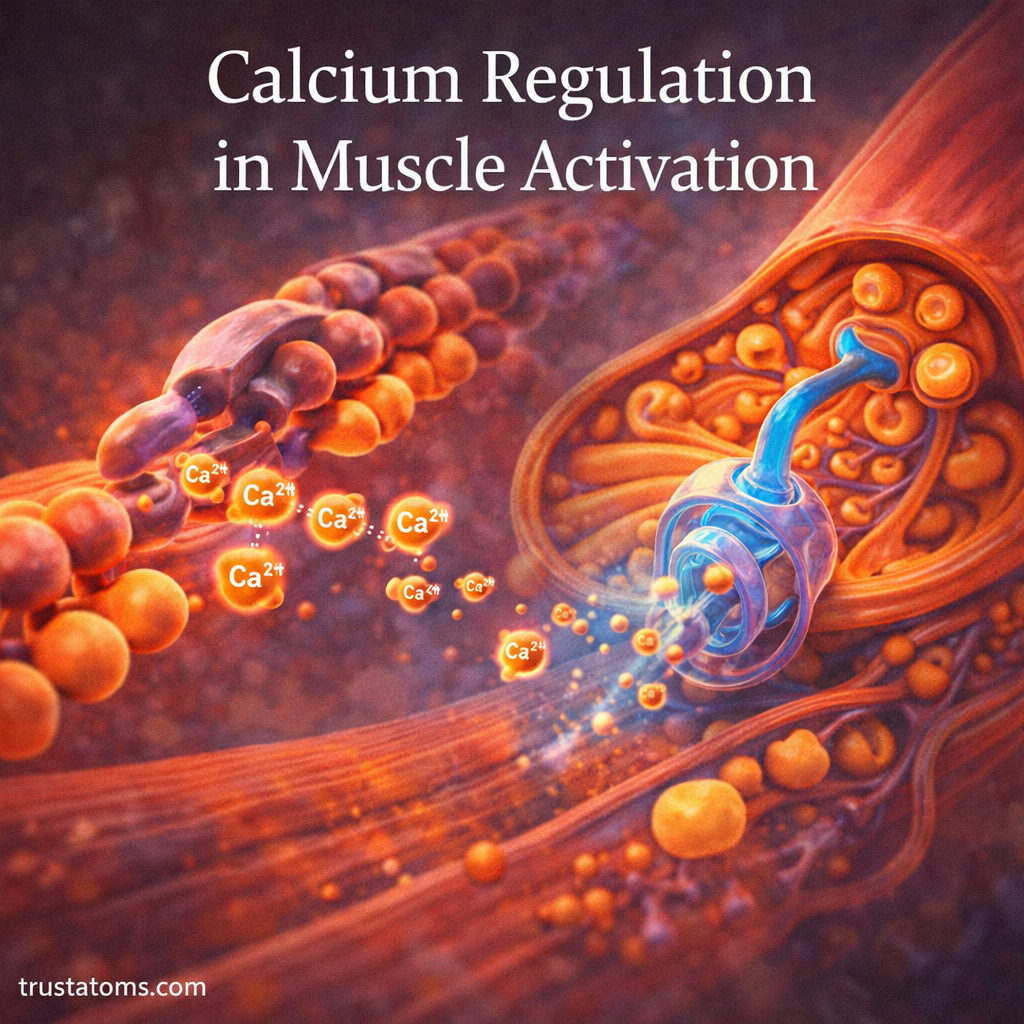
Calcium Regulation in Muscle Activation

Illustration of calcium regulation in muscle activation showing calcium ions released from the sarcoplasmic reticulum and interaction with muscle fibers.
Visual representation of calcium ions regulating muscle activation and contraction processes. trustatoms.com

Calcium plays a central role in how muscles contract and relax. While ATP provides the energy for movement, calcium ions (Ca²⁺) act as the key signal that starts and stops muscle activity.

Understanding calcium regulation helps explain how your body controls muscle activation with precision, speed, and coordination.

Continue reading “Calcium Regulation in Muscle Activation”