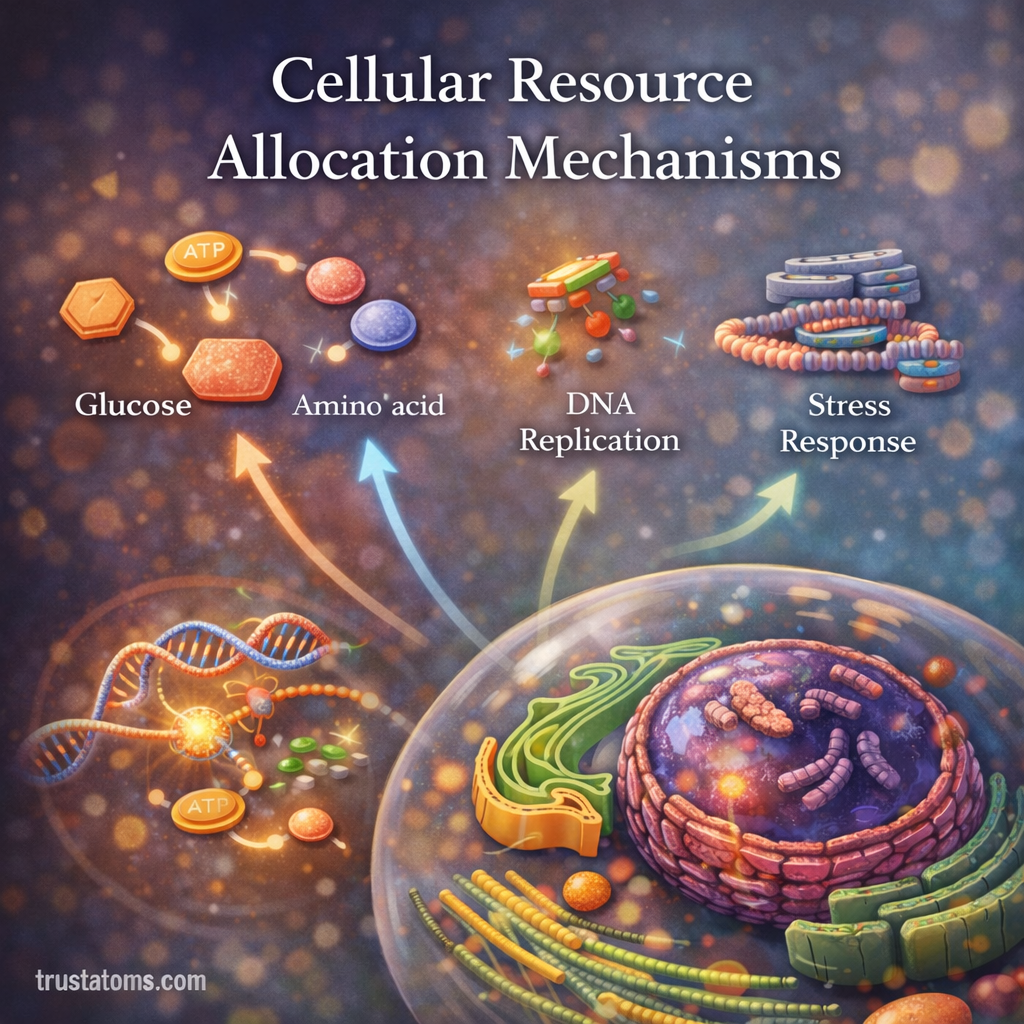
Cellular resource allocation mechanisms are the processes cells use to distribute limited energy, nutrients, and molecular machinery among competing biological activities. These mechanisms help cells balance growth, maintenance, repair, and survival by adjusting how resources are used as internal and environmental conditions change.
Every cell must make trade-offs because producing proteins, replicating DNA, and maintaining cellular structures all require materials and energy. Understanding these trade-offs is part of the study of biology, particularly research into metabolism, cellular regulation, and responses to environmental stress.
What Is Cellular Resource Allocation?
Cellular resource allocation describes how cells regulate the use of available resources to support essential functions while adjusting less urgent activities. Resources include ATP, nutrients, amino acids, ribosomes, enzymes, and other molecules required for cellular processes.
Cells must distribute these resources among several competing demands:
- Energy production: Generating ATP to power cellular activities.
- Protein synthesis: Producing enzymes, structural proteins, and signaling molecules.
- Cellular maintenance: Repairing damaged molecules and replacing worn-out components.
- Growth and division: Producing additional cellular material and replicating DNA.
- Stress responses: Supporting protective mechanisms when conditions become unfavorable.
Allocation is regulated through biochemical reactions and signaling networks rather than conscious decisions. For example, cellular energy regulation mechanisms help coordinate ATP production and consumption according to changing energy demands.
How Resource Allocation Supports Cell Survival
Cells operate in environments where nutrient availability, oxygen levels, and energy demands can fluctuate. A cell with abundant nutrients may invest heavily in growth, while a nutrient-deprived cell may reduce biosynthesis and increase recycling.
These adjustments help preserve essential functions, including membrane integrity, ion balance, and the repair of damaged cellular components.
Resource allocation also involves trade-offs. Increasing one activity can reduce the materials or energy available for another. Cells therefore coordinate multiple processes rather than simply maximizing growth or ATP production.
ATP Management and Cellular Energy Allocation
Adenosine triphosphate (ATP) transfers energy to many cellular processes. Cells continually regenerate ATP from adenosine diphosphate (ADP) using energy released through metabolism or captured through photosynthesis in suitable organisms.
ATP supports activities such as protein synthesis, active transport across membranes, cellular movement, and the production of biological molecules.
How Cells Adjust ATP Production and Consumption
Cells regulate metabolic enzymes and energy-consuming activities to match ATP supply with demand. When ATP consumption increases, changes in ATP, ADP, and AMP concentrations can influence metabolic pathways.
One important regulator is AMP-activated protein kinase (AMPK), which responds to indicators of low cellular energy. AMPK can promote energy-producing pathways while reducing certain energy-intensive biosynthetic activities.
This coordination helps cells respond to temporary energy shortages without unnecessarily exhausting available resources.
Nutrient Allocation and Metabolic Prioritization
Nutrients provide both energy and the building blocks required to construct cellular components. Glucose, amino acids, and fatty acids can enter different metabolic pathways depending on cellular needs.
Glucose, for example, may be broken down to support ATP production or used to produce molecules needed for biosynthesis. In certain cells, excess glucose can also contribute to glycogen or lipid storage.
The relationships between these reactions are explored in metabolic pathway organization in cells, which examines how biochemical pathways coordinate the movement and transformation of cellular materials.
Catabolism, Anabolism, and Storage
Cells balance three broad metabolic activities:
- Catabolism: Breaking down molecules to release usable energy and generate metabolic intermediates.
- Anabolism: Using energy and building blocks to synthesize proteins, lipids, nucleic acids, and other molecules.
- Storage and mobilization: Storing certain nutrients when available and accessing reserves when needed.
The balance between these activities depends on cell type, nutrient supply, hormonal signals, and energy requirements.
How Cells Allocate Ribosomes and Protein Production
Protein synthesis requires amino acids, ribosomes, messenger RNA, and substantial energy. Because ribosomes and translation machinery have limited capacity, cells regulate which proteins are produced and how quickly they are synthesized.
Gene transcription determines which messenger RNA molecules become available, while translation regulation influences how efficiently ribosomes use them.
When nutrients are plentiful, growth-related signaling may increase ribosome production and protein synthesis. During energy shortages, cells can reduce overall translation while selectively producing proteins needed for stress protection or recovery.
A Practical Example: How a Cell Responds to Nutrient Shortage
Imagine a growing yeast cell that normally receives a steady supply of glucose. Glucose supports ATP production and provides carbon-containing molecules used to manufacture cellular components.
If the glucose supply suddenly decreases, the cell cannot necessarily maintain its previous growth rate. Energy-sensitive regulatory pathways respond to the changing metabolic conditions, and the cell adjusts how it uses available resources.
Depending on the yeast species and conditions, the response may involve reducing ribosome production, slowing cell division, changing metabolic activity, and increasing the use of stored or recycled materials.
Instead of investing the same amount of resources in rapid growth, the cell shifts toward maintaining essential functions. This example illustrates how resource allocation changes with nutrient availability rather than following a fixed distribution.
Cellular Stress Responses Redirect Resources
Environmental stress can change cellular priorities. Heat exposure, oxidative damage, nutrient deprivation, and DNA damage may increase the demand for repair proteins and protective mechanisms.
Cells respond by activating regulatory networks that alter gene expression, protein production, and metabolic activity. These processes are examined in cellular stress response pathways, including mechanisms that help cells adapt to damaging conditions.
Common adjustments include temporarily slowing cell division, increasing molecular chaperone activity, activating antioxidant defenses, and directing resources toward DNA repair.
Such responses consume resources themselves, so prolonged or severe stress can eventually overwhelm cellular maintenance capacity.
Autophagy Recycles Cellular Materials
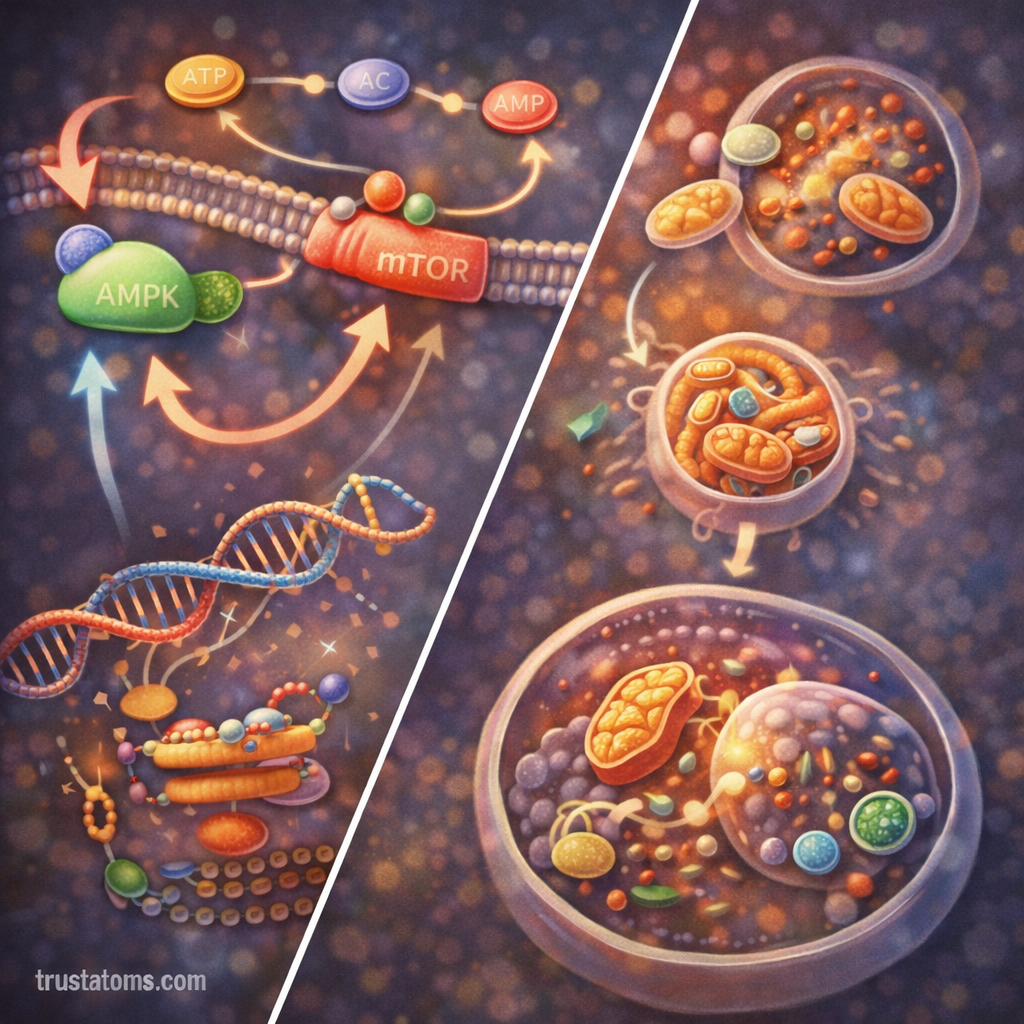
When nutrients become scarce, cells can recover useful materials by breaking down selected internal components. Recycling also removes damaged structures that might otherwise interfere with cellular activity.
One of the most important recycling mechanisms is autophagy, a process where cells break down and reuse damaged or unnecessary cellular components.
During macroautophagy, cellular material becomes enclosed within an autophagosome. This structure delivers its contents to lysosomes in animal cells, where digestive enzymes break the material into smaller molecules.
Recovered amino acids and other building blocks can support cellular metabolism and the production of new molecules. Autophagy therefore contributes to both quality control and resource management.
Regulatory Networks That Coordinate Resource Use
Several signaling systems help cells integrate information about nutrients, energy availability, and environmental conditions.
- mTOR signaling: Promotes many growth-related activities, including protein synthesis, when appropriate nutrients and growth signals are available.
- AMPK signaling: Responds to cellular energy stress and helps shift metabolism toward restoring energy balance.
- Insulin signaling: Influences nutrient uptake, storage, and metabolism in responsive animal cells.
- Stress response pathways: Adjust cellular activities to support protection and repair under unfavorable conditions.
These systems interact rather than functioning independently. For example, AMPK can inhibit certain mTOR-related growth signals when cellular energy is limited, helping coordinate energy availability with biosynthetic activity.
Resource Allocation During Cell Growth and Division
Cell division requires cells to replicate DNA, produce proteins, expand membranes, and distribute cellular components. These activities demand substantial energy and molecular building materials.
Growth-regulating pathways respond to nutrient availability and external signals, while cell-cycle checkpoints monitor conditions such as DNA integrity and successful completion of earlier cell-cycle events.
When conditions are unfavorable, cells may delay division, enter a resting state, or redirect resources toward maintenance. The precise response depends on the organism, cell type, and nature of the limitation.
Systems Biology and Cellular Resource Economics
Scientists use systems biology to investigate how metabolic pathways, gene regulation, and molecular interactions jointly influence resource allocation. Instead of examining each process separately, researchers build models that represent competing demands and biological constraints.
Systems-level cellular coordination examines how interconnected regulatory processes allow cells to adjust their activities as conditions change.
Researchers sometimes describe this problem using an economic analogy: cellular resources are limited, and investing in one activity can reduce the capacity available for another.
Computational models of these trade-offs can help scientists study microbial growth, cancer metabolism, cellular aging, and biotechnology applications. However, cells do not always maximize efficiency; their behavior reflects regulatory mechanisms shaped by their biological conditions and constraints.
Frequently Asked Questions
What resources do cells need to allocate?
Cells allocate energy, nutrients, amino acids, ribosomes, enzymes, and other molecular resources. These materials support activities such as metabolism, protein synthesis, DNA replication, repair, and cellular maintenance.
How do cells respond when energy is limited?
Cells can activate energy-sensing pathways, increase certain energy-producing activities, and reduce energy-intensive processes such as growth-related protein synthesis. The response depends on the cell type and severity of the energy shortage.
Is cellular resource allocation the same as metabolism?
No. Metabolism includes the chemical reactions that transform energy and materials within cells. Resource allocation describes how cells regulate the distribution and use of those resources across metabolism, growth, repair, and other activities.
Cellular resource allocation allows cells to adjust energy use, nutrient processing, protein production, and recycling according to changing demands. By coordinating pathways such as AMPK signaling, mTOR regulation, and autophagy, cells can shift between growth and maintenance when conditions change. Studying these trade-offs helps researchers understand cellular adaptation and develop more accurate models of biological behavior.
Sources: Alberts et al., Molecular Biology of the Cell; Nelson and Cox, Lehninger Principles of Biochemistry; Lodish et al., Molecular Cell Biology.