Europa, one of Jupiter’s largest moons, has become a major focus in the search for life beyond Earth. Beneath its icy surface lies what scientists believe is a विशाल global ocean—making it one of the most compelling places to look for extraterrestrial life in our solar system.
This hidden ocean, protected from harsh space radiation, may contain the key ingredients necessary for life.
What Is Europa?
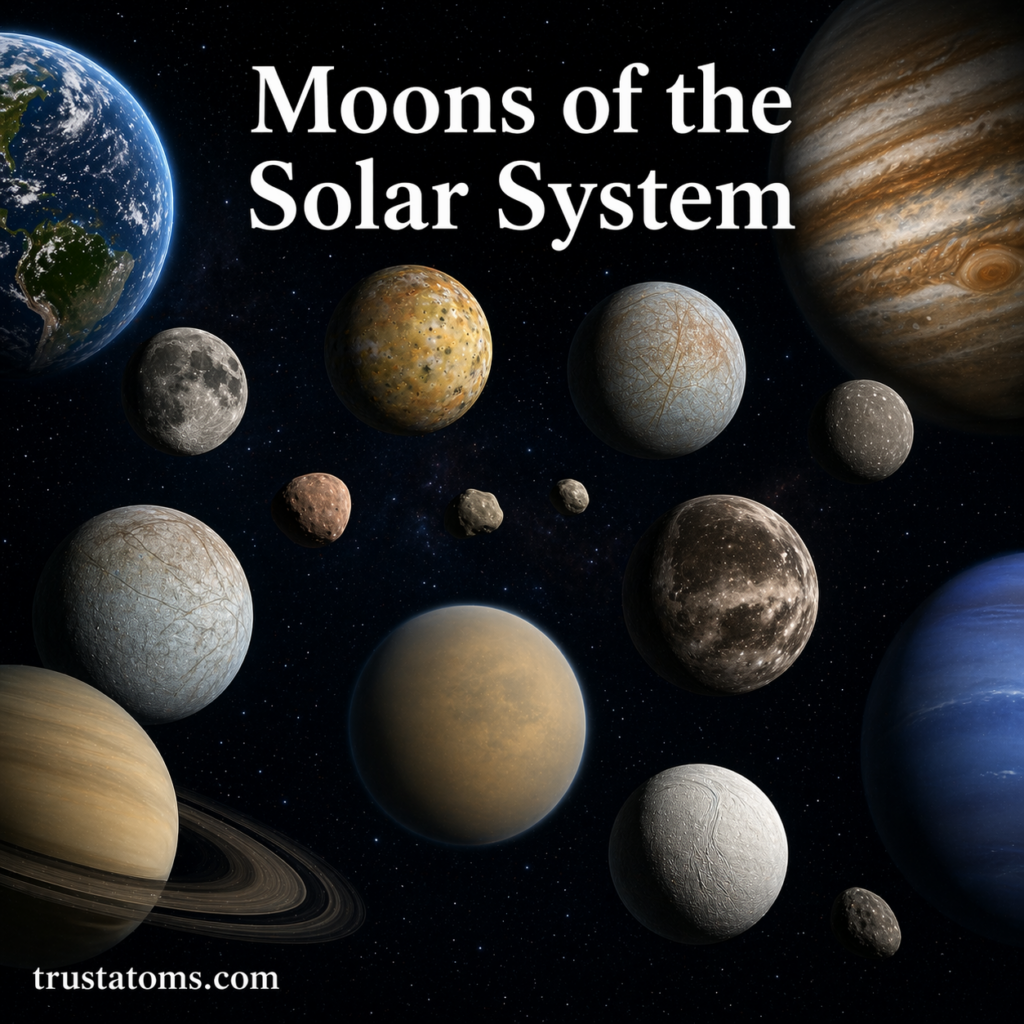
Europa is one of the four Galilean moons orbiting Jupiter, alongside Io, Ganymede, and Callisto.
Key Characteristics
- Slightly smaller than Earth’s Moon
- Covered in a smooth, icy crust
- One of the brightest objects in the solar system
- Very few impact craters, indicating a young surface
Europa’s surface is marked by long cracks and streaks, suggesting active geological processes beneath the ice.
Evidence for a Subsurface Ocean
Scientists have gathered strong evidence that Europa contains a liquid ocean beneath its frozen exterior.
1. Surface Cracks and Ice Movement
Europa’s icy surface shows:
- Long fractures and ridges
- Shifting ice plates
- Patterns consistent with movement over liquid water
These features suggest the ice shell is floating on a liquid layer.
2. Magnetic Field Interactions
Observations from spacecraft show that Europa interacts with Jupiter’s magnetic field in a way that suggests a conductive layer beneath the surface—likely a salty ocean.
3. Water Plumes
There is evidence that Europa occasionally releases plumes of water vapor into space, similar to geysers.
These plumes may originate from the subsurface ocean, offering a direct way to study its composition.
Structure of Europa
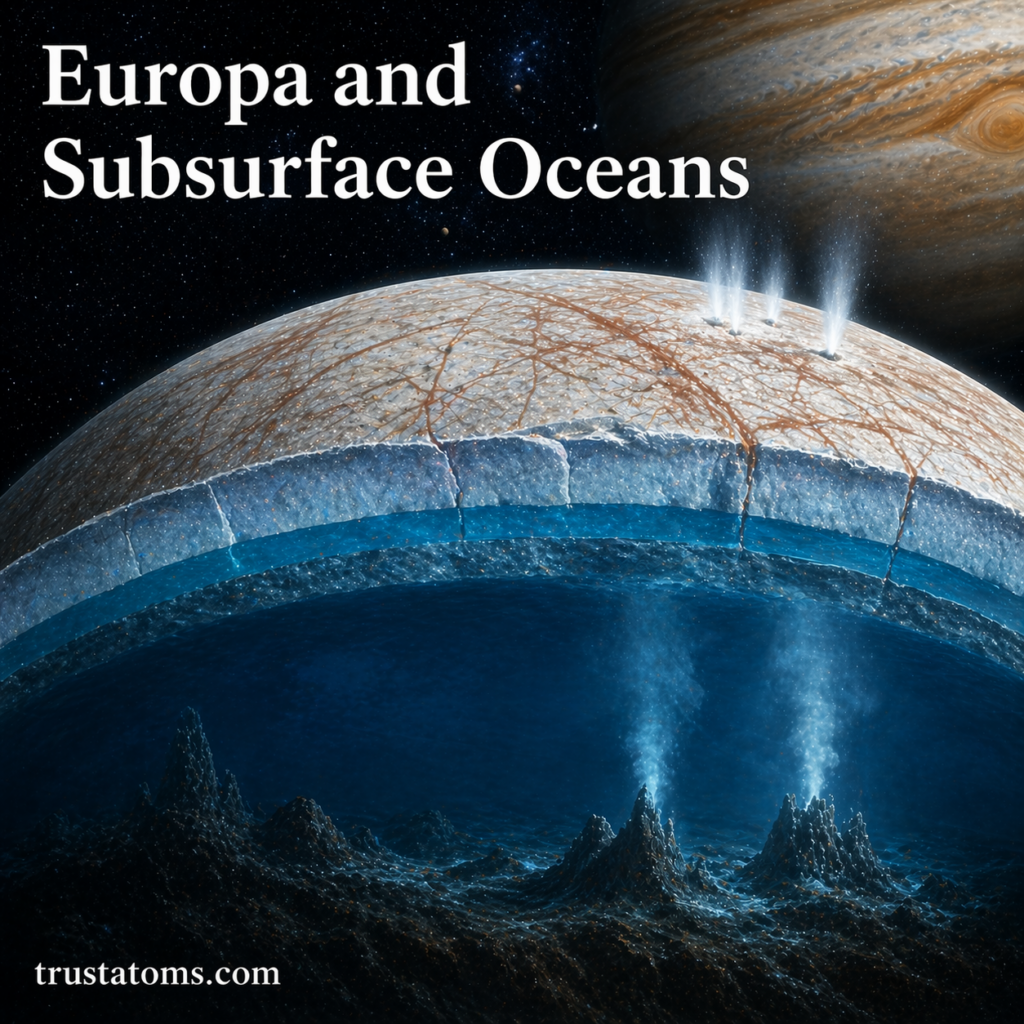
Europa is thought to have a layered internal structure.
Main Layers
- Ice Crust
- Estimated thickness: 10–30 kilometers
- Constantly shifting and cracking
- Subsurface Ocean
- Could be 60–150 kilometers deep
- Contains more water than all of Earth’s oceans combined
- Rocky Mantle and Core
- Provides heat through radioactive decay
- Drives internal activity
Why Europa’s Ocean Is So Important
Europa’s subsurface ocean is one of the best candidates for extraterrestrial habitability.
Key Ingredients for Life
For life to exist, three main conditions are typically needed:
- Liquid water
- Energy source
- Essential chemical elements
Europa appears to meet all three.
Energy Sources
Even without sunlight, Europa may support life through:
- Tidal heating caused by Jupiter’s gravity
- Hydrothermal vents on the ocean floor
- Chemical reactions between water and rock
These are similar to environments on Earth where life thrives without sunlight.
Comparison to Earth’s Deep Oceans
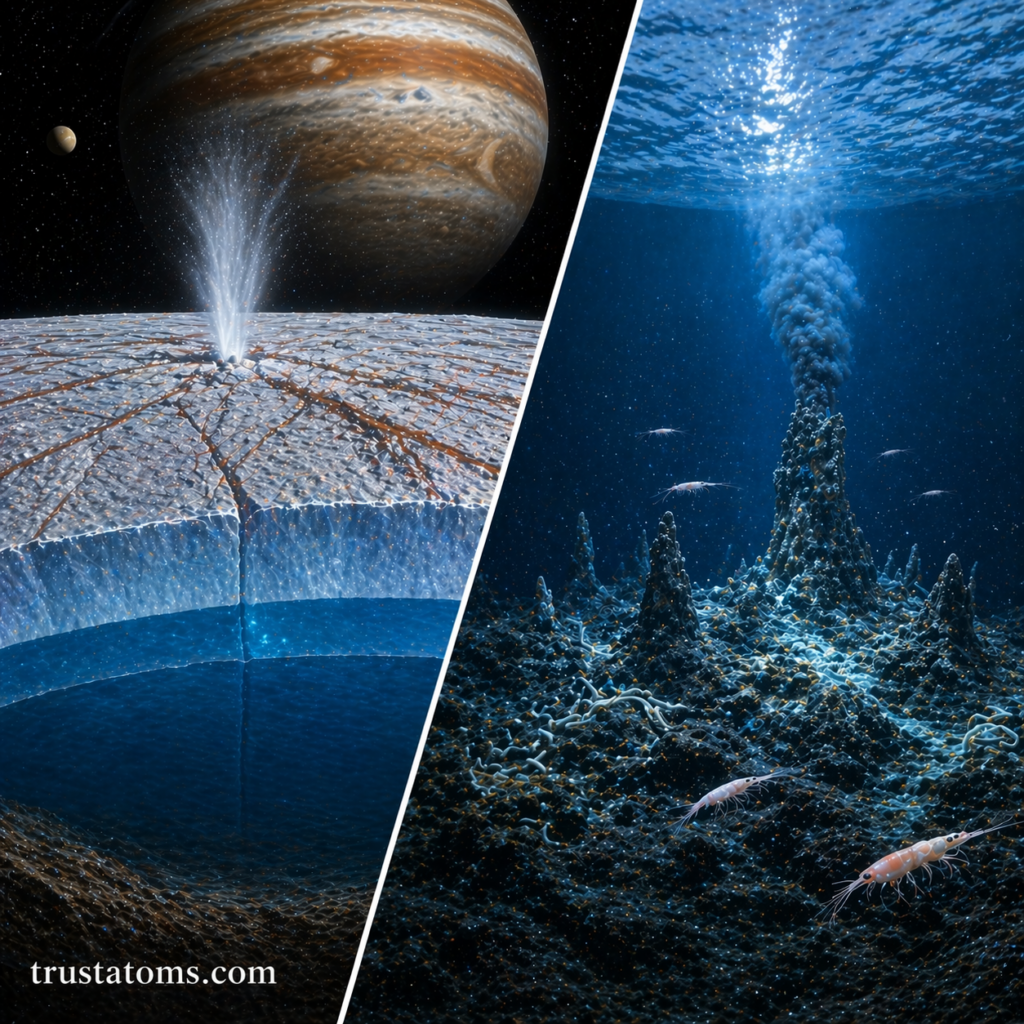
Europa’s ocean may resemble extreme environments found on Earth.
Similar Environments
- Deep-sea hydrothermal vents
- Subglacial lakes in Antarctica
- Dark, high-pressure ecosystems
On Earth, these environments support life forms such as bacteria and other microorganisms—raising the possibility that similar life could exist on Europa.
Challenges of Exploring Europa
Despite its potential, Europa is difficult to study directly.
Major Challenges
- Thick ice shell blocking direct access
- Extreme radiation from Jupiter
- Harsh surface conditions
- Technological limitations for deep drilling
Scientists are developing new mission concepts to overcome these barriers.
Current and Future Missions
Europa is a major target for upcoming space missions.
Europa Clipper (NASA)
- Scheduled to study Europa in detail
- Will analyze surface composition, ice thickness, and ocean properties
- Will fly through potential water plumes
JUICE Mission (ESA)
- Exploring Jupiter’s moons, including Europa
- Focuses on understanding icy worlds and their habitability
These missions aim to determine whether Europa’s ocean could support life.
Could There Be Life on Europa?
While no life has been confirmed, Europa remains one of the most promising candidates.
What Scientists Are Looking For
- Organic molecules
- Chemical energy sources
- Signs of biological processes
Even microbial life would be a groundbreaking discovery, changing our understanding of life in the universe.
Why Subsurface Oceans Matter Beyond Europa
Europa is not the only world with a hidden ocean.
Other Ocean Worlds
- Enceladus (Saturn)
- Titan (Saturn)
- Ganymede (Jupiter)
These worlds suggest that subsurface oceans may be common, greatly increasing the number of potentially habitable environments.
Final Thoughts
Europa represents one of the most exciting frontiers in modern astronomy. Its subsurface ocean, hidden beneath miles of ice, could harbor conditions suitable for life.
As new missions explore this distant moon, we may be closer than ever to answering one of humanity’s biggest questions: Are we alone in the universe?