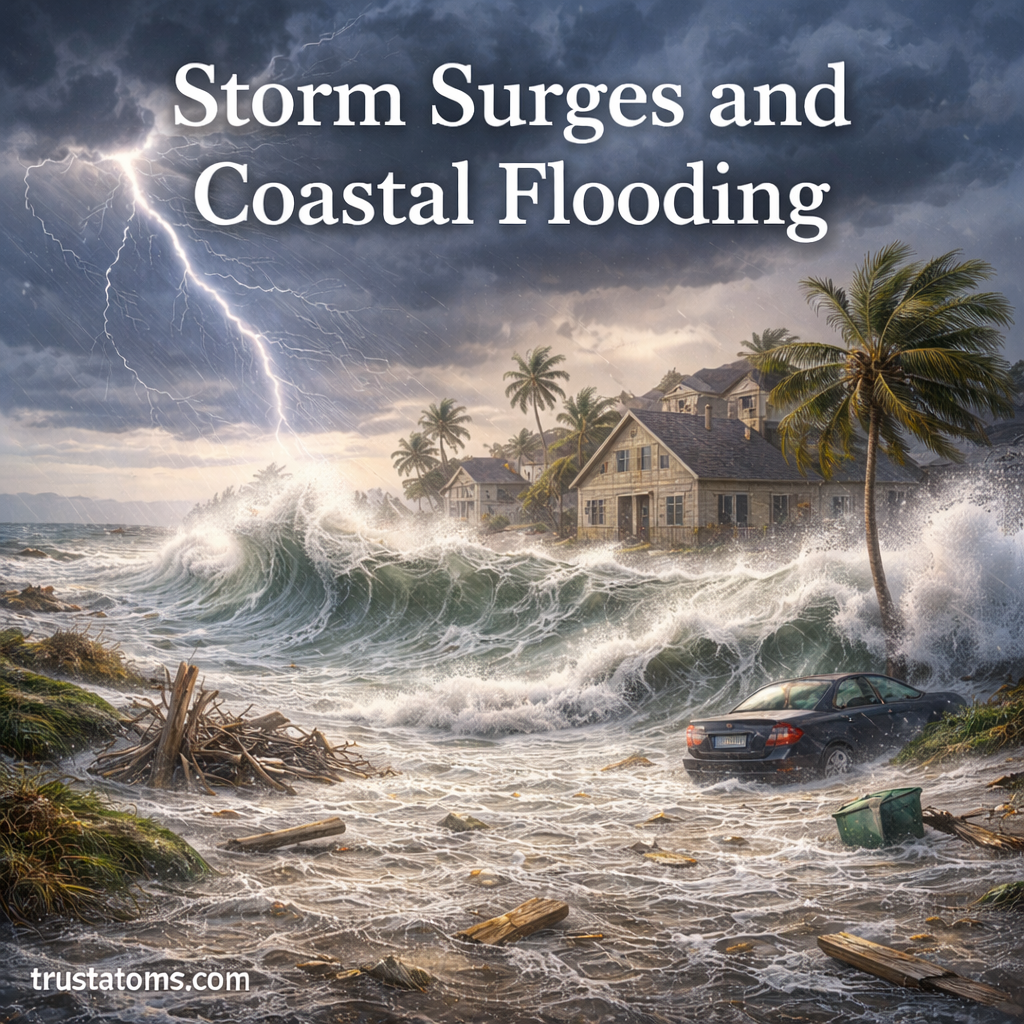
Storm surges and coastal flooding are among the most destructive effects of severe weather, particularly during hurricanes and powerful storms. These events can inundate coastal areas with seawater, causing widespread damage to homes, infrastructure, and ecosystems.
Understanding how storm surges form and why coastal regions are vulnerable is essential for improving safety and resilience.
What Is a Storm Surge?
A storm surge is an abnormal rise in sea level caused by strong winds and low atmospheric pressure during a storm.
Key Features
- Rapid rise in water levels along coastlines
- Driven primarily by wind pushing water toward land
- Often combined with high tides, increasing impact
Storm surges are different from regular waves—they involve a large-scale increase in sea level that can flood entire coastal regions.
How Storm Surges Form
Storm surges develop due to a combination of atmospheric and oceanic forces.
The Process
- Strong Winds Push Water Inland
Storm winds drive ocean water toward the coast, causing it to pile up. - Low Pressure Raises Sea Level
Lower atmospheric pressure allows the ocean surface to rise slightly. - Water Accumulates Along Shorelines
As water continues to build, it leads to significant coastal flooding. - Interaction with Tides
If a storm surge occurs during high tide, flooding becomes more severe.
What Is Coastal Flooding?
Coastal flooding occurs when seawater flows onto land in coastal areas. It is often caused by storm surges but can also result from:
- High tides (king tides)
- Sea level rise
- Strong wave action
Coastal flooding can be temporary or long-lasting, depending on the severity of the event.
Factors That Increase Storm Surge Risk
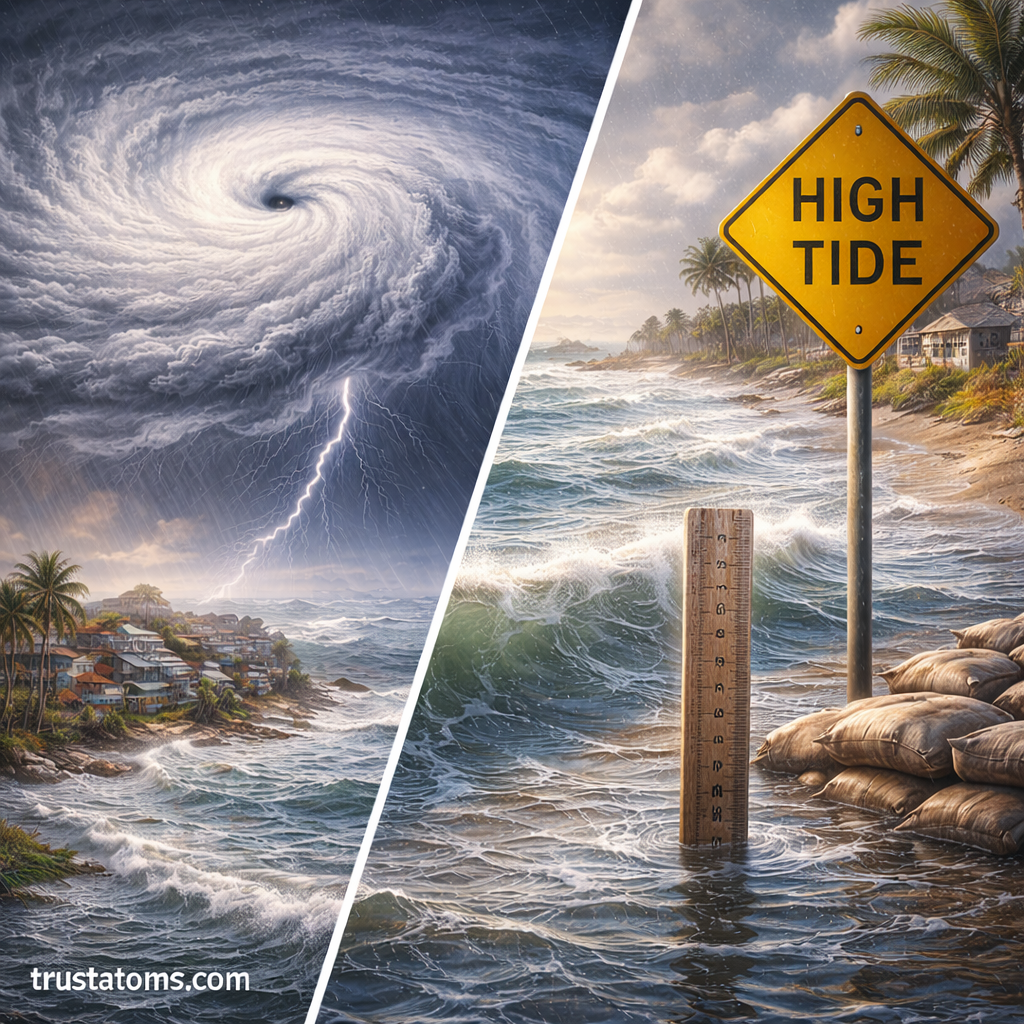
Several factors influence how severe a storm surge can become.
Storm Intensity
Stronger storms generate more powerful winds, pushing more water toward land.
Storm Size
Larger storms affect a wider area, increasing the volume of water displaced.
Coastal Geography
- Shallow coastlines allow water to pile up more easily
- Bays and inlets can funnel water inland
Sea Level Rise
Higher baseline sea levels increase the likelihood and severity of flooding.
Tide Levels
Storm surges during high tide can significantly worsen flooding.
Impacts of Storm Surges and Coastal Flooding
These events can cause widespread and severe damage.
Environmental Impacts
- Erosion of coastlines
- Saltwater intrusion into freshwater systems
- Damage to wetlands and marine habitats
Infrastructure Damage
- Flooded homes and buildings
- Damage to roads, bridges, and utilities
- Power outages and communication disruptions
Economic Impacts
- Costly repairs and rebuilding
- Loss of tourism revenue
- Disruption of local economies
Human Impacts
- Evacuations and displacement
- Risk of injury or loss of life
- Health hazards from contaminated water
How Storm Surges Differ from Tsunamis
Storm surges and tsunamis are often confused, but they are very different.
Storm Surges
- Caused by weather systems (storms, hurricanes)
- Develop over hours to days
Tsunamis
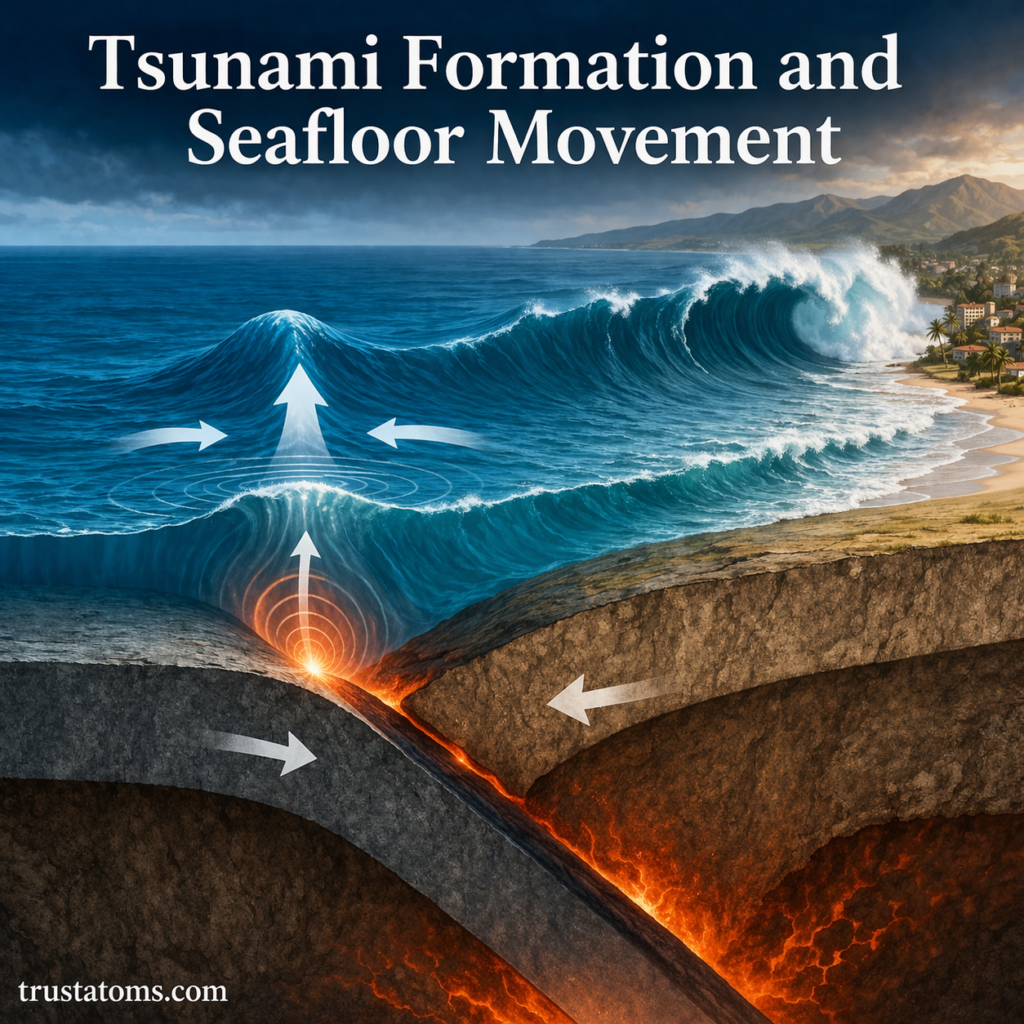
- Caused by underwater earthquakes or landslides
- Travel across oceans at high speeds
How to Stay Safe During a Storm Surge
Preparation and timely action are critical for safety.
Before a Storm
- Monitor weather forecasts and warnings
- Know evacuation routes
- Prepare emergency supplies
During a Storm Surge
- Follow evacuation orders immediately
- Move to higher ground
- Avoid walking or driving through floodwaters
After the Event
- Avoid contaminated water
- Check structures for damage
- Follow local safety guidance
Preventing and Reducing Coastal Flooding
While storm surges cannot be stopped, their impacts can be reduced.
Engineering Solutions
- Sea walls and storm surge barriers
- Elevated buildings in flood-prone areas
- Improved drainage systems
Natural Defenses
- Restoring wetlands and mangroves
- Preserving dunes and coastal vegetation
Planning and Policy
- Zoning regulations to limit coastal development
- Early warning systems
- Community preparedness programs
Storm Surges and Climate Change
Climate change is increasing the risk of storm surges and coastal flooding.
Key Trends
- Rising sea levels increase baseline water height
- Stronger storms produce more intense surges
- Increased coastal development raises vulnerability
These changes make it more important to invest in resilient infrastructure and sustainable planning.
Final Thoughts
Storm surges and coastal flooding are powerful natural hazards that can have devastating impacts on coastal communities. Their severity depends on storm conditions, geography, and preparedness.
By understanding how these events form and taking proactive measures, individuals and communities can better protect themselves and reduce long-term risks.