Uranus is one of the most unusual planets in the Solar System. Known for its striking blue-green color and extreme axial tilt, Uranus challenges many of the patterns seen in other planets.
This article explores two of its most fascinating features: its sideways rotation and its unique atmospheric composition.
Overview of Uranus
Uranus is the seventh planet from the Sun and is classified as an ice giant, along with Neptune.
Key facts about Uranus:
- Diameter: About 4 times that of Earth
- Composition: Water, ammonia, and methane ices
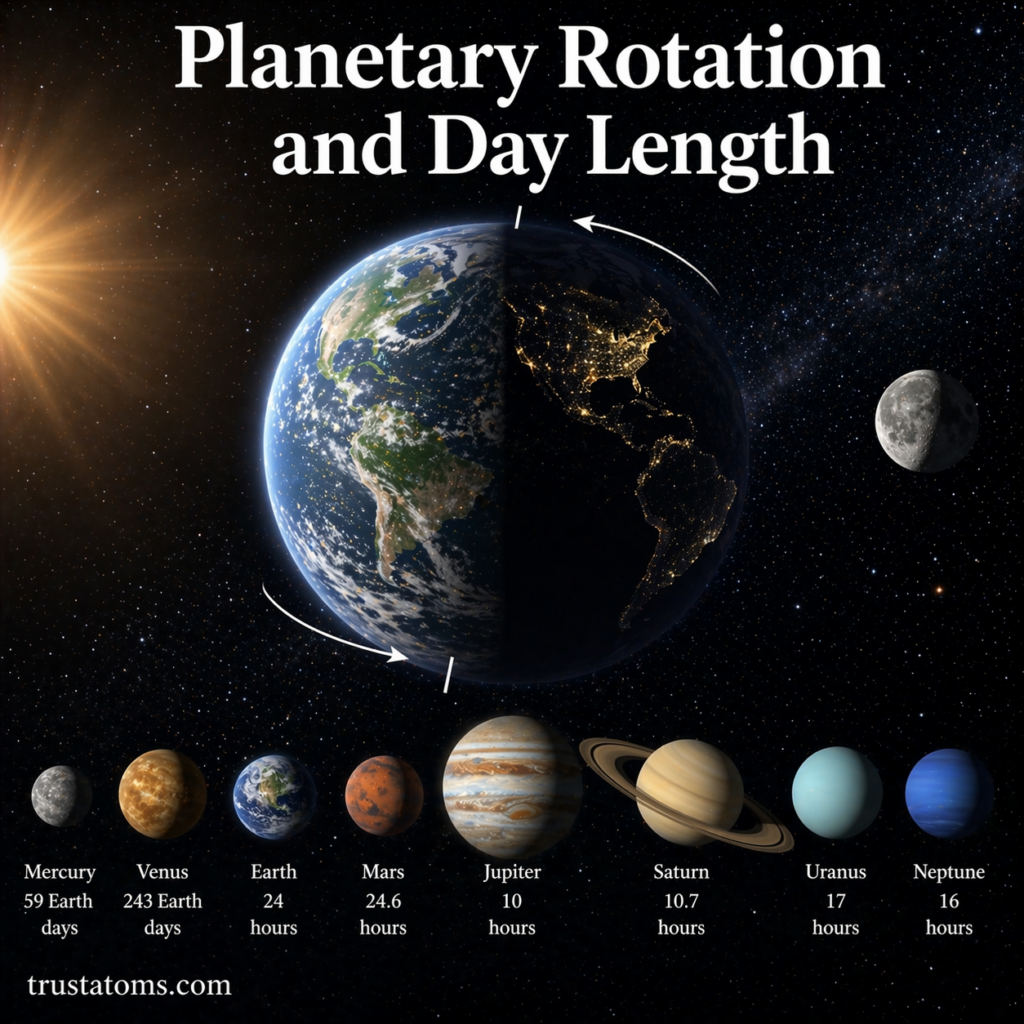
- Day length: About 17 hours
- Year length: About 84 Earth years
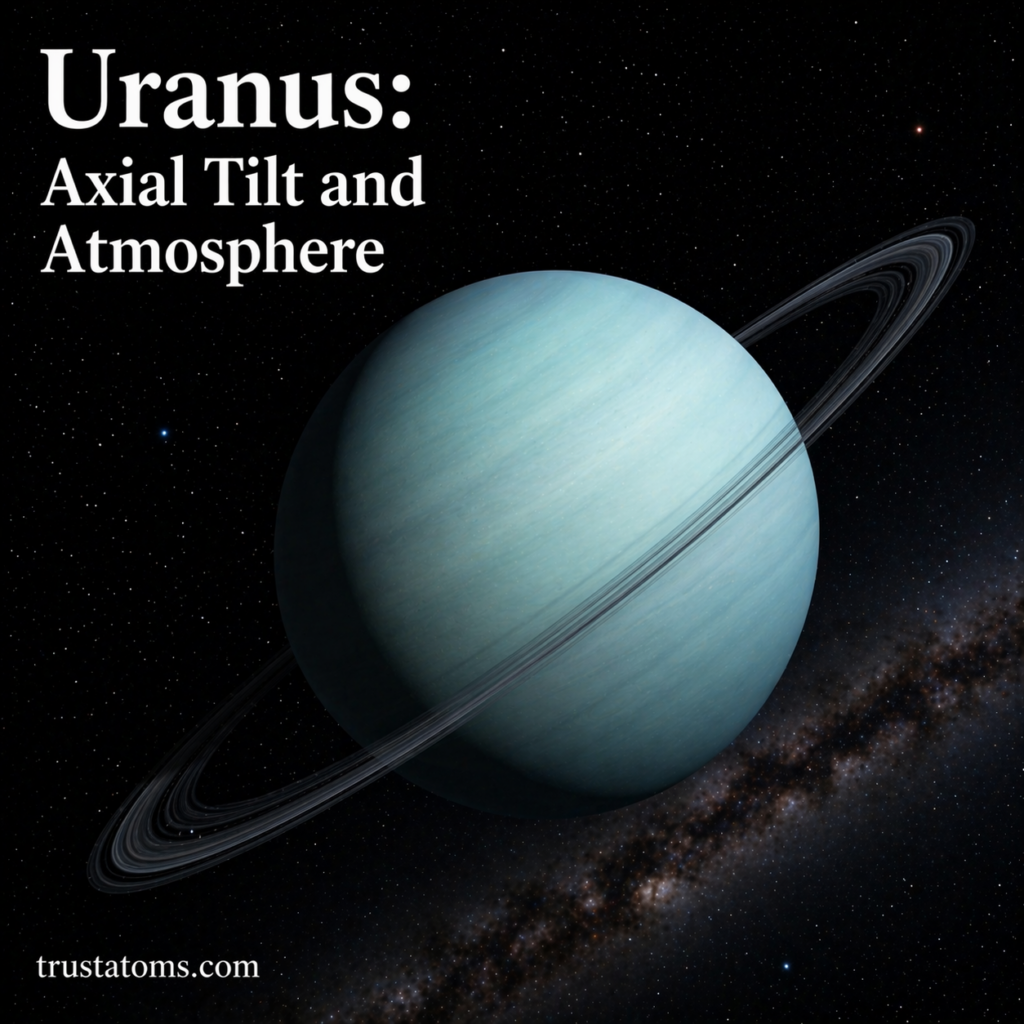
- Color: Blue-green due to methane in the atmosphere
Unlike gas giants like Jupiter and Saturn, Uranus contains more “ices” (volatile substances) in its interior.
Uranus’s Extreme Axial Tilt
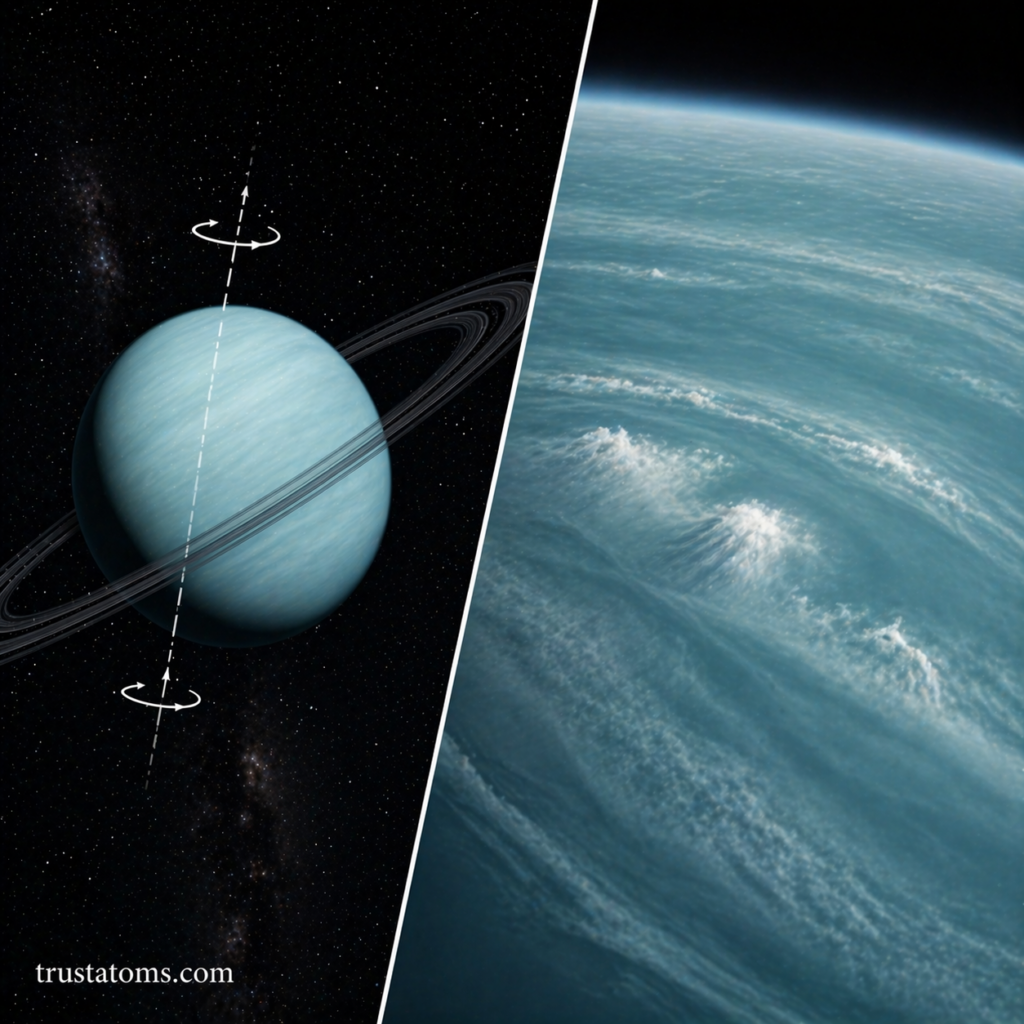
One of Uranus’s most defining characteristics is its extreme tilt.
What is axial tilt?
Axial tilt refers to the angle between a planet’s rotational axis and its orbit around the Sun. Most planets tilt slightly—but Uranus is different.
A Planet on Its Side
Uranus has an axial tilt of about 98 degrees, meaning:
- It essentially rotates on its side
- Its poles point almost directly at the Sun during parts of its orbit
- Its rotation appears “rolling” rather than spinning upright
This unusual orientation makes Uranus look like it’s lying sideways as it travels around the Sun.
Why Is Uranus Tilted?
Scientists believe Uranus’s tilt may have been caused by:
- A massive collision with an Earth-sized object early in its history
- Gravitational interactions during planet formation
While the exact cause is still debated, the tilt has a major impact on the planet’s behavior.
Seasonal Extremes on Uranus
Because of its extreme tilt, Uranus experiences the most dramatic seasons of any planet.
How seasons work on Uranus:
- Each pole gets about 42 years of continuous sunlight
- Followed by 42 years of darkness
- Equatorial regions experience rapid transitions between light and dark
This leads to highly unusual climate patterns compared to Earth.
Uranus’s Atmosphere
Uranus has a thick atmosphere composed primarily of hydrogen and helium, with smaller amounts of methane.
Composition of the Atmosphere
The main gases include:
- Hydrogen (major component)
- Helium
- Methane (responsible for the blue-green color)
Methane absorbs red light and reflects blue and green wavelengths, giving Uranus its distinctive appearance.
Cloud Layers and Structure
Uranus’s atmosphere is layered, though less visually dramatic than Jupiter’s.
- Upper atmosphere: Thin haze
- Middle layers: Methane clouds
- Lower layers: Denser clouds and gases
Unlike other giant planets, Uranus appears relatively smooth due to fewer visible storms.
Temperature and Weather
Uranus is one of the coldest planets in the Solar System.
Key temperature facts:
- Average temperature: About -224°C (-371°F)
- Minimal internal heat compared to other giant planets
- Coldest planetary atmosphere recorded
Despite its calm appearance, Uranus can still experience:
- High-speed winds (up to 560 mph)
- Occasional storm activity
Magnetic Field and Internal Dynamics
Uranus has a strange and uneven magnetic field.
Unique characteristics:
- Tilted significantly from its rotational axis
- Off-center from the planet’s core
- Produces unusual magnetic behavior
This irregular field is likely due to the planet’s internal structure and composition.
Uranus Compared to Other Planets
Uranus stands out when compared to other planets in the Solar System.
Key differences:
- Extreme tilt unlike any other planet
- Colder than Neptune despite being closer to the Sun
- Less visible atmospheric activity than Jupiter or Saturn
These differences make Uranus a unique case study in planetary science.
Exploration of Uranus
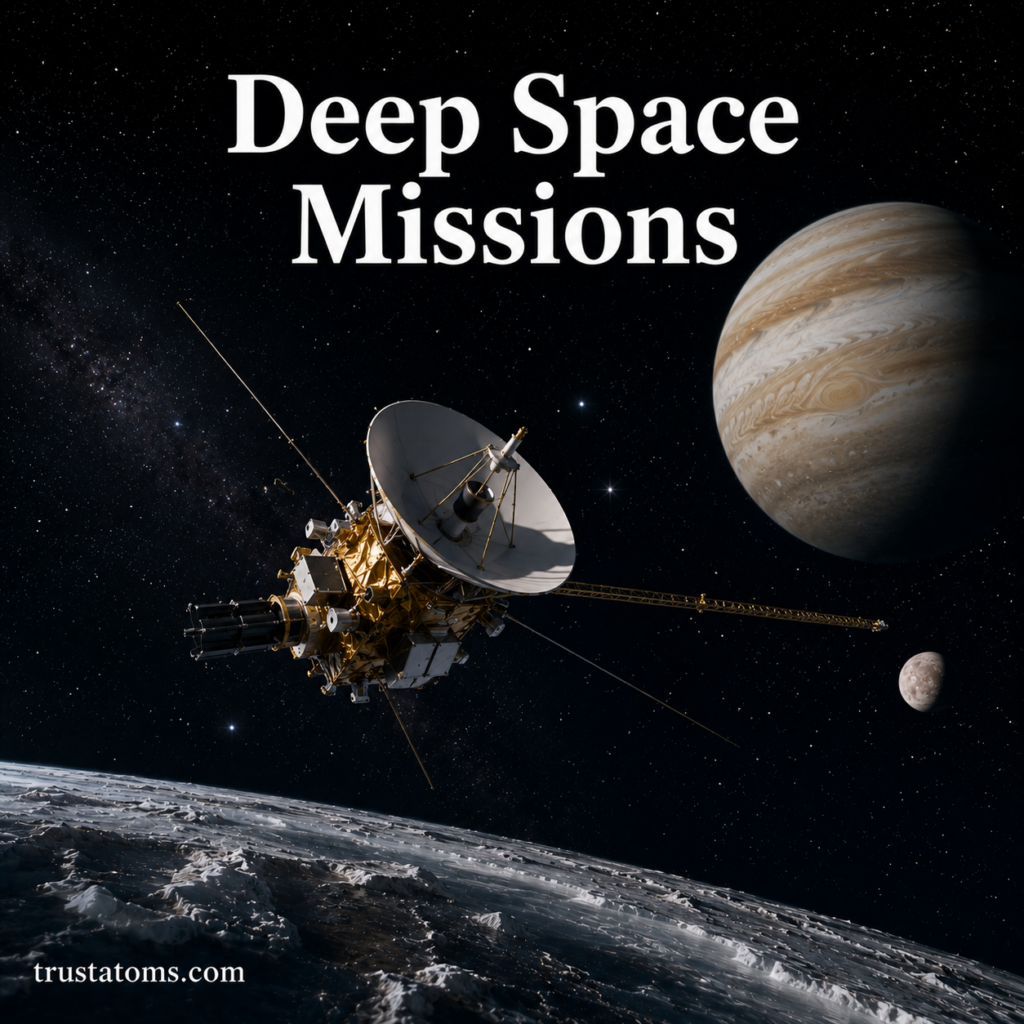
Uranus has been visited by only one spacecraft: Voyager 2.
Voyager 2 (1986):
- Provided the first close-up images
- Discovered rings and additional moons
- Revealed details about atmosphere and magnetic field
Future missions are being considered to explore Uranus in greater detail.
Why Uranus Matters
Uranus offers valuable insights into planetary formation and atmospheric science.
Its importance includes:
- Understanding ice giant planets
- Studying extreme axial tilt effects
- Learning about atmospheric chemistry
- Comparing planetary systems beyond our own
Ice giants like Uranus are common in other star systems, making it an important model for exoplanet research.
Final Thoughts
Uranus is a planet of extremes—tilted, cold, and mysterious. Its unusual orientation and subtle atmosphere make it very different from the more well-known giants like Jupiter and Saturn.
As future missions are planned, Uranus may reveal even more about how planets form and evolve across the universe.