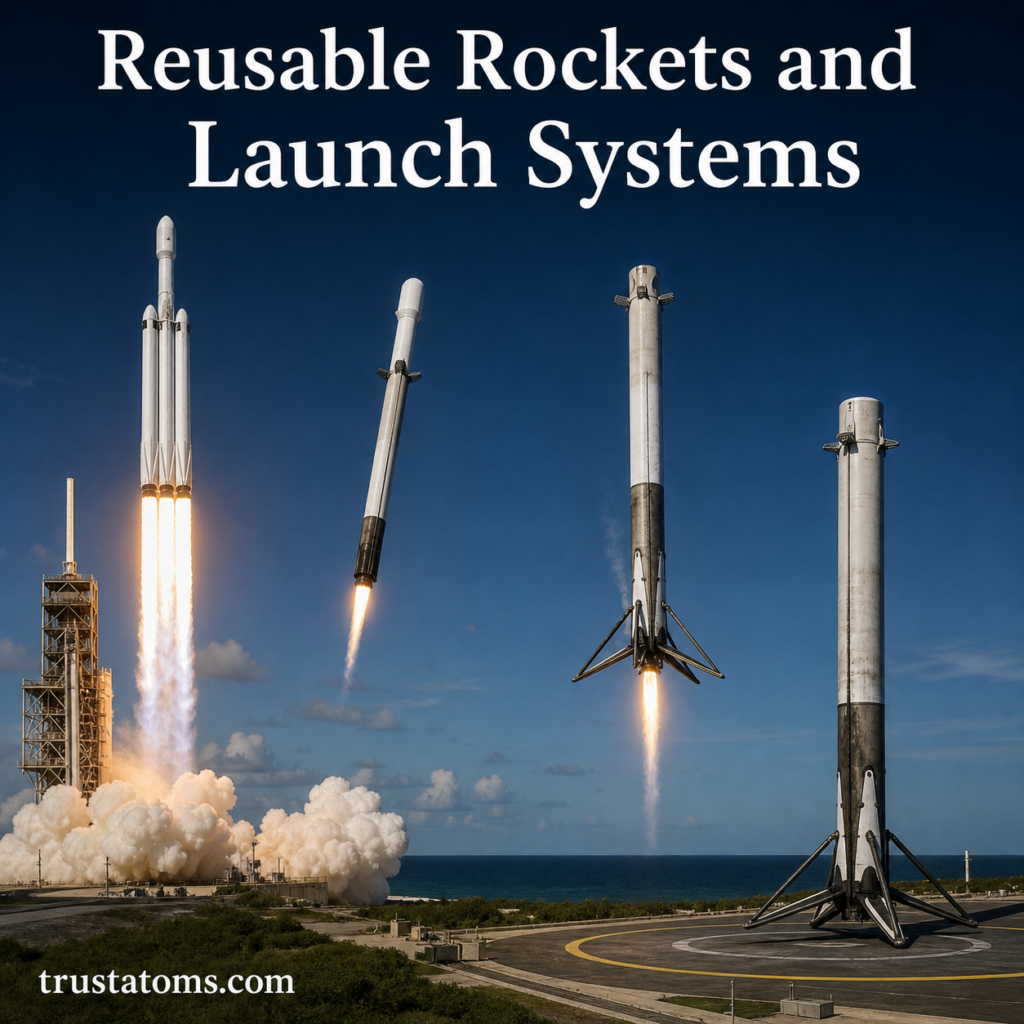
Reusable rockets have transformed modern spaceflight, dramatically lowering the cost of launching payloads into orbit and making space more accessible than ever before. Once considered impractical, reusability is now a central focus of the aerospace industry, enabling more frequent launches, faster turnaround times, and long-term sustainability in space exploration.
This article explores how reusable rocket systems work, their evolution, key technologies, and their impact on the future of space travel.
What Are Reusable Rockets?
Reusable rockets are launch vehicles designed to be recovered, refurbished, and flown again after completing a mission. Unlike traditional expendable rockets—where most components are discarded after a single use—reusable systems aim to preserve and reuse major parts such as:
- First-stage boosters
- Rocket engines
- Payload fairings
The goal is simple: reduce costs and increase efficiency by avoiding the need to build entirely new rockets for every launch.
How Traditional Rockets Worked
Before reusability became viable, rockets followed a single-use model:
- Launch from Earth
- Discard stages as fuel is depleted
- Allow most components to burn up in the atmosphere or fall into the ocean
This approach was extremely expensive due to:
- High manufacturing costs
- Limited launch frequency
- Minimal recovery of hardware
Reusable systems aim to solve these inefficiencies.
How Reusable Rocket Systems Work
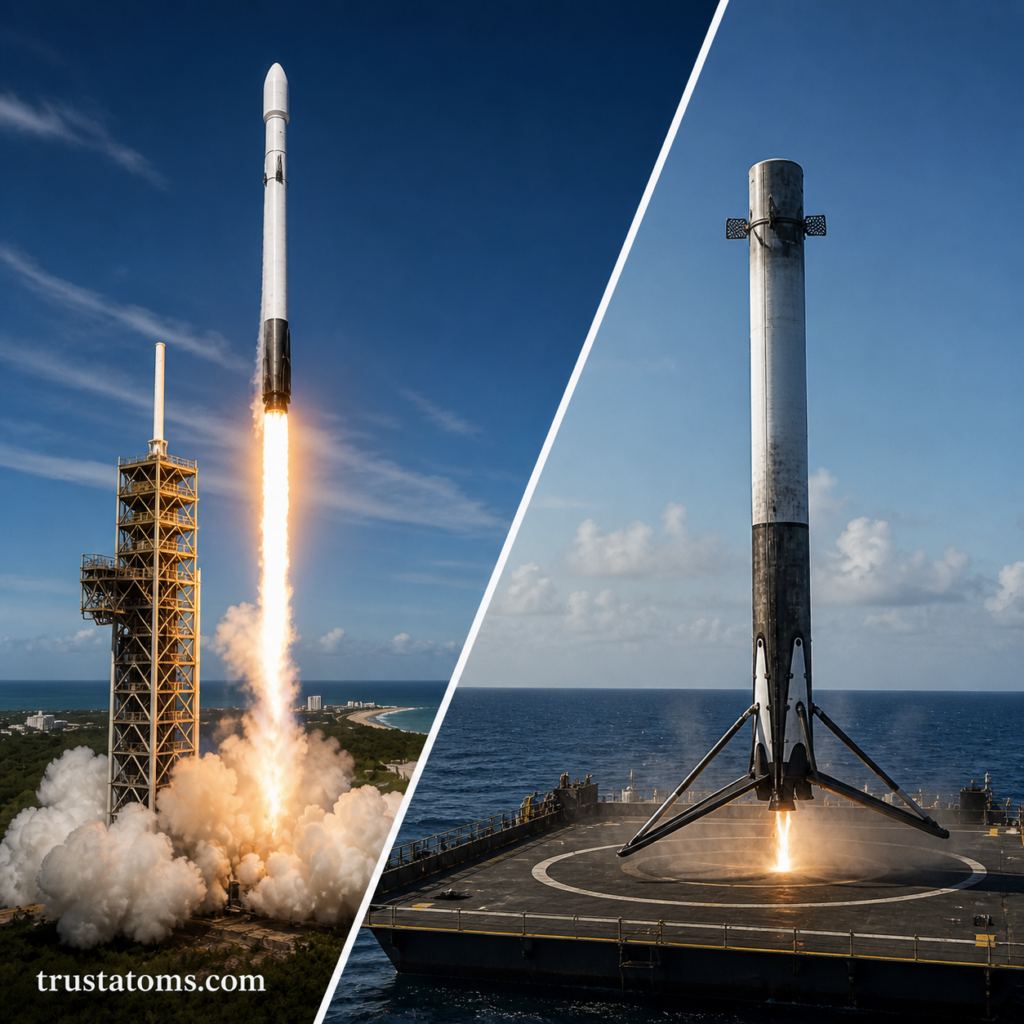
Reusable rockets use advanced engineering and precision control to return safely after launch. The most common method involves vertical landing.
Step-by-Step Process
- Launch Phase
The rocket lifts off and carries payload into space. - Stage Separation
The first stage detaches after fuel depletion. - Reentry Burn
Engines reignite to slow the booster as it reenters Earth’s atmosphere. - Guided Descent
Grid fins and onboard computers guide the booster toward a landing zone. - Landing Burn
Engines fire again to reduce speed for a controlled vertical landing. - Touchdown
The booster lands on a pad or drone ship for recovery.
Types of Reusable Launch Systems
Partially Reusable Rockets
These systems recover only certain components, typically the first stage.
Examples of reusable elements:
- First-stage boosters
- Payload fairings
Fully Reusable Rockets
These aim to recover and reuse the entire launch system, including:
- First stage
- Upper stage
- Spacecraft
Fully reusable systems are still under development but represent the future of cost-efficient spaceflight.
Key Technologies Behind Reusability
Reusable rockets rely on several advanced technologies working together:
1. Precision Guidance Systems
- GPS and onboard computers calculate landing trajectories
- Autonomous control ensures accuracy
2. Restartable Engines
- Engines must ignite multiple times during flight
- Essential for reentry and landing burns
3. Heat Shielding
- Protects the rocket during atmospheric reentry
- Prevents structural damage from extreme temperatures
4. Grid Fins and Aerodynamic Control
- Provide steering during descent
- Stabilize the rocket in the atmosphere
5. Landing Legs
- Deploy just before touchdown
- Absorb impact and stabilize the vehicle
Advantages of Reusable Rockets
Reusable systems offer significant benefits across the space industry.
Cost Reduction
- Reusing hardware dramatically lowers launch costs
- Reduces need for constant manufacturing
Increased Launch Frequency
- Faster turnaround between missions
- Enables more frequent launches
Sustainability
- Less space debris from discarded rocket stages
- More environmentally responsible approach
Innovation and Accessibility
- Lower costs allow more companies and nations to access space
- Supports growth in satellite deployment and research
Challenges and Limitations
Despite their advantages, reusable rockets come with technical and operational challenges.
Engineering Complexity
- Requires advanced systems for recovery and landing
- Increased design and development costs
Refurbishment Time
- Rockets still need inspection and maintenance between flights
- Turnaround time can vary
Weight Trade-Offs
- Additional landing systems add weight
- Reduces payload capacity compared to expendable rockets
Reliability Concerns
- Reused components must meet strict safety standards
- Long-term durability is continuously tested
Real-World Applications
Reusable rockets are already shaping modern space operations.
Satellite Launches
- Frequent and cost-effective deployment of communication satellites
Space Station Missions
- Regular cargo and crew transport
Commercial Spaceflight
- Private companies entering the launch market
Deep Space Exploration
- Potential for reusable systems in Moon and Mars missions
The Future of Reusable Launch Systems
The next generation of reusable rockets aims to push boundaries even further.
Key Trends
- Fully reusable systems for both stages
- Rapid launch turnaround (hours or days instead of weeks)
- Increased automation in recovery and refurbishment
- Integration with space tourism and interplanetary missions
Reusable launch systems may eventually make space travel as routine as air travel, opening the door to permanent human presence beyond Earth.
Final Thoughts
Reusable rockets represent one of the most important breakthroughs in modern space exploration. By reducing costs, improving efficiency, and enabling more frequent launches, they are reshaping how humanity reaches space.
As technology continues to evolve, reusable launch systems will play a central role in expanding our presence in orbit—and beyond.