Private spaceflight has reshaped the modern space industry, turning what was once dominated by government agencies into a competitive, innovation-driven sector. At the center of this transformation is SpaceX, a company that has redefined how rockets are built, launched, and reused.
This article explores how SpaceX helped pioneer private spaceflight, the technologies behind its success, and what this shift means for the future of space exploration.
What Is Private Spaceflight?
Private spaceflight refers to space missions developed and operated by commercial companies rather than government agencies.
These companies design, build, and launch spacecraft for purposes such as:
- Satellite deployment
- Cargo delivery to space stations
- Human space travel
- Deep space exploration
The rise of private companies has introduced competition, reduced costs, and accelerated innovation.
The Origins of SpaceX
SpaceX (Space Exploration Technologies Corp.) was founded in 2002 by Elon Musk with the goal of reducing space transportation costs and enabling human life on other planets.
Early on, the company faced multiple rocket failures, nearly running out of funding. However, persistence and engineering breakthroughs led to successful launches and government contracts, establishing SpaceX as a major player in the aerospace industry.
Key SpaceX Technologies
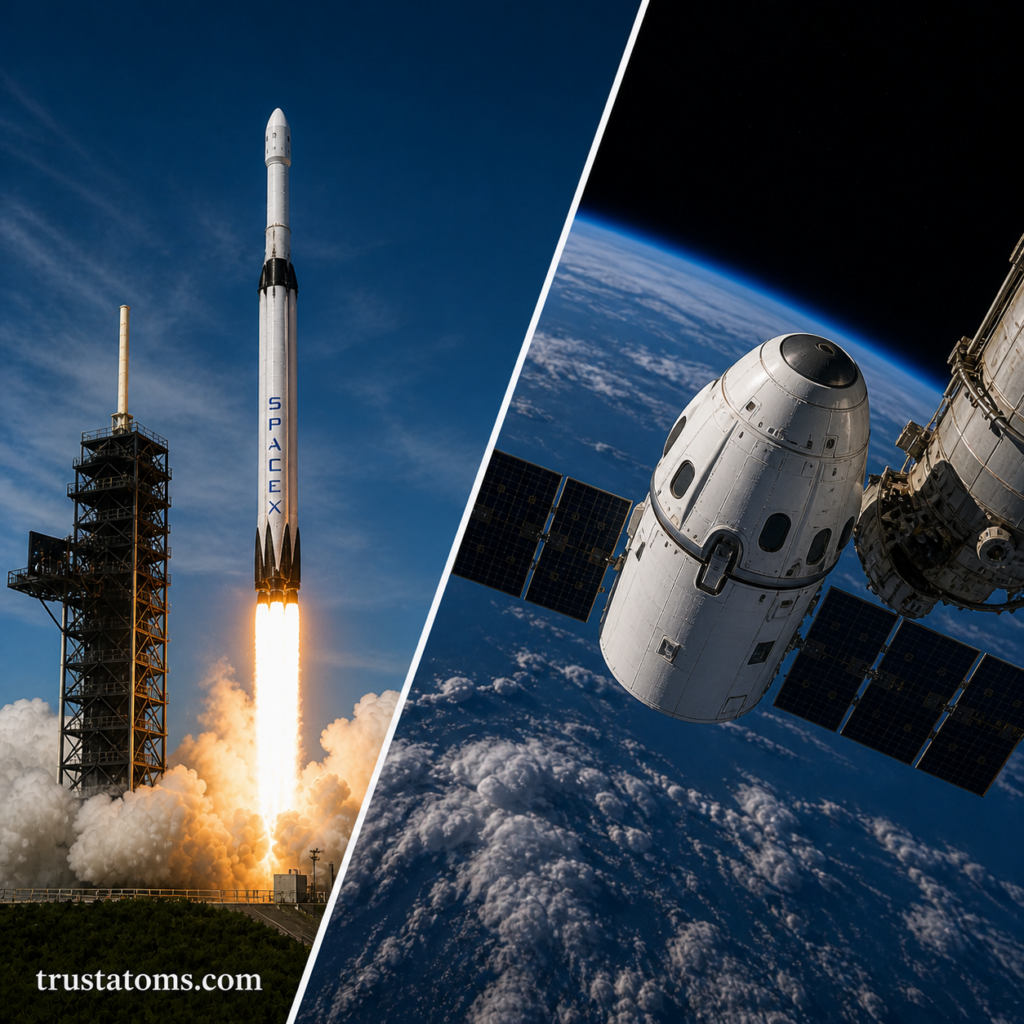
SpaceX’s success is built on several groundbreaking innovations that have changed how spaceflight works.
Reusable Rocket Systems
One of SpaceX’s biggest achievements is the development of reusable rockets, particularly the Falcon 9.
Key features include:
- Vertical landing capability
- Rapid refurbishment and reuse
- Reduced launch costs
Reusable boosters can land on drone ships or landing pads, allowing them to be flown multiple times.
Advanced Spacecraft
The Dragon spacecraft is used for:
- Cargo missions to the International Space Station
- Crew transportation under NASA contracts
It represents one of the first commercially built spacecraft capable of carrying astronauts.
Heavy-Lift Capability
The Falcon Heavy is among the most powerful operational rockets in the world.
It enables:
- Launching large payloads
- Deep space missions
- Complex satellite deployments
The Role of NASA Partnerships
Private spaceflight didn’t replace government agencies—it evolved alongside them.
NASA has partnered with SpaceX through programs such as:
- Commercial Orbital Transportation Services (COTS)
- Commercial Crew Program
These partnerships allow NASA to:
- Focus on deep space exploration
- Reduce costs by outsourcing routine missions
- Support innovation in the private sector
The Rise of Commercial Space Travel
Private companies are making space more accessible—not just for governments, but also for businesses and individuals.
Satellite Launch Services
SpaceX launches satellites for:
- Telecommunications
- GPS systems
- Earth observation
Its high launch frequency has made it a leader in this market.
Space Tourism
Private spaceflight has introduced the possibility of human travel beyond Earth for non-astronauts.
Although still expensive, advancements are making space tourism more realistic.
Global Internet Coverage
The Starlink project aims to provide high-speed internet worldwide using a network of satellites in low Earth orbit.
Advantages of Private Spaceflight
The shift toward private companies offers several major benefits.
Lower Costs
- Reusable technology reduces manufacturing expenses
- Competition drives pricing down
Faster Innovation
- Private companies iterate quickly
- New technologies reach market faster
Increased Launch Frequency
- More launches per year
- Greater access to space
Expanded Opportunities
- More countries and organizations can participate
- Growth in research, communication, and exploration
Challenges and Criticism
Despite its progress, private spaceflight faces important challenges.
Safety Concerns
- Human spaceflight carries significant risk
- Strict safety standards are required
Space Debris
- Increasing satellite launches raise concerns about orbital congestion
Regulatory Oversight
- Governments must ensure responsible operations
- International cooperation is essential
Market Competition
- Other companies entering the space industry increase pressure
The Future of SpaceX and Private Spaceflight
SpaceX continues to push the boundaries of what’s possible in space.
Next-Generation Systems
The Starship is designed to be:
- Fully reusable
- Capable of carrying large crews and cargo
- Suitable for Moon and Mars missions
Interplanetary Goals
SpaceX aims to:
- Support lunar missions
- Enable human settlement on Mars
- Expand humanity’s presence beyond Earth
Long-Term Vision
Private spaceflight could lead to:
- Permanent space habitats
- Routine space travel
- New industries in orbit and beyond
Final Thoughts
SpaceX has played a central role in transforming spaceflight from a government-dominated field into a dynamic commercial industry. By lowering costs, improving technology, and increasing access to space, private companies are opening new possibilities for exploration and innovation.
As technology continues to evolve, private spaceflight will likely shape the future of humanity’s journey into space—making what once seemed impossible increasingly achievable.