
Adaptive immune responses are specialized defenses that allow vertebrates to recognize and target particular pathogens using B cells and T cells. Unlike innate immunity, which provides rapid, broadly acting protection, adaptive immunity develops over time and creates long-lasting immune memory.
In the study of biology, adaptive immune responses help explain how humans and other vertebrates defend themselves against infections they have encountered before. Because this system can remember specific pathogens, adaptive immunity is the biological foundation behind vaccination and long-term disease protection.
These responses involve coordinated communication among immune cells, recognition of molecular targets, and the production of protective molecules. Their effectiveness depends on both the pathogen and the condition of the host’s immune system.
What Is Adaptive Immunity?
Adaptive immunity is the antigen-specific branch of the immune system. It allows vertebrates to recognize, target, and eliminate specific pathogens through specialized lymphocytes. Unlike innate immunity, which provides immediate but broadly acting protection, adaptive immunity usually takes longer to develop during a first encounter.
Two main lymphocyte groups coordinate adaptive defenses: B cells and T cells. B cells can develop into plasma cells that secrete antibodies, while T cells coordinate immune activity or destroy infected cells.
An antibody is a protein that recognizes and binds a particular molecular target. Antibodies can neutralize pathogens, block toxins, or mark infectious material for removal by other immune components.
How an Adaptive Immune Response Develops
Adaptive immunity begins when immune cells encounter antigens associated with an infection. Antigens are molecular structures that immune receptors can recognize; they are not always harmful or found only on pathogens.
- Detection: Immune cells encounter a pathogen and recognize or process its antigens.
- Antigen presentation: Specialized cells display antigen fragments to suitable T cells.
- Lymphocyte activation: B cells and T cells receive signals that stimulate an antigen-specific response.
- Clonal expansion: Activated lymphocytes multiply, increasing the number of cells capable of responding to the antigen.
- Defense and memory: Effector cells help control infection, while some lymphocytes develop into longer-lived memory cells.
These stages overlap rather than occurring as a perfectly separated sequence. The exact response depends on the pathogen, the tissues affected, and previous immune exposure.
B Cells and Antibody-Mediated Immunity
B cells recognize specific antigens through receptors on their surfaces. After appropriate activation, some develop into plasma cells that release antibodies into blood and other body fluids.
Antibodies can prevent viruses from entering cells, interfere with toxins, and help immune cells recognize pathogens. This branch of adaptive defense is called humoral immunity.
Other activated B cells become memory B cells. These cells can respond to a familiar antigen during a later encounter, although protection varies among infections.
T Cells and Cell-Mediated Immunity
T cells recognize antigen fragments displayed by specialized molecules on cell surfaces. Their functions differ according to the T-cell subtype.
Helper T Cells
Helper T cells coordinate immune activity through direct cellular interactions and signaling molecules called cytokines. They support B-cell responses, help activate other immune cells, and influence how an infection is controlled.
Cytotoxic T Cells
Cytotoxic T cells recognize infected or abnormal cells displaying appropriate antigen fragments. They can release molecules that trigger programmed cell death, limiting the production of pathogens inside affected cells.
Regulatory T Cells
Regulatory T cells help restrain excessive immune activity and maintain tolerance toward the body’s own tissues. This regulation reduces unnecessary inflammation and helps prevent harmful immune reactions.
Antigens and Immune Recognition
Antigen recognition gives adaptive immunity its specificity. Different B-cell and T-cell receptors recognize different molecular features, allowing the immune system to respond to a wide variety of threats.
Adaptive defenses also depend on earlier protective mechanisms. Innate immune responses include barriers, inflammation, and immune cells that detect broad signs of infection and help initiate adaptive responses.
Antigen-presenting cells, including dendritic cells, help connect these two systems by processing material from pathogens and displaying antigen fragments to T cells.
Immune Memory and Long-Term Protection
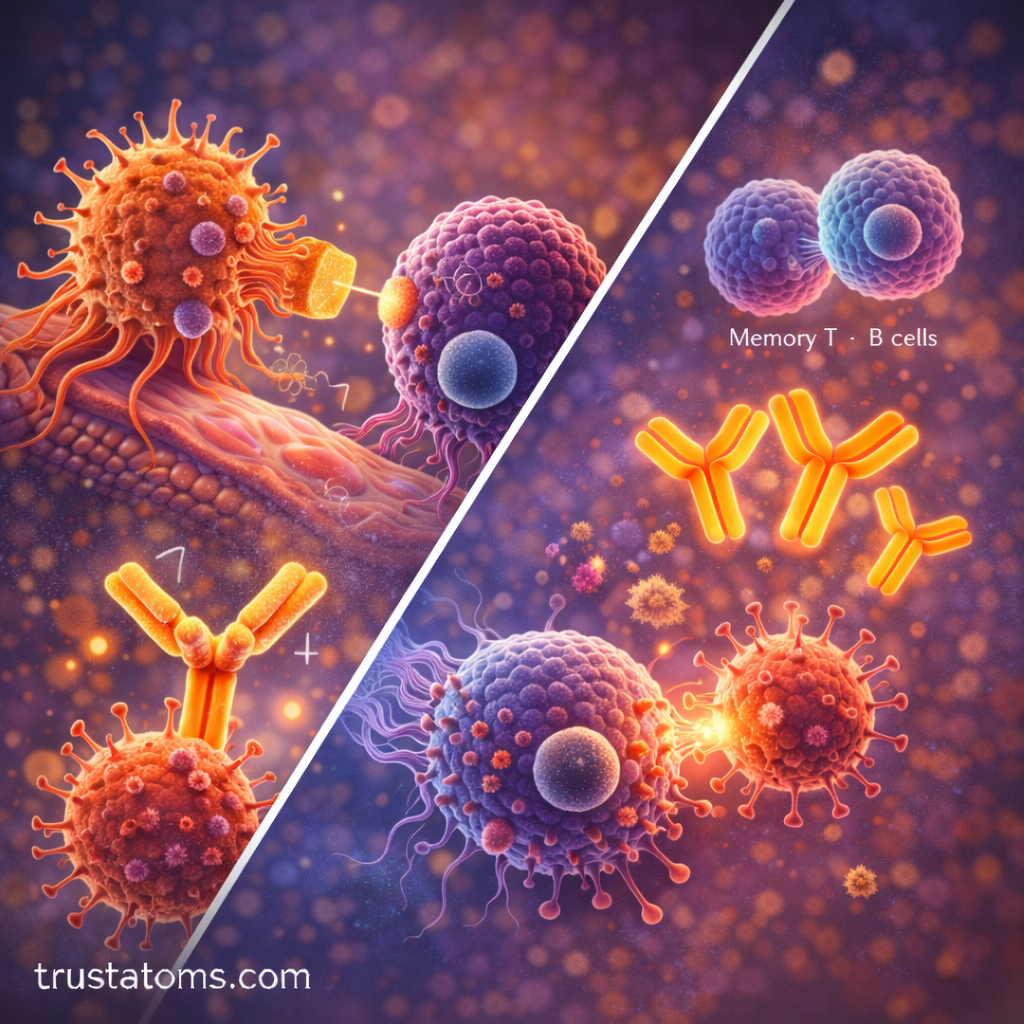
After an infection resolves, many activated immune cells disappear, but some memory B cells and memory T cells remain. Long-lived plasma cells may also continue producing antibodies.
During another encounter with the same antigen, memory cells can respond more rapidly than naive lymphocytes. This secondary response may reduce infection severity or prevent noticeable illness, although it does not guarantee complete protection.
Concrete Example: Immune Responses After Vaccination
Consider a person receiving a vaccine containing a harmless form of a viral surface protein. The antigen can stimulate adaptive defenses without requiring infection by the disease-causing virus.
- Immune cells encounter the vaccine antigen and help activate antigen-specific lymphocytes.
- Activated B cells multiply, and some develop into antibody-secreting plasma cells.
- Some B cells and T cells develop into memory populations.
- During later exposure to the virus, existing antibodies and memory cells may recognize familiar targets and respond more efficiently.
The strength and duration of protection depend on the vaccine, pathogen, and individual immune response. Some vaccines require additional doses to establish or maintain protection.
Innate and Adaptive Immunity Compared
| Feature | Innate Immunity | Adaptive Immunity |
|---|---|---|
| Initial response | Usually rapid | Usually slower during first exposure |
| Recognition | Broad molecular patterns and danger signals | Specific antigens |
| Major components | Barriers, phagocytes, complement proteins | B cells, T cells, antibodies |
| Memory | Can show trained responses in some settings | Antigen-specific memory cells |
| Distribution | Widespread among animals | Specialized lymphocyte-based system in jawed vertebrates |
Innate and adaptive defenses are interconnected. Innate cells help activate lymphocytes, while antibodies and activated T cells can strengthen other immune mechanisms.
Jawless vertebrates, including lampreys and hagfish, also possess adaptive immune systems, but they use variable lymphocyte receptors rather than the conventional antibody and T-cell receptor systems of jawed vertebrates.
Frequently Asked Questions
What Is an Adaptive Immune Response?
An adaptive immune response is a targeted defense against specific antigens. It involves specialized lymphocytes and can generate memory cells that improve responses during later exposure.
What Is the Difference Between B Cells and T Cells?
B cells can develop into plasma cells that produce antibodies. T cells coordinate immune responses, destroy infected cells, or regulate immune activity, depending on their subtype.
Do All Vertebrates Have Adaptive Immunity?
Living vertebrates possess forms of adaptive immunity. Jawed vertebrates use B-cell and T-cell receptor systems, while jawless vertebrates use a different antigen-recognition system based on variable lymphocyte receptors.
Adaptive immune responses protect vertebrates through antigen-specific recognition, coordinated lymphocyte activity, and the formation of immune memory. B cells and T cells work alongside innate defenses to control infections, while memory responses help explain how vaccination can provide lasting protection. Differences between vertebrate groups also show that adaptive immunity can operate through distinct molecular systems.
Sources: Murphy and Weaver, Janeway’s Immunobiology; Abbas, Lichtman, and Pillai, Cellular and Molecular Immunology; National Institute of Allergy and Infectious Diseases.