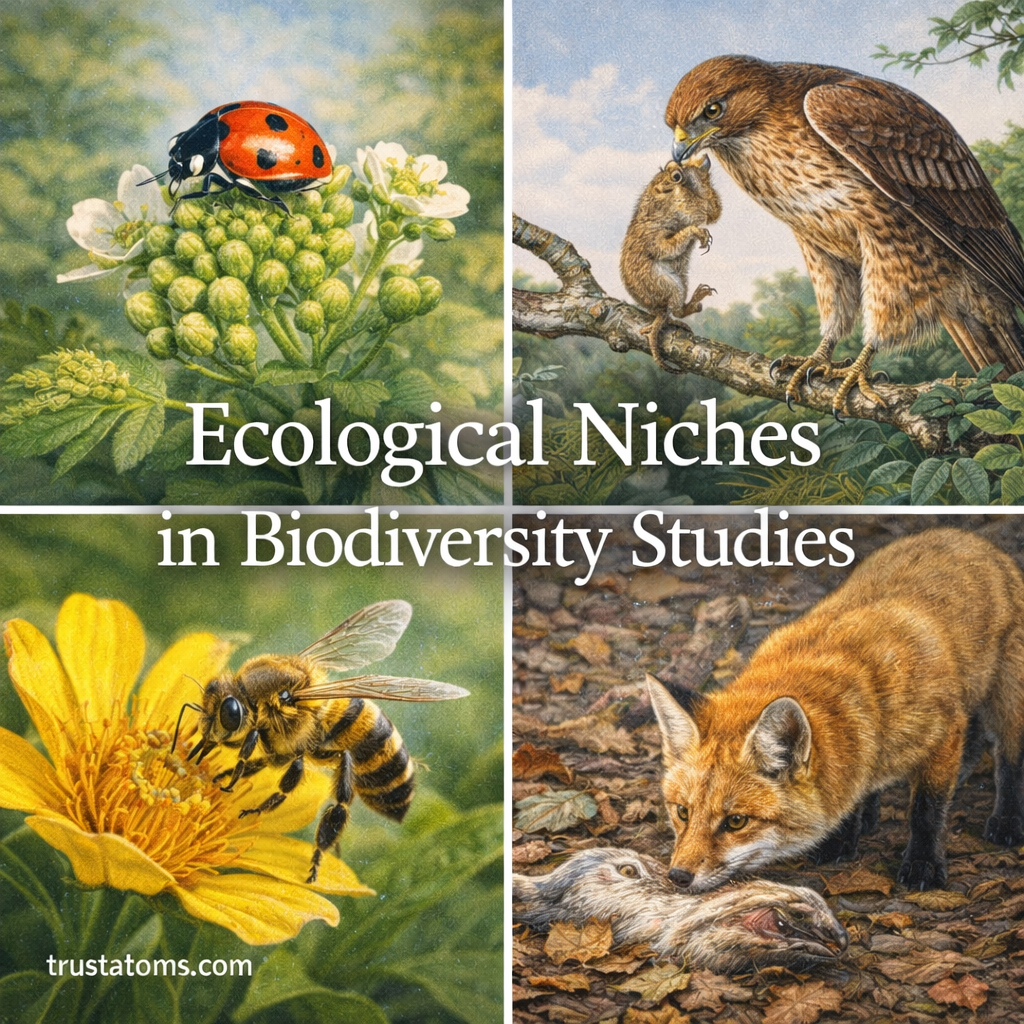
An ecological niche describes the role a species plays within its environment. It includes how an organism obtains resources, interacts with other species, and contributes to the functioning of an ecosystem.
In biodiversity studies, ecological niches help scientists understand how multiple species can coexist in the same environment without competing for exactly the same resources. By occupying different niches, species reduce competition and help maintain ecological balance.
Studying ecological niches provides insight into species diversity, ecosystem stability, and the complex relationships that shape life on Earth.
The Basic Definition of an Ecological Niche
In ecology, a niche refers to the specific role or position a species occupies in its ecosystem.
A species’ niche includes several factors:
- What it eats
- Where it lives
- When it is active
- How it interacts with other species
- How it responds to environmental conditions
For example:
- A hawk’s niche includes hunting small animals during the day.
- Earthworms occupy a niche as decomposers that break down organic material in soil.
- Bees play an essential niche role as pollinators.
Each species contributes to the functioning of the ecosystem through its ecological niche.
Why Ecological Niches Matter for Biodiversity
Ecological niches are a key concept in biodiversity because they help explain how ecosystems support many species simultaneously.
Without niche differentiation, species competing for identical resources could drive each other toward extinction.
Niches support biodiversity by:
- Reducing direct competition between species
- Allowing different species to use different resources
- Creating complex food webs and ecological relationships
- Supporting stable ecosystems with multiple interacting species
The greater the number of available niches in an ecosystem, the greater the potential biodiversity.
Types of Ecological Niches
Scientists often categorize ecological niches into several types depending on how species interact with their environment.
Fundamental Niche
The fundamental niche represents the full range of environmental conditions and resources a species could theoretically use if there were no competition or predators.
It describes the potential space where a species could survive and reproduce.
Examples include:
- A plant species capable of growing across a wide climate range
- A predator able to hunt multiple types of prey
However, in natural ecosystems, species rarely occupy their entire fundamental niche.
Realized Niche
The realized niche refers to the actual conditions and resources a species uses in the presence of competition and other ecological pressures.
Because species compete for limited resources, the realized niche is usually smaller than the fundamental niche.
For example:
- Two bird species may prefer the same insects but feed at different heights in a tree to avoid competition.
- Predators may specialize in certain prey when other predators occupy similar habitats.
Realized niches show how species adapt to coexist with others.
Trophic Niche
A trophic niche describes the feeding role of a species within a food chain or food web.
This includes how organisms obtain energy.
Examples of trophic niches include:
- Producers such as plants that create energy through photosynthesis
- Herbivores that eat plants
- Carnivores that prey on other animals
- Decomposers that break down dead organic material
Each trophic level contributes to energy flow within ecosystems.
Niche Partitioning and Species Coexistence
One important ecological concept is niche partitioning, which occurs when species divide resources in ways that reduce competition.
This allows multiple species with similar needs to coexist within the same environment.
Examples of niche partitioning include:
- Birds feeding on insects at different levels of a tree
- Grazing animals eating different types of grasses
- Predators hunting at different times of day
Through niche partitioning, ecosystems support higher biodiversity.
Examples of Ecological Niches in Nature
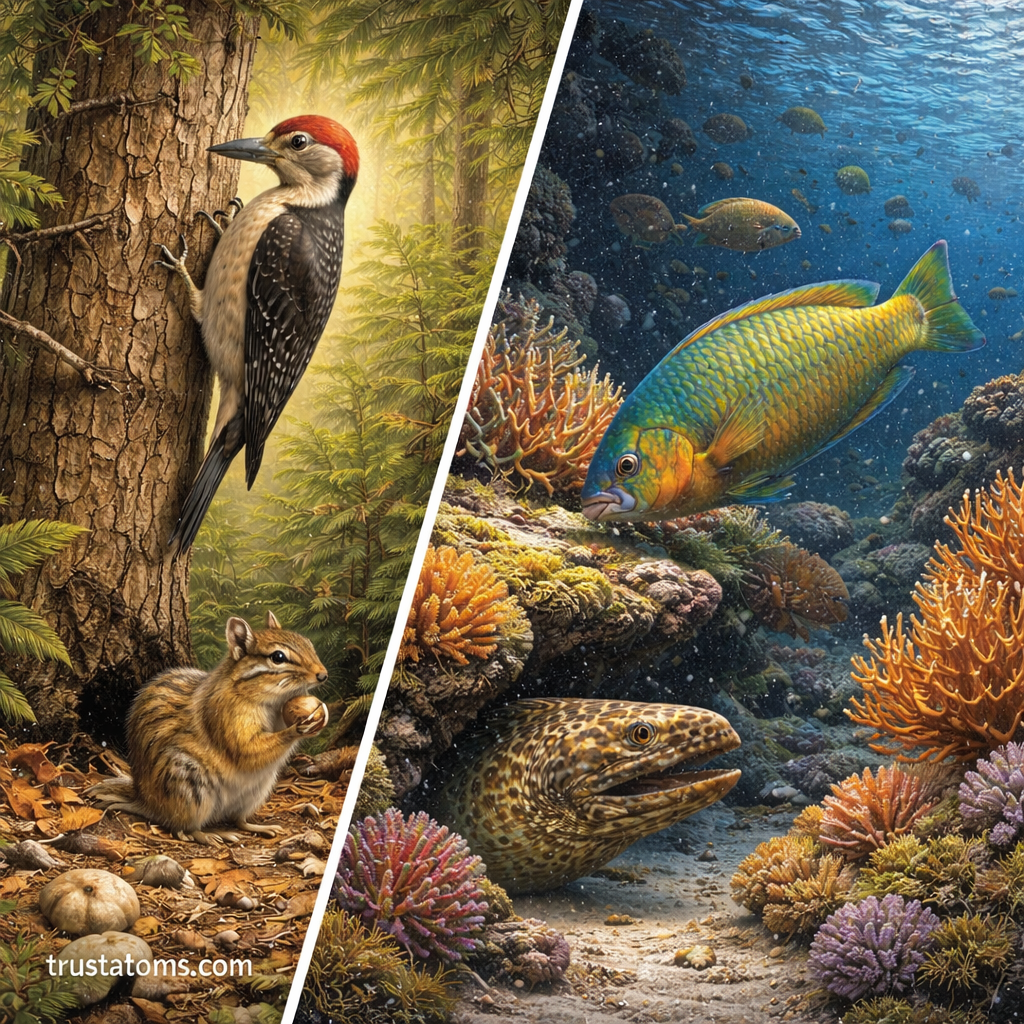
Ecological niches can be observed across many environments.
Forest Ecosystems
In forests, species occupy different niches based on their location and behavior.
Examples include:
- Woodpeckers feeding on insects inside tree bark
- Squirrels storing and eating nuts from trees
- Owls hunting small mammals at night
Each species contributes to the forest ecosystem in a different way.
Coral Reef Ecosystems
Coral reefs are among the most biodiverse ecosystems on Earth partly because they contain many ecological niches.
Examples include:
- Coral polyps building reef structures
- Herbivorous fish eating algae
- Predatory fish controlling smaller fish populations
- Cleaner fish removing parasites from larger fish
These interactions help maintain reef health and stability.
Desert Ecosystems
Desert species often occupy specialized niches due to extreme environmental conditions.
Examples include:
- Cacti storing water to survive long droughts
- Nocturnal animals avoiding daytime heat
- Scavengers feeding on dead organisms
These adaptations allow species to survive in harsh environments.
Competition and the Competitive Exclusion Principle
The competitive exclusion principle states that two species cannot occupy exactly the same niche indefinitely if they rely on the same limited resources.
If this occurs, one species will eventually outcompete the other.
Species avoid competitive exclusion by:
- Adapting to different food sources
- Living in slightly different habitats
- Being active at different times
These differences allow species to maintain separate niches.
Ecological Niches and Ecosystem Stability
Healthy ecosystems contain many ecological niches that support diverse species.
High niche diversity contributes to:
- Greater ecosystem resilience
- Stable food webs
- Balanced predator–prey relationships
- Efficient resource use
When species disappear, their ecological niches may become empty, potentially disrupting ecosystem stability.
Ecological Niches and Environmental Change
Environmental changes such as climate shifts, habitat loss, or pollution can alter ecological niches.
These changes may force species to:
- Adapt to new environmental conditions
- Shift their geographic range
- Compete with new species
- Face population decline or extinction
Understanding ecological niches helps scientists predict how ecosystems may respond to environmental pressures.
The Role of Ecological Niches in Biodiversity Research
Ecological niches are fundamental to the study of biodiversity.
By analyzing how species occupy different niches, scientists can better understand:
- Why certain ecosystems support high biodiversity
- How species interact within ecological communities
- How ecosystems respond to disturbances
- How conservation strategies can protect species and habitats
Studying ecological niches reveals the complex relationships that allow life on Earth to thrive in diverse environments.