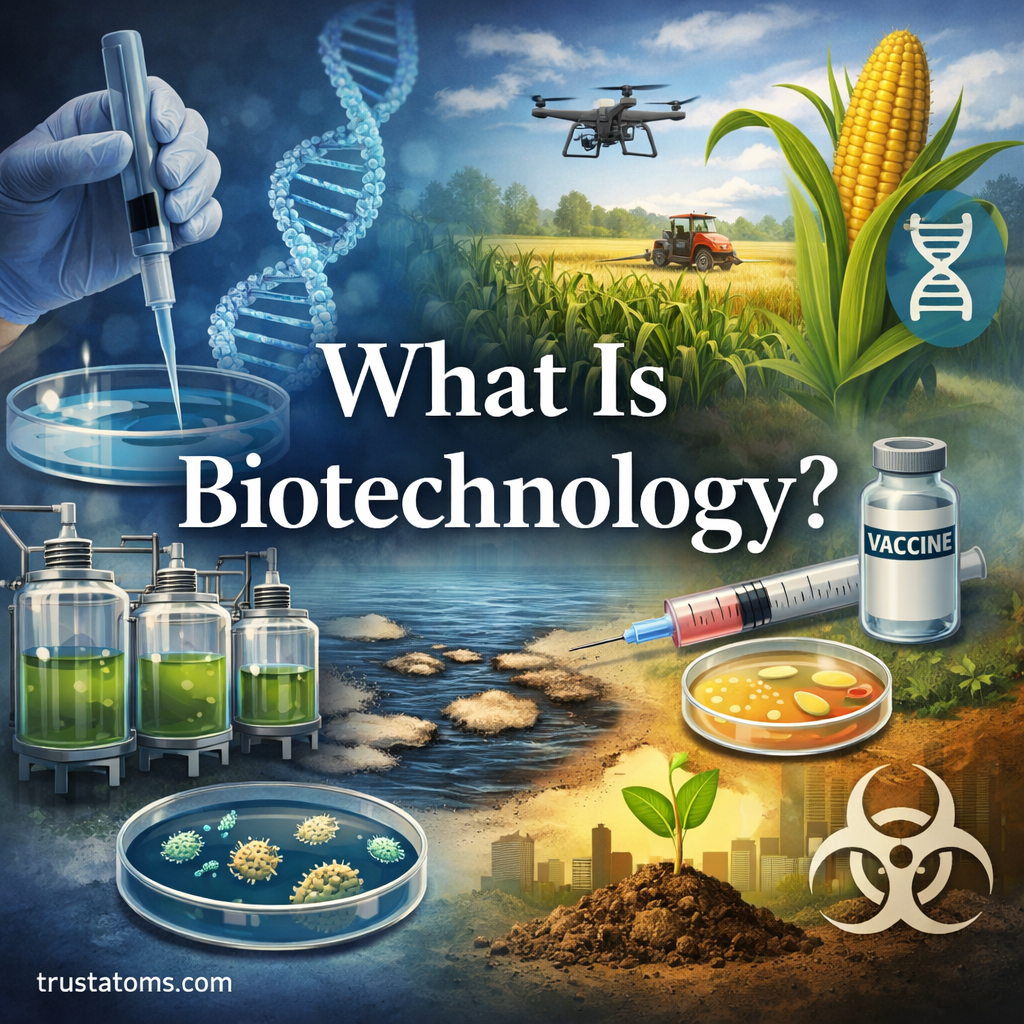
Biotechnology is a broad field of science that uses living organisms, biological systems, or biological processes to develop technologies and products that improve human life. From creating life-saving medicines to improving crops and cleaning the environment, biotechnology connects biology with technology to solve real-world problems.
Although the term may sound modern, humans have used basic forms of biotechnology for thousands of years. Early examples include fermentation for making bread, beer, and cheese. Today, biotechnology has expanded into advanced fields such as genetic engineering, pharmaceutical development, and synthetic biology.
Understanding biotechnology helps explain how modern science improves agriculture, medicine, environmental protection, and industrial production.
Biotechnology Definition
Biotechnology is the use of living organisms, cells, or biological molecules to create products or processes that benefit humans or the environment.
Scientists in biotechnology often work with:
- Microorganisms such as bacteria and yeast
- Plant and animal cells
- DNA and genetic material
- Enzymes and proteins
By studying and manipulating biological systems, researchers can design solutions to challenges in health, food production, energy, and environmental sustainability.
A Brief History of Biotechnology
While modern biotechnology uses advanced laboratory tools, the basic concept dates back thousands of years.
Early Biotechnology (Ancient to 1800s)
Ancient civilizations used biological processes without understanding the underlying science.
Examples include:
- Fermentation to make bread, wine, and beer
- Selective breeding of plants and animals
- Cheese and yogurt production using bacteria
These practices relied on natural biological processes to create useful products.
Scientific Biotechnology (1800s–1900s)
Major scientific discoveries transformed biotechnology into a research field.
Key developments included:
- Discovery of microorganisms by Louis Pasteur
- Understanding of genetics by Gregor Mendel
- Development of vaccines and antibiotics
These discoveries allowed scientists to deliberately use biological systems for medical and industrial purposes.
Modern Biotechnology (1970s–Today)
The discovery of DNA structure and genetic engineering tools launched modern biotechnology.
Important milestones include:
- Recombinant DNA technology
- Genetic engineering of crops
- Development of insulin through bacteria
- CRISPR gene editing technology
These innovations allow scientists to directly modify genetic material to create new biological solutions.
Major Areas of Biotechnology

Biotechnology is often divided into several major fields, each focusing on different applications.
Medical Biotechnology
Medical biotechnology focuses on improving human health through biological research and technology.
Examples include:
- Vaccine development
- Gene therapy
- Biopharmaceutical drugs
- Diagnostic tests for diseases
One well-known example is the production of human insulin using genetically engineered bacteria, which helps millions of people with diabetes.
Agricultural Biotechnology
Agricultural biotechnology aims to improve crops, livestock, and food production.
Common applications include:
- Pest-resistant crops
- Drought-tolerant plants
- Nutrient-enriched foods
- Faster-growing livestock
Genetically modified (GM) crops are a widely discussed example of agricultural biotechnology.
Environmental Biotechnology
Environmental biotechnology focuses on protecting ecosystems and reducing pollution.
Examples include:
- Using bacteria to clean oil spills
- Wastewater treatment using microorganisms
- Biodegradable materials
- Biofuels from plant biomass
These technologies help reduce environmental damage while promoting sustainability.
Industrial Biotechnology
Industrial biotechnology uses biological systems to produce materials, chemicals, and energy.
Examples include:
- Enzymes used in detergents
- Biofuels like ethanol and biodiesel
- Bioplastics made from plant materials
- Fermentation processes in manufacturing
This field helps industries produce goods more efficiently while reducing environmental impact.
Key Techniques Used in Biotechnology
Biotechnology relies on a variety of scientific techniques to study and manipulate biological systems.
Genetic Engineering
Genetic engineering involves modifying an organism’s DNA to give it new traits.
Scientists can:
- Insert genes from one organism into another
- Remove harmful genes
- Modify genetic sequences
This technology is used in medicine, agriculture, and research.
Cell Culture
Cell culture allows scientists to grow cells outside the body in laboratory conditions.
Applications include:
- Drug testing
- Vaccine production
- Tissue engineering
Fermentation
Fermentation uses microorganisms to convert substances like sugar into useful products.
Common fermentation products include:
- Alcohol
- Yogurt
- Antibiotics
- Vitamins
This technique has been used for centuries but is now optimized using modern biotechnology.
Gene Editing
Gene editing technologies allow scientists to precisely change DNA sequences.
CRISPR is a widely used gene-editing tool that enables researchers to:
- Correct genetic mutations
- Study gene function
- Develop disease treatments
Real-World Applications of Biotechnology
Biotechnology affects many aspects of daily life, often in ways people do not notice.
Medicine
Biotechnology has revolutionized modern medicine through:
- Personalized medicine
- Targeted cancer treatments
- Rapid disease testing
- Vaccine development
The rapid development of certain vaccines in recent years demonstrates the power of biotechnology.
Food Production
Biotechnology helps increase food supply for a growing global population.
Applications include:
- Disease-resistant crops
- Improved food preservation
- Nutrient-enhanced foods
For example, certain rice varieties have been engineered to contain additional vitamins.
Environmental Protection
Biotechnology helps reduce pollution and protect ecosystems.
Examples include:
- Microbes that break down plastic
- Plants that absorb toxic metals from soil
- Biofuels that reduce fossil fuel use
Industry
Many industries rely on biotechnology to improve efficiency and sustainability.
Examples include:
- Bio-based chemicals
- Renewable energy sources
- Sustainable textile production
Advantages of Biotechnology
Biotechnology offers many potential benefits to society.
Key advantages include:
- Development of new medical treatments
- Increased food production
- Reduced environmental pollution
- Sustainable industrial processes
- Improved disease detection and prevention
These benefits make biotechnology one of the most influential scientific fields today.
Challenges and Ethical Considerations
Despite its benefits, biotechnology also raises important ethical and safety concerns.
Some common issues include:
- Genetic modification of organisms
- Potential environmental risks
- Ethical concerns around gene editing
- Access to biotechnology treatments
Because biotechnology can alter living systems, scientists and policymakers must carefully regulate its development and use.
The Future of Biotechnology
Biotechnology continues to evolve rapidly as new technologies emerge.
Future advancements may include:
- Gene therapies that cure inherited diseases
- Lab-grown organs for transplantation
- Sustainable food production using cellular agriculture
- Biodegradable materials replacing plastics
- Personalized medicine based on individual genetics
As scientific knowledge grows, biotechnology will likely play an even greater role in addressing global challenges such as disease, food security, and climate change.
Final Thoughts
Biotechnology combines biology and technology to create solutions that improve human life and protect the environment. From ancient fermentation practices to modern genetic engineering, biotechnology has evolved into one of the most powerful scientific fields.
Today it influences medicine, agriculture, industry, and environmental science, making it a key driver of innovation in the modern world. As research continues, biotechnology will remain central to solving many of the world’s most complex challenges.