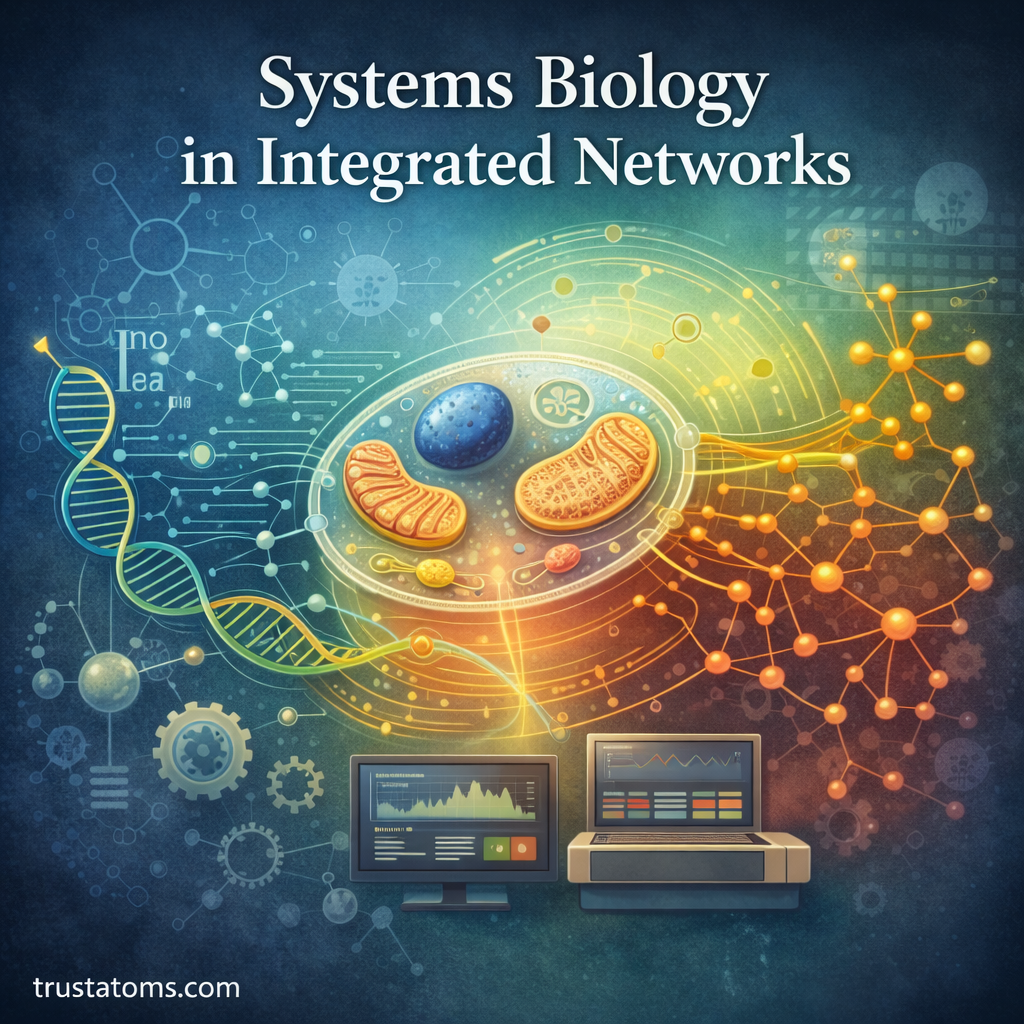
Modern biology has moved far beyond studying individual genes or proteins in isolation. Instead, scientists increasingly focus on how biological components interact with one another to form complex systems. This holistic approach is known as systems biology.
Systems biology examines how genes, proteins, metabolites, and cellular processes interact within interconnected biological networks. By analyzing these integrated systems, researchers gain a deeper understanding of how life functions at molecular, cellular, and organism levels.
This field combines biology, mathematics, computer science, and engineering to model and analyze the complexity of living systems.
What Is Systems Biology?
Systems biology is the scientific study of biological systems as interconnected networks rather than isolated parts.
Traditional biological research often focuses on individual elements such as:
- A single gene
- One metabolic pathway
- A specific protein
While these studies are valuable, they do not fully explain how biological processes emerge from interactions between thousands of molecules.
Systems biology addresses this limitation by studying how biological components work together through complex regulatory networks.
Key elements studied include:
- Gene regulatory networks
- Protein interaction networks
- Metabolic pathways
- Cellular signaling networks
By analyzing these networks, scientists can better understand how cells behave as coordinated systems.
Why Integrated Networks Matter in Biology
Living organisms depend on countless molecular interactions occurring simultaneously. Systems biology seeks to map and analyze these relationships.
Integrated networks are important because they help explain:
Cellular Coordination
Cells perform thousands of biochemical reactions at once. Integrated networks show how these reactions are regulated and coordinated.
For example:
- Genes activate or suppress other genes
- Proteins interact to form signaling pathways
- Metabolic processes depend on enzyme networks
Together, these interactions allow cells to function efficiently.
Biological Robustness
Biological systems are remarkably stable even when conditions change. This stability, known as robustness, often emerges from network interactions.
For instance:
- If one pathway fails, another pathway may compensate
- Multiple regulatory mechanisms control essential processes
Network analysis helps explain how organisms maintain stability despite environmental stress.
Disease Mechanisms
Many diseases arise from disruptions in biological networks rather than a single faulty gene.
Examples include:
- Cancer signaling networks
- Neurodegenerative disease pathways
- Immune system dysregulation
Studying these networks can reveal new therapeutic targets.
Key Components of Systems Biology Networks
Systems biology focuses on several major types of biological networks.
Gene Regulatory Networks
Gene regulatory networks describe how genes control each other’s activity through transcription factors and regulatory signals.
In these networks:
- Some genes activate other genes
- Some genes suppress gene expression
- Feedback loops regulate gene activity
These interactions guide processes such as development, cell differentiation, and stress responses.
Protein Interaction Networks
Proteins rarely act alone. Instead, they interact with other proteins to carry out cellular tasks.
Protein interaction networks help scientists study:
- Signal transduction pathways
- Enzyme complexes
- Cellular communication systems
Mapping these networks reveals how proteins cooperate in biological functions.
Metabolic Networks
Metabolic networks represent biochemical reactions that convert nutrients into energy and cellular components.
These networks involve:
- Enzymes
- Metabolites
- Energy transfer processes
Understanding metabolic networks helps scientists analyze cellular metabolism and energy balance.
Signaling Networks
Cells constantly receive signals from their environment and from neighboring cells.
Signaling networks allow cells to respond to:
- Hormones
- Growth factors
- Environmental stress
- Immune signals
These networks help control cell growth, division, and survival.
Technologies Used in Systems Biology
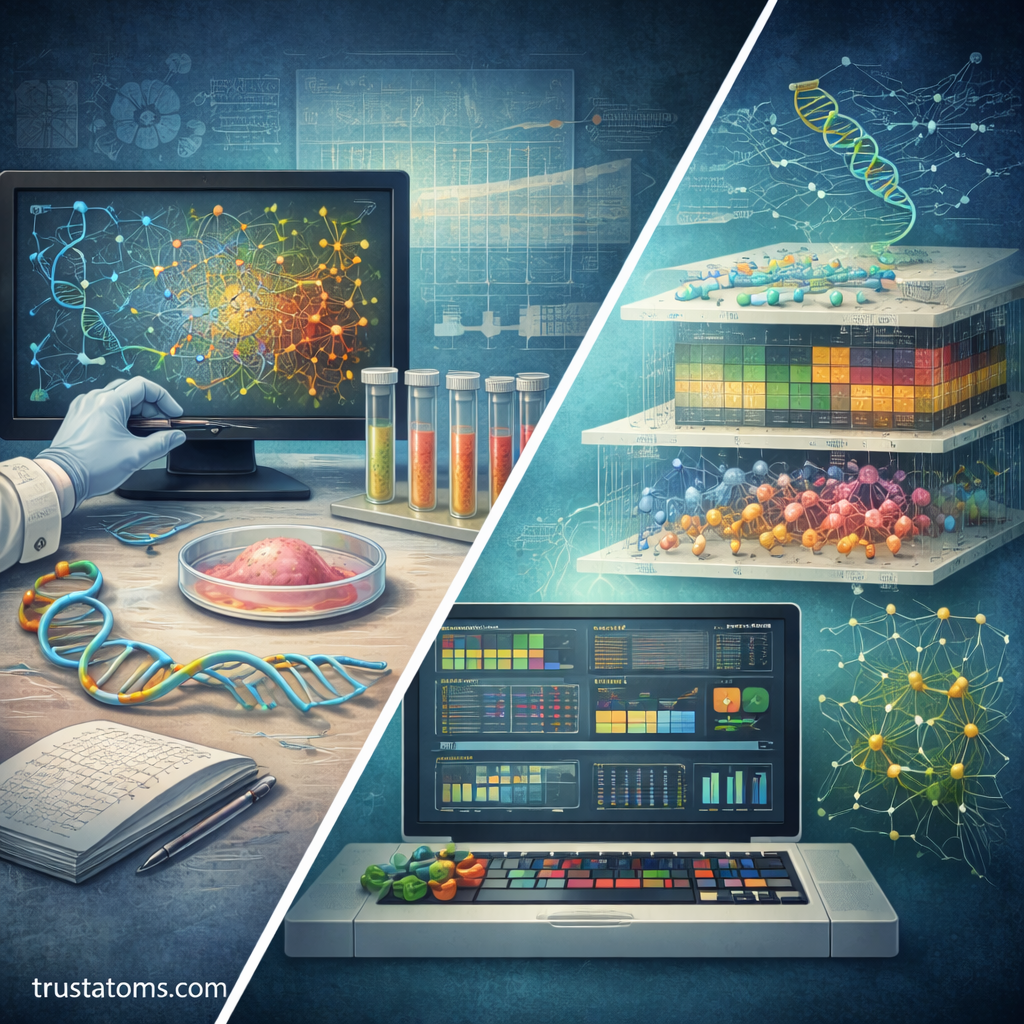
Systems biology relies on advanced experimental and computational tools to study complex networks.
High-Throughput Biological Data
Large datasets allow scientists to measure thousands of biological molecules simultaneously.
Examples include:
- Genomics (DNA analysis)
- Transcriptomics (RNA expression)
- Proteomics (protein studies)
- Metabolomics (metabolic compounds)
These datasets provide the raw information needed to build network models.
Computational Modeling
Computational tools are essential for analyzing complex biological networks.
Researchers use mathematical models to:
- Simulate biological systems
- Predict system behavior
- Identify regulatory relationships
- Analyze network stability
Modeling helps scientists understand how networks respond to changes or disturbances.
Network Visualization Tools
Specialized software helps researchers map and visualize biological networks.
These tools can display:
- Gene interactions
- Protein binding networks
- Metabolic pathways
- Regulatory feedback loops
Visualizing networks makes it easier to detect patterns and relationships within complex data.
Applications of Systems Biology
Systems biology plays an important role across many areas of biological research.
Precision Medicine
Systems biology helps scientists understand how diseases affect multiple biological pathways.
This knowledge supports personalized medical approaches that consider:
- Genetic differences
- Molecular signaling pathways
- Individual disease mechanisms
As a result, treatments can be tailored to individual patients.
Drug Discovery
Many drugs fail because they target only a single molecule while ignoring the broader biological network.
Systems biology helps identify:
- Key regulatory hubs
- Network vulnerabilities
- Multi-target drug strategies
This improves drug effectiveness and reduces unintended side effects.
Synthetic Biology
Synthetic biology uses systems-level knowledge to design new biological functions.
Scientists can engineer:
- Custom metabolic pathways
- Genetically modified microbes
- Biofuel-producing organisms
Understanding integrated networks makes these designs more reliable.
Environmental and Ecological Research
Systems biology is also used to study ecological systems and microbial communities.
Researchers analyze:
- Microbiome networks
- Nutrient cycling systems
- Environmental stress responses
These studies help explain how ecosystems maintain balance.
Challenges in Systems Biology
Despite its powerful approach, systems biology faces several challenges.
Data Complexity
Biological networks contain enormous numbers of interactions.
For example:
- A human cell contains thousands of proteins
- Each protein may interact with many others
- Regulatory pathways often overlap
Managing this complexity requires advanced computational methods.
Incomplete Network Knowledge
Even with modern technology, many biological interactions remain unknown.
Scientists continue working to map:
- Hidden regulatory pathways
- Rare molecular interactions
- Context-dependent network behavior
As data improves, models become more accurate.
Integration Across Scales
Biological systems operate across multiple levels, including:
- Molecular interactions
- Cellular processes
- Organ systems
- Whole organisms
Integrating data across these scales remains a major challenge.
Future Directions in Systems Biology
The future of systems biology involves combining multiple scientific disciplines and technologies.
Important emerging developments include:
- Artificial intelligence for network prediction
- Multi-omics integration across biological datasets
- Digital cell modeling
- Real-time biological network monitoring
These innovations will help scientists build more accurate models of biological systems.
Ultimately, systems biology aims to create a comprehensive understanding of life as an interconnected network of molecular interactions.
Final Thoughts
Systems biology represents a major shift in how scientists study life. Instead of focusing on isolated components, researchers now analyze how genes, proteins, and metabolic pathways interact within complex networks.
By studying these integrated biological systems, scientists gain deeper insights into cellular behavior, disease mechanisms, and organism function.
As technologies for data collection and computational modeling continue to advance, systems biology will play an increasingly important role in understanding the complexity of living systems.