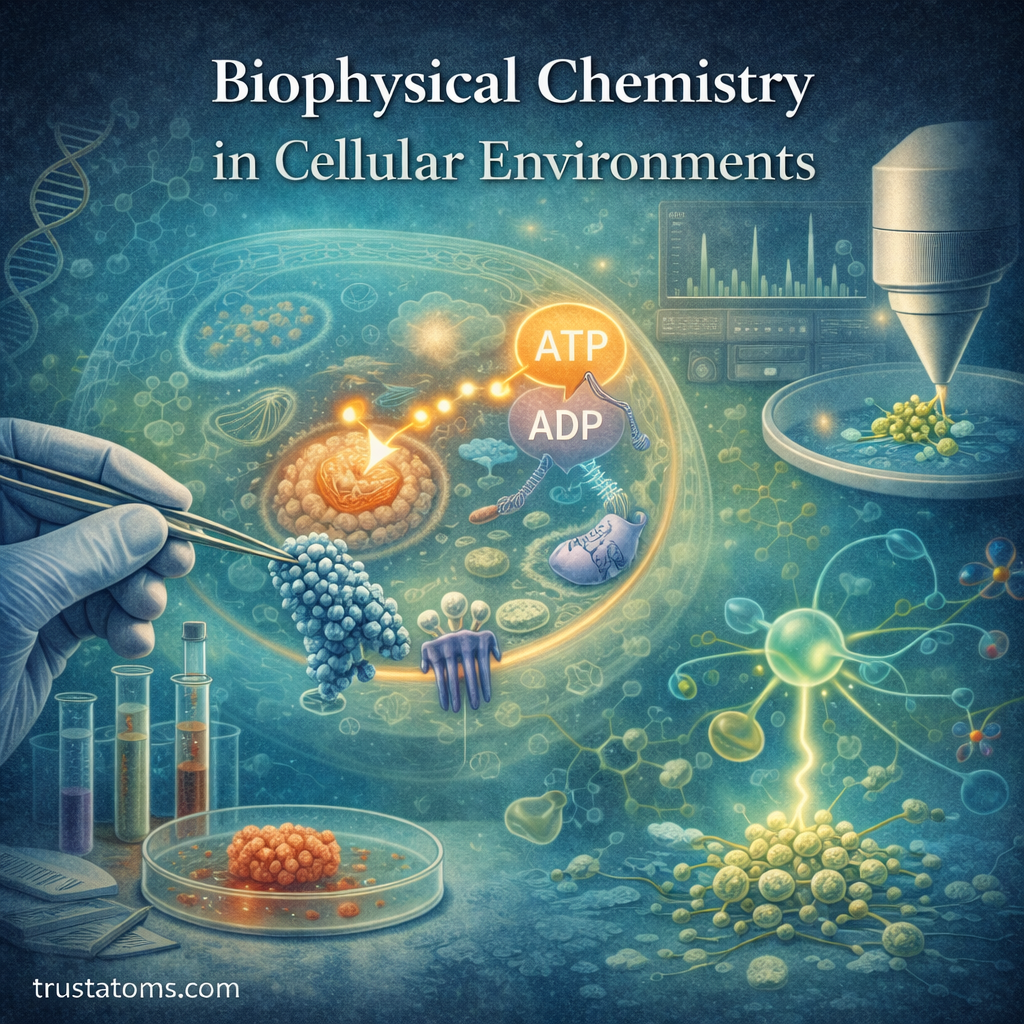
Biophysical chemistry is the study of how physical and chemical principles explain the behavior of biological molecules. It examines how proteins fold, enzymes accelerate reactions, molecules move through cells, and energy changes influence cellular processes.
Living cells contain thousands of interacting molecules, but understanding their behavior requires more than identifying their biological functions. While biology examines living systems, explaining molecular behavior also requires the principles of physics and chemistry. This intersection is known as biophysical chemistry.
By combining thermodynamics, reaction kinetics, and molecular structure, scientists can investigate how biological processes operate under actual cellular conditions. These principles help explain why molecules interact, how quickly reactions occur, and what allows cells to maintain organized structures despite constant molecular movement.
What Does Biophysical Chemistry Study?
Biophysical chemistry applies physical chemistry concepts to biological molecules and systems. Rather than examining chemical reactions only in simplified laboratory solutions, researchers also investigate how molecules behave in complex environments such as the cytoplasm, membranes, and cellular compartments.
The field addresses several fundamental questions:
- How do proteins acquire and maintain their three-dimensional structures?
- What determines whether a biochemical reaction can proceed?
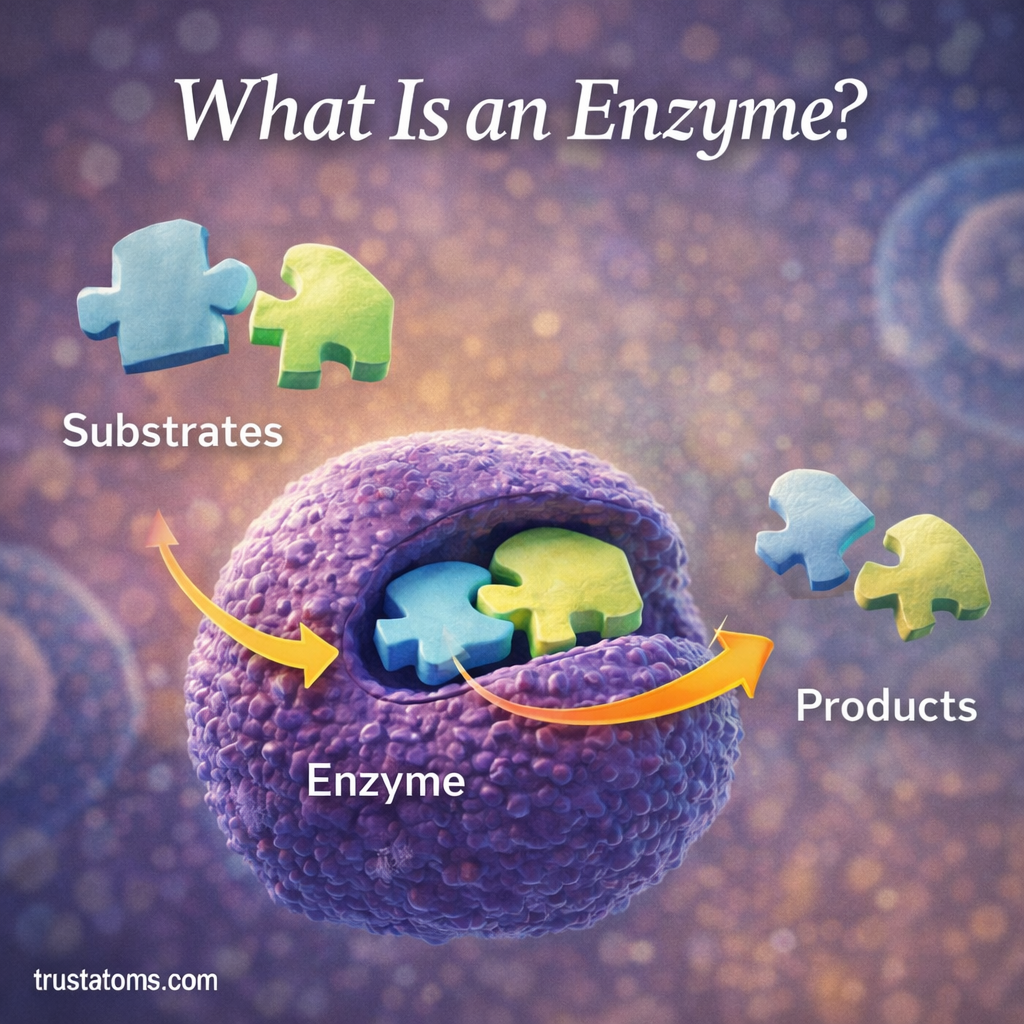
- How do enzymes accelerate reactions without being consumed?
- How do molecules recognize and bind to specific partners?
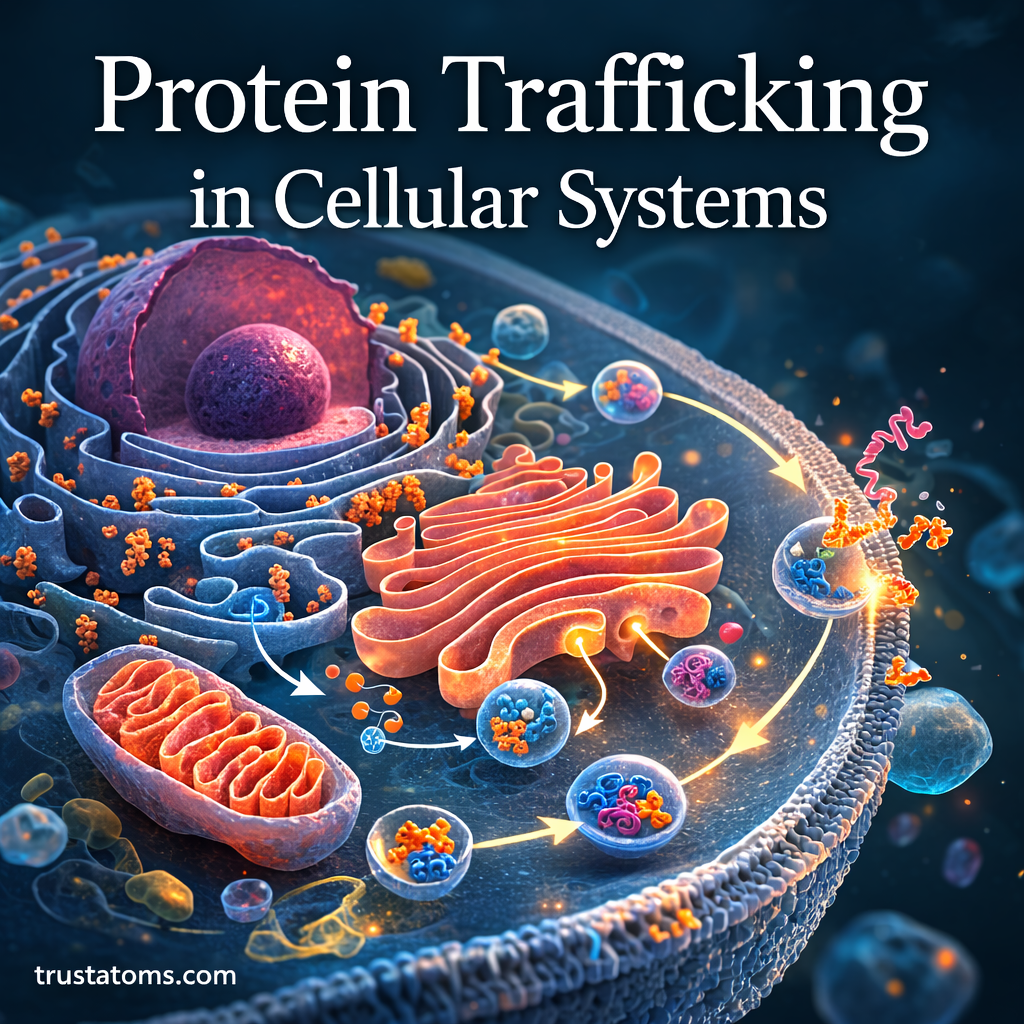
- How do substances move through crowded cellular environments and across membranes?
Answering these questions requires examining both molecular structure and the physical conditions surrounding biological molecules.
The Cellular Environment: A Crowded Molecular World
A cell is not an empty container filled with water. Its interior contains proteins, nucleic acids, dissolved ions, metabolites, membranes, and numerous molecular complexes.
This crowded environment affects how molecules move and interact. Large molecules occupy space, restrict movement, and influence the availability of potential binding partners.
Molecular crowding can change protein stability, diffusion rates, and the balance between associated and separated molecules. However, crowding does not always slow every reaction or strengthen every interaction. Its effects depend on molecular size, concentration, and chemical properties.
These conditions help explain why experiments performed in dilute laboratory solutions may not fully reproduce cellular behavior. Research into biomolecular interactions in cells examines how proteins, nucleic acids, and other molecules recognize and influence one another in these environments.
Three Physical Chemistry Principles That Explain Cell Function
Thermodynamics and Cellular Energy
Thermodynamics describes how energy changes influence physical and chemical processes. In cells, Gibbs free energy helps determine whether a reaction is thermodynamically favorable under particular conditions.
A negative Gibbs free energy change (ΔG) indicates that a process is thermodynamically favorable in the specified direction. A positive value indicates that the process requires coupling to another favorable process or a change in conditions to proceed in that direction.
Cells frequently couple energy-releasing reactions to energy-requiring activities. ATP hydrolysis, for example, can be coupled to molecular transport, chemical synthesis, and mechanical work.
Thermodynamic favorability does not determine reaction speed. A favorable reaction may still proceed extremely slowly without a suitable catalyst.
Chemical Kinetics and Reaction Rates
Chemical kinetics examines how quickly reactions occur and which factors affect their rates.
In biological systems, reaction rates depend on temperature, molecular concentrations, enzyme activity, and the accessibility of reacting molecules.
Enzymes increase reaction rates by providing reaction pathways with lower activation energy. They do not change the overall Gibbs free energy difference between reactants and products or the equilibrium position of a reaction.
Molecular Forces and Chemical Recognition
Biological molecules interact through hydrogen bonds, electrostatic attractions, van der Waals forces, and hydrophobic effects.
These interactions contribute to protein folding, DNA structure, membrane organization, and molecular recognition. Their combined effects determine how strongly molecules associate and whether a particular arrangement is energetically favorable.
How Physical Forces Control Protein Folding
One of the most important topics in biophysical chemistry is protein folding.
Proteins are chains of amino acids that often fold into specific three-dimensional structures. Their shapes influence how they recognize other molecules and perform biological functions.
Several interactions contribute to folding and stability:
- Hydrophobic effects: Nonpolar amino acid groups often become buried within a protein, reducing their exposure to water.
- Hydrogen bonds: These help stabilize structural arrangements such as alpha helices and beta sheets.
- Electrostatic interactions: Charged amino acid groups can attract or repel one another.
- Disulfide bonds: Covalent connections between certain cysteine residues can stabilize some protein structures.
Protein structure is closely connected to biological activity. The relationship between molecular shape and function is examined further in structural biology and protein function.
Cells also contain molecular chaperones that assist certain proteins in reaching or maintaining functional structures. When proteins misfold or aggregate, cellular function may be disrupted. Abnormal protein aggregation is associated with disorders including Alzheimer’s and Parkinson’s diseases.
How Enzymes Catalyze Reactions Inside Cells
Enzymes are biological catalysts that accelerate chemical reactions by lowering activation energy. Their activity depends on molecular structure, substrate availability, and surrounding conditions.
A typical enzyme-catalyzed reaction involves substrate recognition, binding at an active site, chemical transformation, and product release.
Temperature and pH can influence enzyme structure and activity. Some enzymes also require metal ions or organic cofactors, while regulatory molecules may increase or decrease their activity.
Scientists examine these relationships through enzyme kinetics in biological reactions, which investigates how reaction rates change with substrate concentration and other conditions.
A Real-World Example: How the Sodium-Potassium Pump Works
The sodium-potassium pump demonstrates how cells combine molecular recognition, energy changes, and membrane transport.
This membrane protein uses energy from ATP hydrolysis to move sodium and potassium ions against their electrochemical gradients.
- Sodium binding: Three sodium ions bind to sites accessible from inside the cell.
- ATP-dependent phosphorylation: ATP transfers a phosphate group to the pump, promoting a structural change.
- Sodium release: The pump releases the three sodium ions outside the cell.
- Potassium binding: Two potassium ions bind from outside the cell, promoting dephosphorylation and another structural change.
- Potassium release: The pump returns to its original orientation and releases the potassium ions inside the cell.
Each complete cycle transports three sodium ions outward and two potassium ions inward using one ATP molecule.
This process helps maintain ion gradients needed for electrical signaling in nerve and muscle cells. It also demonstrates how energy from a chemical reaction can drive directional molecular movement.
How Molecules Move Through Cells and Membranes
Molecular transport occurs through diffusion, facilitated transport, and energy-dependent mechanisms.
Diffusion and Concentration Gradients
Diffusion results from random molecular motion and produces net movement from regions of higher concentration toward regions of lower concentration.
Small molecules such as oxygen can cross many biological membranes by simple diffusion. Other substances require transport proteins because their size, charge, or chemical properties prevent efficient passage through the lipid bilayer.
Facilitated Diffusion and Active Transport
Facilitated diffusion uses membrane proteins to move substances down their electrochemical gradients without directly requiring metabolic energy.
Active transport moves substances against their electrochemical gradients using an energy source. Some transporters use ATP directly, while others use energy stored in existing ion gradients.
Ion channels generally permit passive movement through selective pores, whereas pumps and certain carrier proteins can perform active transport.
Transport also depends on molecular recognition and interactions between proteins, lipids, and transported substances. These relationships are part of the broader systems described in complex biomolecular interactions in cells.
Experimental Methods Used in Biophysical Chemistry
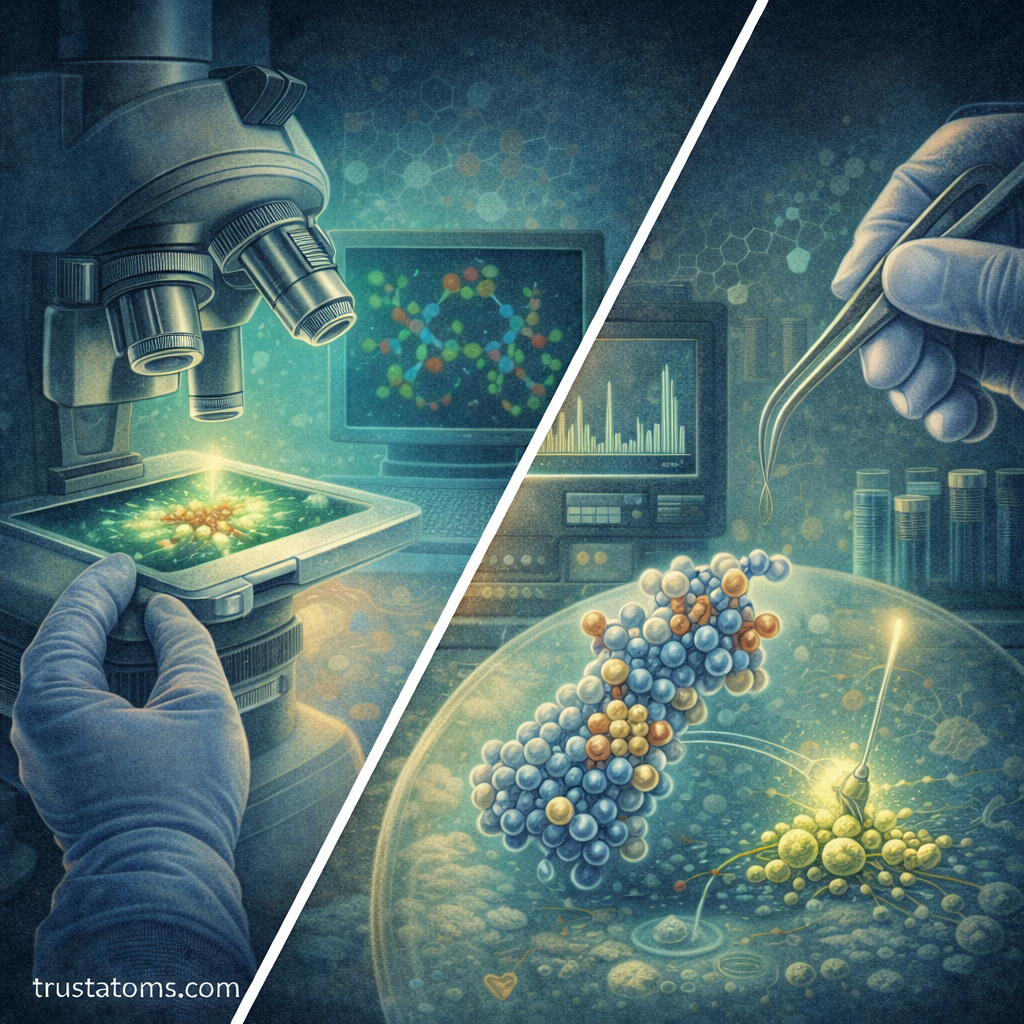
Scientists use specialized techniques to investigate molecular structures, movements, and chemical interactions. Different methods provide different types of information.
| Technique | What It Measures | Typical Application |
|---|---|---|
| Fluorescence microscopy | Light emitted by fluorescent markers | Tracking molecules in cells |
| Nuclear magnetic resonance | Signals from atomic nuclei in magnetic fields | Studying molecular structure and dynamics |
| Infrared spectroscopy | Absorption of infrared radiation | Examining molecular bonds and protein structure |
| Atomic force microscopy | Forces between a probe and a sample | Imaging surfaces and measuring mechanical properties |
| Single-molecule techniques | Behavior of individual molecules | Observing binding and molecular movement |
Many measurements require carefully prepared samples, specialized instruments, or molecular labels. Researchers must consider whether these conditions alter the behavior they intend to study.
Applications in Medicine and Biotechnology
Biophysical chemistry helps researchers understand molecular processes involved in disease and treatment.
In drug development, scientists investigate how candidate compounds bind to biological targets. Measuring binding strength, molecular structure, and reaction kinetics helps explain how a compound may affect cellular activity.
Structural studies can reveal molecular features associated with protein function, while computational simulations help researchers explore possible molecular arrangements and interactions.
Biophysical principles also support biotechnology applications such as enzyme engineering, biosensor development, and the design of biological systems with specialized functions.
Challenges in Studying Molecules Inside Living Cells
Biological molecules operate in environments that constantly change. Concentrations fluctuate, proteins move between compartments, and chemical reactions influence one another.
Some molecular events occur too quickly or at scales too small for conventional observation. Others involve several interacting components that are difficult to isolate without changing their behavior.
Researchers address these limitations by combining experimental measurements, computational modeling, and observations of living cells. Each approach provides information that can help test and refine explanations of molecular behavior.
Frequently Asked Questions
What is the difference between biochemistry and biophysical chemistry?
Biochemistry focuses on the chemical substances and reactions involved in living systems. Biophysical chemistry emphasizes the physical principles governing molecular structure, energy changes, interactions, and reaction rates. The two fields overlap extensively.
Why is thermodynamics important in living cells?
Thermodynamics helps explain whether chemical processes are energetically favorable and how cells couple reactions to perform work. It provides a framework for understanding ATP-dependent processes, molecular binding, and energy transformations.
How does molecular crowding affect chemical reactions?
Molecular crowding changes the space available to molecules and can influence diffusion, binding, and protein stability. Its effects vary with molecular properties and environmental conditions, so crowding may favor some interactions while interfering with others.
Biophysical chemistry explains how molecular forces, energy changes, and reaction rates shape the behavior of living cells. From protein folding to ATP-powered ion transport, these principles connect measurable physical processes with biological functions and provide researchers with tools for investigating cellular mechanisms.
Sources: Atkins and de Paula, Physical Chemistry for the Life Sciences; Nelson and Cox, Lehninger Principles of Biochemistry; Alberts et al., Molecular Biology of the Cell.