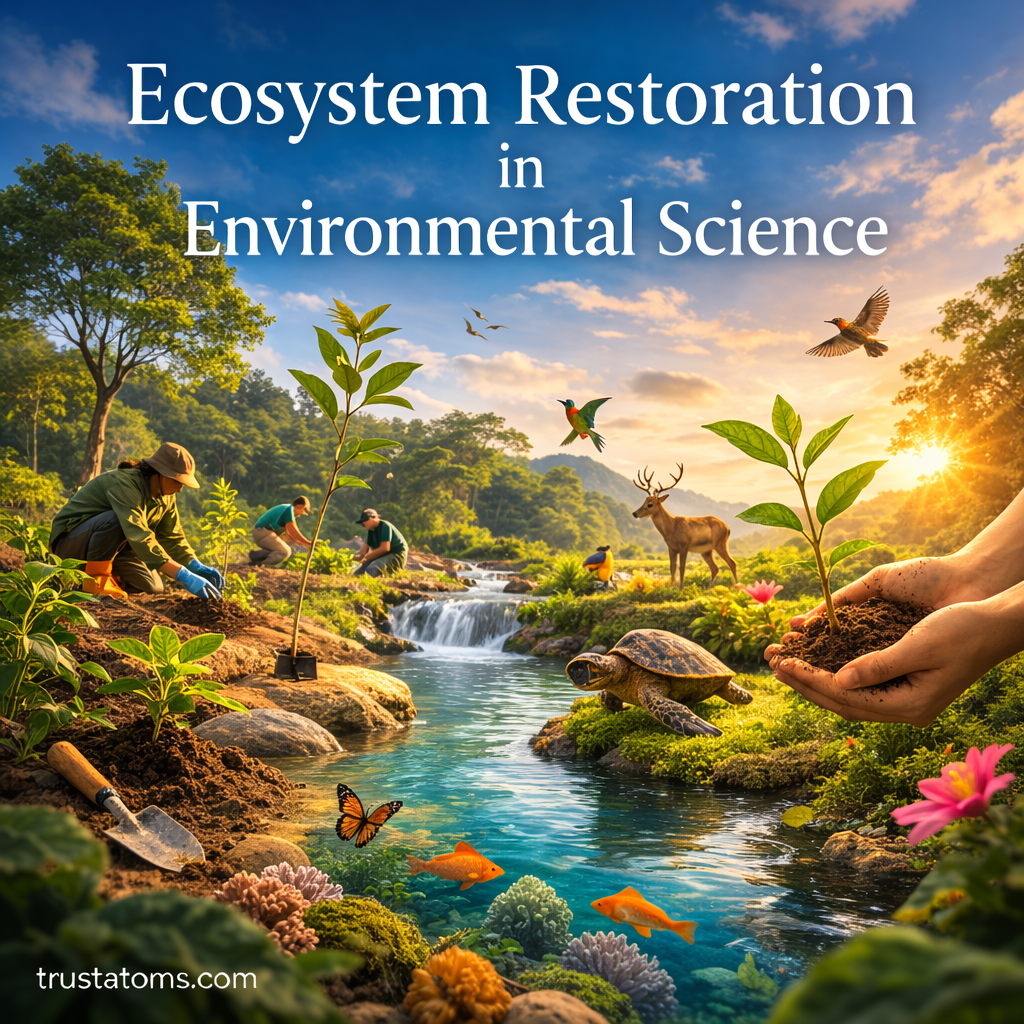
Ecosystems are complex networks of living organisms and their surrounding environments. Forests, wetlands, oceans, grasslands, and freshwater systems all support diverse forms of life while providing essential services such as clean water, climate regulation, soil fertility, and food production.
However, many ecosystems have been degraded by human activities such as deforestation, pollution, urban development, and climate change. Ecosystem restoration is the process of repairing damaged environments and helping them recover their natural structure, biodiversity, and ecological functions.
Environmental scientists study restoration strategies to rebuild ecosystems, protect biodiversity, and promote long-term environmental sustainability.
What Is Ecosystem Restoration?
Ecosystem restoration refers to assisting the recovery of ecosystems that have been degraded, damaged, or destroyed.
The goal is not simply to plant trees or remove pollution. Instead, restoration focuses on rebuilding ecological processes that allow ecosystems to function naturally.
Successful restoration aims to restore:
- Native plant and animal species
- Soil health and nutrient cycles
- Water systems and hydrology
- Natural ecological interactions
- Long-term ecosystem stability
Restoration projects often involve scientists, conservation organizations, governments, and local communities working together.
Why Ecosystem Restoration Is Important
Healthy ecosystems provide essential benefits for both nature and human societies.
Restoration helps:
- Recover biodiversity lost due to habitat destruction
- Improve water quality and watershed protection
- Reduce erosion and restore soil fertility
- Capture carbon and help mitigate climate change
- Support sustainable agriculture and fisheries
In many regions, restoration also improves local economies by supporting tourism, fisheries, and sustainable resource management.
Common Causes of Ecosystem Degradation
Understanding why ecosystems become damaged helps scientists design effective restoration strategies.
Deforestation
Large-scale clearing of forests for agriculture, logging, and development removes habitat for wildlife and disrupts natural ecological cycles.
Deforestation can lead to:
- Loss of biodiversity
- Soil erosion
- Disrupted rainfall patterns
- Increased carbon emissions
Pollution
Pollution from industrial activities, agriculture, and urban development can severely damage ecosystems.
Examples include:
- Chemical contamination of rivers and lakes
- Plastic pollution in marine environments
- Air pollution affecting plant growth
- Nutrient runoff causing harmful algal blooms
These pollutants can disrupt food webs and reduce species survival.
Invasive Species
Invasive species are non-native organisms that spread rapidly and compete with native species.
They can alter ecosystems by:
- Outcompeting native plants and animals
- Changing nutrient cycles
- Disrupting predator-prey relationships
Managing invasive species is often a critical part of restoration projects.
Climate Change
Climate change affects ecosystems through rising temperatures, changing precipitation patterns, and extreme weather events.
These changes can shift habitats, stress species populations, and alter ecological relationships.
Restoration strategies increasingly focus on improving ecosystem resilience to climate change.
Major Ecosystem Restoration Strategies
Environmental scientists use a range of approaches to restore degraded ecosystems.
Reforestation and Afforestation
Reforestation involves planting trees in areas where forests were previously cleared.
Afforestation refers to creating forests in areas that historically lacked tree cover.
Benefits of forest restoration include:
- Rebuilding wildlife habitat
- Improving soil stability
- Increasing carbon storage
- Enhancing local water cycles
Large-scale forest restoration projects are a key strategy for addressing both biodiversity loss and climate change.
Wetland Restoration
Wetlands are among the most productive ecosystems on Earth. They provide habitat for birds, fish, amphibians, and numerous plant species.
Restoration efforts may include:
- Reestablishing natural water flow
- Removing drainage systems
- Replanting native vegetation
- Controlling invasive plant species
Healthy wetlands help filter water, reduce flooding, and support biodiversity.
River and Freshwater Restoration
Freshwater ecosystems often suffer from pollution, dams, and altered water flow.
Restoration techniques include:
- Removing obsolete dams
- Restoring natural river channels
- Improving water quality
- Reintroducing native fish species
These actions help restore natural aquatic ecosystems and improve freshwater biodiversity.
Coral Reef Restoration
Coral reefs support some of the most diverse ecosystems in the ocean but have been severely impacted by warming oceans and pollution.
Restoration methods include:
- Coral gardening and transplantation
- Artificial reef structures
- Reducing coastal pollution
- Protecting reef habitats from overfishing
Reef restoration is critical for protecting marine biodiversity and coastal communities.
Grassland and Prairie Restoration
Grasslands support unique plant and animal species and play an important role in soil health and carbon storage.
Restoration may involve:
- Reintroducing native grasses and plants
- Controlled burning to maintain natural cycles
- Removing invasive species
- Sustainable grazing practices
Healthy grasslands contribute to both ecological stability and agricultural sustainability.
The Role of Science and Technology in Restoration

Modern restoration projects rely heavily on scientific research and advanced technologies.
Environmental scientists use tools such as:
- Satellite imagery to monitor land changes
- Geographic information systems (GIS) for habitat mapping
- Environmental DNA to track species presence
- Remote sensors to monitor soil and water conditions
These technologies allow scientists to evaluate restoration progress and make data-driven decisions.
Community Involvement in Ecosystem Restoration
Successful restoration projects often depend on local community participation.
Communities contribute through:
- Tree-planting initiatives
- Habitat restoration projects
- Wildlife monitoring programs
- Sustainable land-use practices
When communities benefit from restoration, they are more likely to support long-term environmental protection.
Challenges in Ecosystem Restoration
Although restoration science has made significant progress, several challenges remain.
Long Recovery Times
Ecosystems may take decades or even centuries to fully recover after major disturbances.
Limited Resources
Large-scale restoration projects require significant funding, planning, and scientific expertise.
Climate Uncertainty
Climate change may alter ecosystems faster than restoration efforts can adapt.
Balancing Human Needs
Restoration must often be balanced with agriculture, urban development, and other economic activities.
The Future of Ecosystem Restoration
Global interest in ecosystem restoration has increased significantly in recent years.
Many environmental initiatives now focus on restoring degraded landscapes and ecosystems.
Future strategies may include:
- Large-scale landscape restoration programs
- Climate-resilient ecosystem design
- Improved ecological monitoring technologies
- Integration of restoration with sustainable development goals
International collaborations and policy initiatives are also expanding restoration efforts worldwide.
Final Thoughts
Ecosystem restoration is one of the most important tools for protecting biodiversity and maintaining environmental stability. By repairing degraded landscapes and rebuilding ecological processes, restoration projects help ecosystems recover and support life once again.
As environmental pressures increase, restoration science will continue to play a crucial role in conserving biodiversity, improving ecosystem resilience, and creating a more sustainable future for both nature and human societies.