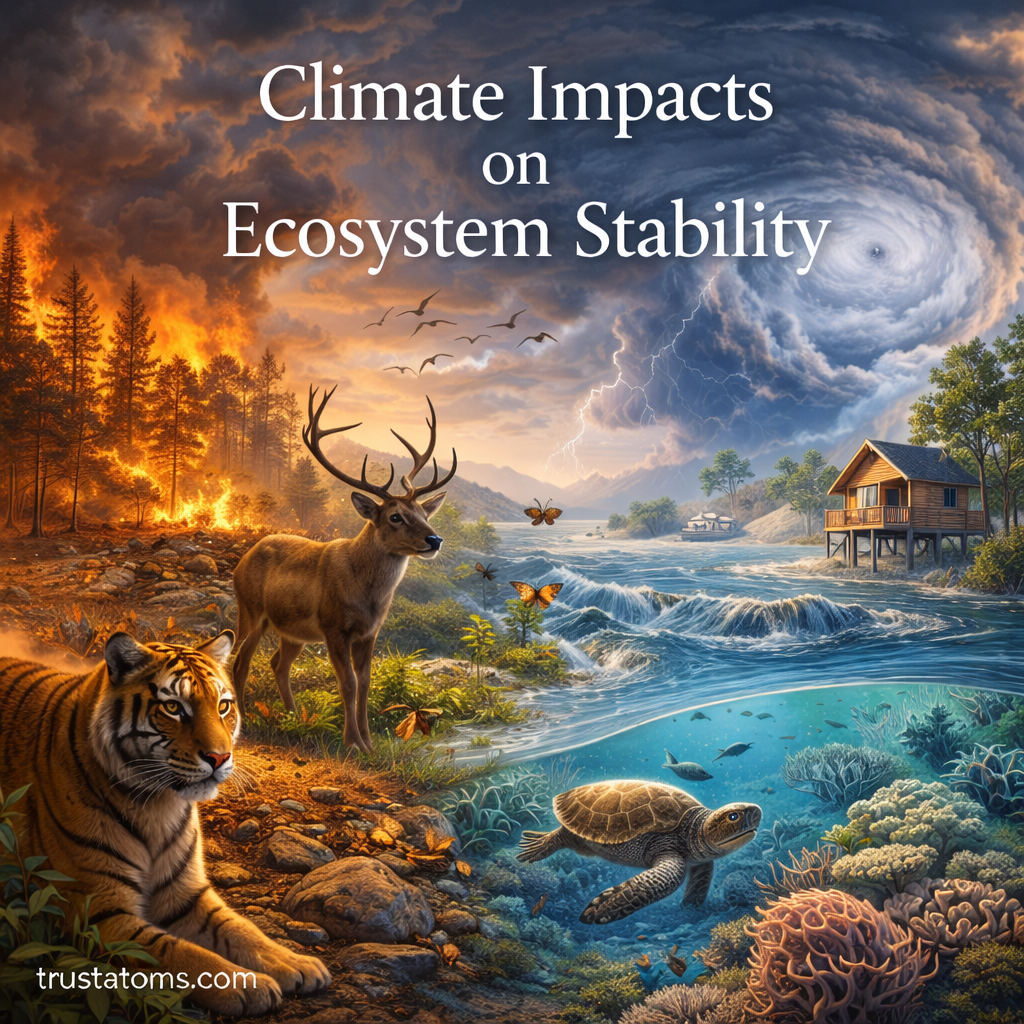
Climate change affects ecosystem stability by altering temperatures, rainfall patterns, extreme weather, and environmental conditions that support living organisms. These changes can disrupt food webs, shift species distributions, reduce biodiversity, and make ecosystems less able to recover from disturbances.
Forests, oceans, wetlands, grasslands, and freshwater habitats respond differently to climate pressures, but all depend on interactions between organisms and their physical surroundings. Understanding these relationships is an important part of the study of biology because changes in environmental conditions can influence entire ecological communities.
What Is Ecosystem Stability?
Ecosystem stability describes how an ecosystem maintains its structure and functions over time or responds to environmental disturbances. A stable ecosystem does not necessarily remain unchanged; populations, nutrient cycles, and environmental conditions naturally fluctuate.
Scientists often distinguish between resistance and resilience when studying ecological stability in ecosystems.
- Resistance: The ability to experience relatively little change during a disturbance.
- Resilience: The ability to recover important structures or functions after a disturbance.
- Functional stability: The continued performance of processes such as nutrient cycling, decomposition, and primary production.
An ecosystem may resist one disturbance but recover slowly from another. For example, a forest might withstand a short dry period yet require decades to recover after a severe wildfire.
Major Climate Factors Affecting Ecosystems
Climate affects ecosystems through several interacting environmental factors. Their effects depend on local geography, species characteristics, and existing environmental pressures.
Rising Temperatures
Global warming changes the temperature conditions under which organisms grow, reproduce, and survive. Species adapted to narrow temperature ranges may experience heat stress as average temperatures rise.
Warming can alter growing seasons, breeding schedules, and the geographic ranges of plants and animals. Alpine and polar species face particular challenges because suitable cooler habitats may become increasingly limited.
Changing Rainfall and Drought
Changes in precipitation influence soil moisture, river flows, wetlands, and the availability of drinking water. Some regions experience more intense rainfall, while others face increasing drought risk.
Extended drought can reduce plant growth and increase vegetation stress. In some environments, these conditions also contribute to wildfire risk, especially when dry vegetation provides abundant fuel.
Extreme Weather Events
Human-caused climate change has increased the frequency or intensity of certain extreme events, particularly heatwaves and heavy precipitation in many regions. Effects on storms, droughts, and other extremes vary by location and event type.
Floods can remove vegetation and alter river channels. Severe storms may damage forests and coastal habitats, while repeated heatwaves can reduce survival and reproductive success among sensitive species.
Ocean Warming and Acidification
Marine ecosystems face rising water temperatures, changing oxygen conditions, and increasing ocean acidity as seawater absorbs atmospheric carbon dioxide.
Marine heatwaves can trigger coral bleaching, while acidification makes it more difficult for some organisms to build and maintain calcium carbonate shells or skeletons.
Climate pressures can also interact with habitat fragmentation in ecosystems. Roads, development, and isolated habitat patches may prevent organisms from reaching areas with more suitable environmental conditions.
Effects of Climate Change on Ecosystem Stability
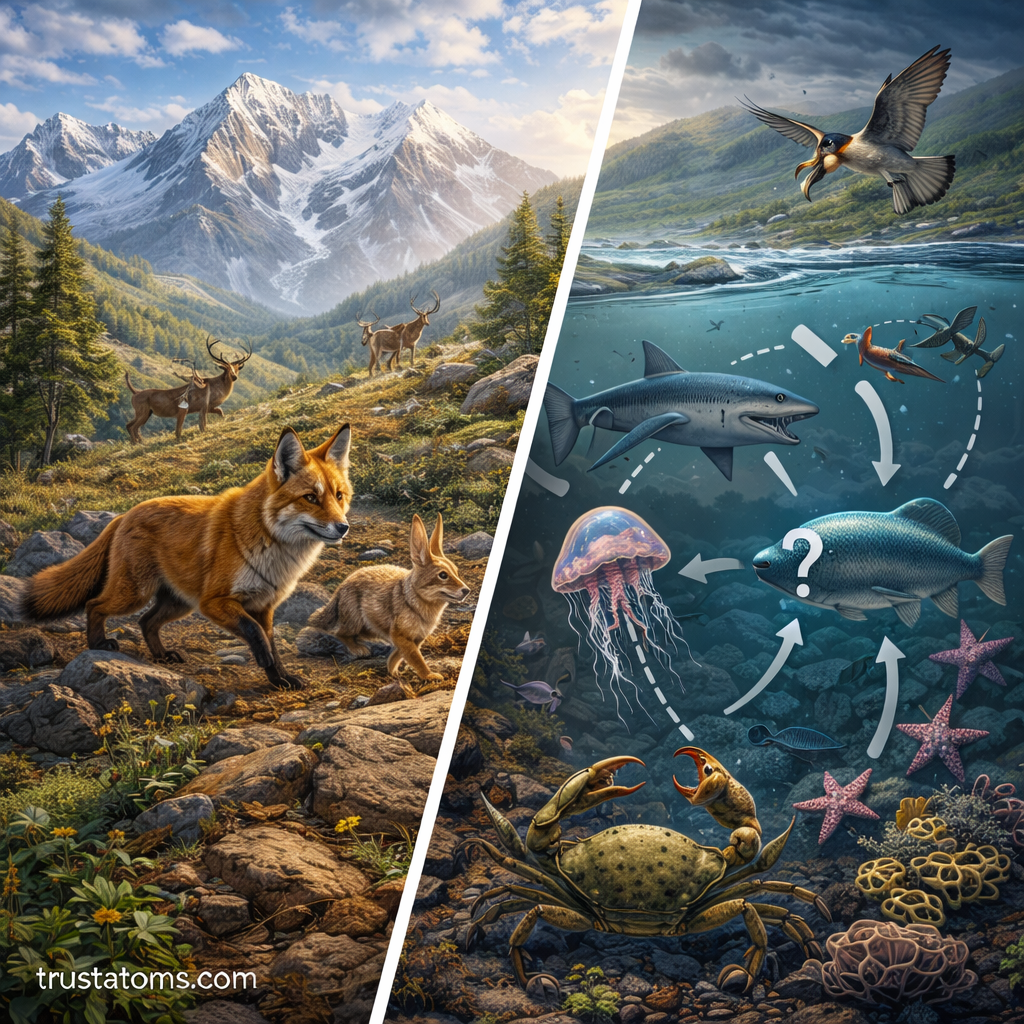
Climate change can affect ecosystems through direct environmental stress and indirect changes in species interactions. The effects often overlap with land-use change, pollution, invasive species, and other environmental drivers of ecosystem change.
Species Move Into New Habitats
As temperatures change, some species shift toward higher elevations or cooler latitudes. These movements can create new ecological interactions while disrupting established relationships.
Not every species can move successfully. Organisms with limited dispersal abilities, specialized habitat requirements, or physical barriers may be unable to reach suitable environments.
Food Web Relationships Change
Food webs depend on relationships among producers, consumers, and decomposers. Climate-driven changes in one population can influence many others.
For example, earlier spring warming may cause plants to flower before their usual pollinators become active. If flowering and pollinator activity become poorly synchronized, reproduction and food availability may be affected.
Similar timing mismatches can occur between insects and the birds that feed on them. The consequences depend on how strongly species rely on particular food sources.
Biodiversity Declines
Climate stress can reduce populations when organisms cannot tolerate new conditions or adjust their behavior, distribution, or physiology quickly enough.
Loss of biodiversity may reduce the range of ecological functions performed within a community. However, the relationship between biodiversity and stability depends on which species are lost and how their functions overlap.
A Practical Example: Coral Reefs During Marine Heatwaves
Consider a tropical coral reef experiencing unusually warm seawater for several weeks. Many reef-building corals depend on microscopic photosynthetic organisms living within their tissues.
Prolonged heat stress can disrupt this relationship, causing corals to lose these organisms or their pigments. The resulting pale appearance is called coral bleaching.
Bleached corals are not necessarily dead. If temperatures return to suitable levels soon enough, some can recover. However, prolonged or repeated bleaching can cause substantial mortality.
When coral cover declines, fish and invertebrates may lose shelter, feeding areas, and breeding habitat. The reef can become less structurally complex, changing the community it supports.
This example illustrates how a physical climate stress can spread through biological relationships and affect ecosystem stability beyond the organisms initially exposed.
When Ecosystems Shift Into Different States
Some ecosystems recover after disturbances, while others undergo lasting changes in vegetation, species composition, or ecological processes.
Repeated drought and wildfire may prevent certain forests from regenerating successfully. Under suitable conditions, grasslands or shrublands can replace formerly forested areas.
Similarly, coral reefs experiencing repeated disturbances may shift toward communities dominated by algae or other organisms.
These changes are not always irreversible, but recovery can become difficult when the new ecosystem state reinforces the conditions that maintain it.
What Helps Ecosystems Resist and Recover From Climate Stress?
Ecosystem resilience depends on biological diversity, environmental conditions, disturbance history, and the ability of species to respond to change.
- Species diversity: Different organisms may perform overlapping functions, allowing some processes to continue when particular species decline.
- Genetic diversity: Variation within populations can influence their capacity to respond to changing conditions.
- Habitat connectivity: Connected habitats allow movement between populations and access to suitable environments.
- Healthy soils and water systems: These support vegetation, nutrient cycling, and recovery after disturbances.
No single characteristic guarantees resilience. An ecosystem’s response depends on the type, intensity, and frequency of disturbances it experiences.
Conservation Strategies for Climate-Resilient Ecosystems
Conservation efforts can reduce existing pressures and improve the capacity of ecosystems to respond to climate change.
Conservation strategies for biodiversity include protecting habitats, reducing harmful human activities, and maintaining populations of native species.
Additional approaches include:
- Protecting climate refuges: Conserving locations where environmental conditions may remain suitable for vulnerable species.
- Restoring degraded habitats: Improving wetlands, forests, grasslands, and coastal systems where recovery is feasible.
- Maintaining wildlife corridors: Connecting habitats to support species movement and genetic exchange.
- Reducing greenhouse gas emissions: Limiting future warming and associated ecological pressures.
Conservation planning must account for local conditions. A strategy suitable for a temperate forest may not be appropriate for a coral reef, alpine meadow, or freshwater wetland.
How Scientists Monitor Ecosystem Change
Scientists combine field observations, environmental measurements, and remote sensing to detect ecological changes and evaluate conservation outcomes.
- Satellite imagery: Tracks vegetation cover, land-surface conditions, and large-scale habitat changes.
- Long-term field surveys: Measure changes in species populations and community composition.
- Environmental sensors: Record temperature, moisture, water quality, and other physical conditions.
- Ecological models: Explore possible ecosystem responses under different climate scenarios.
Monitoring also supports ecosystem restoration in environmental science by showing whether restoration efforts improve habitat conditions, species recovery, and ecological functions.
Because ecosystems respond differently to environmental pressures, repeated measurements are often more informative than observations from a single year.
Frequently Asked Questions
How does climate change reduce ecosystem stability?
Climate change can alter environmental conditions faster than some organisms and ecological communities can adjust. Rising temperatures, drought, extreme events, and ocean changes may disrupt species populations, food webs, and ecosystem functions.
Can ecosystems recover from climate-related disturbances?
Many ecosystems can recover from disturbances, but recovery depends on the severity and frequency of the event, the condition of the habitat, and the organisms that remain. Repeated disturbances may slow recovery or contribute to lasting ecological changes.
Does greater biodiversity always make ecosystems more stable?
Biodiversity can support stability by providing different species that contribute to ecological functions. However, stability also depends on species interactions, environmental conditions, and the type of disturbance affecting the ecosystem.
Climate change affects ecosystem stability by changing the environmental conditions that shape species survival, ecological interactions, and recovery after disturbances. Protecting connected habitats, reducing existing environmental pressures, and monitoring ecological change can improve resilience in many ecosystems. Limiting future warming remains essential for reducing the long-term risks that conservation and restoration alone cannot eliminate.
Sources: Intergovernmental Panel on Climate Change, Sixth Assessment Report; Intergovernmental Science-Policy Platform on Biodiversity and Ecosystem Services, Global Assessment Report; National Oceanic and Atmospheric Administration.