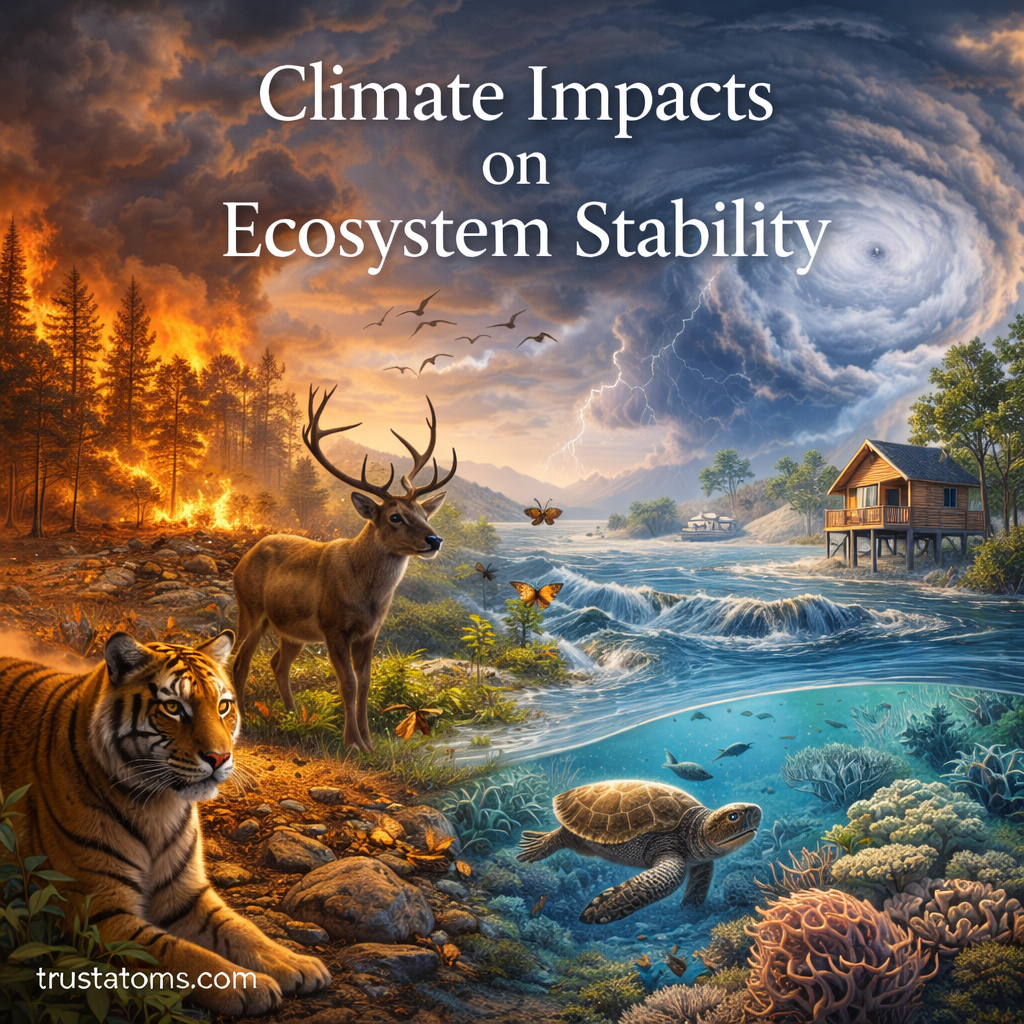
Earth’s ecosystems are dynamic systems made up of living organisms and their physical environments. Forests, oceans, wetlands, grasslands, and freshwater systems depend on delicate environmental balances to maintain stability. However, climate change is increasingly disrupting these balances.
Rising global temperatures, shifting precipitation patterns, extreme weather events, and ocean changes are altering ecosystems around the world. Understanding how climate affects ecosystem stability is an important focus in modern environmental science and ecology.
Studying these impacts helps scientists predict ecological changes, protect biodiversity, and develop strategies for environmental adaptation.
What Is Ecosystem Stability?
Ecosystem stability refers to the ability of an ecosystem to maintain its structure, function, and biodiversity over time, even when environmental conditions change.
Stable ecosystems typically show:
- Balanced food webs
- Consistent species populations
- Efficient nutrient cycling
- Resilience to disturbances
When ecosystems are stable, they can recover from natural disruptions such as storms, droughts, or wildfires.
Climate change, however, can introduce stresses that exceed an ecosystem’s ability to recover.
Major Climate Factors Affecting Ecosystems
Several climate-related factors influence ecosystem stability.
Rising Temperatures
Global temperatures have increased significantly over the past century. Many species are sensitive to temperature changes because their survival, reproduction, and migration patterns depend on specific climate conditions.
Rising temperatures can lead to:
- Habitat loss for temperature-sensitive species
- Changes in plant growing seasons
- Increased heat stress on wildlife
- Expansion of invasive species
Some ecosystems, particularly polar and alpine environments, are especially vulnerable to warming temperatures.
Changing Precipitation Patterns
Climate change is altering rainfall patterns across many regions.
Some areas experience heavier rainfall and flooding, while others face prolonged droughts.
Changes in precipitation affect ecosystems by:
- Altering water availability for plants and animals
- Changing river and wetland systems
- Increasing wildfire risk in dry environments
- Affecting agricultural and grassland ecosystems
Water availability is a critical factor for ecosystem health.
Extreme Weather Events
Climate change is associated with an increase in extreme weather events, including hurricanes, floods, heatwaves, and droughts.
These events can rapidly disrupt ecosystems by:
- Destroying habitats
- Causing large-scale species mortality
- Altering soil structure and vegetation patterns
Although ecosystems can recover from occasional disturbances, frequent extreme events can weaken ecosystem resilience.
Ocean Changes
Marine ecosystems are also experiencing major climate-related changes.
Important factors include:
- Rising ocean temperatures
- Ocean acidification
- Sea-level rise
- Changes in ocean circulation
These changes affect marine biodiversity and can destabilize entire ocean ecosystems.
For example, coral reefs are highly sensitive to temperature changes and have experienced widespread bleaching events.
Effects of Climate Change on Ecosystem Stability
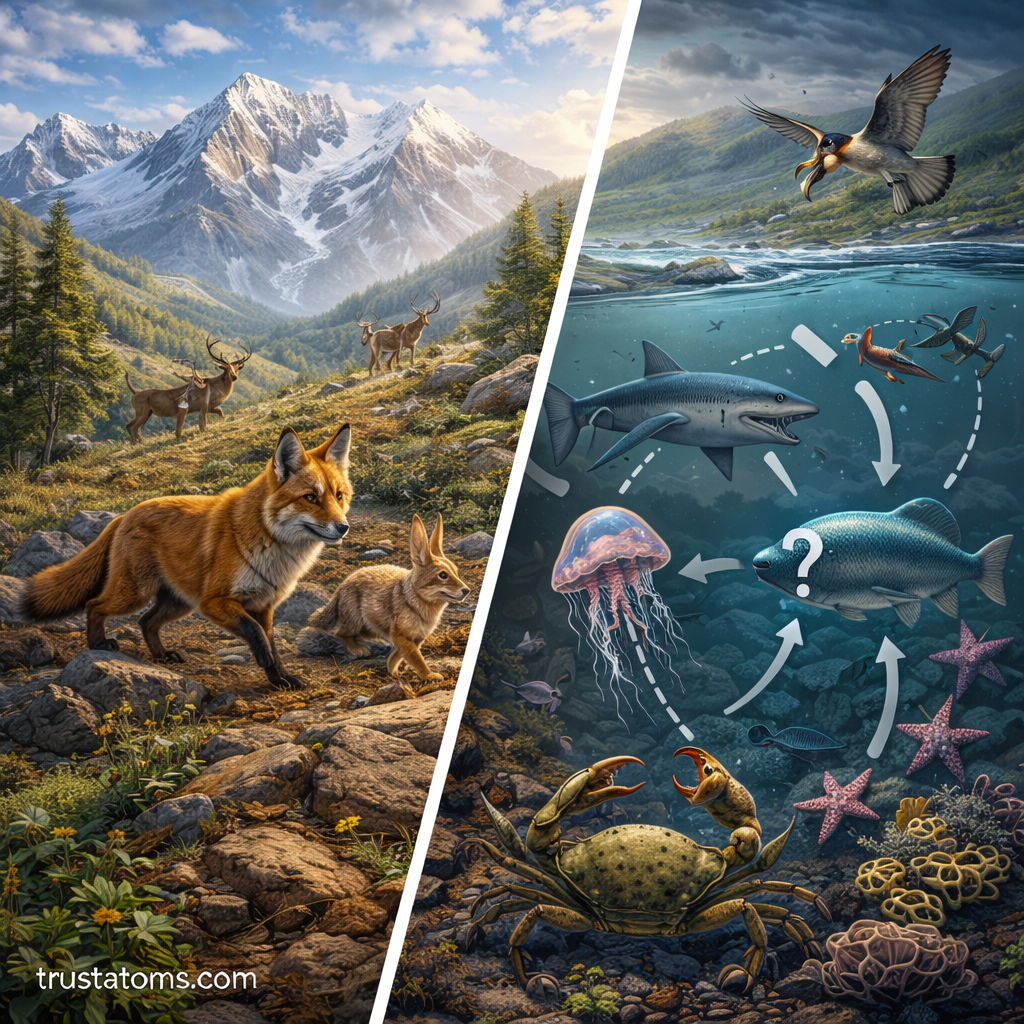
Climate change affects ecosystems in several interconnected ways.
Species Distribution Shifts
As temperatures change, many species move toward cooler environments or higher elevations.
These shifts can lead to:
- Changes in species interactions
- New predator-prey relationships
- Competition between native and migrating species
Some species may struggle to migrate quickly enough to survive climate changes.
Disruption of Food Webs
Food webs connect species within ecosystems through feeding relationships.
Climate-driven changes in species populations can disrupt these relationships.
For example:
- Declines in key prey species may affect predator survival
- Changes in plant growth can affect herbivore populations
- Ocean warming may alter plankton communities that support marine food chains
Food web disruptions can cascade through entire ecosystems.
Loss of Biodiversity
Climate change is increasingly recognized as a major driver of biodiversity loss.
Species may decline or disappear when they cannot adapt to rapidly changing environments.
Factors contributing to biodiversity loss include:
- Habitat changes
- Reduced reproductive success
- Increased disease and parasites
- Competition with invasive species
Biodiversity loss weakens ecosystems and reduces their resilience.
Ecosystem Transformation
In some cases, ecosystems may shift into entirely new states.
For example:
- Forests may convert to grasslands due to drought and wildfire
- Coral reefs may become algae-dominated systems
- Wetlands may dry out or convert to other habitats
These transformations can permanently change ecosystem structure and ecological processes.
Ecosystem Resilience and Adaptation
Despite the challenges posed by climate change, some ecosystems show remarkable resilience.
Resilience refers to the ability of ecosystems to adapt to disturbances while maintaining essential functions.
Factors that support ecosystem resilience include:
- High biodiversity
- Healthy soil and water systems
- Habitat connectivity
- Genetic diversity within species
Protecting these factors helps ecosystems adapt to climate pressures.
Conservation Strategies for Climate-Resilient Ecosystems
Scientists and conservationists are working to protect ecosystems from climate-related threats.
Important strategies include:
Protecting Biodiversity
Maintaining diverse species populations strengthens ecosystems and improves resilience.
Protected areas and wildlife conservation programs play a key role in preserving biodiversity.
Restoring Degraded Ecosystems
Restoration efforts help ecosystems recover from environmental damage.
Examples include:
- Reforestation projects
- Wetland restoration
- Coral reef recovery programs
Healthy ecosystems are better able to withstand climate stress.
Protecting Habitat Connectivity
Wildlife corridors allow species to migrate as environmental conditions change.
Connected landscapes help species move to suitable habitats and maintain genetic diversity.
Climate-Smart Conservation
Climate-smart conservation strategies incorporate climate projections into environmental planning.
These approaches may involve:
- Protecting climate refuges
- Designing flexible conservation areas
- Monitoring ecosystem responses to climate change
Adaptive management helps conservation strategies evolve as conditions change.
The Role of Science in Monitoring Ecosystem Change
Scientific research plays a critical role in understanding climate impacts on ecosystems.
Researchers use various tools to monitor environmental change.
Examples include:
- Satellite imagery for tracking land and vegetation changes
- Long-term ecological monitoring programs
- Climate modeling and predictive simulations
- Environmental sensors measuring temperature, moisture, and ocean chemistry
These technologies allow scientists to identify ecological changes and develop informed conservation strategies.
The Future of Ecosystem Stability in a Changing Climate
Climate change will continue to influence ecosystems for decades to come.
Future environmental stability will depend on:
- Reducing greenhouse gas emissions
- Protecting biodiversity
- Restoring damaged ecosystems
- Improving global conservation policies
By combining scientific research with effective environmental management, societies can help ecosystems adapt to changing climate conditions.
Final Thoughts
Climate change is one of the most significant challenges facing ecosystems today. Rising temperatures, altered precipitation patterns, extreme weather events, and ocean changes are reshaping environments around the world.
These changes affect species distribution, biodiversity, and ecological interactions that maintain ecosystem stability.
Understanding climate impacts on ecosystems allows scientists, policymakers, and communities to develop strategies that protect biodiversity and strengthen environmental resilience.
Protecting ecosystems is essential not only for wildlife but also for the long-term health and sustainability of our planet.