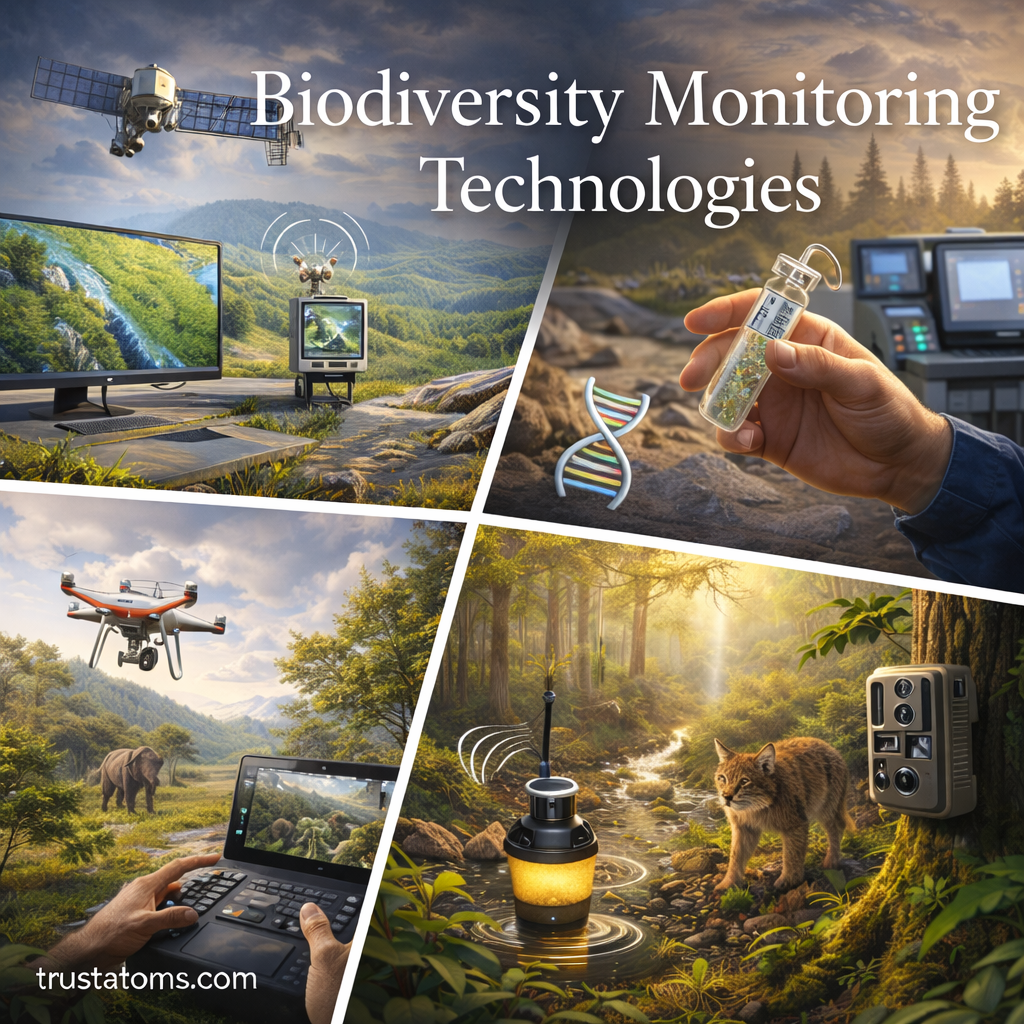
Biodiversity monitoring is essential for understanding the health of ecosystems and protecting species around the world. Scientists and conservationists rely on monitoring technologies to track changes in wildlife populations, habitat conditions, and ecological interactions over time.
As environmental pressures such as climate change, habitat loss, and pollution increase, monitoring biodiversity has become more important than ever. Modern technologies allow researchers to collect large amounts of ecological data with greater accuracy and efficiency than traditional field surveys alone.
These technologies help scientists identify trends in biodiversity, detect environmental threats, and guide conservation strategies designed to protect ecosystems.
What Is Biodiversity Monitoring?
Biodiversity monitoring is the process of collecting, analyzing, and interpreting data about species and ecosystems over time.
Monitoring programs aim to track:
- Species population sizes
- Changes in species distribution
- Habitat conditions
- Ecosystem health
- Impacts of environmental changes
By observing these patterns, scientists can detect early warning signs of ecological disruption and develop informed conservation policies.
Why Biodiversity Monitoring Is Important
Monitoring biodiversity provides valuable insights into how ecosystems function and how they respond to environmental stress.
Key benefits of biodiversity monitoring include:
- Detecting species declines or population recoveries
- Understanding ecosystem dynamics
- Evaluating conservation program effectiveness
- Identifying environmental threats early
- Supporting environmental policy decisions
Long-term monitoring also allows researchers to study how ecosystems respond to climate change and human activities.
Traditional Biodiversity Monitoring Methods
Before advanced technologies were widely available, biodiversity monitoring relied heavily on direct field observations.
Field Surveys
Field surveys involve scientists or trained volunteers observing species in their natural habitats.
Examples include:
- Bird population counts
- Plant diversity surveys
- Wildlife tracking
- Marine species monitoring
Although field surveys remain valuable, they can be time-consuming and limited in geographic coverage.
Camera Traps
Camera traps are motion-activated cameras placed in natural environments to capture images of wildlife.
These devices help researchers monitor animals that are:
- Nocturnal
- Rare
- Difficult to observe directly
Camera traps are widely used for studying mammals, birds, and other terrestrial species.
Modern Technologies for Biodiversity Monitoring
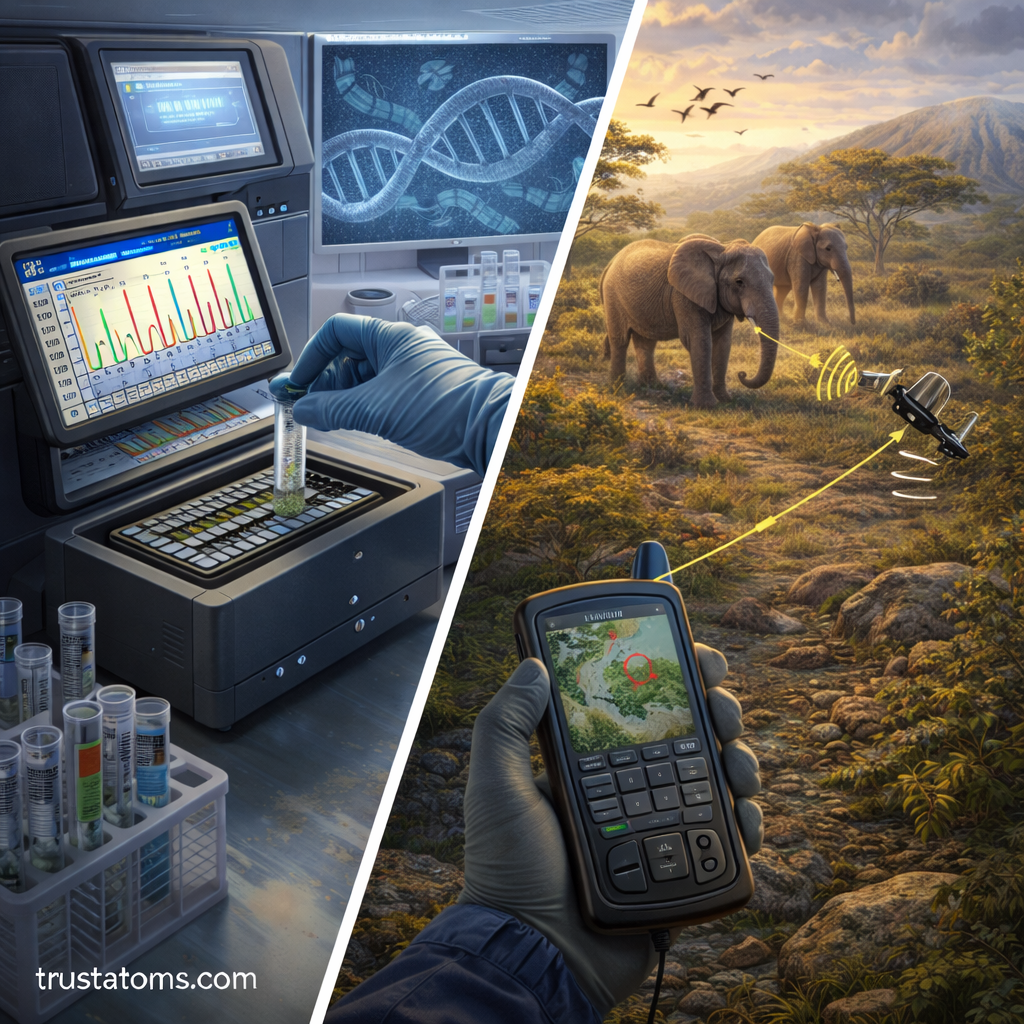
Advances in technology have significantly expanded the tools available for biodiversity monitoring.
Satellite Remote Sensing
Satellite imagery allows scientists to observe large ecosystems from space.
Remote sensing technologies help monitor:
- Deforestation and habitat loss
- Vegetation changes
- Wetland and coastal ecosystem health
- Land-use changes
These systems provide valuable large-scale environmental data over long periods.
Environmental DNA (eDNA)
Environmental DNA analysis is a powerful new method for detecting species presence in ecosystems.
Organisms leave traces of genetic material in their environments through:
- Skin cells
- Scales
- Waste
- Pollen
Scientists can collect water, soil, or air samples and analyze them for DNA fragments to identify species living in the area.
eDNA monitoring is particularly useful for detecting rare or elusive species.
Acoustic Monitoring Systems
Many species communicate through sound, including birds, frogs, insects, and marine mammals.
Acoustic monitoring devices record environmental sounds, allowing researchers to identify species through their vocalizations.
This technology helps scientists:
- Monitor bird populations
- Track amphibian breeding activity
- Study whale and dolphin communication
- Detect biodiversity changes in forests
Automated acoustic analysis can process large audio datasets efficiently.
Wildlife Tracking Technologies
Tracking devices help scientists study animal movements, migration patterns, and habitat use.
Common tracking tools include:
- GPS collars for large mammals
- Satellite tags for marine animals
- Radio telemetry transmitters
- Biologging devices that record environmental conditions
These technologies reveal how species interact with ecosystems and respond to environmental changes.
Drone-Based Monitoring
Unmanned aerial vehicles (drones) have become valuable tools in ecological research.
Drones allow scientists to:
- Survey remote or difficult-to-access habitats
- Count wildlife populations from the air
- Monitor habitat changes
- Capture high-resolution ecological imagery
Drone technology improves monitoring efficiency while reducing disturbance to wildlife.
Artificial Intelligence in Biodiversity Monitoring
Artificial intelligence (AI) is increasingly used to analyze large ecological datasets.
AI systems can automatically process data from:
- Camera traps
- Acoustic recordings
- Satellite images
- Environmental sensors
These systems help researchers identify species, track ecological changes, and detect environmental threats more quickly.
Machine learning algorithms can also predict ecological patterns and identify conservation priorities.
Integrating Multiple Monitoring Technologies
Modern biodiversity monitoring often combines several technologies to produce more accurate ecological insights.
Integrated monitoring systems may combine:
- Satellite remote sensing
- Ground-based sensors
- Wildlife tracking devices
- Genetic analysis
This multi-technology approach allows scientists to study ecosystems from local to global scales.
Challenges in Biodiversity Monitoring
Despite technological advances, biodiversity monitoring still faces several challenges.
Data Management
Modern monitoring technologies generate massive datasets that require sophisticated storage and analysis systems.
Cost and Accessibility
Some technologies, such as satellite tracking or genetic analysis, can be expensive and difficult to deploy in developing regions.
Technological Limitations
Not all ecosystems or species can be easily monitored with current technologies.
Researchers must often combine traditional fieldwork with modern monitoring tools.
Ethical and Environmental Concerns
Monitoring technologies must be designed carefully to avoid disturbing wildlife or damaging sensitive ecosystems.
The Future of Biodiversity Monitoring
Technological innovation continues to improve biodiversity monitoring capabilities.
Emerging developments include:
- Global biodiversity observation networks
- Real-time environmental monitoring systems
- Advanced genetic analysis techniques
- Automated species recognition systems
These tools will allow scientists to track biodiversity changes more effectively and respond to environmental challenges more quickly.
Final Thoughts
Biodiversity monitoring technologies are transforming how scientists study and protect ecosystems. By combining traditional ecological surveys with advanced technologies such as satellite imagery, environmental DNA, drones, and artificial intelligence, researchers can gain deeper insights into biodiversity patterns and environmental change.
These monitoring systems provide essential data that guides conservation strategies, protects endangered species, and helps maintain the health of ecosystems worldwide.
As technology continues to evolve, biodiversity monitoring will play an increasingly important role in preserving the planet’s natural heritage.