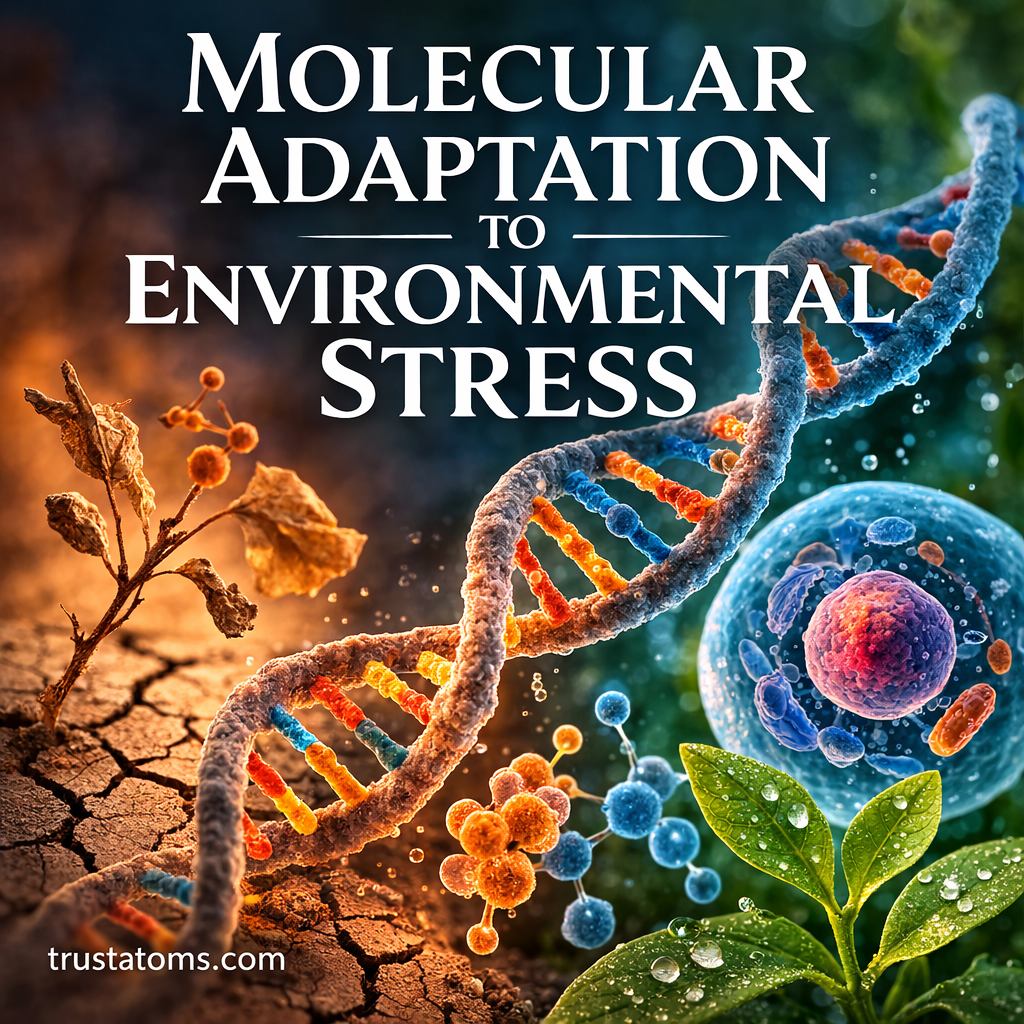
Environmental conditions on Earth are rarely constant. Temperature changes, limited nutrients, toxins, radiation, and dehydration all place pressure on living organisms. To survive these challenges, cells rely on molecular adaptation mechanisms—biochemical and genetic adjustments that allow organisms to maintain stability and function despite stress.
From bacteria living in boiling hot springs to plants surviving drought, molecular adaptation plays a central role in evolution and day-to-day survival. These responses occur at the level of genes, proteins, membranes, and metabolic pathways, allowing organisms to respond rapidly and efficiently to changing environments.
What Is Molecular Adaptation?
Molecular adaptation refers to changes in cellular molecules that improve survival under environmental stress. These changes may occur through:
- Regulation of gene expression
- Structural changes in proteins
- Altered metabolic pathways
- Protective molecules that stabilize cellular structures
Unlike long-term evolutionary adaptations that occur across generations, many molecular responses happen within minutes or hours, allowing cells to quickly respond to stress.
Examples of environmental stressors include:
- Extreme temperatures
- Oxidative stress (reactive oxygen species)
- High salinity
- Drought or dehydration
- Radiation exposure
- Toxic chemicals or pollutants
- Nutrient limitation
Cells detect these conditions through specialized sensors and trigger molecular pathways designed to restore internal balance.
Cellular Stress Response Systems
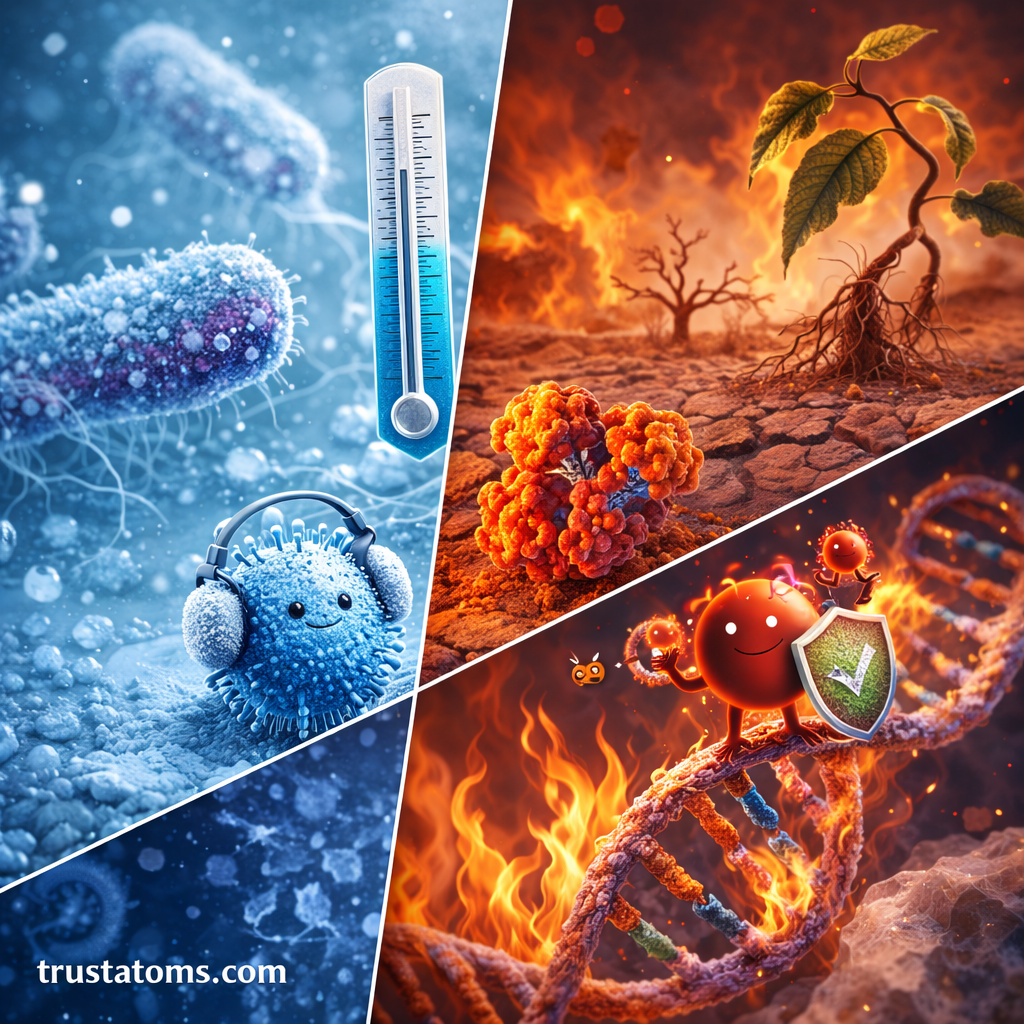
Cells contain sophisticated stress response networks that monitor environmental changes and activate protective mechanisms.
Stress Detection
Cells use molecular sensors that detect physical or chemical disturbances, including:
- Changes in protein folding
- Damage to DNA
- Membrane instability
- Shifts in ion concentrations
Once detected, signaling pathways activate genes that encode protective proteins.
Gene Expression Changes
A major component of stress adaptation involves turning genes on or off. Stress-responsive transcription factors bind DNA and regulate genes responsible for survival.
Common cellular responses include:
- Increased production of protective proteins
- Reduced energy-consuming processes
- Activation of repair pathways
- Metabolic reprogramming
These regulatory shifts help cells allocate resources toward survival instead of growth.
Heat Shock Response
One of the best-studied examples of molecular adaptation is the heat shock response.
When cells experience high temperatures, proteins can begin to misfold. Misfolded proteins lose function and may form harmful aggregates.
To prevent this, cells produce heat shock proteins (HSPs).
Role of Heat Shock Proteins
Heat shock proteins act as molecular chaperones, assisting other proteins in maintaining proper structure.
Functions of heat shock proteins include:
- Refolding damaged proteins
- Preventing protein aggregation
- Stabilizing newly synthesized proteins
- Assisting protein transport within cells
Heat shock proteins are found across nearly all forms of life—from bacteria to humans—demonstrating their evolutionary importance.
Molecular Adaptation to Cold
Low temperatures can slow biochemical reactions and reduce membrane fluidity, making cellular processes inefficient.
To compensate, organisms modify molecular components in several ways.
Membrane Composition Changes
Cell membranes contain lipids that determine flexibility. In cold environments, organisms increase the proportion of unsaturated fatty acids, which prevent membranes from becoming rigid.
Benefits include:
- Maintaining membrane fluidity
- Allowing transport proteins to function
- Supporting normal cellular signaling
Cold Shock Proteins
Some organisms produce cold shock proteins that stabilize RNA molecules and ensure proper protein synthesis under low temperatures.
These proteins help maintain gene expression even when biochemical reactions slow down.
Oxidative Stress and Antioxidant Systems
Environmental stress often leads to the production of reactive oxygen species (ROS). These molecules can damage DNA, proteins, and lipids.
Cells combat oxidative stress through antioxidant systems.
Key Antioxidant Molecules
Important antioxidant defenses include:
- Superoxide dismutase (SOD)
- Catalase
- Glutathione
- Peroxidases
These molecules neutralize reactive oxygen species before they cause damage.
DNA Repair Mechanisms
When oxidative damage does occur, cells activate repair systems such as:
- Base excision repair
- Nucleotide excision repair
- Double-strand break repair
These pathways restore genetic stability and prevent mutations.
Osmotic Stress Adaptation
Osmotic stress occurs when water balance in cells is disrupted due to high salt or dehydration.
Cells respond by producing compatible solutes, small molecules that stabilize cellular components without interfering with biochemical processes.
Examples include:
- Proline
- Trehalose
- Glycine betaine
These molecules help cells retain water and protect proteins from damage.
Transport Systems
Cells also regulate ion transport to maintain proper internal conditions.
Key strategies include:
- Pumping excess ions out of the cell
- Importing protective osmolytes
- Adjusting membrane permeability
These mechanisms allow cells to survive extreme salinity or dehydration.
Molecular Adaptation in Plants
Plants frequently encounter environmental stresses such as drought, heat, and soil salinity.
Because they cannot move away from unfavorable conditions, plants rely heavily on molecular adaptation.
Drought Stress Response
During drought, plants activate signaling molecules like abscisic acid (ABA).
This hormone triggers several protective changes:
- Closing stomata to reduce water loss
- Producing protective proteins
- Increasing osmoprotectant molecules
Plants also alter root growth patterns to access deeper water sources.
Stress-Responsive Genes
Many plant genes are specifically activated during environmental stress. These genes produce proteins that:
- Protect cell membranes
- Stabilize enzymes
- Regulate water balance
- Detoxify harmful molecules
Understanding these genes is important for developing drought-resistant crops.
Molecular Adaptation in Microorganisms
Microorganisms often live in environments far more extreme than those tolerated by most plants and animals.
Examples include:
- Hot springs
- Deep-sea hydrothermal vents
- Highly acidic lakes
- Arctic ice
Microbes adapt through specialized molecular mechanisms.
Extremophile Proteins
Proteins in extremophiles are often uniquely structured to withstand extreme conditions.
Examples include:
- Heat-stable enzymes in thermophiles
- Cold-active enzymes in psychrophiles
- Acid-resistant proteins in acidophiles
These enzymes are highly valuable in biotechnology because they remain functional under harsh industrial conditions.
Evolutionary Importance of Molecular Adaptation
Although many stress responses are short-term, repeated environmental pressures can lead to permanent genetic adaptations over evolutionary time.
Mutations that improve survival under stress may be favored by natural selection, eventually becoming widespread within populations.
Examples include:
- Antifreeze proteins in Antarctic fish
- Heat-resistant enzymes in desert organisms
- Salt tolerance in coastal plants
These evolutionary adaptations often originate from cellular stress-response mechanisms that become genetically encoded.
Applications in Biotechnology and Medicine
Research on molecular stress responses has important practical applications.
Medicine
Understanding cellular stress pathways helps scientists develop treatments for diseases involving cellular damage, including:
- Neurodegenerative disorders
- Cancer
- Aging-related diseases
Many therapies aim to regulate oxidative stress or improve cellular repair systems.
Agriculture
Crop scientists use molecular adaptation knowledge to create plants that tolerate environmental challenges such as:
- Drought
- Heat waves
- Soil salinity
- Pathogens
This research is increasingly important as climate change alters growing conditions worldwide.
Industrial Biotechnology
Stress-resistant enzymes from extremophiles are widely used in industries such as:
- Biofuel production
- Food processing
- Pharmaceutical manufacturing
These enzymes remain active under extreme temperatures, acidity, or pressure.
Key Takeaways
Molecular adaptation allows organisms to survive environmental stress by modifying cellular processes and structures.
Important features include:
- Rapid changes in gene expression
- Protective proteins that stabilize cellular components
- Antioxidant systems that prevent damage
- Membrane and metabolic adjustments
- Specialized molecules that maintain cellular balance
These mechanisms operate across all forms of life and play a crucial role in survival, evolution, and biotechnology.
As environmental conditions continue to change globally, understanding molecular adaptation will remain essential for medicine, agriculture, and ecological research.