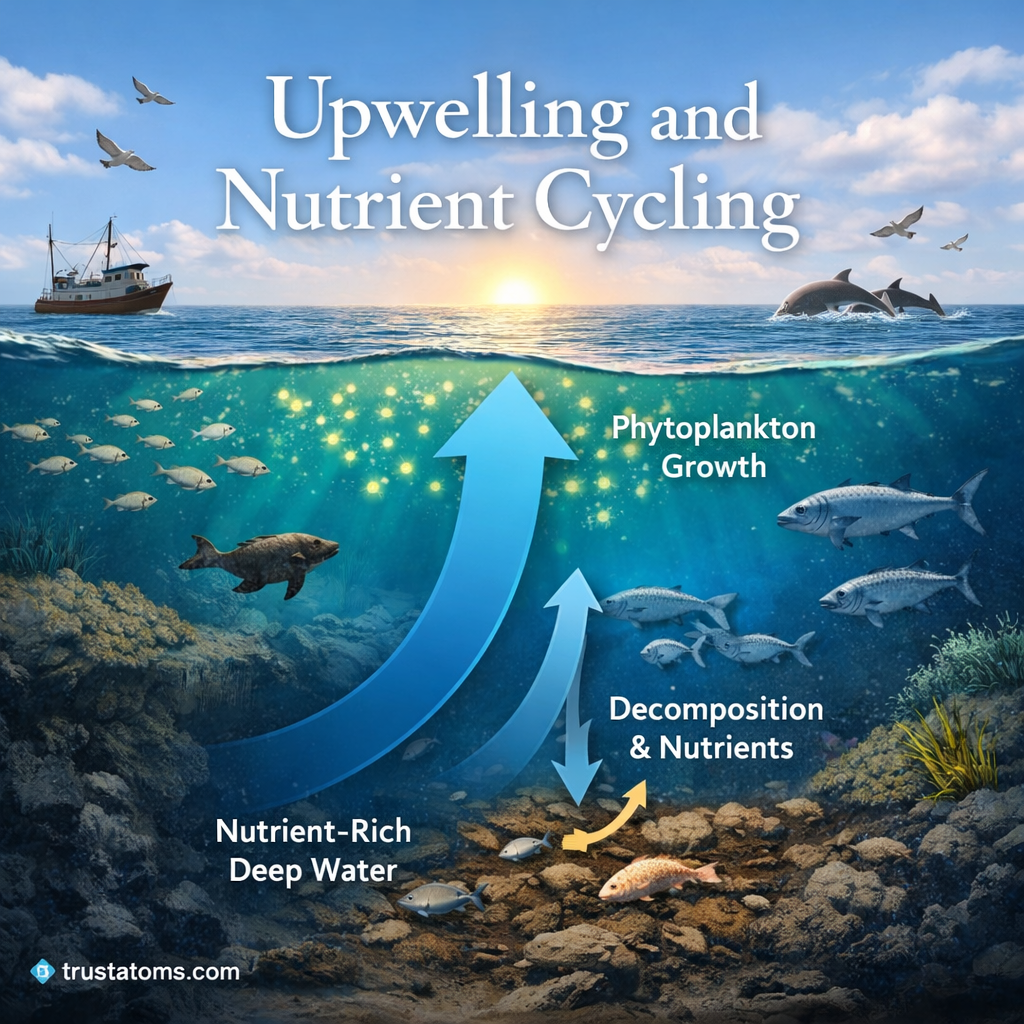
The ocean may look calm at the surface, but beneath it lies a powerful system that drives life across the planet. One of the most important of these systems is upwelling—a process that brings nutrient-rich water from the deep ocean to the surface.
This natural mechanism plays a critical role in marine ecosystems, global climate patterns, and even the food we eat.
What Is Upwelling?
Upwelling is the process where cold, deep ocean water rises to the surface, replacing warmer surface water that has been pushed away.
This movement is primarily driven by:
- Wind patterns
- The rotation of Earth (Coriolis effect)
- Ocean current dynamics
When surface water moves away, deeper water rises to take its place—bringing with it a wealth of nutrients.
Why Upwelling Matters
Upwelling zones are among the most biologically productive areas on Earth.
They matter because they:
- Deliver essential nutrients like nitrogen and phosphorus
- Support massive populations of phytoplankton
- Form the base of marine food webs
- Sustain major global fisheries
Without upwelling, many ocean ecosystems would struggle to survive.
The Role of Nutrient Cycling
Nutrient cycling refers to the movement and reuse of essential elements through the ocean ecosystem.
Key nutrients involved include:
- Nitrogen
- Phosphorus
- Carbon
- Silica
These nutrients are constantly recycled through:
- Dead organisms sinking to the ocean floor
- Decomposition by bacteria
- Release of nutrients back into deep water
- Upwelling returning them to the surface
This cycle ensures that nutrients are not lost but reused continuously.
How Upwelling and Nutrient Cycling Work Together
Upwelling and nutrient cycling are deeply connected processes.
Here’s how they interact:
- Marine organisms die and sink to the ocean floor
- Decomposers break down organic material
- Nutrients accumulate in deep water
- Upwelling brings these nutrients back to the surface
- Phytoplankton use the nutrients to grow
- The food chain continues
This cycle fuels ocean productivity and maintains ecological balance.
Types of Upwelling
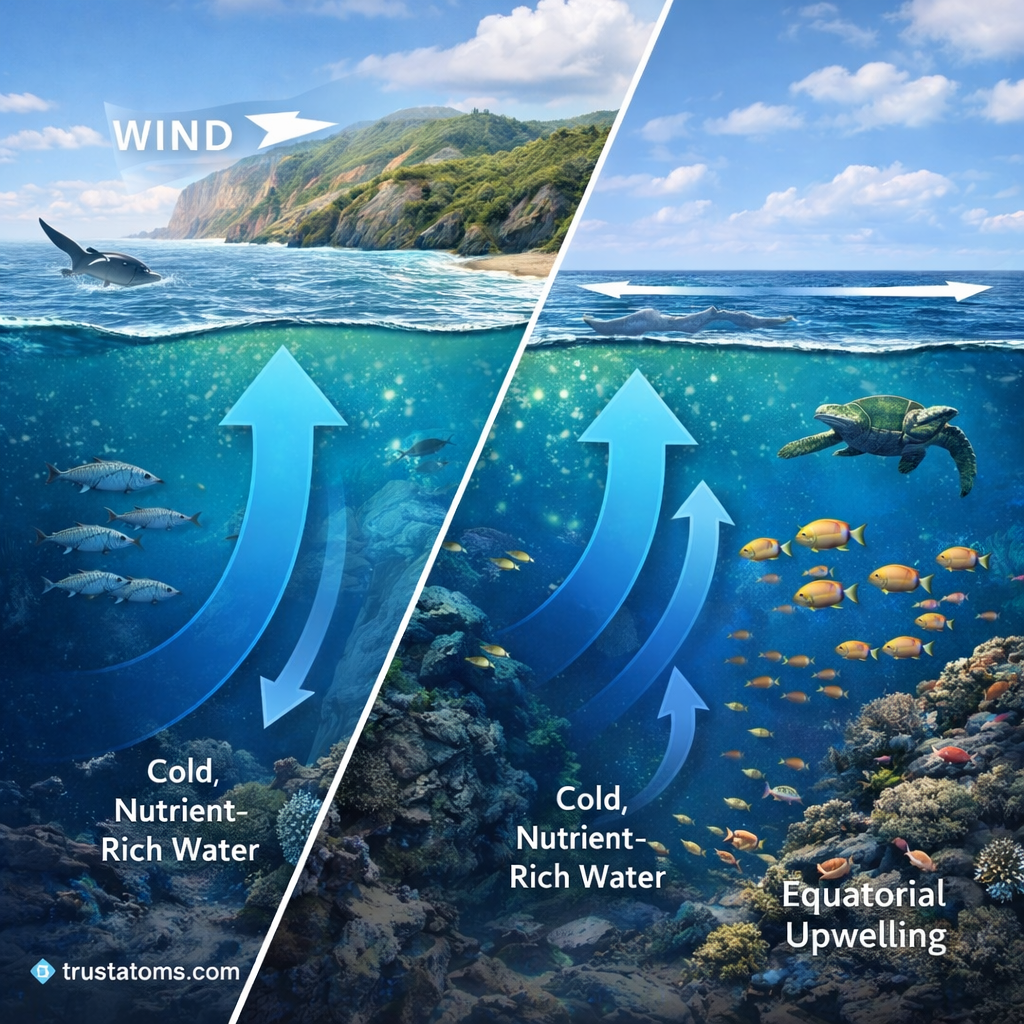
Coastal Upwelling
Occurs along coastlines when winds push surface water offshore.
Common regions include:
- The west coasts of continents
- Areas like California, Peru, and northwest Africa
These zones are known for rich fisheries and biodiversity.
Equatorial Upwelling
Happens near the equator where trade winds move surface water in opposite directions.
This allows deeper water to rise, supporting marine life in tropical regions.
Seasonal Upwelling
Some regions experience upwelling only during certain times of the year due to changing wind patterns.
This seasonal shift can dramatically impact local ecosystems and fishing yields.
The Importance of Phytoplankton
Phytoplankton are microscopic organisms that act like plants in the ocean.
They:
- Use sunlight and nutrients to perform photosynthesis
- Produce a significant portion of Earth’s oxygen
- Form the base of the marine food chain
Upwelling provides the nutrients phytoplankton need to thrive, leading to population blooms that support entire ecosystems.
Upwelling and Global Fisheries
Many of the world’s most productive fishing areas are located in upwelling zones.
Examples include:
- The California Current system
- The Humboldt Current off South America
- The Canary Current near Africa
These areas support:
- Sardines
- Anchovies
- Tuna
- Marine mammals and seabirds
A large portion of the global seafood supply depends on these nutrient-rich waters.
Climate Connections
Upwelling also plays a role in regulating Earth’s climate.
It influences:
- Ocean temperatures
- Carbon dioxide absorption
- Weather patterns
For example:
- Cold upwelled water can cool coastal climates
- Nutrient-driven phytoplankton help absorb carbon dioxide from the atmosphere
However, climate change can disrupt upwelling patterns, affecting both ecosystems and global systems.
Human Impacts on Upwelling Systems
Human activity can interfere with natural ocean processes.
Major threats include:
- Climate change altering wind patterns
- Ocean warming reducing nutrient mixing
- Pollution affecting water quality
- Overfishing disrupting food webs
These impacts can weaken the benefits of upwelling and reduce ocean productivity.
Key Takeaways
- Upwelling brings nutrient-rich deep water to the ocean surface
- Nutrient cycling ensures essential elements are reused in marine ecosystems
- Together, they support phytoplankton growth and marine food chains
- Upwelling zones are critical for global fisheries and biodiversity
- Climate and human activity can influence these vital processes
Final Thoughts
Upwelling and nutrient cycling are essential systems that keep the ocean alive and productive. They connect the deep sea to the surface, recycling life-sustaining nutrients and fueling ecosystems that impact the entire planet.
Understanding these processes highlights just how interconnected Earth’s systems are—and why protecting them is crucial for the future of marine life and human sustainability.