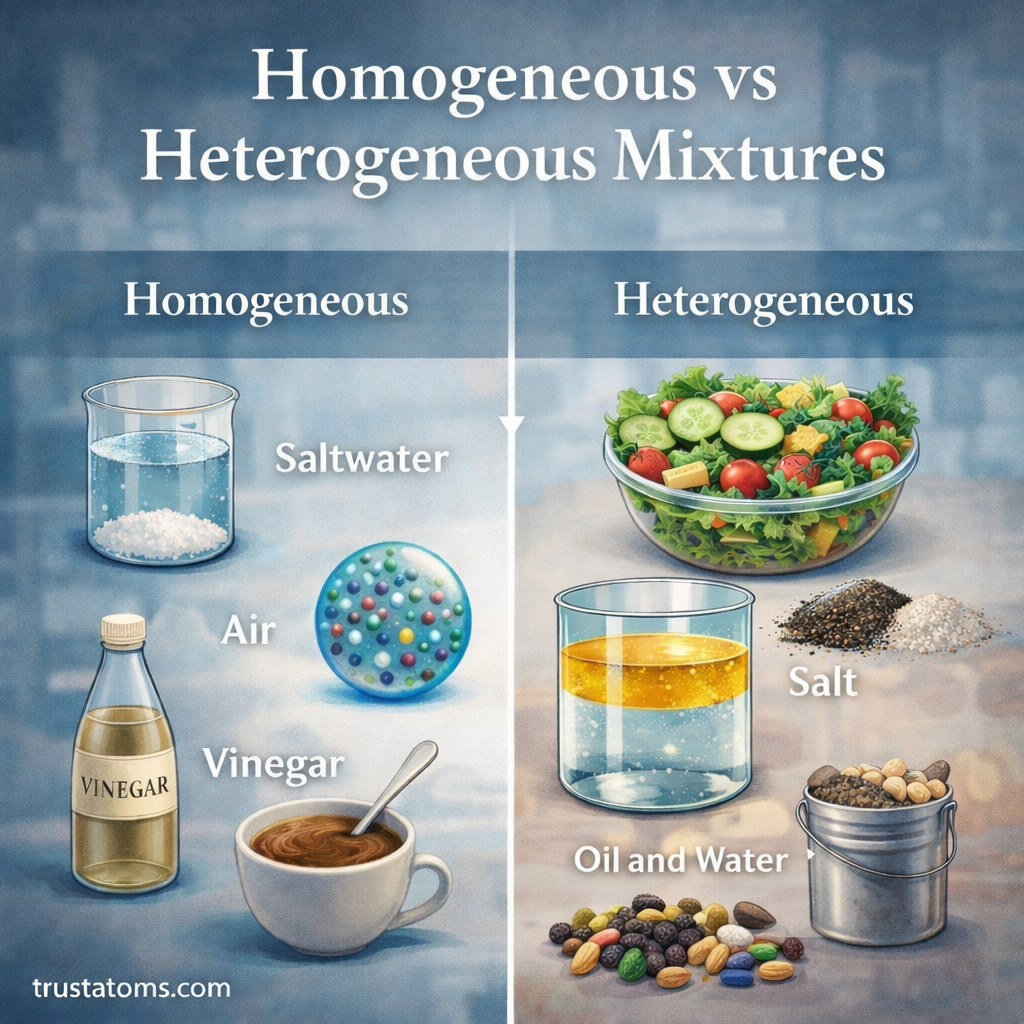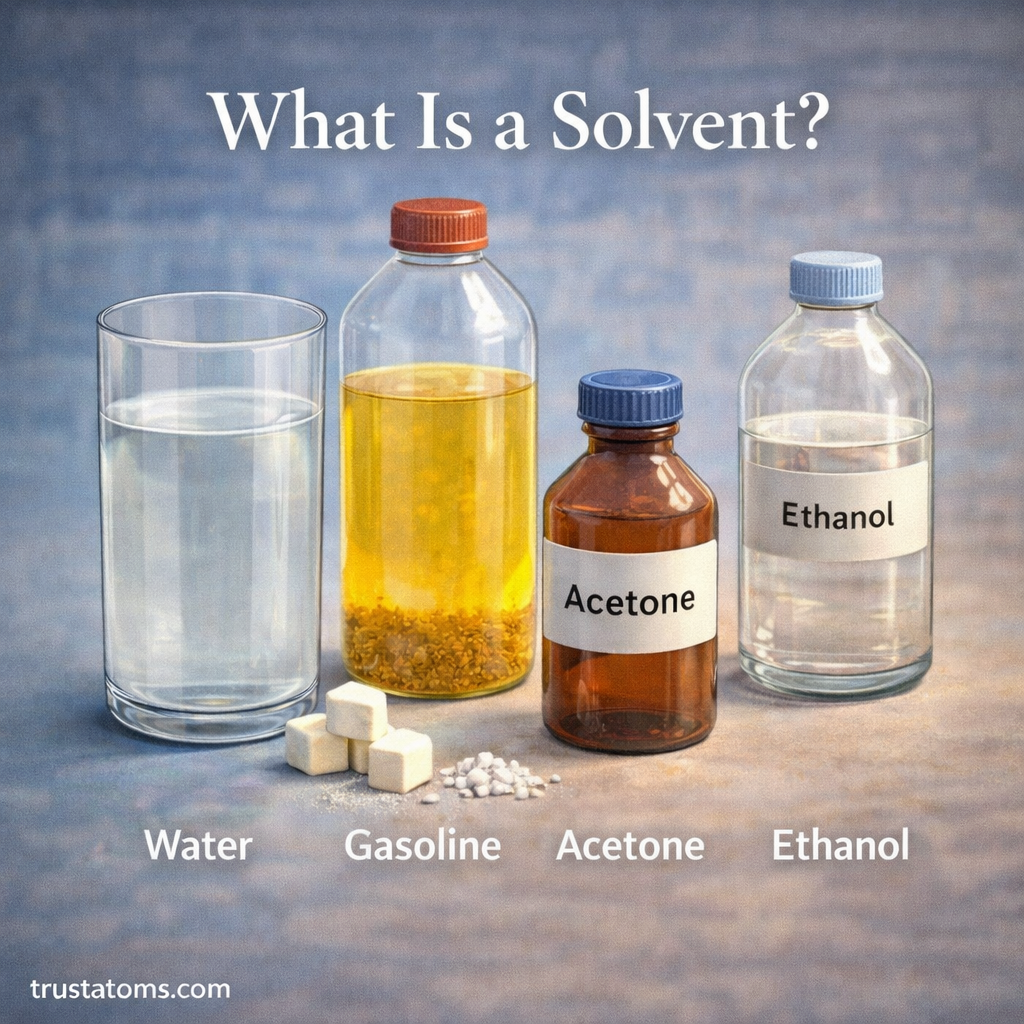
A solvent is a substance that dissolves another substance, called a solute, to form a homogeneous mixture known as a solution. Most familiar solvents are liquids, but gases and solids can also act as solvents in certain mixtures.
In the study of chemistry, many substances mix together to form solutions. In every solution, one component acts as the solvent, providing the medium in which other components become uniformly distributed. Water dissolving salt and ethanol dissolving certain organic compounds are familiar examples.
Solvents are used in laboratories, biological systems, cleaning products, medicines, and manufacturing. Understanding how they work helps explain why some substances mix readily while others remain separate.
Definition of a Solvent in Chemistry
A solvent is the substance in a solution that dissolves another substance, known as the solute. In most familiar solutions, the solvent is present in the greatest amount, although the distinction can depend on the type of mixture and how its components are classified.
When dissolution occurs, solute particles become distributed throughout the solvent. A homogeneous mixture forms when the components are uniformly mixed at the molecular, ionic, or atomic level.
Common characteristics of solvents include:
- They provide the medium in which solutes dissolve.
- They are often present in larger amounts than the solute.
- They interact with dissolved molecules, ions, or atoms.
- They can exist in liquid, gaseous, or solid form.
- Their chemical properties influence which substances can dissolve.
For example, in saltwater, water acts as the solvent while sodium chloride is the solute. Water molecules interact with sodium and chloride ions, allowing the ions to separate from the crystal and become dispersed throughout the liquid.
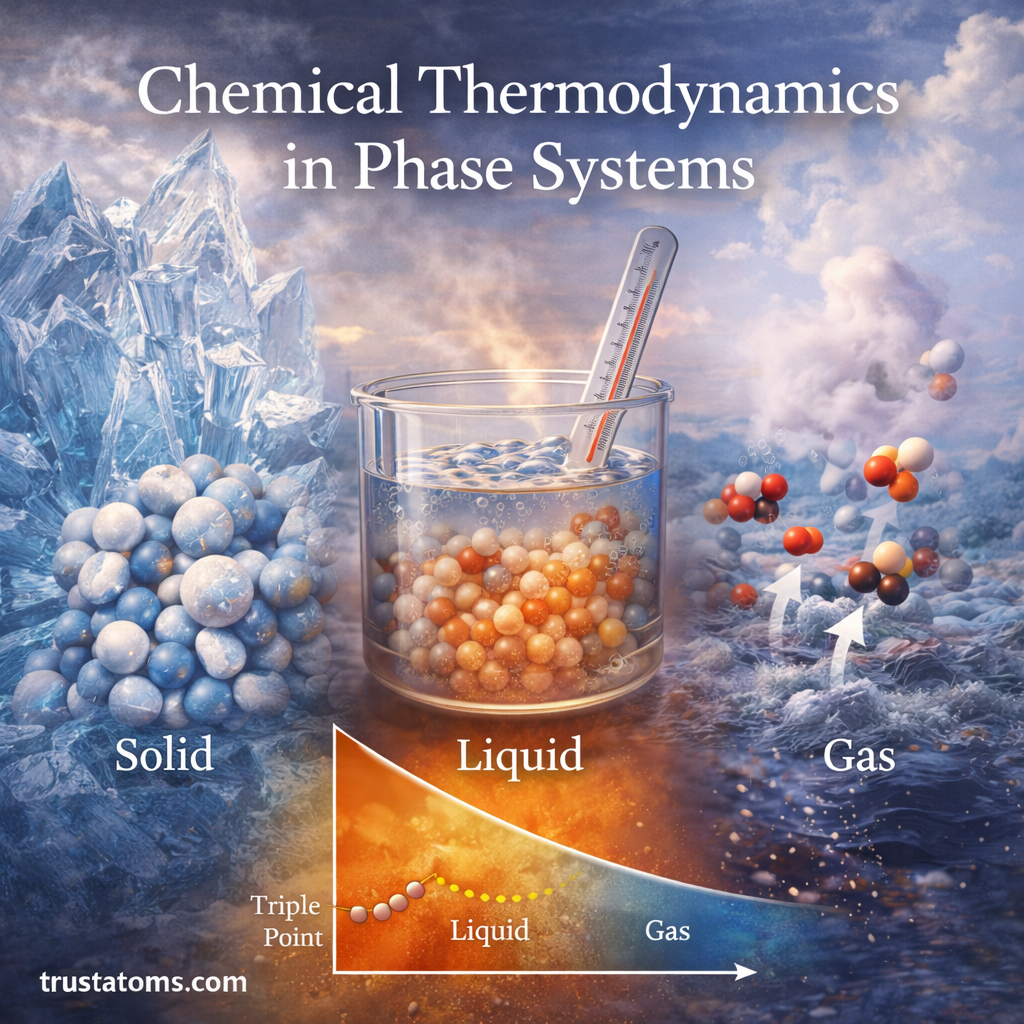
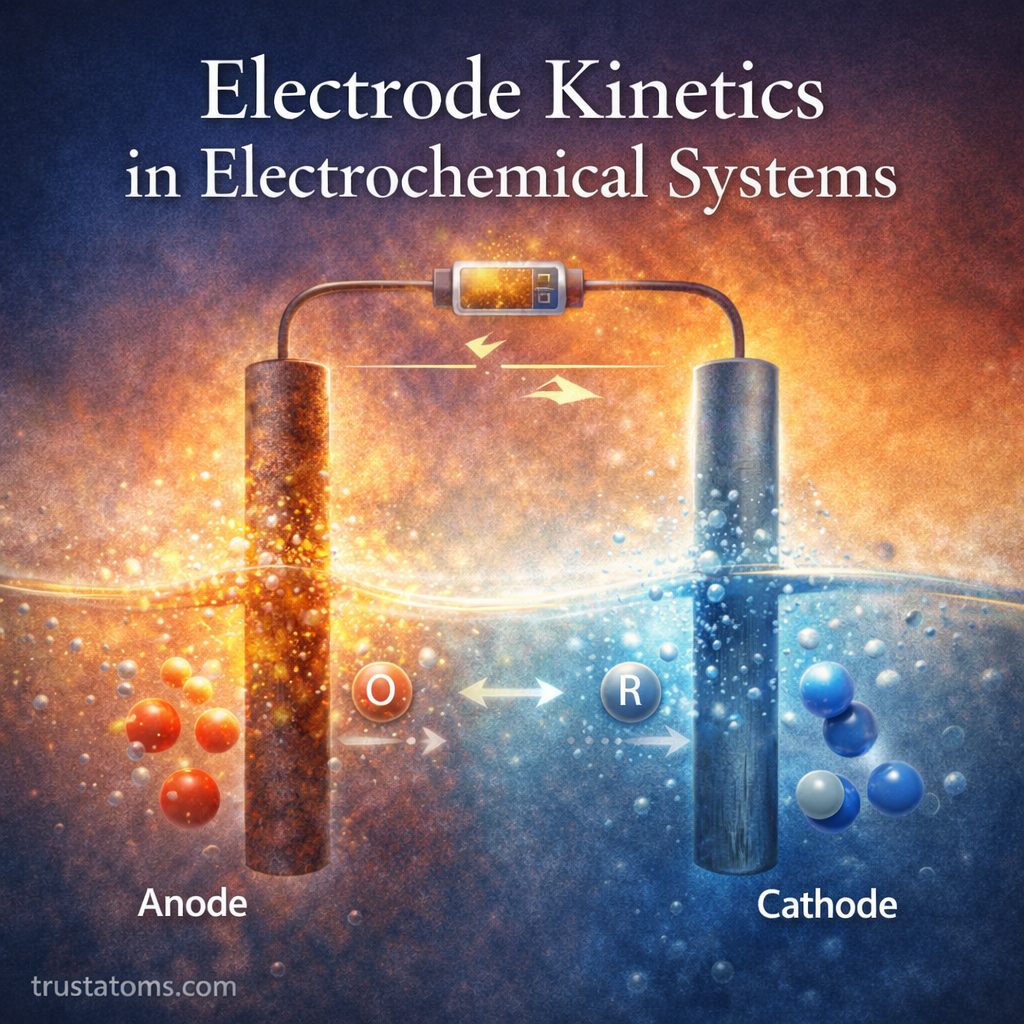
Solubility in chemistry describes the equilibrium amount of a substance that can dissolve under specified conditions. The behavior of mixtures as they approach equilibrium is explored through solution dynamics in chemical systems, while solvent effects in chemical reactions explains how the choice of solvent can influence reaction behavior.
How Do Solvents Dissolve Substances?
Solvents work through interactions between their particles and the particles of a solute. Whether a substance dissolves depends on the balance of interactions within the original substances and the new interactions formed when they mix.
For a solid dissolving in a liquid solvent, the process generally involves four stages:
- Solvent molecules come into contact with the surface of the solid solute.
- Interactions between solute particles are overcome as individual particles separate from the solid.
- Solvent molecules surround and interact with the separated particles through a process called solvation.
- The dissolved particles spread throughout the solvent through diffusion and mixing, producing a homogeneous solution.
When water is the solvent, the surrounding of dissolved particles by water molecules is called hydration. Water’s polarity allows it to interact strongly with many ions and polar molecules.
For example, sugar molecules separate from a sugar crystal when added to water. They become surrounded by water molecules but generally remain intact as sugar molecules. Sodium chloride behaves differently because it separates into positively charged sodium ions and negatively charged chloride ions.
Common Examples of Solvents
Different solvents are useful for different substances. Their effectiveness depends on molecular structure, polarity, intermolecular forces, and the conditions under which dissolution occurs.
Water
Water is one of the most widely encountered solvents and is sometimes called the universal solvent because it dissolves many different substances. However, water does not dissolve everything, and the name should not be interpreted literally.
Water can dissolve many salts, sugars, acids, and gases. Its ability to support dissolved substances makes it the primary solvent in many biological fluids and natural aquatic environments.
Ethanol
Ethanol is an alcohol that mixes completely with water and can dissolve many organic substances. It contains a polar hydroxyl group and a small nonpolar carbon-containing portion, allowing it to interact with different kinds of molecules.
Ethanol is used in laboratory preparations, perfumes, pharmaceutical formulations, and certain cleaning products. It is flammable, so its suitability depends on the application and required safety precautions.
Acetone
Acetone is a polar organic solvent that dissolves many oils, resins, and other organic materials. It is found in some nail polish removers and is used in laboratories and industrial processes.
Acetone evaporates readily and is highly flammable. It can also damage certain plastics, coatings, and finishes, making material compatibility an important consideration.
Hydrocarbon Solvents
Hydrocarbon-based liquids such as hexane and components of gasoline can dissolve many nonpolar substances, including oils, greases, and waxes.
Gasoline is a complex mixture rather than a single pure solvent. Although it can dissolve oily materials, it is highly flammable and presents health hazards, so it should not be treated as a general-purpose household cleaning solvent.
Polar vs. Nonpolar Solvents
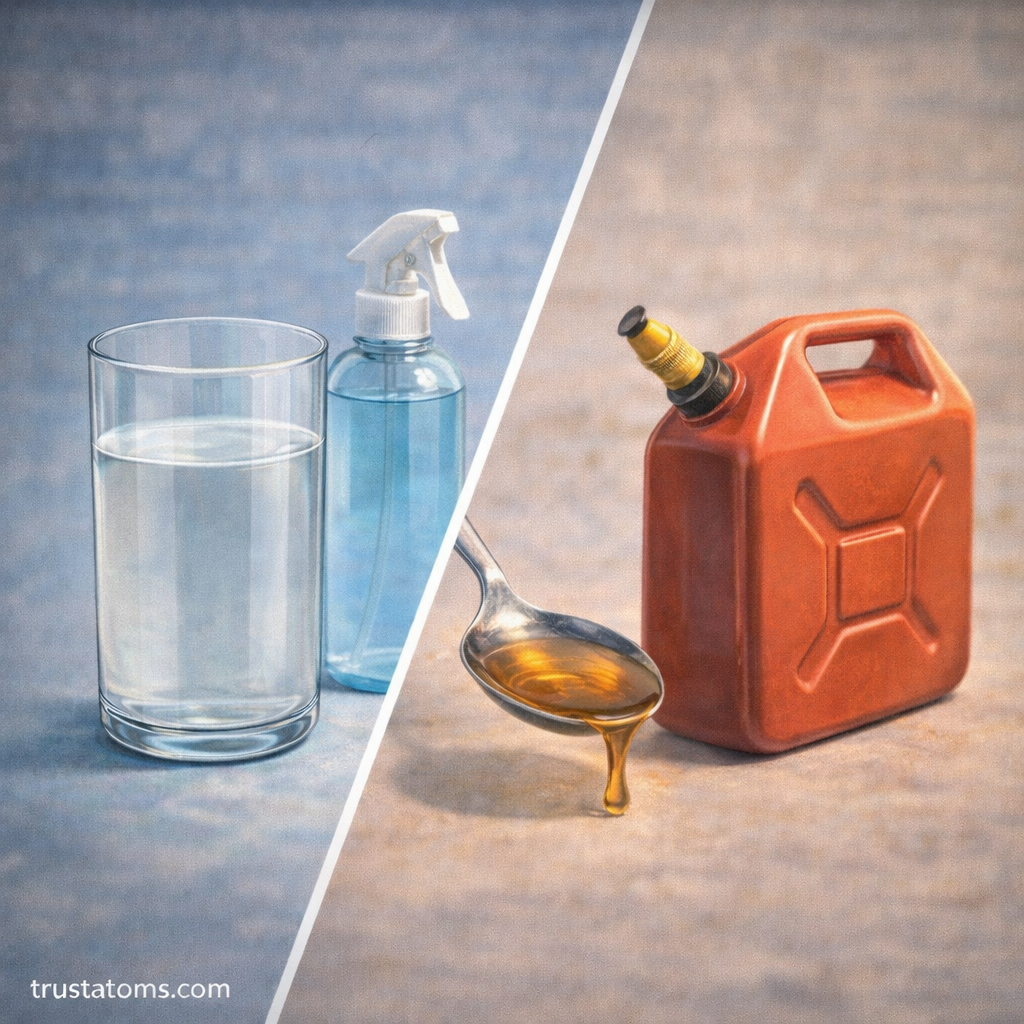
Solvents are often classified by polarity, which describes how electrical charge is distributed within their molecules. Polarity helps explain why some substances dissolve readily in a particular solvent while others do not.
Polar Solvents
Polar solvent molecules have an uneven distribution of electrical charge, creating regions with partial positive and partial negative charges. These properties allow them to interact with many polar molecules and, in suitable cases, dissolved ions.
Examples include water, methanol, ethanol, and acetone. However, not all polar solvents behave identically: acetone, for example, does not dissolve sodium chloride as effectively as water.
Nonpolar Solvents
Nonpolar solvents have little or no permanent separation of electrical charge across their molecules. They often dissolve nonpolar substances more readily than strongly polar or ionic compounds.
Examples include hexane, cyclohexane, and toluene. These solvents are used in various chemical processes involving oils, waxes, and other organic materials.
| Property | Polar Solvents | Nonpolar Solvents |
|---|---|---|
| Charge distribution | Uneven | Little or no permanent separation |
| Common examples | Water, ethanol, acetone | Hexane, cyclohexane, toluene |
| Often dissolve | Polar molecules and some ionic compounds | Oils, waxes, and nonpolar molecules |
| Typical interactions | Dipole interactions and, for some solvents, hydrogen bonding | Primarily dispersion forces |
| Water miscibility | Varies by solvent | Generally low |
A useful introductory rule is “like dissolves like.” Substances with compatible intermolecular interactions often mix more readily, although actual solubility depends on several factors beyond polarity alone.
Solvent vs. Solute: Understanding the Difference
The solvent provides the medium in which another substance dissolves. The solute is the dissolved component, and the resulting homogeneous mixture is the solution.
| Property | Solvent | Solute |
|---|---|---|
| Definition | Dissolving medium | Substance being dissolved |
| Typical amount | Often larger | Often smaller |
| Physical state | Solid, liquid, or gas | Solid, liquid, or gas |
| Saltwater example | Water | Sodium chloride |
| Sugar-water example | Water | Sugar |
In some mixtures of two completely miscible liquids, the solvent-solute distinction is a matter of convention. The component present in the greater amount is commonly designated the solvent.
Worked Example: Identifying a Solvent and Calculating Concentration
Suppose you prepare a saltwater mixture by dissolving 15 grams of sodium chloride in 135 grams of water. Assuming all the salt dissolves, you can identify the components and calculate the salt concentration by mass.
- Identify the solvent. Water is the dissolving medium and has a mass of 135 grams.
- Identify the solute. Sodium chloride is the dissolved substance and has a mass of 15 grams.
- Calculate the total solution mass: 135 + 15 = 150 grams.
- Divide the solute mass by the solution mass: 15 / 150 = 0.10.
- Multiply by 100 to express the concentration as a percentage: 0.10 × 100 = 10%.
The solution contains 10% salt by mass and 90% water by mass. If another 150 grams of water were added, the total mass would increase to 300 grams while the salt mass remained 15 grams. The new salt concentration would be 5% by mass.
This illustrates dilution: adding more solvent lowers the concentration of a dissolved substance without changing the amount of solute, provided no solute is lost or reacts.
How Solvent Choice Affects Chemical Reactions
Solvents do more than dissolve substances. They can influence how quickly chemical reactions occur, which products form, and how stable reactants or intermediate species are during a reaction.
For example, a polar solvent may stabilize charged particles through interactions with its molecules. In some reactions, this stabilization changes the relative energies of reactants, intermediates, and transition states, affecting reaction rates.
Solvent choice also affects practical laboratory considerations such as boiling point, evaporation rate, chemical compatibility, and ease of separating products after a reaction.
A solvent that dissolves a reactant effectively is not necessarily the best choice for every reaction. Chemists must consider both the chemical behavior and the practical properties of the solvent.
Where Solvents Are Used in Everyday Life
Solvents are found in many natural and manufactured systems. Their ability to dissolve and transport substances makes them useful across scientific and industrial applications.
- Biology: Water acts as the primary solvent in cells and many biological fluids, allowing dissolved substances to move and react.
- Medicine: Suitable solvents are used to prepare certain liquid pharmaceutical formulations and laboratory solutions.
- Food production: Water and ethanol are used in various extraction, flavoring, and preparation processes.
- Manufacturing: Solvents help dissolve materials, support chemical reactions, and remove residues from equipment.
- Environmental systems: Water transports dissolved minerals, nutrients, and gases through rivers, groundwater, and oceans.
Solvent Safety and Environmental Considerations
Solvent safety depends on the particular chemical, its concentration, exposure conditions, and intended use. A substance being useful as a solvent does not automatically mean it is safe to inhale, touch, ingest, or release into the environment.
Many organic solvents are flammable, and some can cause harmful effects through inhalation or skin contact. Benzene is a known human carcinogen, while other solvents have different toxicity and exposure concerns.
When handling solvents, follow product labels and safety data sheets, use appropriate ventilation and protective equipment, and keep flammable materials away from ignition sources. Solvent waste should be managed according to local disposal requirements rather than poured into drains without authorization.
Green chemistry encourages the selection of solvents and processes that reduce hazards, waste, and environmental impact. Water can be a suitable lower-hazard choice in many applications, but no solvent is automatically the safest or most sustainable option for every process.
Common Misconceptions About Solvents
Misconception 1: Every Solvent Is a Liquid
Most familiar solvents are liquids, but solutions can also exist as gases and solids. In air, nitrogen is commonly treated as the solvent because it is the most abundant component. Certain metal alloys contain solid solutions.
Misconception 2: Water Can Dissolve Everything
Water dissolves many substances, but it is not capable of dissolving every material. Oils and many other nonpolar substances have low solubility in water under ordinary conditions.
Misconception 3: A Stronger Solvent Always Dissolves More
There is no single solvent that is strongest for every substance. Solvent effectiveness depends on the chemical properties of the solute and solvent, as well as temperature and other conditions.
Misconception 4: Dissolving Always Causes a Chemical Reaction
Many dissolution processes occur without creating new chemical substances. For example, sugar molecules remain sugar molecules when dissolved in water. However, some dissolving processes are accompanied by chemical reactions, depending on the substances involved.
Frequently Asked Questions
What is a solvent in simple terms?
A solvent is the substance that dissolves another substance to form a solution. For example, water is the solvent when salt or sugar dissolves in it.
What are five examples of solvents?
Five examples are water, ethanol, methanol, acetone, and hexane. They differ in polarity, chemical properties, applications, and safety hazards.
Is water always a solvent?
No. Water commonly acts as a solvent, but it can be designated as a solute in certain mixtures where another substance is considered the solvent. Its role depends on the composition and context of the mixture.
What is the difference between a solvent and a solute?
The solvent provides the dissolving medium, while the solute is the substance being dissolved. In sugar water, water is the solvent and sugar is the solute.
Why do some substances dissolve in one solvent but not another?
Different solvents interact with substances in different ways. Polarity, hydrogen bonding, dispersion forces, and other molecular interactions influence whether dissolution is favorable. Temperature and pressure may also affect solubility.
A solvent is the component of a solution that provides the medium for dissolving another substance. Its molecular properties determine which materials dissolve readily, while its physical and chemical characteristics influence how solutions behave and how reactions proceed. Understanding solvents helps explain everyday mixtures, laboratory processes, and the movement of dissolved substances through biological and environmental systems.
Sources: OpenStax Chemistry 2e; Chemistry: The Central Science by Theodore L. Brown and colleagues; IUPAC Compendium of Chemical Terminology (Gold Book); Chemistry by Raymond Chang and Kenneth A. Goldsby.