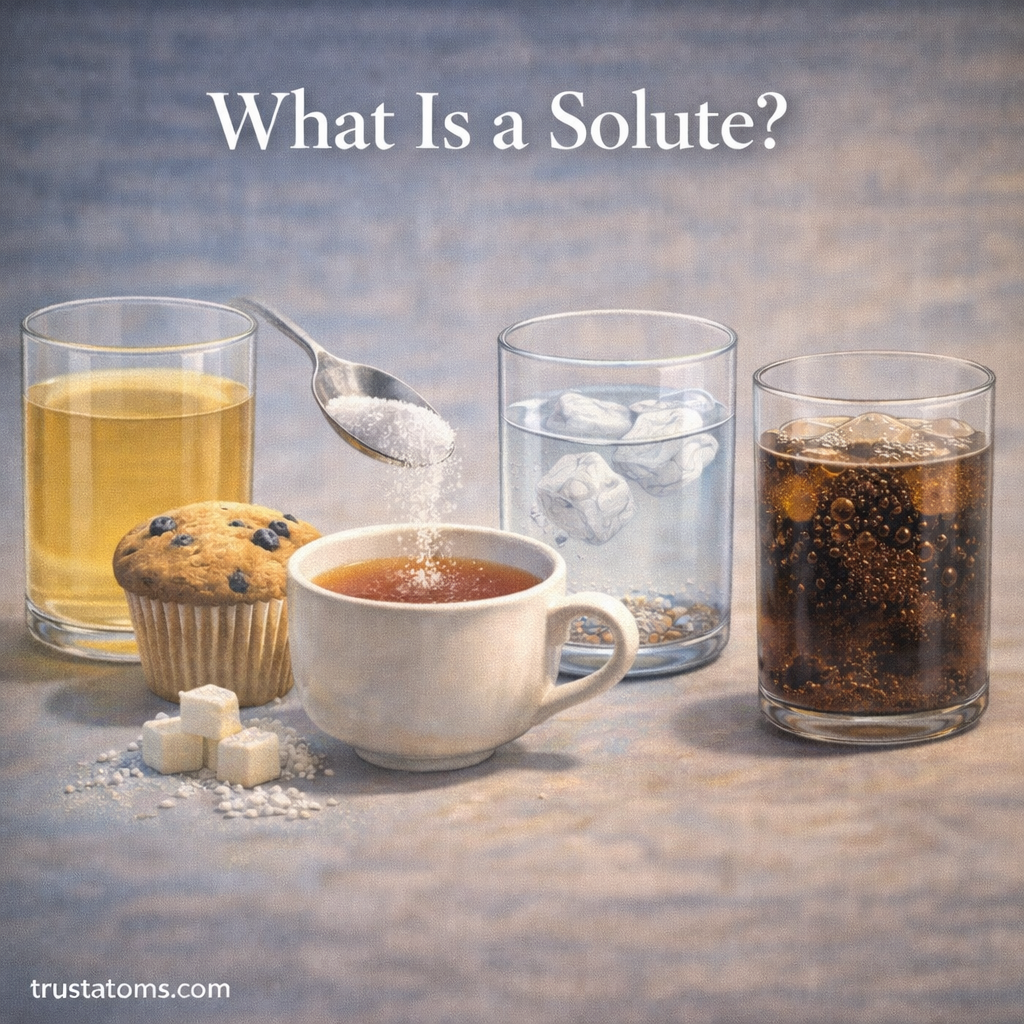
In chemistry, many substances dissolve into others to form solutions. When this happens, one substance spreads throughout another at the molecular level. The substance that gets dissolved is called the solute.
Solutes play a fundamental role in chemistry, biology, and everyday life. From sugar dissolving in coffee to oxygen dissolving in water for aquatic life, solutes help explain how substances mix and interact.
This guide explains what a solute is, how it works in solutions, common examples, and how solutes differ from solvents.
Definition of a Solute
A solute is the substance that is dissolved in a solvent to form a solution.
In most solutions, the solute is present in a smaller amount compared to the solvent. When the solute dissolves, its particles spread evenly throughout the solvent, creating a uniform mixture.
Key characteristics of solutes include:
- They dissolve in a solvent
- They are usually present in smaller amounts than the solvent
- They disperse evenly throughout the solution
- They can exist in solid, liquid, or gas form
A simple example is saltwater. In this mixture:
- Salt is the solute
- Water is the solvent
Together, they form a solution.
How Solutes Dissolve
When a solute is added to a solvent, the particles begin to separate and spread throughout the solvent molecules.
The dissolving process typically follows these steps:
- The solute particles begin to break apart.
- Solvent molecules surround the solute particles.
- The particles disperse evenly throughout the solvent.
- A uniform solution forms.
This process is known as dissolution.
For example, when sugar is stirred into tea, the sugar crystals break down into smaller particles that spread evenly throughout the liquid.
Types of Solutes
Solutes can exist in different physical states depending on the substances involved.
Solid Solutes
Many common solutes are solids that dissolve in liquids.
Examples include:
- Salt dissolved in water
- Sugar dissolved in coffee
- Baking soda dissolved in water
Liquid Solutes
Sometimes liquids dissolve into other liquids.
Examples include:
- Alcohol mixed with water
- Vinegar mixed with water
- Flavor extracts added to beverages
Gas Solutes
Gases can also dissolve in liquids.
Examples include:
- Carbon dioxide dissolved in soda
- Oxygen dissolved in water for aquatic animals
- Nitrogen dissolved in ocean water
Solute vs Solvent
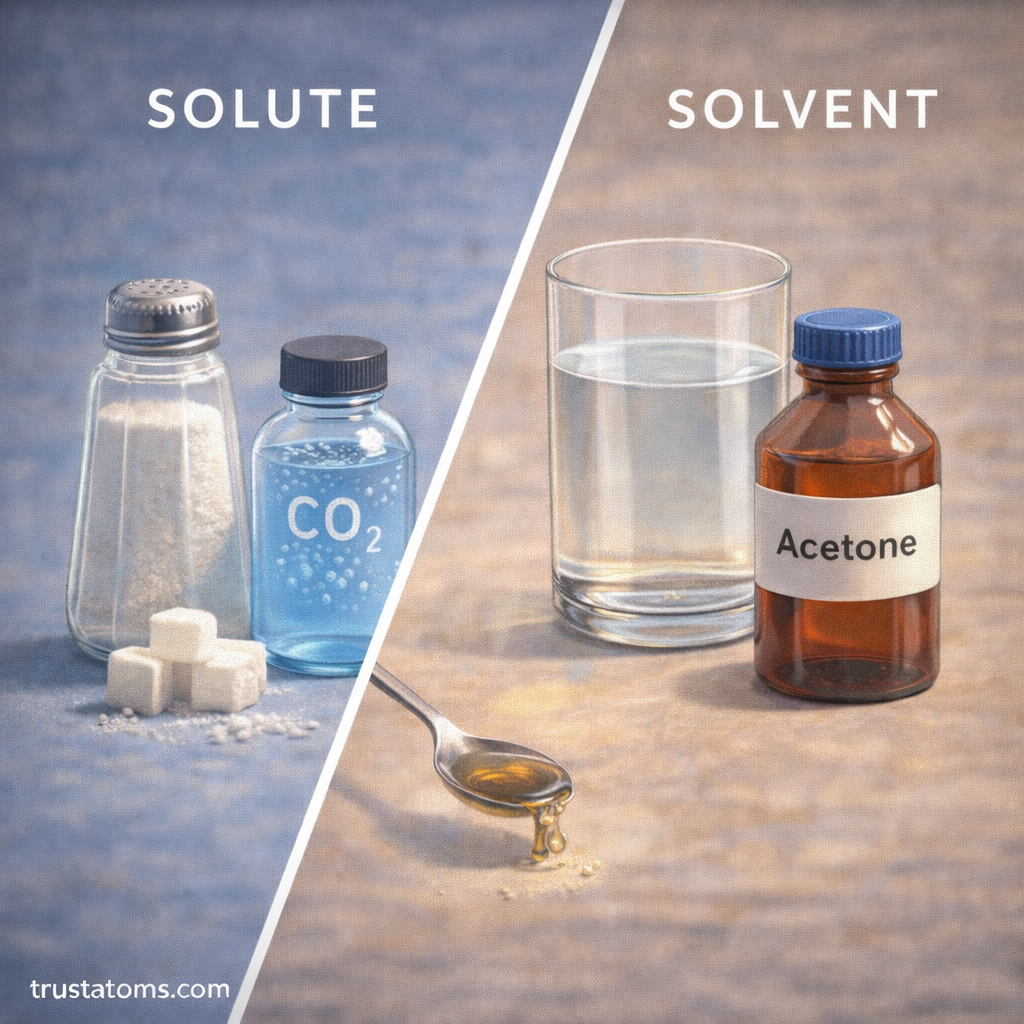
Understanding the difference between a solute and a solvent is essential when studying solutions.
Solute
The solute:
- Is the substance being dissolved
- Is usually present in smaller amounts
- Disperses throughout the solvent
Example: Sugar in lemonade.
Solvent
The solvent:
- Dissolves the solute
- Is usually present in larger amounts
- Acts as the medium for the solution
Example: Water in lemonade.
Together, the solute and solvent form a solution.
Examples of Solutes in Everyday Life
Solutes appear in many common mixtures we encounter every day.
Examples include:
- Sugar in tea
- Salt in soup
- Carbon dioxide in soda
- Flavoring in sports drinks
- Minerals dissolved in drinking water
In each case, the solute spreads evenly throughout the solvent.
Factors That Affect Solubility
Solubility refers to how easily a solute dissolves in a solvent. Several factors influence this process.
Temperature
Temperature often affects how quickly and how much solute dissolves.
For example:
- Sugar dissolves faster in hot water than in cold water.
Pressure
Pressure mainly affects gas solutes.
For example:
- Carbon dioxide dissolves in soda under high pressure.
Nature of the Substances
Certain solutes dissolve better in particular solvents.
A common chemistry rule is:
“Like dissolves like.”
This means:
- Polar solutes dissolve well in polar solvents.
- Nonpolar solutes dissolve better in nonpolar solvents.
Saturated, Unsaturated, and Supersaturated Solutions
The amount of solute dissolved in a solvent can change depending on conditions.
Unsaturated Solution
An unsaturated solution can still dissolve more solute.
Saturated Solution
A saturated solution contains the maximum amount of solute that can dissolve at a given temperature.
Supersaturated Solution
A supersaturated solution contains more dissolved solute than normally possible under standard conditions.
These types of solutions are important in chemical processes and crystal formation.
Why Solutes Are Important
Solutes play a critical role in many scientific and natural processes.
They are essential in fields such as:
- Chemistry
- Biology
- Environmental science
- Medicine
- Food science
For example:
- Nutrients dissolved in blood act as solutes.
- Medicines dissolve in body fluids to be absorbed.
- Minerals dissolved in water support ecosystems.
Understanding solutes helps scientists predict how substances behave in solutions.
Final Thoughts
A solute is the substance that dissolves in a solvent to form a solution. Solutes can exist as solids, liquids, or gases and disperse evenly throughout the solvent during the dissolution process.
From sugar in tea to oxygen in water, solutes play an essential role in many natural and chemical systems. Understanding solutes and how they interact with solvents helps explain how solutions form and function in everyday life and scientific applications.