Hydrocarbons are some of the most important compounds in chemistry and modern industry. They form the foundation of many fuels, plastics, and organic chemicals used in everyday life.
At their core, hydrocarbons are simple molecules made entirely of hydrogen and carbon atoms. Despite this simplicity, hydrocarbons can form a wide variety of structures and play a central role in energy production and organic chemistry.
This guide explains what hydrocarbons are, how they are classified, and why they are important in science and industry.
Definition of a Hydrocarbon
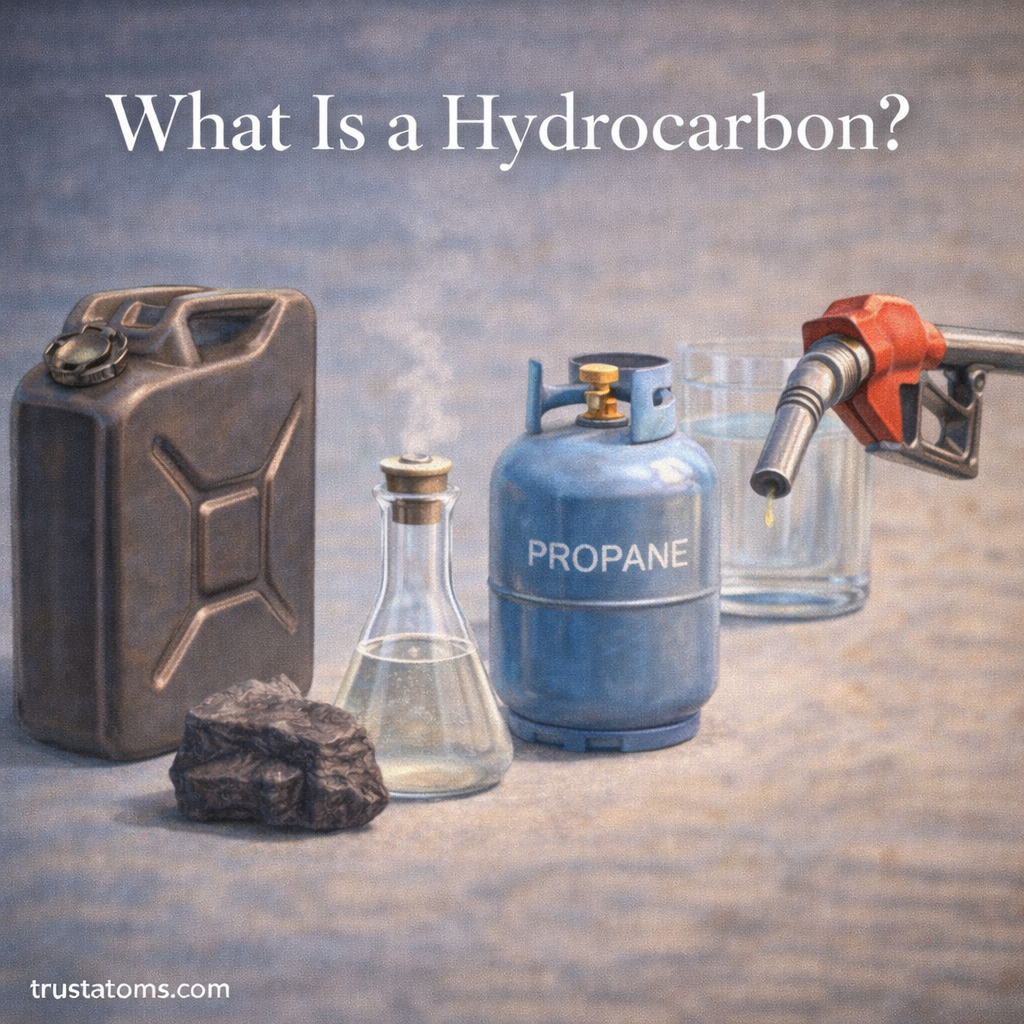
A hydrocarbon is an organic compound made exclusively of hydrogen and carbon atoms.
These atoms bond together in different arrangements to form a wide range of molecules. Some hydrocarbons contain just a few atoms, while others form long chains or complex ring structures.
Key characteristics of hydrocarbons include:
- Made only of carbon and hydrogen
- Form part of organic chemistry
- Can exist as gases, liquids, or solids
- Often serve as fuels or raw materials for chemical production
Examples of hydrocarbons include methane, propane, gasoline, and many types of petroleum products.
How Hydrocarbons Form
Hydrocarbons are most commonly found in fossil fuels, which formed from ancient plants and organisms buried under layers of sediment over millions of years.
During this long process:
- Organic matter became buried underground.
- Heat and pressure increased over time.
- Chemical reactions transformed the material.
- Hydrocarbon molecules formed and accumulated.
These hydrocarbons now exist in natural resources such as:
- Crude oil
- Natural gas
- Coal
Types of Hydrocarbons
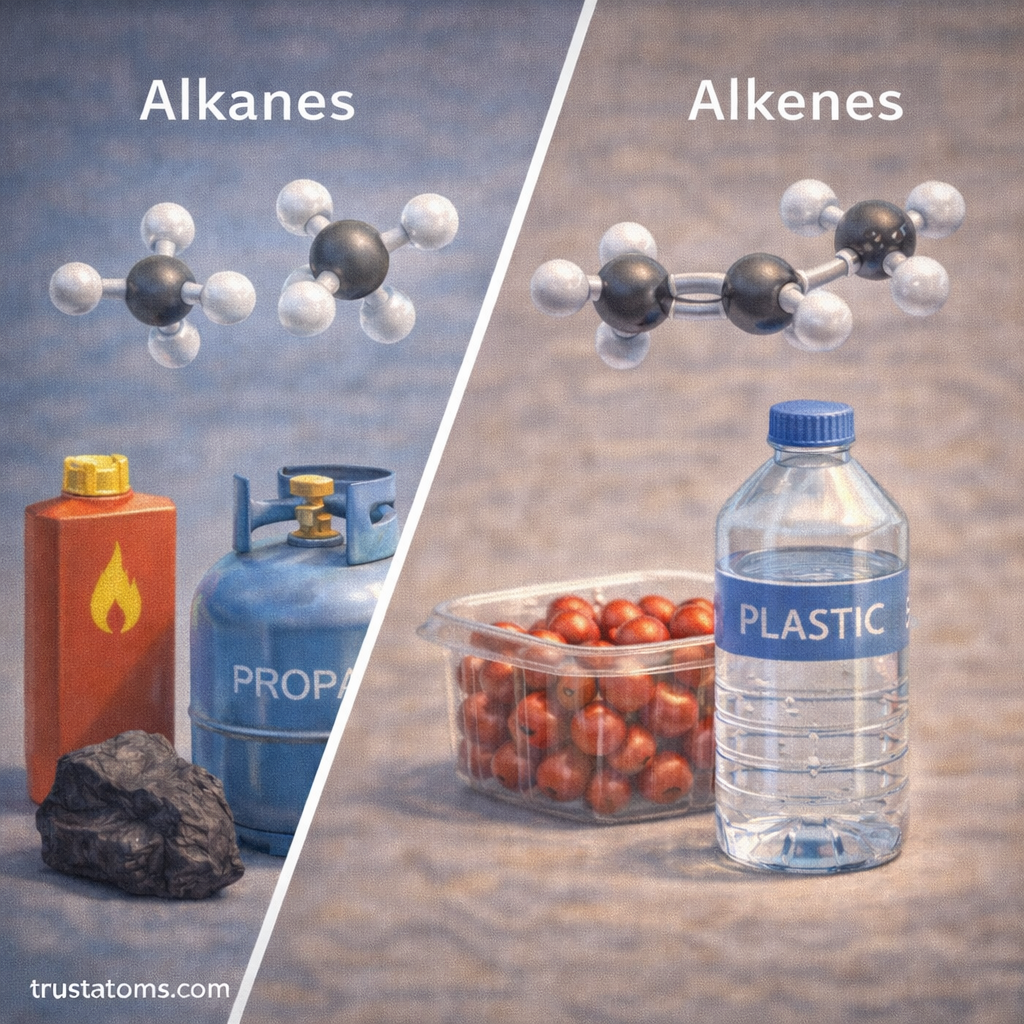
Hydrocarbons are classified into several categories based on how their carbon atoms are bonded together.
Alkanes
Alkanes are hydrocarbons that contain single bonds between carbon atoms.
They are also called saturated hydrocarbons because they contain the maximum possible number of hydrogen atoms.
Examples include:
- Methane
- Ethane
- Propane
- Butane
Alkanes are commonly used as fuels.
Alkenes
Alkenes contain at least one double bond between carbon atoms.
Because of this double bond, they are considered unsaturated hydrocarbons.
Examples include:
- Ethene (ethylene)
- Propene (propylene)
Alkenes are widely used in chemical manufacturing, particularly in producing plastics.
Alkynes
Alkynes contain at least one triple bond between carbon atoms.
This type of bonding makes them highly reactive.
An example is:
- Ethyne (acetylene)
Acetylene is commonly used in welding and metal cutting.
Aromatic Hydrocarbons
Aromatic hydrocarbons contain ring-shaped structures of carbon atoms with special bonding patterns.
The most well-known example is benzene.
Aromatic hydrocarbons are important in the production of:
- Plastics
- Pharmaceuticals
- Synthetic materials
Examples of Hydrocarbons in Everyday Life
Hydrocarbons are present in many products and systems used daily.
Common examples include:
- Natural gas used for heating and cooking
- Gasoline used in vehicles
- Propane used for grilling and heating
- Plastics derived from petroleum
- Synthetic fibers used in clothing
Because hydrocarbons release energy when burned, they are widely used as fuels.
Why Hydrocarbons Are Important
Hydrocarbons are essential to modern society because they provide energy and raw materials for manufacturing.
Energy Production
Many fuels are hydrocarbons, including:
- Natural gas
- Gasoline
- Diesel
- Jet fuel
When hydrocarbons burn, they release energy that powers engines, heating systems, and power plants.
Chemical Manufacturing
Hydrocarbons serve as building blocks for many chemical products.
Industries use them to produce:
- Plastics
- Synthetic rubber
- Detergents
- Paints
- Pharmaceuticals
Materials and Consumer Products
Many everyday items originate from hydrocarbon-based materials.
Examples include:
- Plastic containers
- Synthetic fabrics
- Packaging materials
- Household products
Hydrocarbon Combustion
When hydrocarbons burn in oxygen, they undergo combustion reactions that release energy.
The typical products of hydrocarbon combustion include:
- Carbon dioxide
- Water
- Heat energy
For example, burning methane produces carbon dioxide and water vapor while releasing energy used for heating or electricity generation.
Environmental Considerations
While hydrocarbons are valuable energy sources, their use can also impact the environment.
Issues associated with hydrocarbon use include:
- Air pollution
- Greenhouse gas emissions
- Oil spills
- Resource depletion
Because of these concerns, scientists are researching cleaner energy sources and more sustainable fuel alternatives.
Final Thoughts
Hydrocarbons are organic compounds composed entirely of carbon and hydrogen atoms. They form the basis of many fuels, industrial chemicals, and everyday materials.
Different types of hydrocarbons—such as alkanes, alkenes, alkynes, and aromatic compounds—have unique structures and uses. From powering vehicles to producing plastics, hydrocarbons play a central role in modern technology and chemistry.
Understanding hydrocarbons helps explain how fossil fuels work, how organic molecules are structured, and how many industrial products are created.