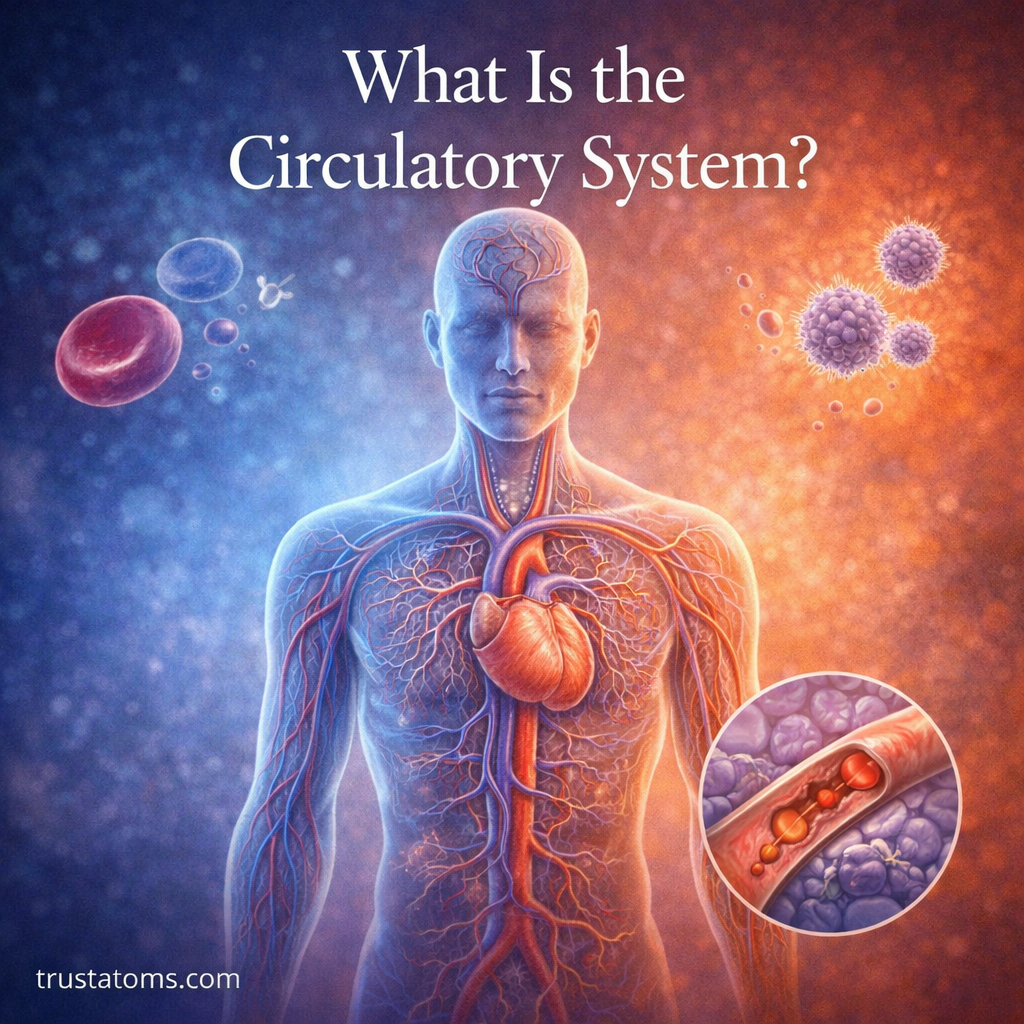
The circulatory system is one of the body’s most essential systems, responsible for transporting blood, oxygen, nutrients, hormones, and waste products throughout the body. It acts as a delivery and removal network, ensuring that every cell gets what it needs to function properly.
Without the circulatory system, vital processes like energy production, temperature regulation, and immune defense would not be possible.
Main Components of the Circulatory System
The circulatory system is made up of three primary components that work together continuously.
1. The Heart
The heart is a muscular organ that acts as a pump, pushing blood throughout the body.
Key Functions
- Pumps oxygen-rich blood to the body
- Sends oxygen-poor blood to the lungs
- Maintains blood pressure and circulation
The heart beats about 60–100 times per minute at rest, continuously moving blood through the system.
2. Blood Vessels
Blood vessels are the pathways through which blood travels.
Types of Blood Vessels
- Arteries: Carry oxygen-rich blood away from the heart
- Veins: Return oxygen-poor blood back to the heart
- Capillaries: Tiny vessels where exchange of oxygen, nutrients, and waste occurs
These vessels form a vast network that reaches every part of the body.
3. Blood
Blood is the fluid that transports essential substances.
Components of Blood
- Red blood cells: Carry oxygen using hemoglobin
- White blood cells: Help fight infections
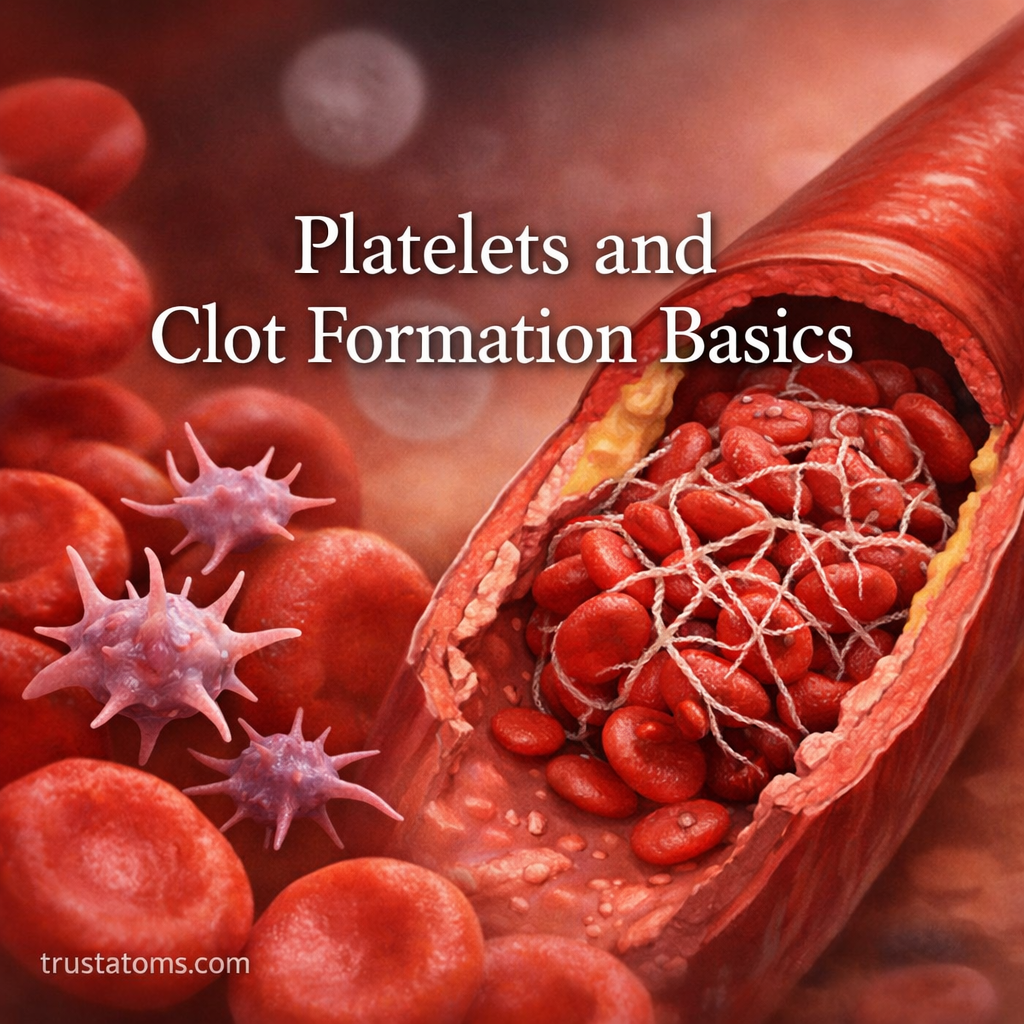
- Platelets: Assist in blood clotting
- Plasma: Liquid portion carrying nutrients, hormones, and waste
Together, these components support survival and overall health.
How the Circulatory System Works
The circulatory system operates through a continuous cycle of blood flow.
Step-by-Step Process
- The heart pumps oxygen-poor blood to the lungs
- The lungs add oxygen and remove carbon dioxide
- Oxygen-rich blood returns to the heart
- The heart pumps this blood to the rest of the body
- Cells use oxygen and nutrients, producing waste
- Blood carries waste back to the heart and lungs
This cycle repeats constantly, keeping the body functioning efficiently.
Pulmonary vs. Systemic Circulation
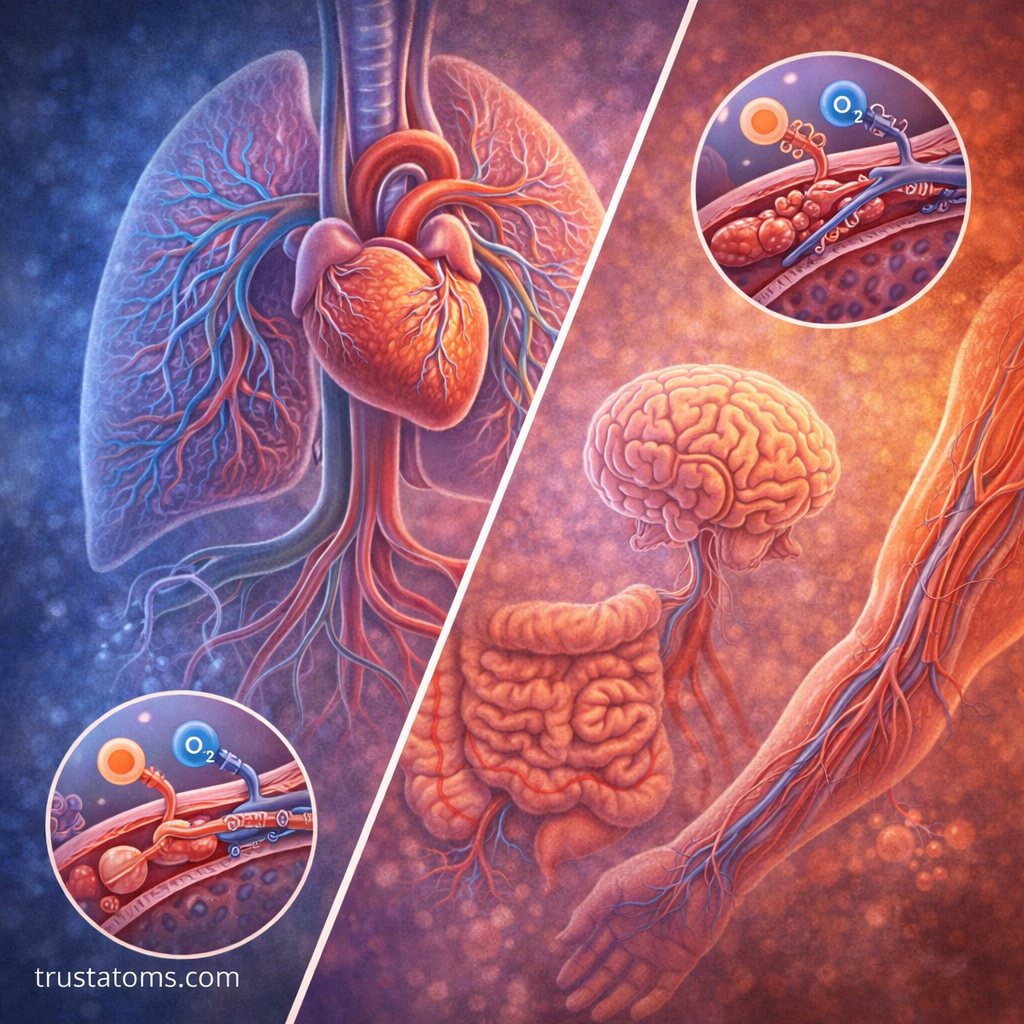
The circulatory system has two main circuits:
Pulmonary Circulation
- Moves blood between the heart and lungs
- Adds oxygen to the blood
- Removes carbon dioxide
Systemic Circulation
- Delivers oxygen and nutrients to the body
- Removes waste products from tissues
These two circuits work together to maintain balance and support life.
Functions of the Circulatory System
The circulatory system does more than just move blood—it supports multiple vital functions.
Key Functions
- Oxygen transport: Delivers oxygen to cells
- Nutrient distribution: Supplies glucose, amino acids, and vitamins
- Waste removal: Removes carbon dioxide and metabolic waste
- Hormone transport: Carries chemical signals throughout the body
- Temperature regulation: Helps maintain body heat
- Immune support: Circulates white blood cells and antibodies
Each function is essential for maintaining homeostasis.
The Role of Capillaries
Capillaries are the smallest blood vessels but play one of the most important roles.
Why Capillaries Matter
- Allow exchange of oxygen and carbon dioxide
- Deliver nutrients directly to cells
- Remove waste products
- Connect arteries and veins
Their thin walls make efficient exchange possible at the cellular level.
How the Heart Is Structured
The heart has four chambers that manage blood flow.
Chambers of the Heart
- Right atrium: Receives oxygen-poor blood
- Right ventricle: Pumps blood to the lungs
- Left atrium: Receives oxygen-rich blood
- Left ventricle: Pumps blood to the body
Valves between chambers ensure that blood flows in one direction.
Maintaining Healthy Circulation
Keeping the circulatory system healthy is essential for long-term well-being.
Healthy Habits
- Exercise regularly to improve blood flow
- Eat a balanced diet rich in fruits, vegetables, and healthy fats
- Stay hydrated
- Avoid smoking and excessive alcohol
- Manage stress and blood pressure
These habits help reduce the risk of cardiovascular disease.
Common Circulatory System Disorders
Problems with the circulatory system can affect overall health.
Examples
- Hypertension (high blood pressure): Strains blood vessels and heart
- Atherosclerosis: Buildup of plaque in arteries
- Heart disease: Affects the heart’s ability to pump effectively
- Stroke: Disruption of blood flow to the brain
Early detection and lifestyle changes can help manage or prevent these conditions.
Why the Circulatory System Matters
The circulatory system is essential for survival because it connects every part of the body.
Key Takeaways
- Delivers oxygen and nutrients to cells
- Removes waste and toxins
- Supports immune defense
- Maintains internal balance
It works continuously, even when you are at rest or asleep.
Final Thoughts
The circulatory system is a complex and vital network that keeps the body alive and functioning. By transporting essential substances and removing waste, it supports every organ and cell.
Understanding how this system works can help you make better health decisions and appreciate the intricate processes that sustain life every day.